In Pondicherry, I find myself unexpectedly and repeatedly meeting one theme: unity — between people, cultures, ideas, and inner states. Community appears here not as an abstract ideal, but as something lived in streets, rituals, contradictions, and quiet shared spaces. Again and again, this place seems to ask what it really means to be together in a world built from differences.
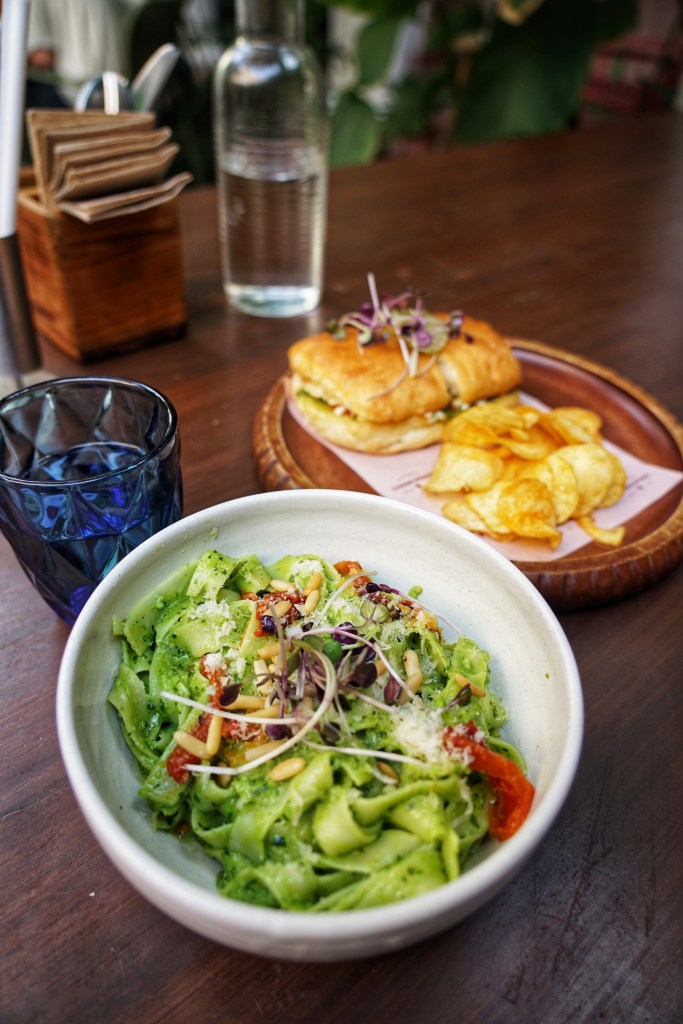
With the cough finally losing its grip on me, my explorer’s hunger returns. And so we do, in fact, begin to discover quite a bit of Pondicherry. Each day we wander a little longer; the pivot of our wanderings is often the lunch spot of the day. On the doctor’s advice, we’re avoiding Indian food for now and instead are working our way through the city’s exquisite European gastronomic offerings — a little slice of fine dining in this corner of the subcontinent.
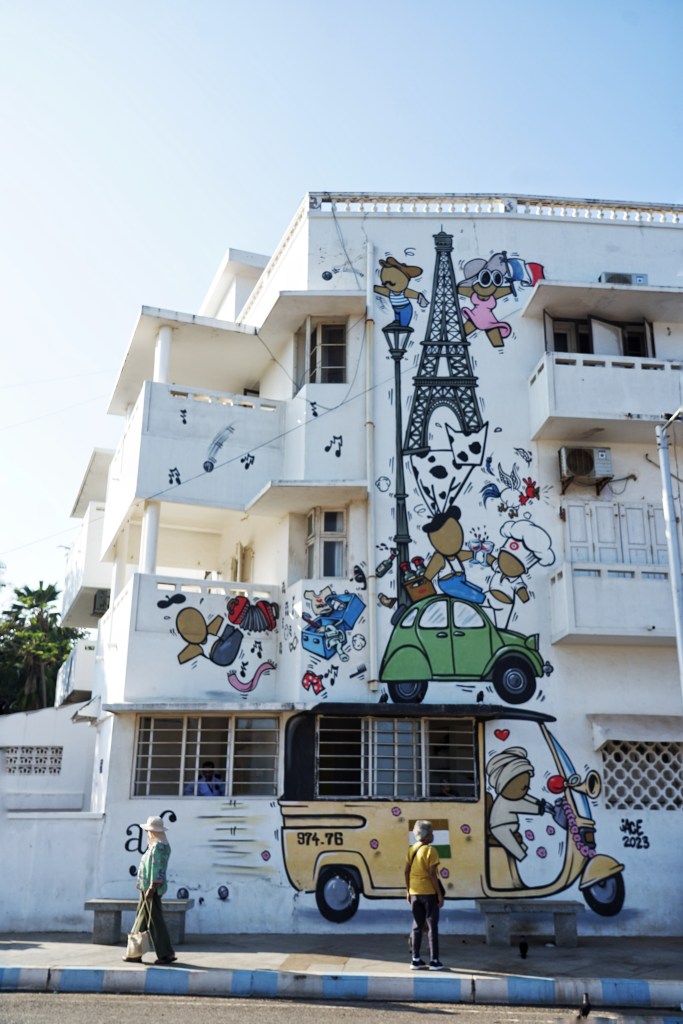
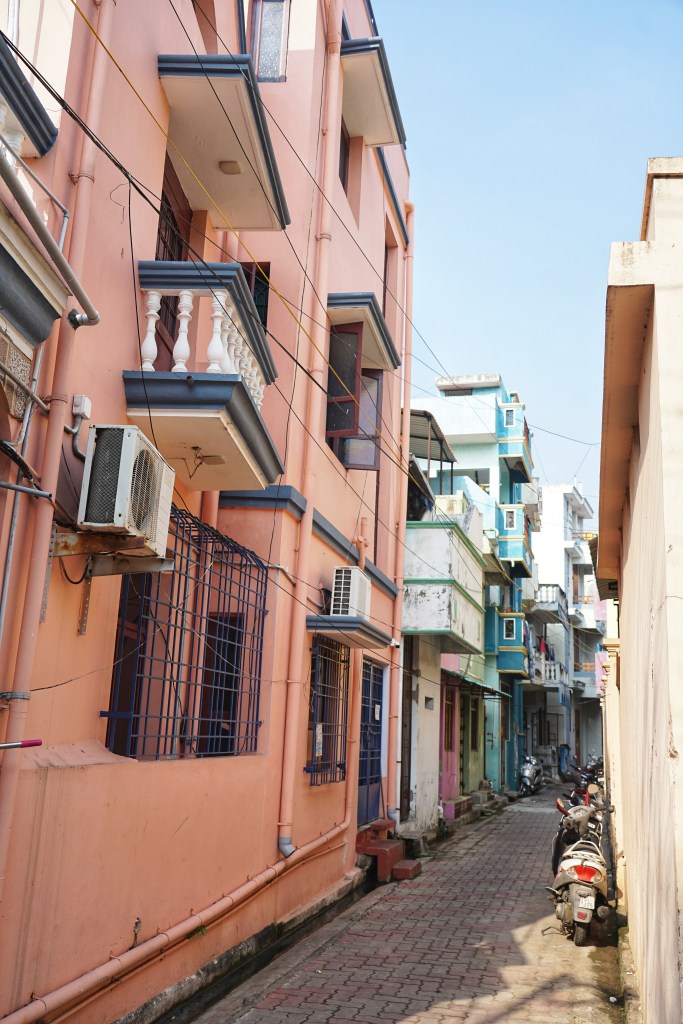
Pondicherry’s heartbeat is an intriguing blend of East and West, past and present. The city wears its French colonial past like an old coat that fits, frayed in places, comforting in others. For nearly 140 years, from the late 17th century until 1954, Pondicherry was French India — a European settlement on Indian soil whose grid-patterned streets, pastel facades, and bougainvillea-draped balconies still whisper of a time when French was as common on street signs as Tamil. Here, community does not erase difference; it lets contrasts stand side by side, breathing the same air.
A broad canal still cuts through town — not just a waterway, but a kind of invisible seam between two worlds: the shaded elegance of the French Quarter with its boulevards and boulangeries, and the tangled intensity of the Indian Quarter with its spice-scented lanes. Walk it blind-folded and you’d know the moment you crossed — the air itself changes, carrying different stories with it.
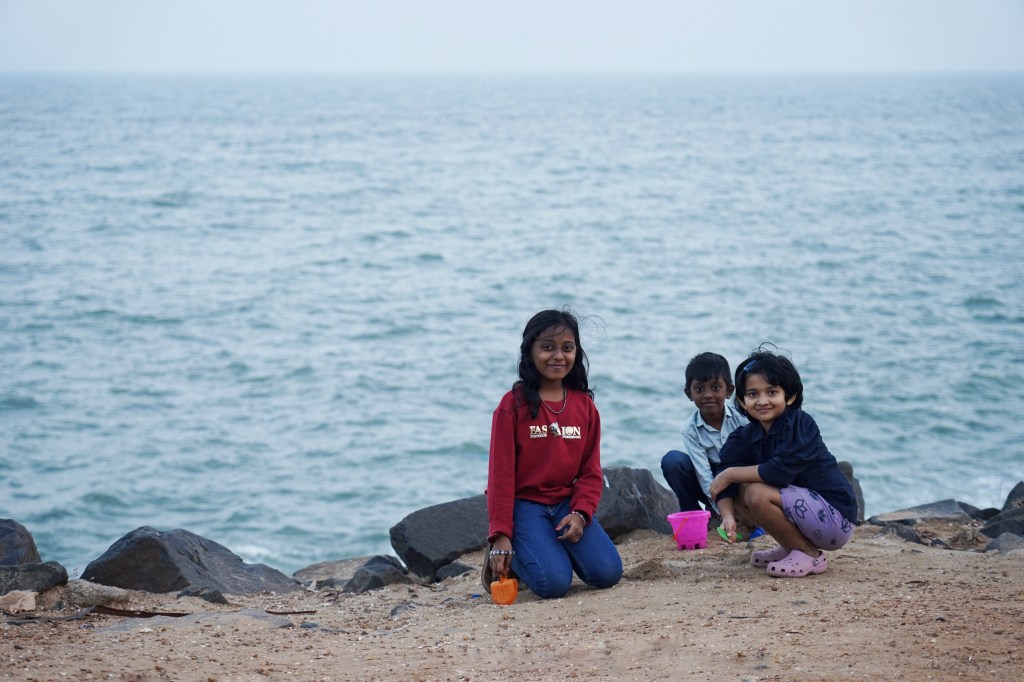
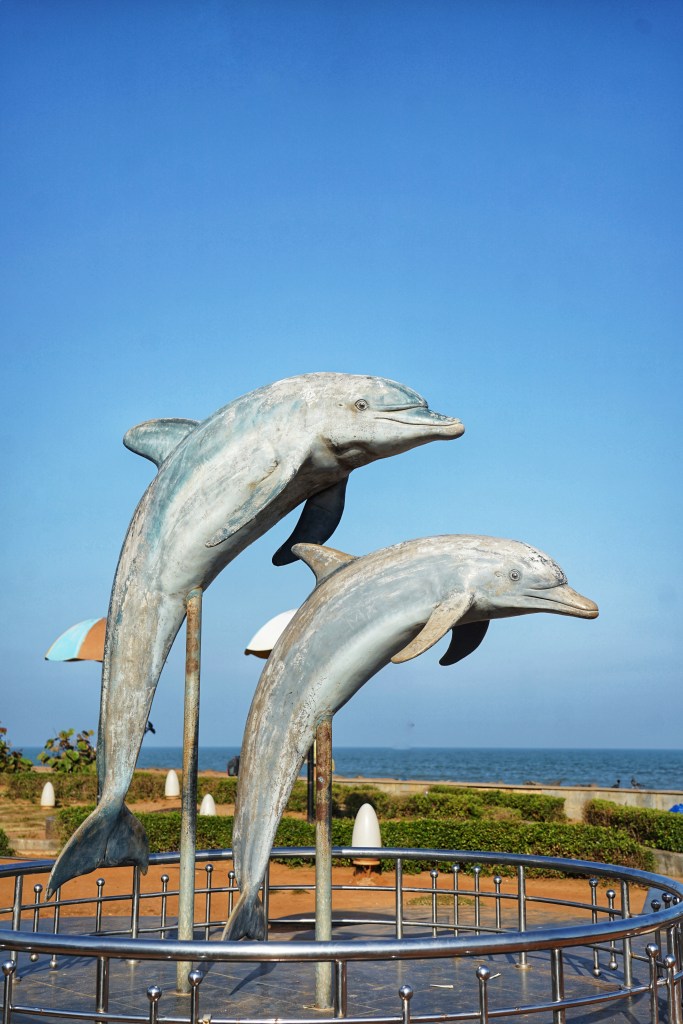
Some days we walk the seaside promenade, the Bay of Bengal unrolling like a metallic ribbon alongside us. Other days we lose ourselves in tiny alleys where scooters inch past fruit stalls and flower vendors, and storefront temples pulse with incense smoke.
One afternoon we decide to visit the Sri Aurobindo Ashram. The ashram — founded by Sri Aurobindo and his French collaborator Mirra Alfassa, known simply as The Mother — has grown from a small circle of disciples around a former revolutionary-turned-yogi into one of Pondicherry’s most internationally recognised spiritual communities. Originally formed around Sri Aurobindo’s life of meditation and teaching in the early 20th century, it formally took shape in 1926 when he handed its leadership to the Mother after withdrawing into seclusion.
In the ashram, unity is not something people try to create with one another, but something they seek to realise within themselves, as if oneness were a quiet ground already present beneath the surface of difference. Community, then, is less a matter of closeness or shared identity and more a shared field of practice — individuals walking inward journeys side by side, without needing to walk in step. What binds the place is not emotion or agreement, but a common orientation toward consciousness itself, subtle as a current that runs beneath visible life.
Inside its gray-walled courtyard sits the samadhi — the white marble shrine where both Sri Aurobindo and the Mother rest. Flowers are arranged with quiet precision, petals layered and bright against the pale stone. Pilgrims and visitors drift silently in and out, some sitting at the samadhi’s edge with closed eyes, others kneeling with hands pressed together. I stand at the edge, trying to feel what others seem to feel — that deep, luminous quiet — but for me there’s a gap, a gentle distance, subtle as a breath held between two thoughts. It’s not judgment, just the honest measure of my own interior that day.
As we walk through the adjacent halls and corridors, we encounter another layer of the ashram — spaces devoted to bookshops, art prints, images of the Mother and Sri Aurobindo, even handmade paper and artisan items. The ashram supports these cottage industries and departments — paper production, photography sections, publishing — which help fund its activities and educational projects including libraries and the Sri Aurobindo International Centre of Education.
And yet in that moment, watching the crisp edges of postcards and mandala prints under glass, I feel a tension: the interplay of sacred intent and commercial presence is visible, and while funds do cycle back into the ashram’s institutions and community projects, the spiritual and the economic live next to one another like two trees growing from the same root but in different directions. Perhaps that’s part of the ashram’s own paradox — rooted in devotion and expression, shaped through centuries of evolving human purpose.
On the January 15 — Thai Pongal arrived. Pongal is not merely a date on a calendar but a season of thanksgiving, a four-day harvest festival celebrated primarily by Tamil Hindus in southern India that marks the end of the winter solstice and the Sun’s northward journey called Uttarayan. The word Pongal itself means “to boil over,” and refers to the ceremonial dish of rice cooked with milk and jaggery until it spills over — a symbol of abundance and prosperity.
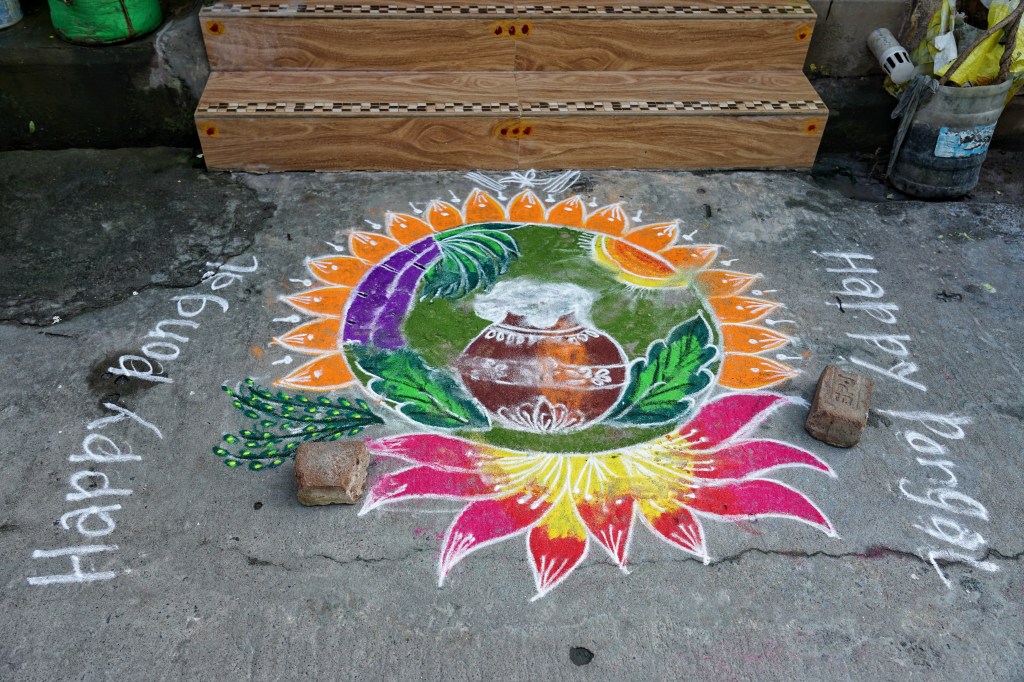
Traditionally, the festival unfolds over four days:
- Bhogi, a day of cleansing and renewal, where old belongings are cast away to welcome the new;
- Thai Pongal, the heart of the festival, dedicated to Surya, the Sun God, with rice boiled in clay pots in the early morning light;
- Mattu Pongal, for honouring cattle — the beasts of burden whose labour feeds the fields;
- and Kaanum Pongal, a day of feasts, visits, and shared joy.
Since I was still under the weather, our plan to witness the festival out on the land was postponed. We assumed that, in the city, we wouldn’t catch much of the ceremonial heart. But India always finds its way.
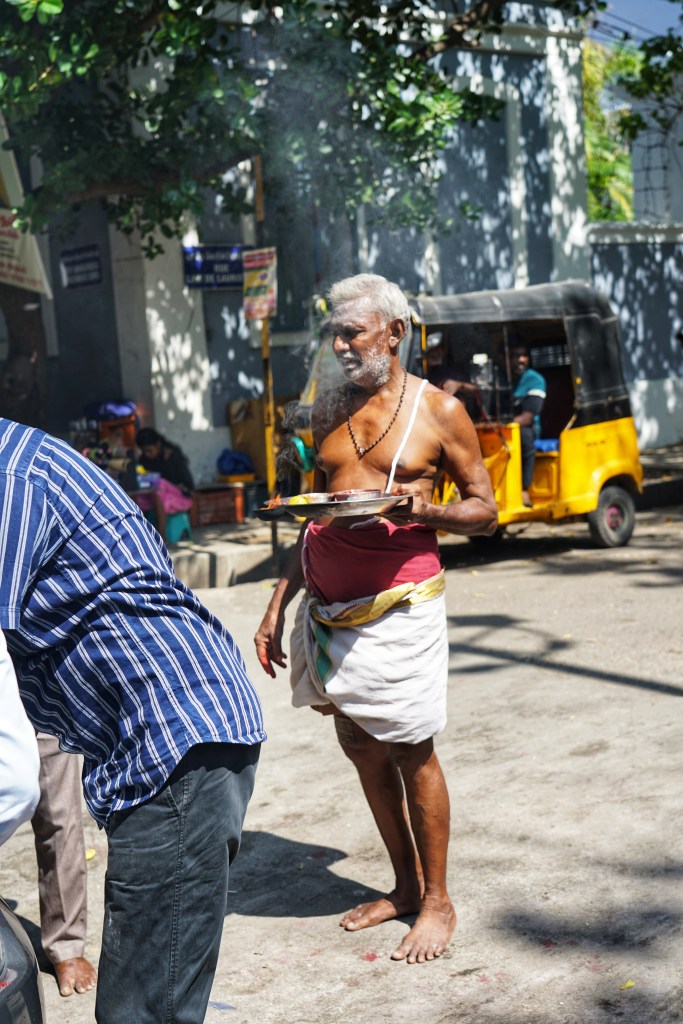
As we stepped out of the hotel that morning, at a street corner near a community hall, a small ceremony was being arranged. Colourful threads, palm leaves, an earthen pot perched over an open flame. We were invited to join, and of course we did. At six sharp, we were back: seated on plastic chairs around a low, smoking cauldron of rice and milk bubbling over the fire, the traffic of the main road roaring just feet away.
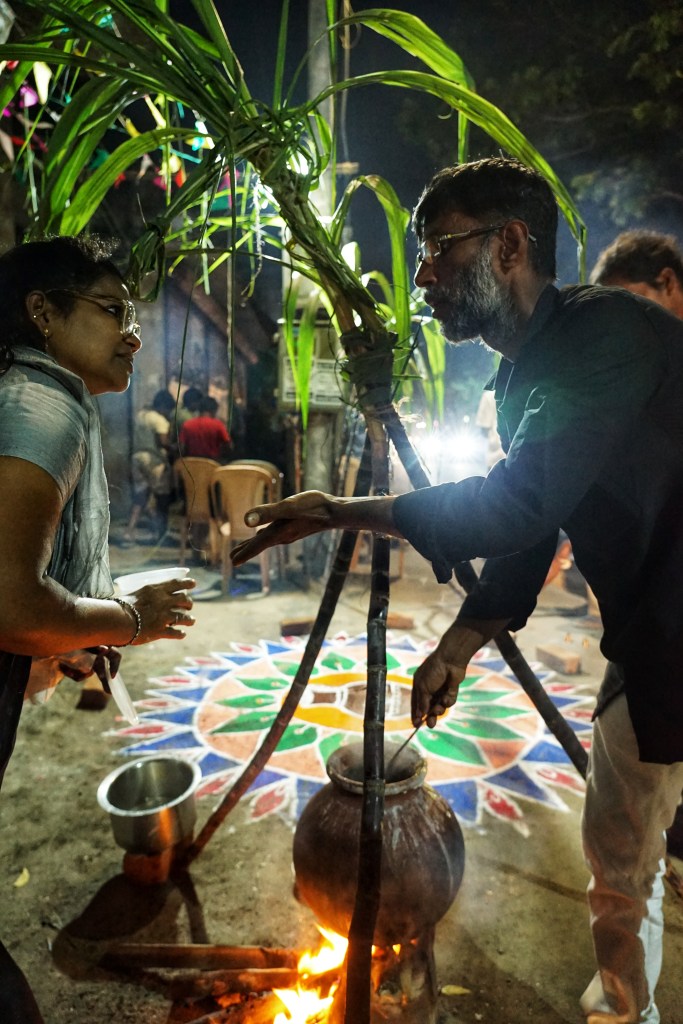
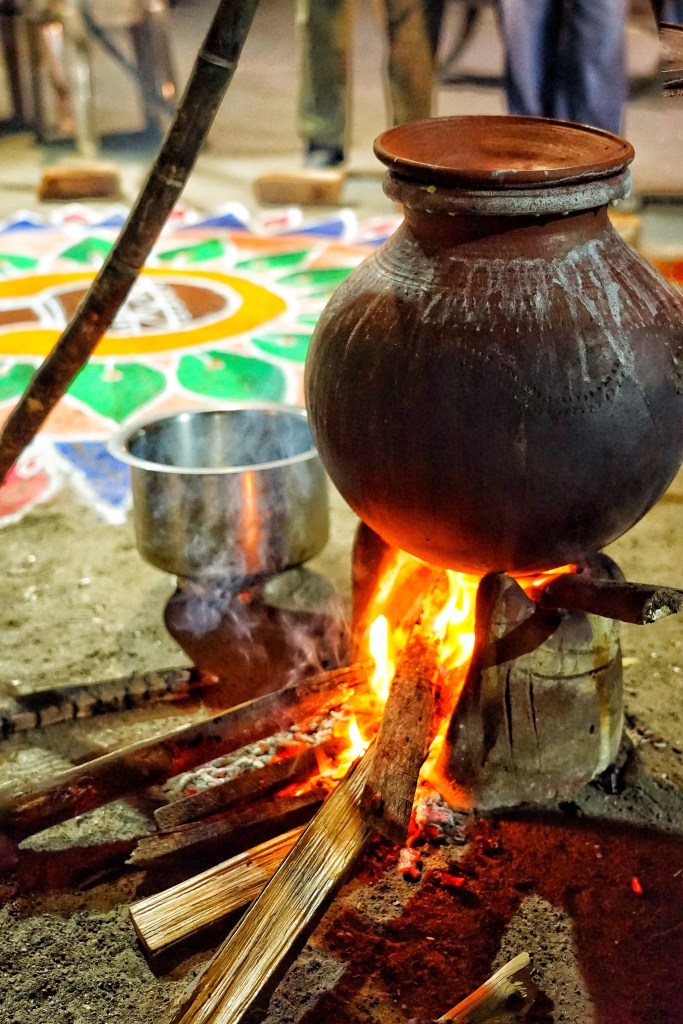
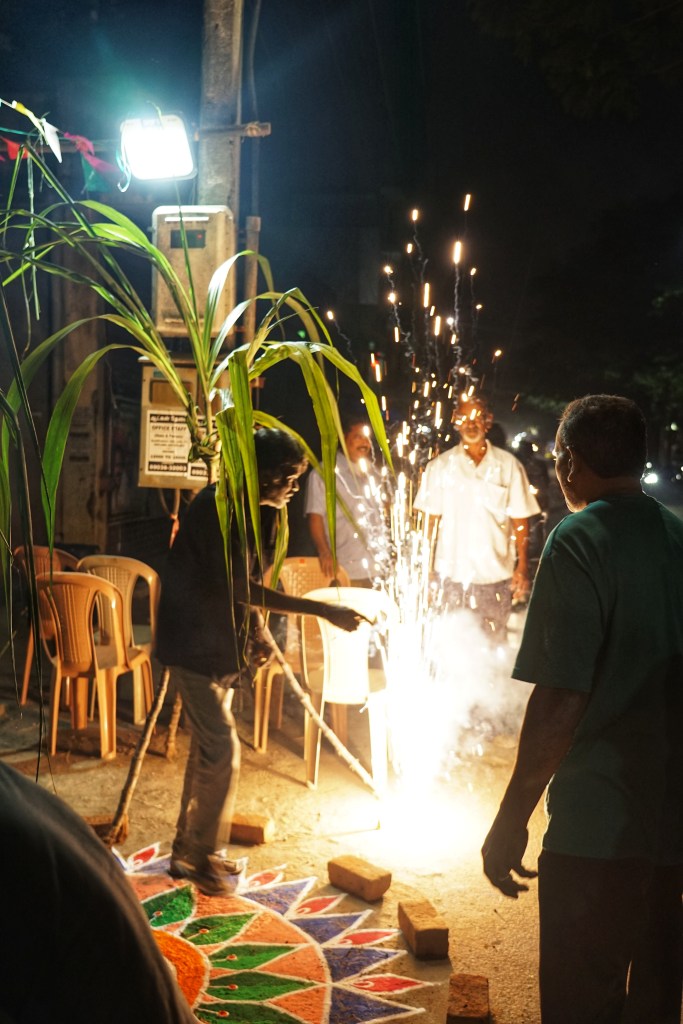
There was laughter as a man and a woman debated whether the pot needed more milk, more fire, whether the sugarcane should go in now or later — their voices rising and falling like little threads of sound that seemed to stitch the moment together. Women and older men stood around, sometimes silent, sometimes sharing quick observations in Tamil we couldn’t follow. A man lit fireworks: bright, sharp streaks carving light into the dusk. And though we knew no one, and no one spoke English, there was an undeniable — familiar — warmth to it. For a moment, unity required no shared language, only shared presence. Community formed not through understanding, but through participation.
On our last day in the Pondicherry area we dared to rent a scooter. Willem Jan rode — calm, present, simply attuned to the Indian flow of traffic, a river of honks and shifting lanes. We cut through crowded streets, joining the percussive orchestra of horns and engines, and for the first time in days away from bed and blankets, it felt so freeing, like breath returning to a lung that had forgotten how to inhale.

We made our way to Auroville, a name you might have seen on tourist brochures and road signs, but which only reveals its strange gravity when you stand at its edge. Auroville is an experimental international township founded in 1968 not as a village or suburb, but as a living idea — a place where people from all over the world can live, work, and build together in peace and progressive harmony, beyond the constraints of creed, politics, or nationality. It was born from the vision of The Mother, guided by the teachings of the Indian philosopher Sri Aurobindo – yes, the same two again -, and formally inaugurated with soil from 124 countries mixed in a symbolic urn to express human unity.
For me, the whole idea resonates deeply — coexisting, committed to peace, creative collaboration without the usual hierarchies, the very thought feels like a small pulse of hope in a world that often prefers separation to community. The notion that humanity might practice unity, not just preach it, is a beautiful aspiration, a kind of soft rebellion against isolation, competition, and the silent cynic inside all of us that whispers “this cannot be.” So Iam excited to experience it.
At the car park we left our trusted scooter and joined the massive crowds who had evidently made the same pilgrimage today. In that murmuring stream of people we walked the 30 minutes out to glimpse the golden cupola, the Matrimandir, from a distance.
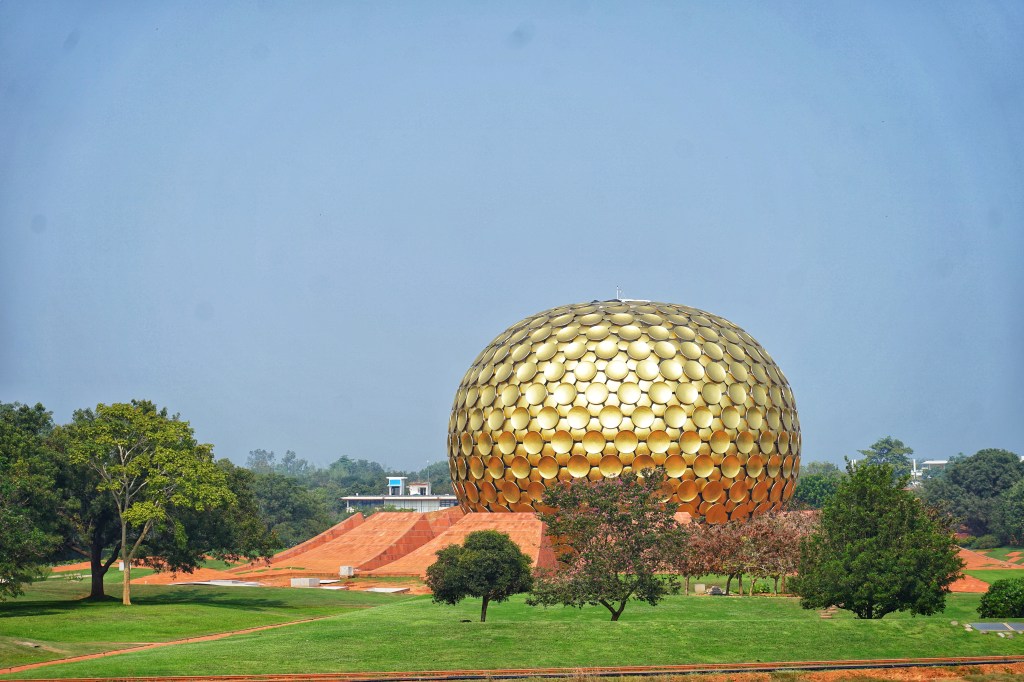
From afar it rises like a dream fossilised into architecture: a giant golden sphere resting in the center of Auroville, flanked by twelve symbolic gardens. The word Matrimandir literally means Temple of the Mother, and for its creators it’s meant to symbolise the birth of a new consciousness, a central force radiating outwards toward a future human unity. That one I don’t quite get. A structure meant to support the departure from ego, from identification with the material world, from the endless glitter of form — and then this: a massive golden sphere, gleaming, monumental, impossible to ignore. I find myself caught in that contradiction. Because if the journey is inward, toward the quiet dissolution of self, why dress that doorway in the very symbolism of attachment? And if I’m honest, I carry this same question with me into many of Europe’s great churches. I stand beneath painted ceilings, gold leaf catching candlelight, marble saints frozen in theatrical ecstasy — and alongside awe there is always that quiet wondering: why all the glamour? If the divine is subtle, everywhere, woven through breath and dust and human presence, why do we reach for spectacle to approach it? Why do we translate transcendence into shine?
On our way back we drive slowly through Auroville town. The streets are lined with simple homes, studios, and gardens; people walk, cycle, and pause in shared spaces, living the experiment of everyday community. I feel deeply that a single daytrip can show nothing of what this place is about. To feel its rhythm and its unity, one would need to linger, observe, participate, and watch the quiet weaving of life here. I would like to see how this community works, not from afar but from inside, to understand the ordinary pulses that sustain such an extraordinary vision.
That night, we trade the golden glow of the day for something far less symbolic and far more real: my very first sleeping bus. Ten hours on wheels. And with it yet another layer of community. Strangers momentarily bound together by the road, by motion, by the shared vulnerability of sleep. Fleeting, fragile, yet undeniably present. For a moment, we are all part of something larger than ourselves, carried forward by the same current of movement and trust.
From the outside it looks like any other long-distance bus — its name written in looping script across the windshield. Inside, though, it feels like a moving dormitory. Narrow steps lead upward into a corridor lined not with seats, but with stacked sleeping beds, two levels high, on the left enough pace for two persons, two the right just wide enough for a body and a backpack. Thin curtains in beige offer privacy, fluttering every time someone passes.
The air smells of fabric, metal, and the faint trace of incense someone must have carried aboard. Plastic water bottles roll softly with every curve. Below us, the engine growls, steady and low, like an animal that has done this journey a thousand times before.
I climb into our bunk — vinyl mattress, a blanket and a pillow with the determined optimism of having survived many heads before mine. Outside, headlights slide across the fabric in fleeting streaks of white and gold. The bus lurches, brakes, sways. We are gently but constantly rocked, carried through the dark by roads I will never see. Around me, strangers breathe, shift, cough softly in their sleep. A floating village of dreams, suspended above asphalt.
I close my eyes, held in the rhythm of motion, letting the impressions run through me once again…



 An unmapped life
If you feel like responding, I’m listening.