Varkala. At first the place feels like a slap in my face. After two weeks wrapped in fabric — shoulders covered, knees hidden, midriff negotiated with care — the sudden nakedness of the beach hits me almost violently. Western bodies, Indian bodies, sunburned bellies, swinging breasts, exposed thighs. Skin everywhere. Casual. Unbothered. I feel… offended. Which is absurd.
I am a child of nakedness. I grew up in a culture where summer means less fabric, not more. And yet something in me recoils. As if the last weeks have rewired my nervous system. What is India doing to me?
I miss saris. A sari is not a garment in the Western sense. It is not cut to shape. Not stitched to fit. It begins as a long strip of cloth — usually five to nine meters — and becomes clothing only through the body that wears it. Fabric first. Form later. Cotton, silk, chiffon, linen. Plain, embroidered, handwoven, glowing with color or quiet as dust. One end is tucked into a petticoat at the waist, then wrapped around the hips in a full circle, grounding the cloth to the body. After that, pleats are folded — again and again — narrow, careful, almost meditative. They fall like a fan down the front, creating movement where there was only flatness. The remaining length travels across the torso and over the shoulder. This final part — the pallu — is gesture. It can cover the chest, the head, fall loose down the back, or be wrapped close like a shawl. Modesty, elegance, mood, region, occasion — all spoken through how that one piece of fabric is placed.
Draping a sari is not dressing. It is choreography.
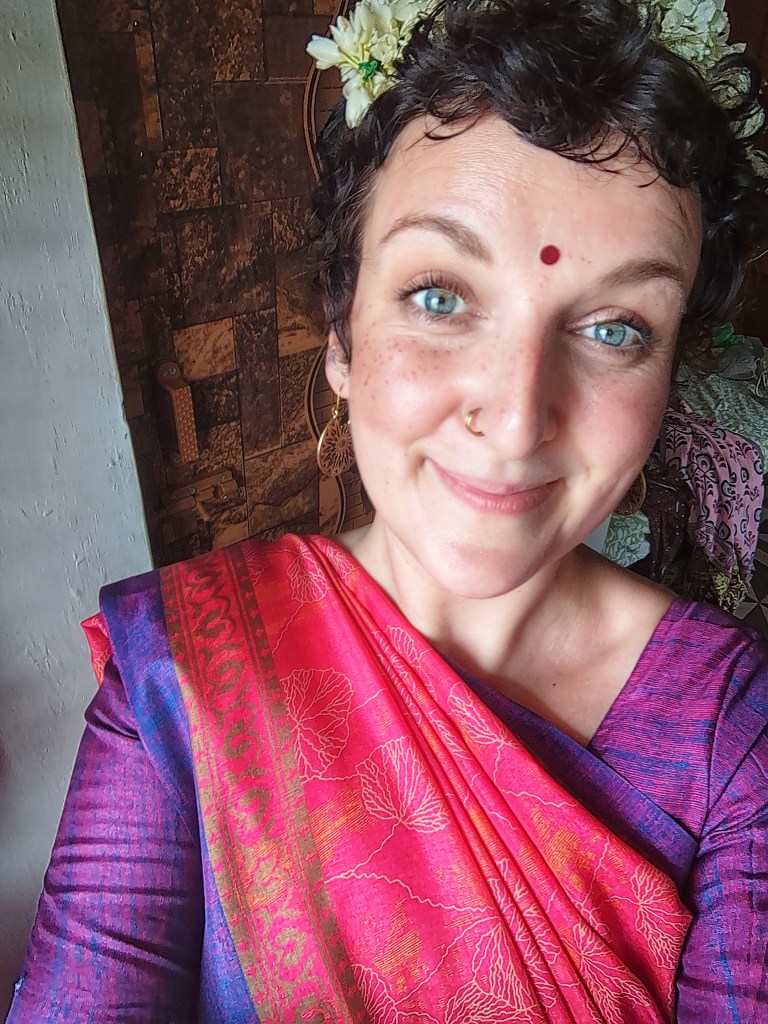
There is a moment, always, when the cloth is still just cloth. And then, with the last pleat adjusted, something shifts. The spine grows taller. The steps become smaller, more deliberate. The body is still the same body, but it moves as if accompanied. A sari doesn’t impose shape; it collaborates. It follows breath, widens with sitting, tightens with walking, responds to wind. It reveals and conceals at the same time — a language of suggestion rather than exposure. Wearing one feels less like putting something on and more like entering a relationship. Between fabric and skin. You don’t just wear a sari. You inhabit it.
Wearing a sari in rural India had felt like being admitted into a quiet, unspoken club. Not fully inside — never that — but no longer entirely outside either. An in-between space. Recognizable. Allowed. Exotic, yes. That was unmistakable the first time I entered a silk shop. Everyone was looking at me. I tell you, everyone. But what met me there was not suspicion — it was couriosity and delight. A generous, almost tender sharing of culture. Hands helping, adjusting pleats, choosing colors against my skin.
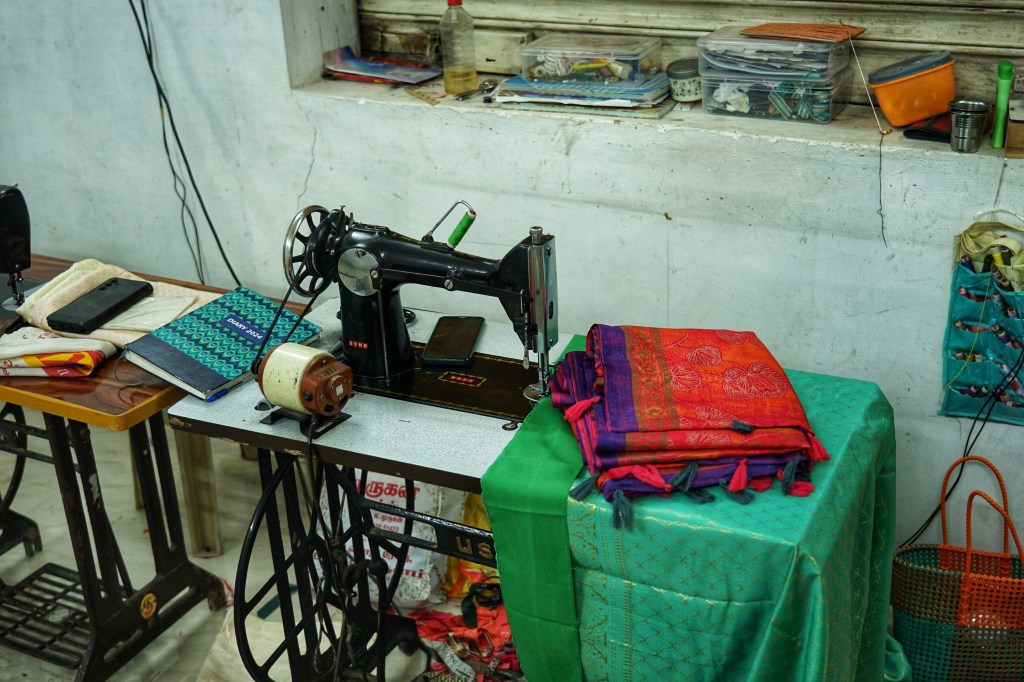
The same warmth met me in the tailor’s shop, where a beautiful Indian woman took my measurements to sew my very own sari blouse, her hands quick, precise, matter-of-fact in their closeness.
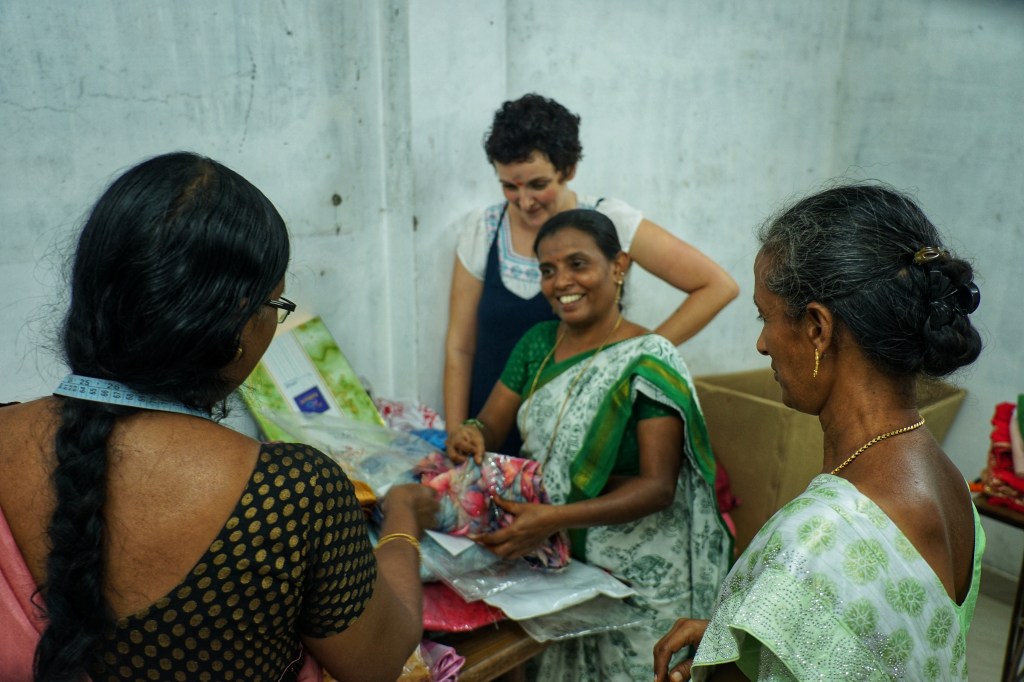
In the beginning, thoughts about cultural appropriation flickered through my mind. Western mental frameworks trying to keep up. But they dissolved quickly. Everywhere I went, women reacted the same way when they saw me in a sari. They touched the fabric. Tugged gently at the drape. Smiled wide. Asked for photos. There was no debate here like the ones I’ve had about my dreadlocks in the past — and those, notably, only ever with white people.
After two days in Varkala, my system adjusts slightly. I allow more skin again. But not much. Too much exposure now feels strangely wrong in my own body. I stay with long trousers. No cleavage. Only my shoulders are allowed to peek out beneath my thin new jacket. Something in me has shifted. And I’m interested to see if it will change back.
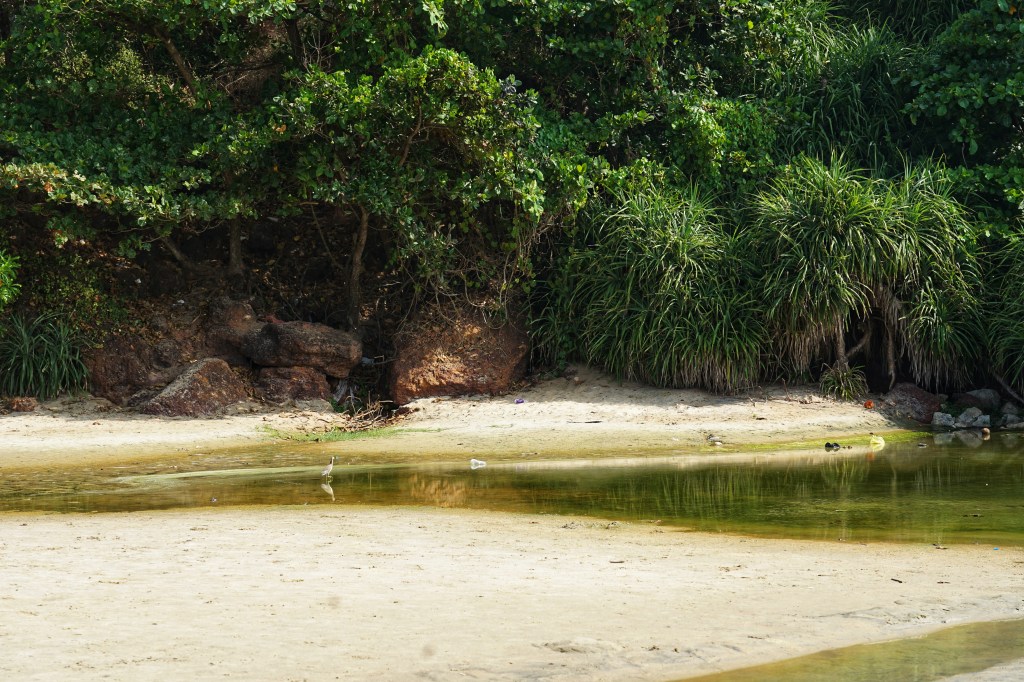
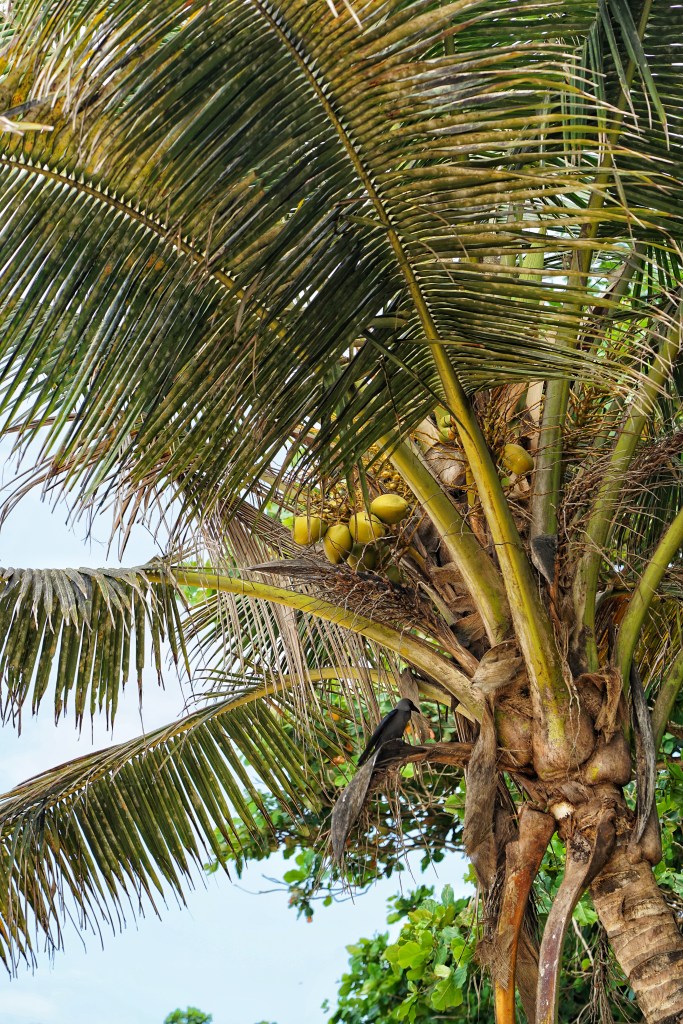
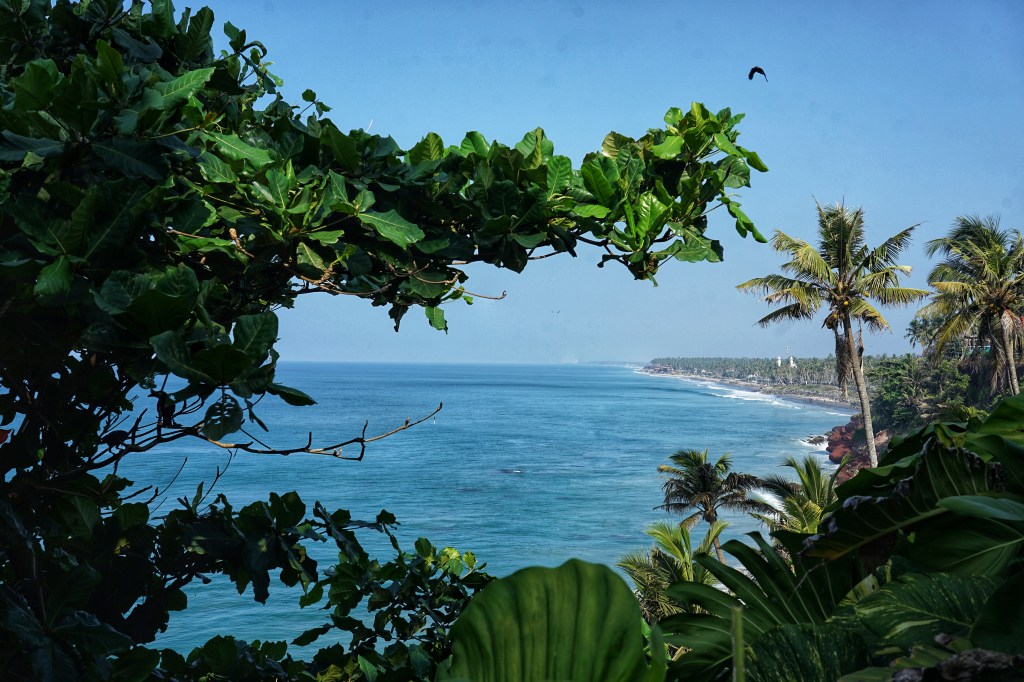
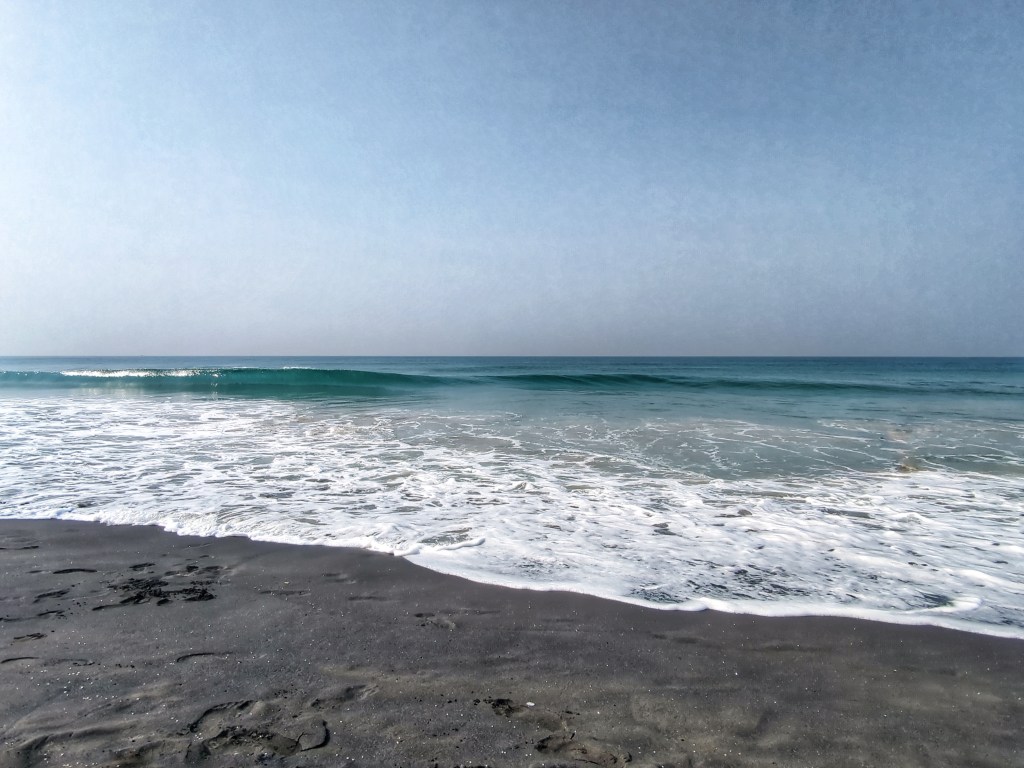
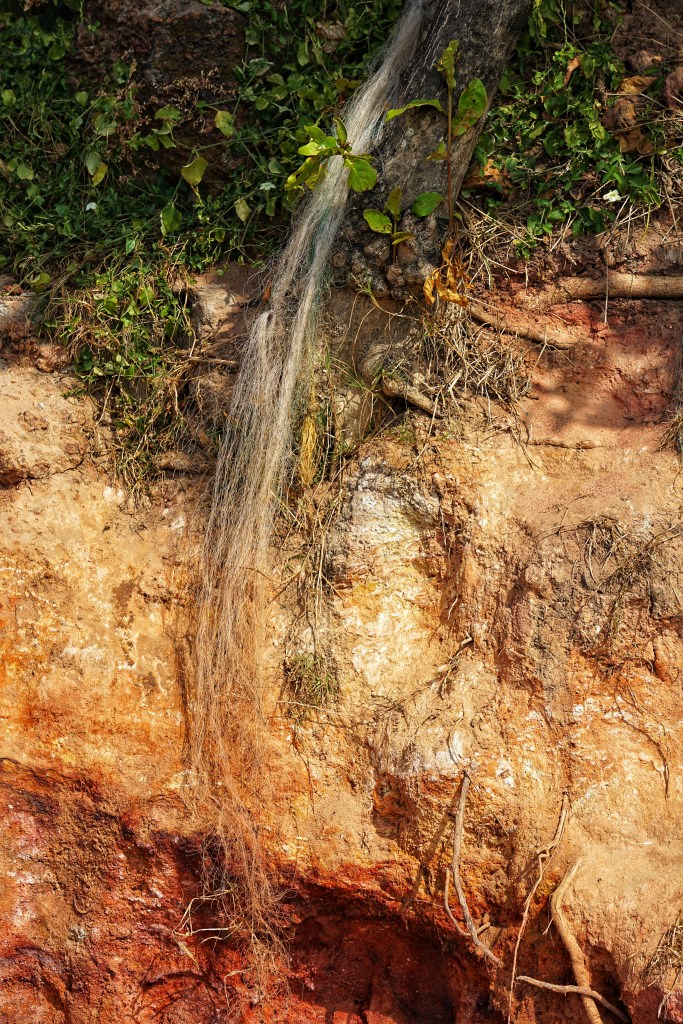
Varkala sits along dramatic red laterite cliffs on Kerala’s coast, where land suddenly drops into the Arabian Sea. Below, waves pound against dark rock and sand; above, palm trees lean into the wind as if permanently listening to the ocean. Frangipani, hibiscus, banana leaves heavy with green. Crows arguing. Dogs asleep in the shade like they’ve surrendered to the humidity of existence. Historically, this is pilgrimage land. Temples. Sacred springs. A place of ritual bathing and release long before backpacker cafés and yoga signs arrived. Spirituality didn’t move in with tourism — tourism moved into something already ancient. We stay at the northern end, away from the main beach stretch. Black Beach, they call it. Fewer people. More wind. Space to hear your own thoughts between the waves.
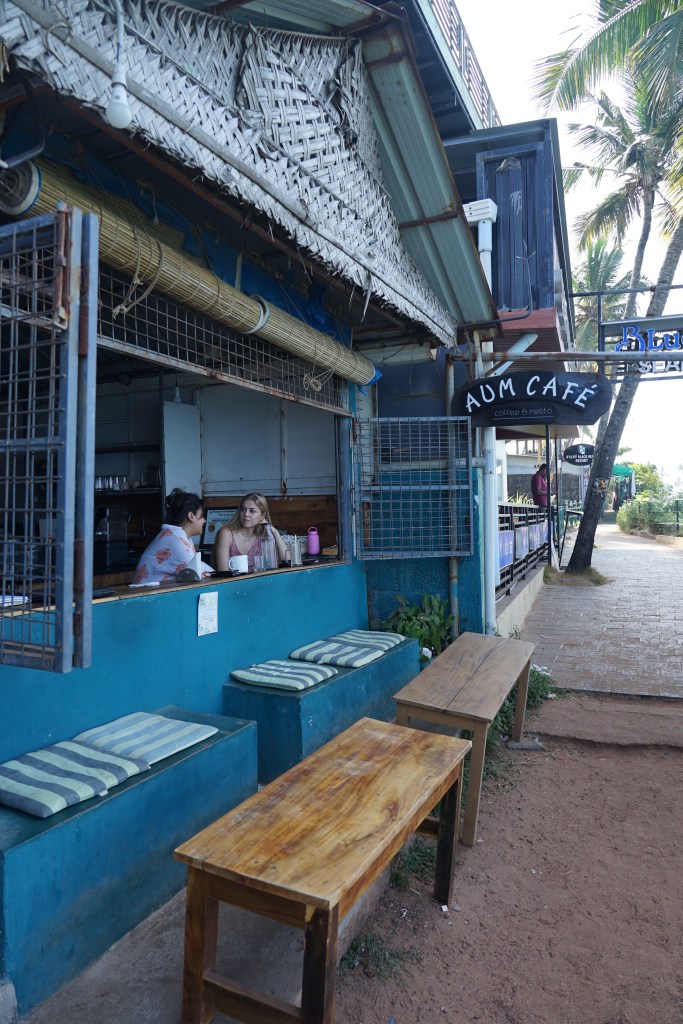
At the hotel I hear about an Ayurveda center just down the road. Ayurveda has been orbiting my life for years, crossing my path like someone you keep almost meeting. Now it seems we’ve finally agreed to sit down together.
Kerala is one of Ayurveda’s living heartlands. Not a wellness trend. A lineage. Knowledge passed through generations of physicians who study body, mind, environment, digestion, rhythm, season, emotion — as one interwoven system. Ayurveda means “the science of life.” Not the fixing of symptoms, but the understanding of patterns. At the Panackal Ayurvedic Private Treatment Center I receive a long consultation. Pulse reading. Questions about sleep, digestion, emotions, history, tendencies. No quick prescription. No single pill.
Instead: an inquiry into the whole architecture of my being. This is what I have been looking for without having words for it. After all the intense psychological therapy, the dismantling and rebuilding of identity, something still lingers in the body. Trauma that has moved from story into tissue. Anxiety. Pain. Insomnia. Doctors and I have tried to adjust the knobs: melatonin, exercise, painkillers. Managing symptoms like separate problems.
Ayurveda looks at me differently. It sees a system that has been running too hot, too driven, too sharp for too long — and then collapsed into depletion. Fire that burned through its fuel. Wind that keeps moving even when there’s nothing left to carry.
Too much activity in the mind. Too little stability in the body. The inner elements no longer cooperating, each pulling in a different direction. No wonder I feel frayed. For the next three days I gift myself two hours of treatment each day.
Marma therapy — neck and shoulders
Marma points are subtle energy junctions in the body, places where physical structure and life force meet. Gentle but precise pressure, oil, rhythm. It’s not muscle work; it’s communication. The therapist’s hands move slowly, deliberately, as if listening through her fingers. My neck, usually a corridor of tension, begins to feel porous. Space appears between vertebrae I didn’t know were compressed.
Pinda Sweda — herbal poultices for the back
My back carries too much heat, too much inflammation. Marma there would be too intense. So she uses warm herbal bundles dipped in oil, rhythmically tapping and pressing them across my back. Sixty-five touches per section. Again and again. The first two days are almost dreamy. I drift in and out of sleep while the warm, oily bundles land like soft punctuation marks on my spine. On the third day, the same treatment feels completely different.On the third day, the same treatment feels completely different.
Shirodhara – calming for the nerves
A steady stream of warm oil poured across the forehead, moving slowly from side to side. It’s meant to calm the nervous system, quiet the mind, bring fragmented thoughts into a single current.
Day one is almost unbearable. Outside, construction. A chainsaw rips through wood and, in my perception, straight through my skull each time the oil shifts direction. Motorbikes. Honking rickshaws. Metal clanging. The oil cannot compete with the noise; it becomes a spotlight on my agitation. I lie there with wide, unblinking eyes, trapped between ritual and chaos. When it’s over, only one word rises from somewhere ancient inside me: Horrible. The next day they change the treatment to a head and face massage. I’m not giving up that easily. Maybe it really was just the noise.
Outside, construction. A chainsaw rips through wood and, in my perception, straight through my skull each time the oil shifts direction. Motorbikes. Honking rickshaws. Metal clanging. The oil cannot compete with the noise; it becomes a spotlight on my agitation. I lie there with wide, unblinking eyes, trapped between ritual and chaos. When it’s over, only one word rises from somewhere ancient inside me: Horrible. The next day they change the treatment to a head and face massage. I’m not giving up that easily. Maybe it really was just the noise. This time the hands cradle my skull, slow circles along the temples, oil in the hair. My thoughts begin to spread out instead of colliding. My breath drops lower. Something inside unwinds that has been clenched for years. This is what it’s supposed to feel like.
I don’t think these will be my last Ayurvedic treatments. Perhaps I’ll return for Panchakarma — the deeper cleansing process designed to remove accumulated imbalance from the system entirely. Not spa days, but a guided physiological reset. Maybe in September, when the season begins again.

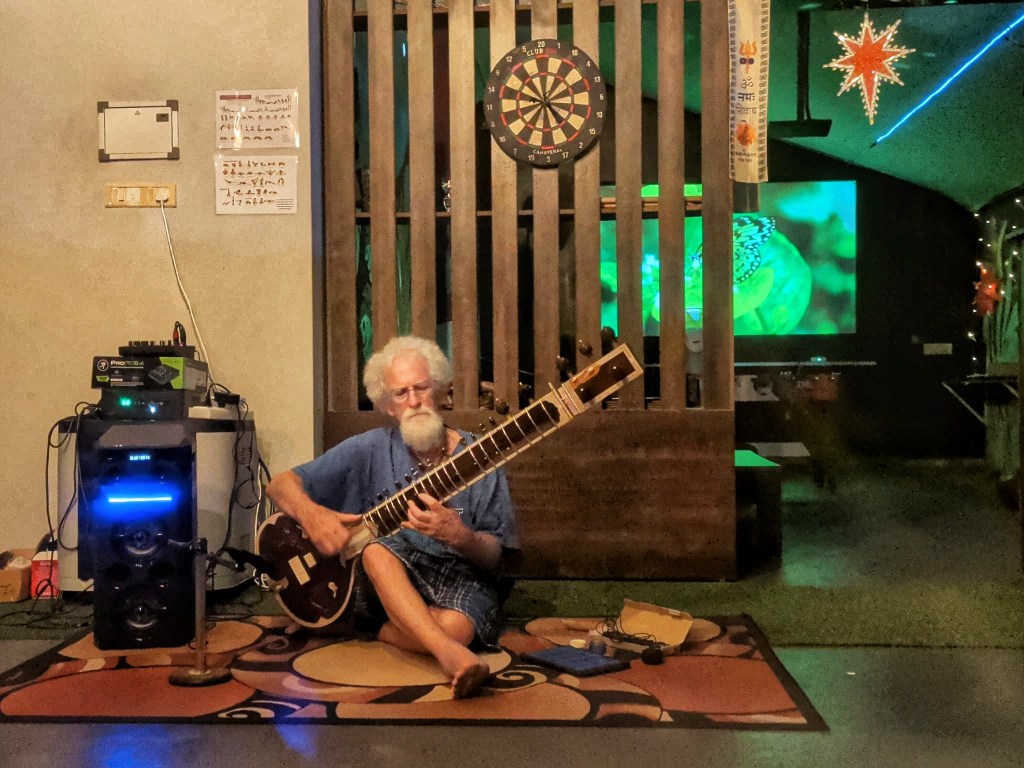
Alongside Ayurveda, Varkala introduces me to sitar music. Our hostel invites Pietro, an Italian musician who has devoted twenty-three years to studying this North Indian instrument. The sitar doesn’t just produce notes; it produces atmosphere. Long, bending tones that seem to search for something just out of reach. Strings that shimmer behind the melody like memory behind thought.
He explains how it’s taught: not through books, but through relationship. Guru and student. Years of sitting, listening, repeating. A bond that extends beyond technique into life itself. His teacher lives in Kolkata. Their connection, he says, is for life. That feels familiar. Some knowledge can’t be downloaded. It has to be transmitted human to human.
Varkala carries a mature kind of spirituality. Yogis, tourists, locals — coexisting without the place losing its Indian heartbeat. The sacred doesn’t feel staged here. It’s woven into the background, like the ocean — always there whether you look at it or not.
When we leave on February 1st, the goodbye is softer than expected. Because I know this is not an ending.
 An unmapped life
If you feel like responding, I’m listening.