Twenty years ago it was the centre of all my India dreams. The steady current of the Ganges, the ghats, the ceremonies. I don’t remember why I wanted to go to India back then. Only the feeling — a deep, almost physical longing. And somehow it was always tied to this city. So reaching it was never just another stop on an itinerary.
When the plane from Chennai landed and we sat in our pre-arranged taxi, I was almost afraid. Curious how it would feel. To be here. In this city. The city everyone has an opinion about.
Madness.
Too intense.
Not for everyone.
Once is enough.
I heard it so often on the way that at some point I simply zoomed out. And I am grateful I did. Because by now it feels like listening to someone speaking badly about a member of my family. The very moment our cab dives into the thick of it, I feel it — I am home.
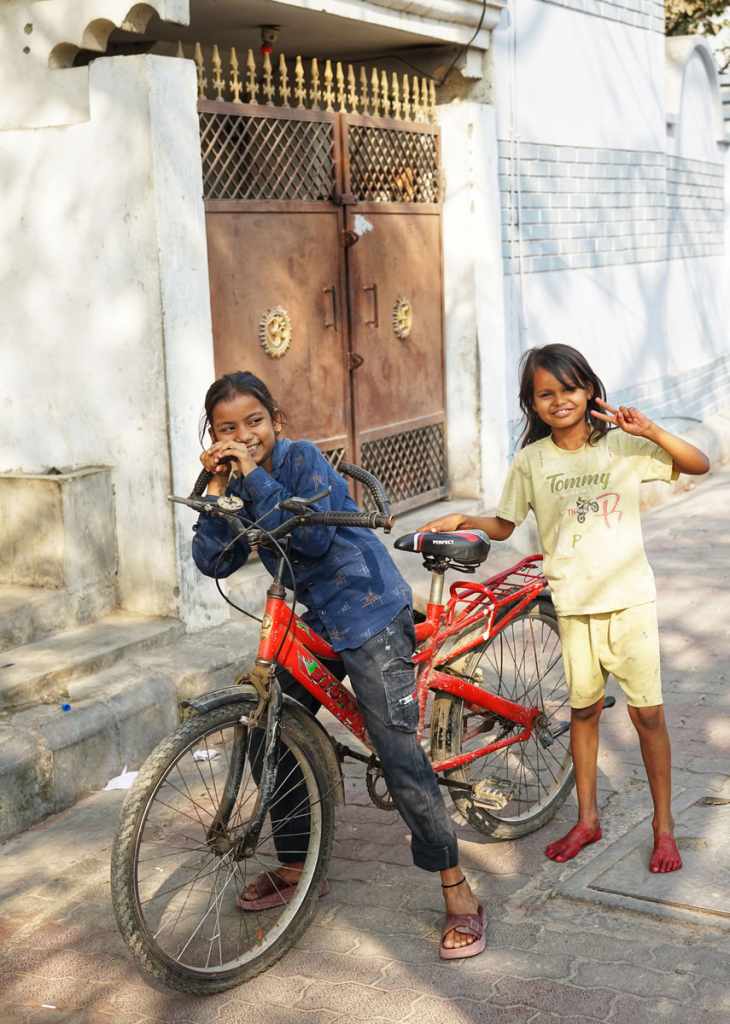
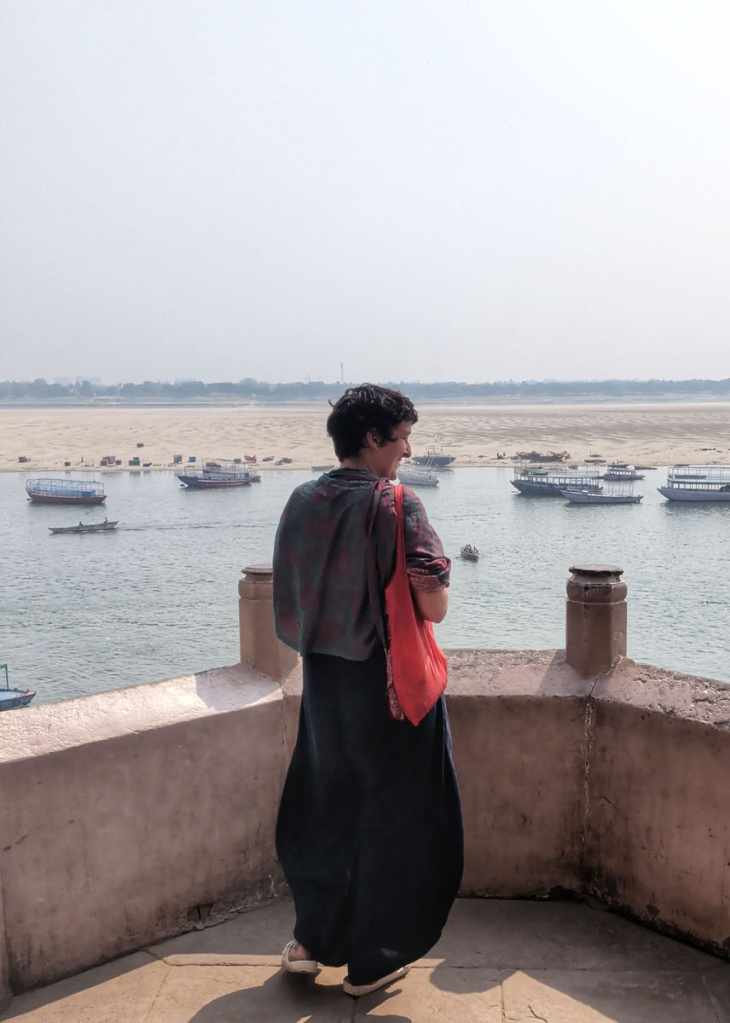
The ghats are not a single place. They are steps, corridors, thresholds. A slow descent from the narrow streets of the city into something wider.
At the water’s edge I can witness the scenes that I have seen in countless documentaries. Being here is a totally different though. Everywhere: fabric. Piles of clothes in radiant colours. Plastic bags knotted and tucked between stones. Changing cabins — wooden, painted, half broken — where a hand appears for a moment to hang a dripping shirt on a nail. Man and women, young and old, stand side by side. No separation. The ritual bath is not dramatic. It repeats itself in small gestures: water lifted in joined palms, a brief immersion, lips moving silently, eyes closed against the sun. A businessman slowly unbuttons his shirt, removes his pants and lowers himself into the river. A boy in bright orange shorts splashes his grandfather. Two women in saris wring out their hair. No one seems to watch anyone else, and yet everything is witnessed.
For days I have been pondering whether to step in myself. The temptation is strong. And yet, my body is finally just fine, and I want to hold on to that. Beyond that, somehow, it does not feel as if the river is inviting me. I imagine that if an Indian woman had asked me to join her, perhaps I would have gone, despite my mind’s careful reasoning. But as it is, I sense that it is not yet my path. And so I let it be, accepting the timing of my own crossing, the quiet patience of waiting for the invitation that will truly belong to me.
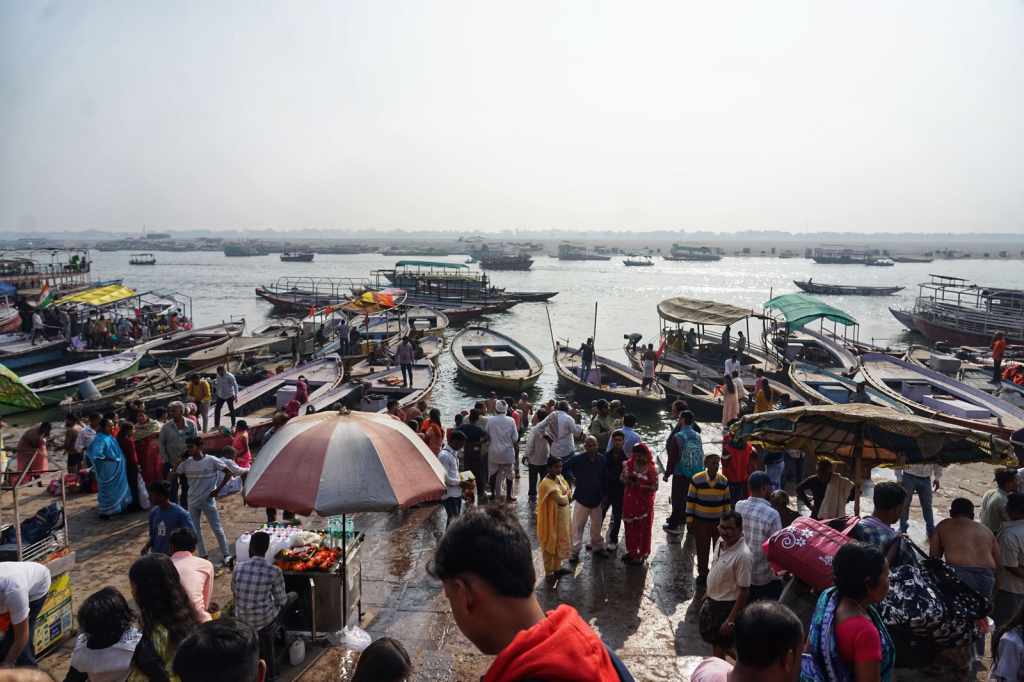
A little above the waterline, under oversized sun umbrellas, men sit and stand around wooden platforms and offer a variety of services from shavings to boatrides. Some want to massage Willem Jan, catching his hand with every passing by and reassuring as firmly their skill as they press their thumbs in his paws.
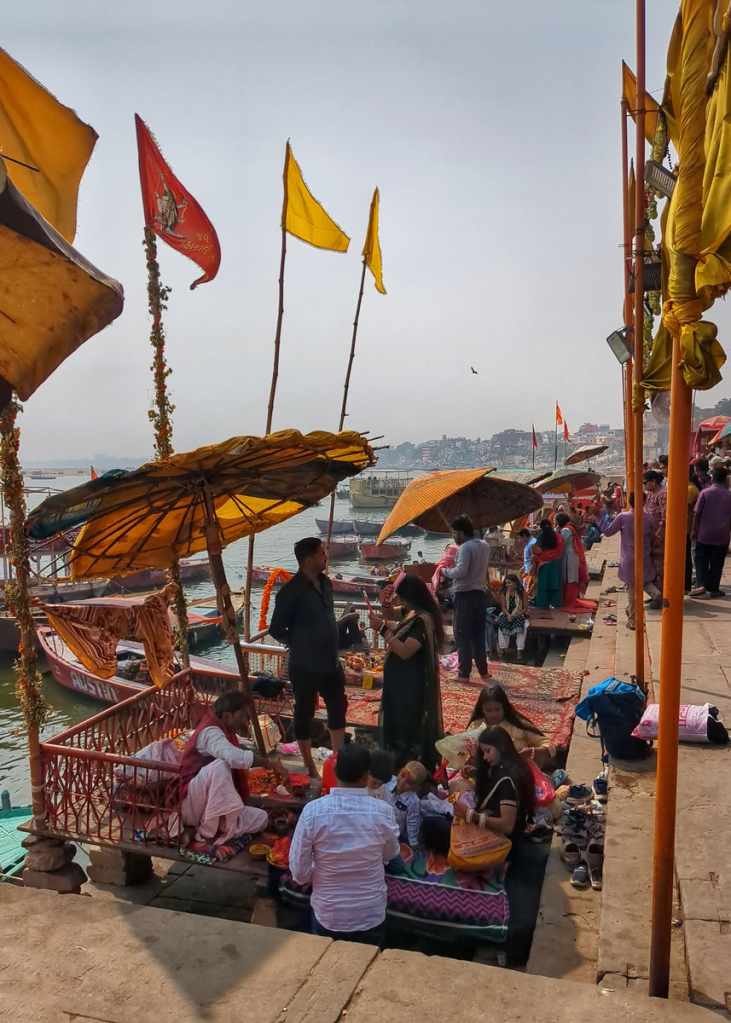
Some are sitting in silence, head bowed, legs crossed. Some wear ordinary shirts, slightly faded, neatly buttoned. Some have the vertical sandalwood mark on their forehead, others nothing at all. In front of them, families gather. They arrive carrying small plates: coconuts, marigolds, sweets in bright plastic boxes. They sit down on the platform, close together, knees touching. The conversation begins almost casually, like a visit to an uncle — and yet the atmosphere shifts. Backs straighten. Heads bow. Questions are placed into the space between them. Not always religious questions. Sometimes practical ones. A good date for a wedding. A journey. A business decision. An illness that has not found a name. The men listen. This is not only about faith. It is about orientation. In a world that moves too fast, these platforms become places where a life can be briefly laid down, looked at from above, and returned with a direction.
As I witness these moments I feel my usual coordinates soften: what used to be my profession, plans, the architecture of identity that I carry through most of my days. The ghats do not ask me to believe in anything, yet for a moment I sense the relief of a world in which guidance can be sought without embarrassment, where orientation is a shared practice, and where the crossing from the private into the communal does not diminish the self but gently dissolves its edges.
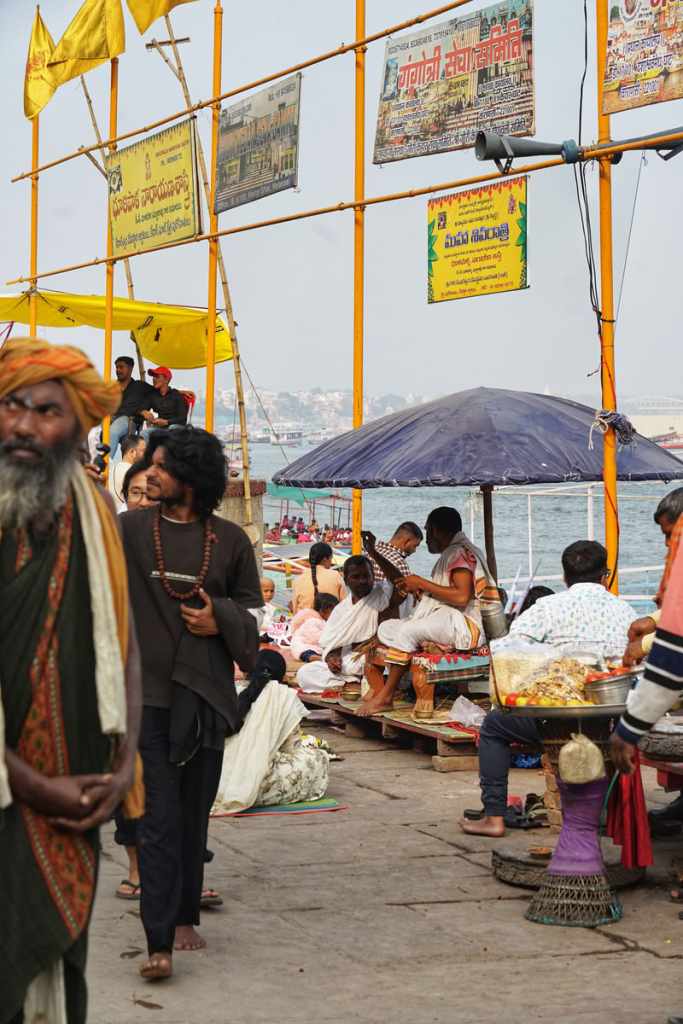
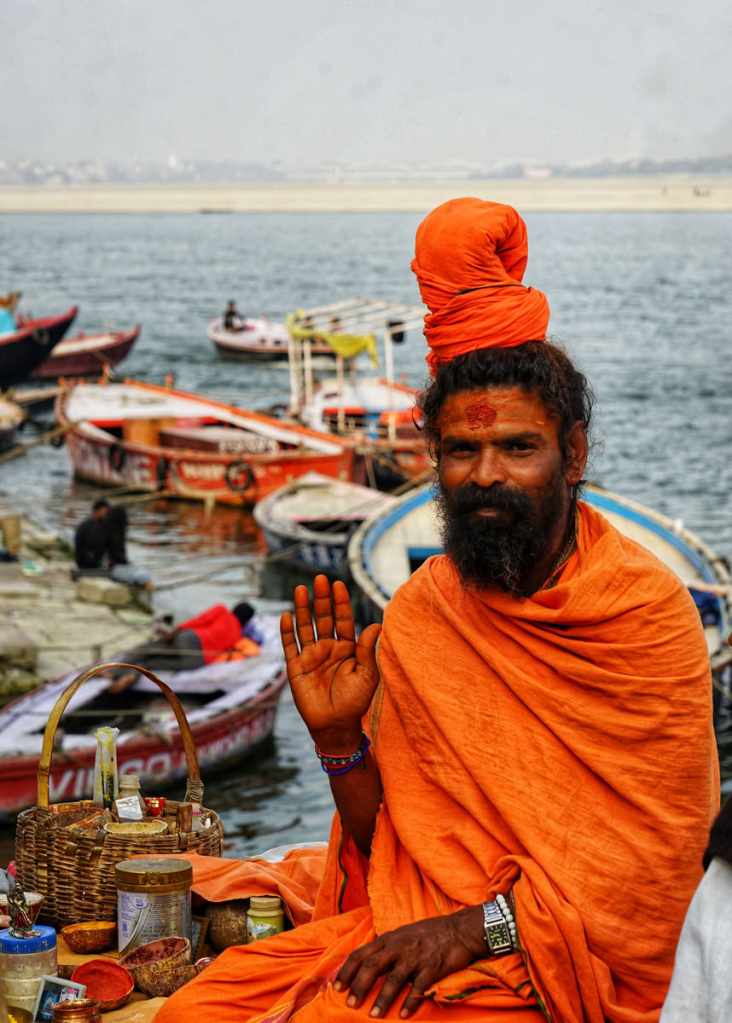
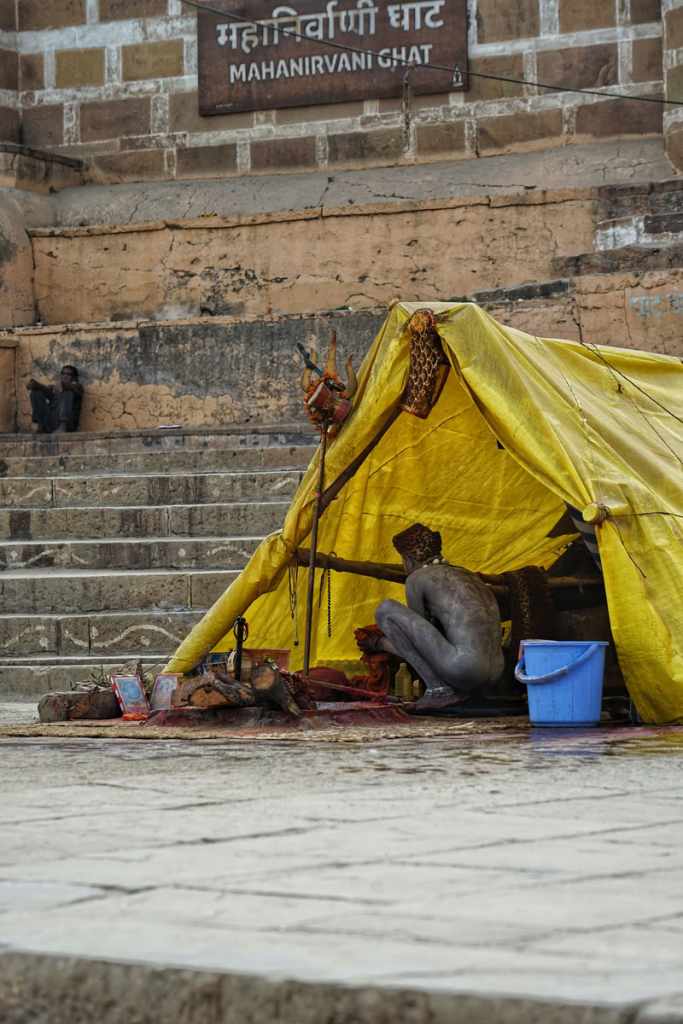
One more step above, some of the ghats are ligned with little huts. Barely rooms — three wooden walls, a roof of tarpaulin or cloth. Incense curls lazily in the heat. Old mattresses and blankets, marigold flowers already beginning to dry and more or less dressed man with turbans. The so called babas – “holy man” who stepped out of the usual order of life — often having left family, work, name — to live in renunciation, or in devotion, or somewhere in between. Some belong to ancient lineages. Some are wanderers who stayed. Some are scholars. Some are performers of holiness. You never quite know. One day we meet Eve and the International Tiger Baba — a man with laughing eyes, when he doesn’t hide them behind his round mirrored spectacles. And suddenly we are no longer just passing through. We are sitting in one of the huts ourselves, cross-legged on a thin mattress. People glance at us with brief curiosity and then look away again. Inside the hut the movements slow down. A small clay pipe appears. Hands that have done this a thousand times begin their careful work: crumbling, mixing, pressing, shaping. The so called chillum is lifted to the forehead before it is lit. A gesture of offering. Smoke rises and the hut fills with it, as if the walls themselves were exhaling. It is offered to me with such quiet sincerity that it feels less like a substance and more like a gesture of inclusion. I decline — not because I am afraid; I do not think it would harm me.
Sitting there, I am struck by the careful attention in every gesture and by how naturally inclusion is offered, without expectation. I feel the weight of that sincerity, and in declining, I do not close a door but acknowledge my own rhythm and desire to meet Varanasi clear in mind and soul. The gesture lingers in the air long after the smoke dissipates, leaving a quiet warmth, a reminder that participation can take many forms, and that respect and honour travel both ways.
Morning and evening, the river is greeted and released with fire at the ghats. At dawn, at Assi Ghat, Iam still wrapped in the softness of sleep, when the bells ring, not loudly but steadily, and the priests move in slow, unhurried arcs, their lamps drawing circles into the pale air. The smoke rises straight up. The city is waking, the day is being received.
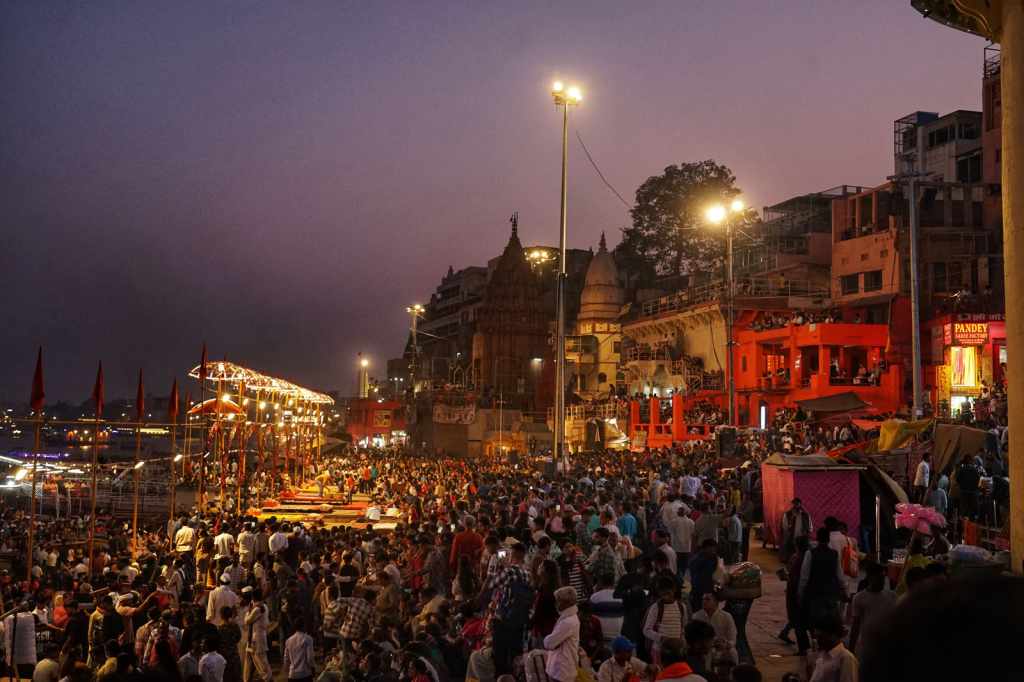
In the evening we go to the large so called Aarti at one of the main ghats, and it becomes something else entirely. Hundreds of people have been waiting for hours to secure the best view. Boats — small wooden ones and larger, almost like floating grandstands — line the shore in tight rows. Loudspeakers crackle. Around me people are on video calls, turning their phones toward the stage so that someone far away can watch in real time. Others scroll through their feeds. A constant current of bodies presses past us, determined, elbows negotiating space. The sacred choreography is still there, but for me its aura dissolves in the urgency to capture it.
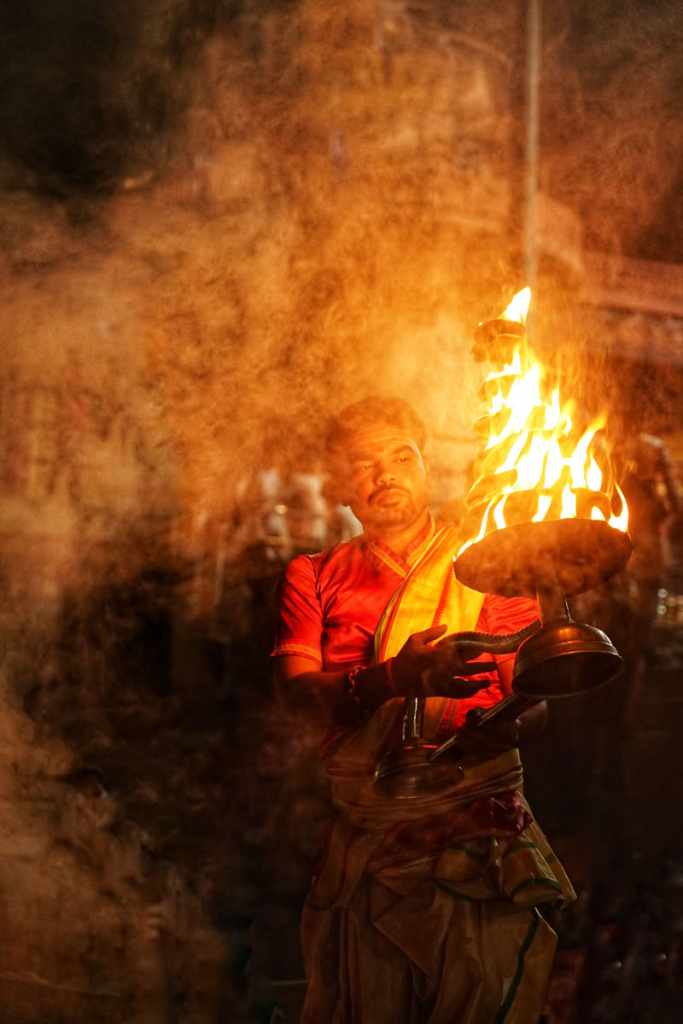
I ask Willem Jan if we can slip away. Just ten metres further along the ghat, a single man stands with his lamp, performing his own small Aarti. No loudspeaker, no crowd. We are the only ones who sit down. Everyone else rushes by, pulled toward the spectacle. The river receives the light without commentary.
And I am reminded how much beauty there is in greeting and in letting go — not as grand gestures, but as daily practices. To welcome the morning, to say goodbye to the day. It requires so little, and almost everything: attention, a pause, the willingness to be where one is. The rituals are always there, waiting. Only when we give them time do they become thresholds — moments that hold us, quietly, at the beginning and at the end of what we are given.
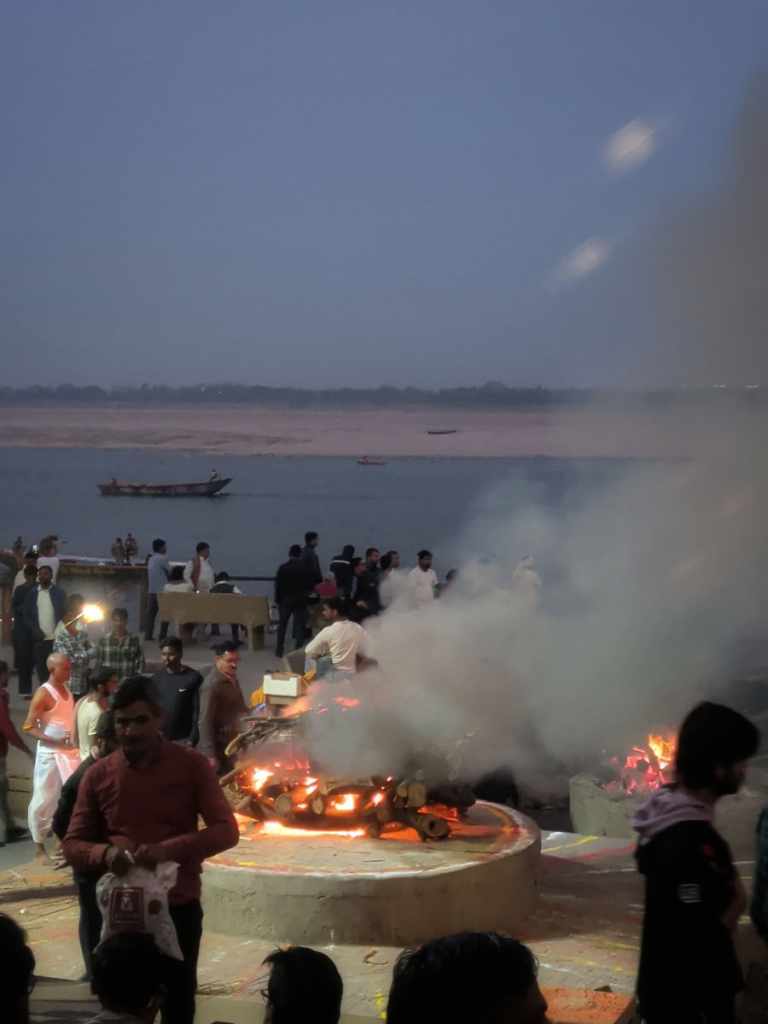
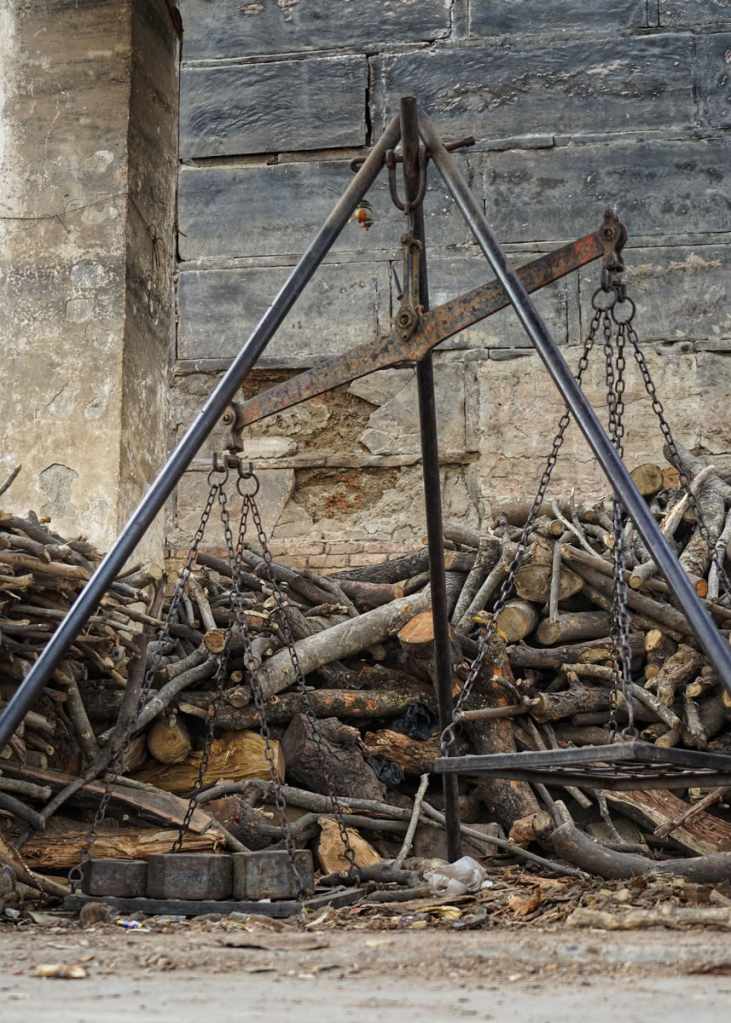
One evening we go to the cremation ghat. We sit perhaps ten metres away from the pyre that is about to be lit. Wood is stacked — logs, straw, a body, then more wood. There are no features, no visible face, no sign of whether the person was a man or a woman. Everything is bound in cloth. Men begin to walk around the pile in slow clockwise circles. A priest kneels and holds a bundle of straw into a small flame. And then it catches. Dark smoke rises into the night sky. The men sit down on the steps in front of the fire, so close they must be able to feel the heat — the heat of their loved one burning. We cannot feel it yet. But we hear the wood cracking, sharp and irregular. We smell it. My grandfather comes to mind. My grandmother. My father. My best friend. All those deaths and funerals. The fire changes its voice. A fine prickling sound joins the cracking. The smoke turns from black to white. Now, faintly, we feel the heat on our faces. I stare into it. Another body is carried down into the Ganges to be washed. Another pile of wood is being built. Death here is not an interruption. It is a sequence.
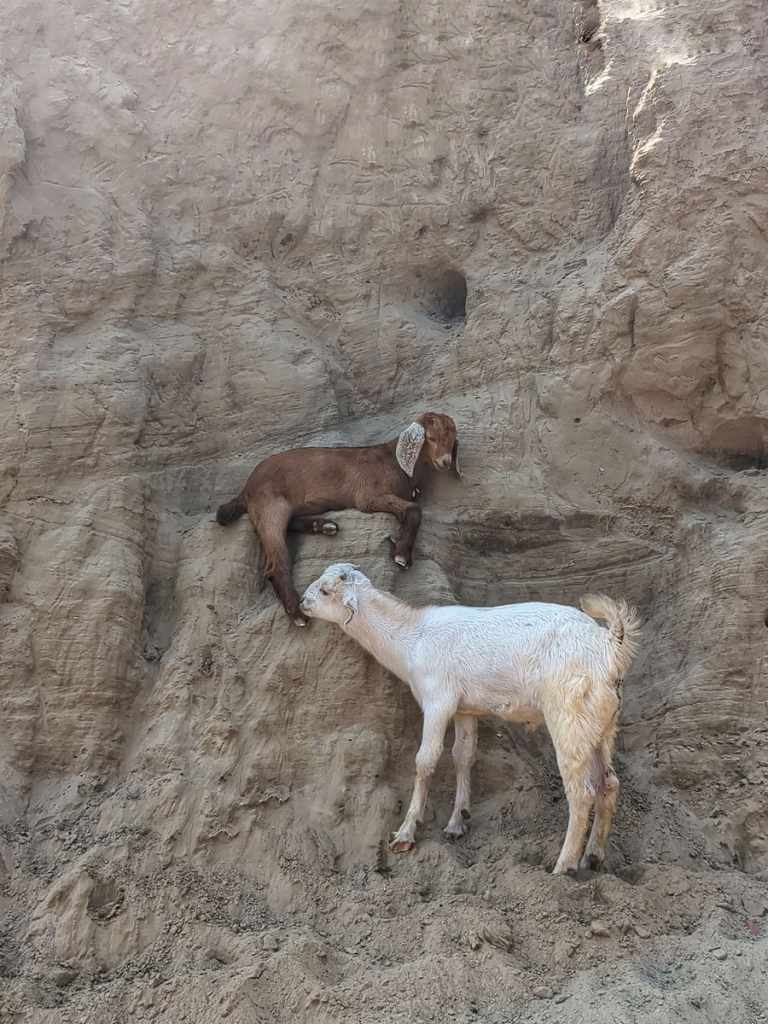
At that moment three white goats walk up the steps as if they had been sent. One comes straight toward me and begins to nibble at the hand I have stretched out without thinking. I stroke its neck, its impossibly soft ears. There is nothing else in the world. Only me, the wounds, and the goat. Tears come without fight and I say my final goodbye to the people that were so dear to me. As we walk away I take one last look. The fabric has burned off. For a brief second I see a head, a face, before the smoke closes again.
We walk in silence.
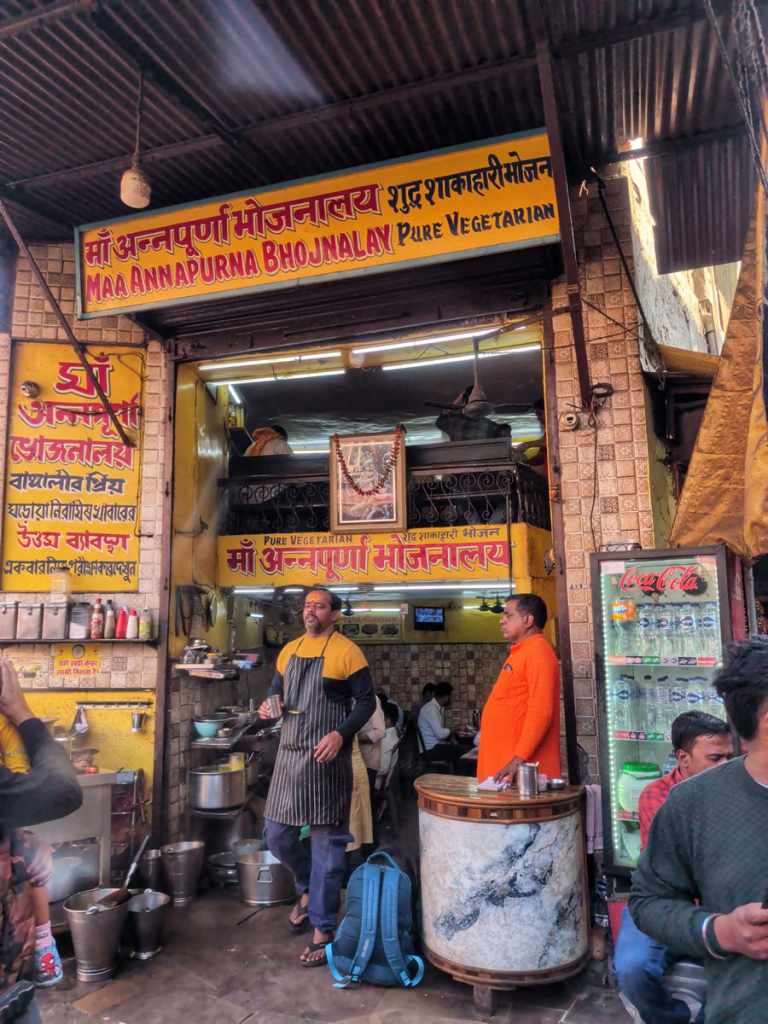
The city feels darker tonight. A man falls into step beside me and we start to talk. The conversation, turns unexpected without warning towards suicide. We want to go to the Bowl of Compassion, but the restaurant is closed. Only the old painted letters remain. A man standing nearby tells us the owner has died. The little puppy we have been feeding for days is not drinking anymore, he is to weak. Tomorrow a doctor will come an pick him up. We can only trust and pray.
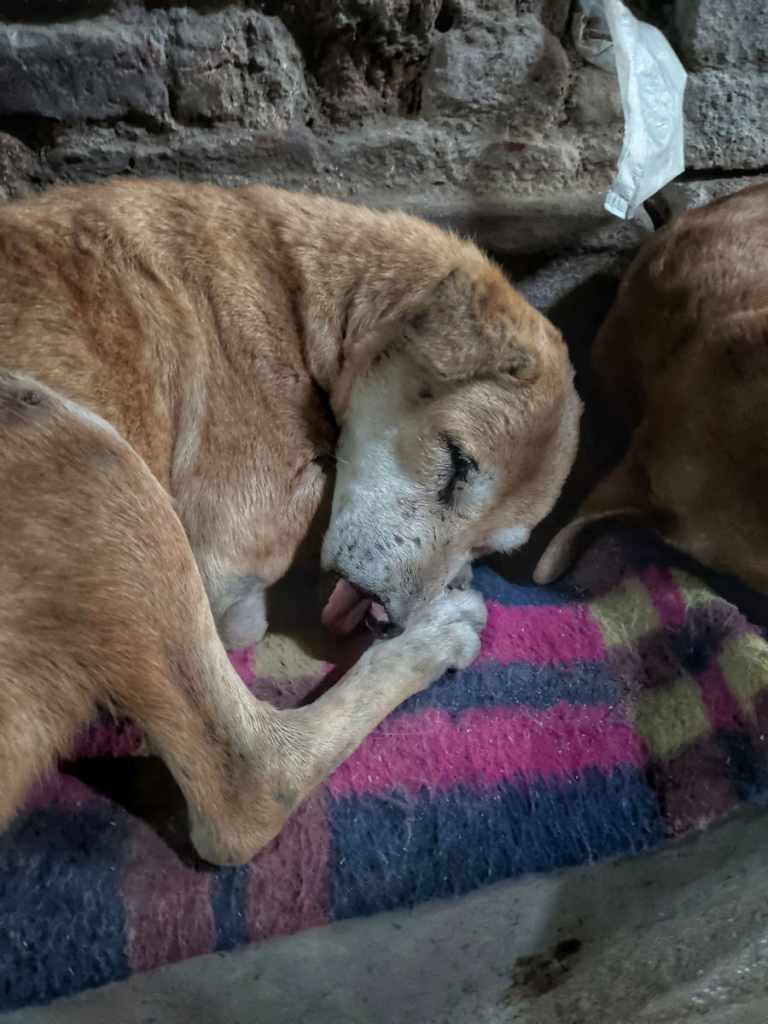
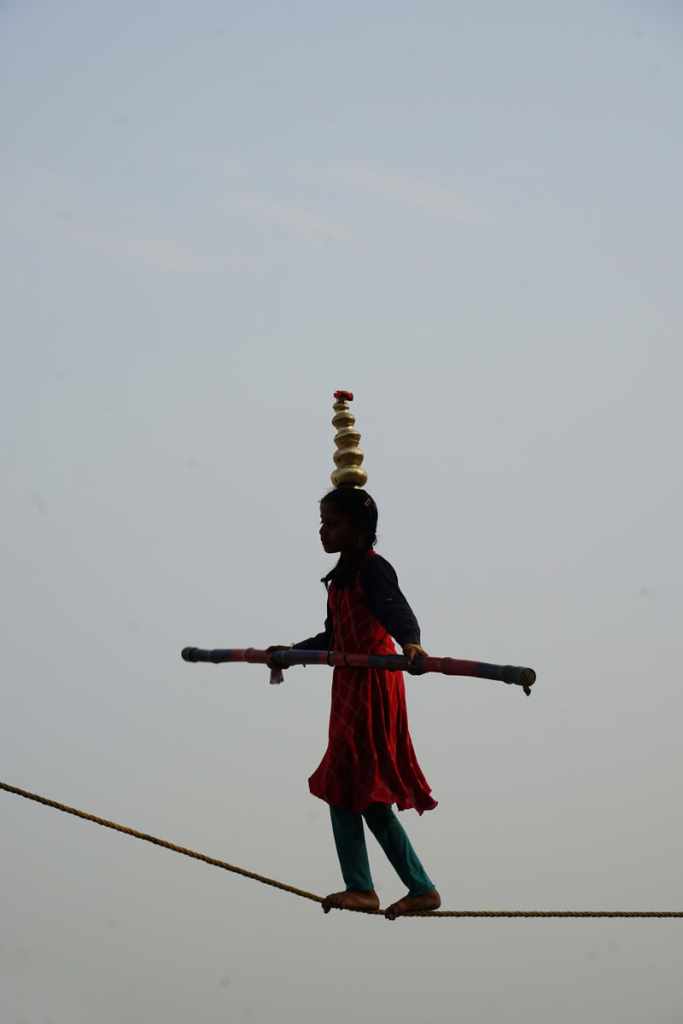
We light a cigarette. After so much death it feels appropriate. And then life, stubborn and luminous, keeps appearing. A girl not older than five dances in a narrow hallway. Four dogs lie pressed against each other; one sleeps with its tongue falling out of its mouth. An old woman sits in the entrance of her house, scrubbing metal pots while a tiny mouse steals food behind her in the kitchen.
In Varanasi life and death do not stand on opposite shores; they move beside each other like two currents in the same river. The fires burn while children chase kites above the rooftops, while tea is poured, while someone bargains for flowers a few steps away. Sitting at the ghat I let my own grief enter the flames — not as a ritual that belongs to me, and not with the presumption that it mirrors what the family beside the pyre is living through, but as a quiet inner gesture: to give the weight of all those absences to the fire and watch the smoke carry it somewhere beyond my reach. As the evening gathers and we walk back through the alleys, something has changed. The heaviness of the day loosens. I have not left the people behind — only the burden of their lost bodies. What remains is their love, and that doesn’t weighs anything.
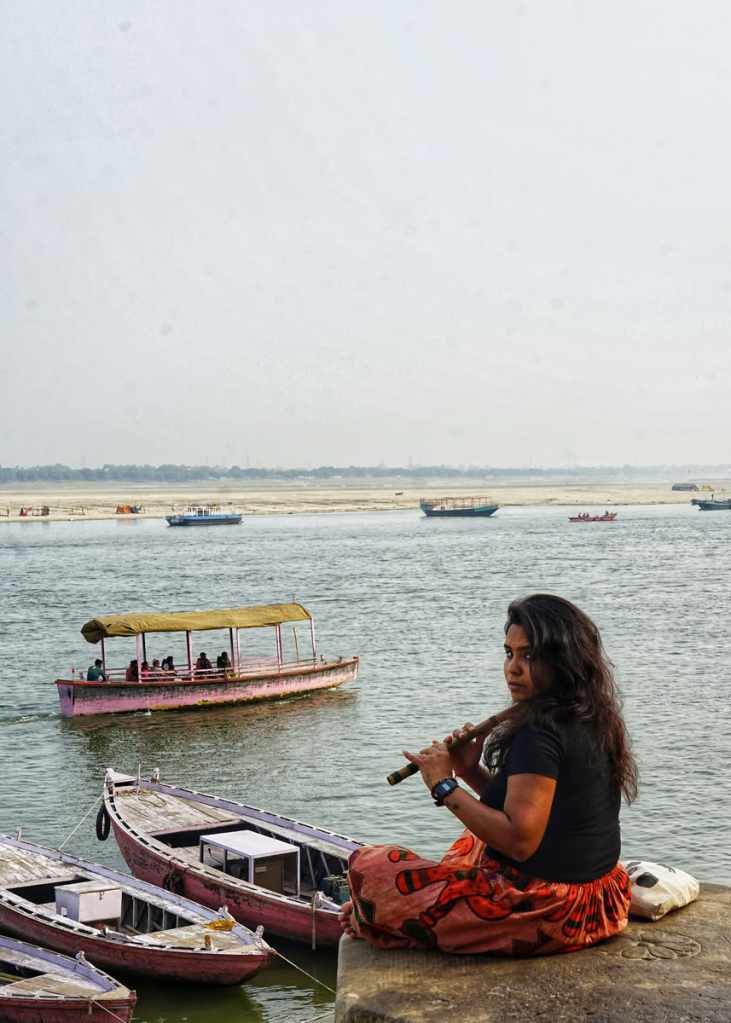
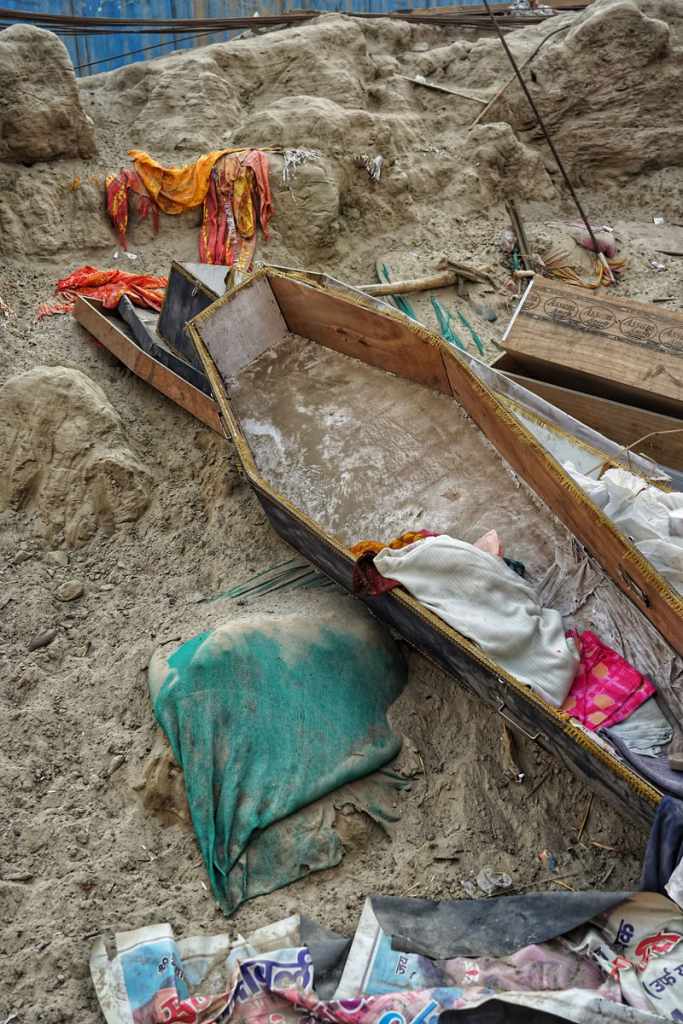
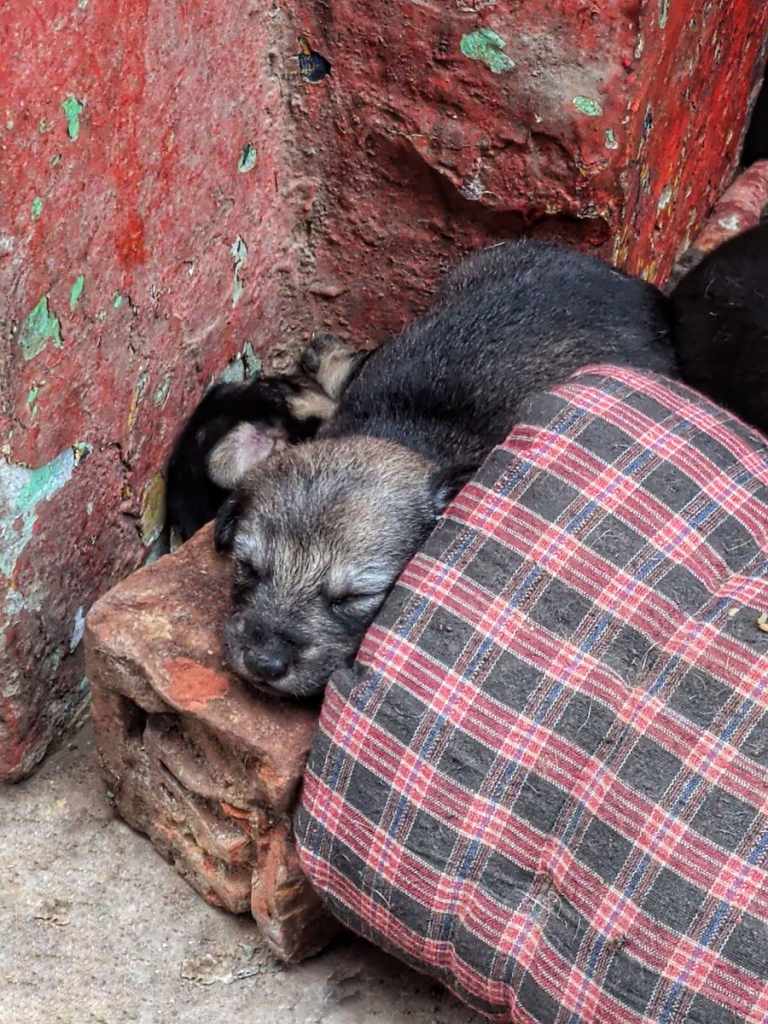
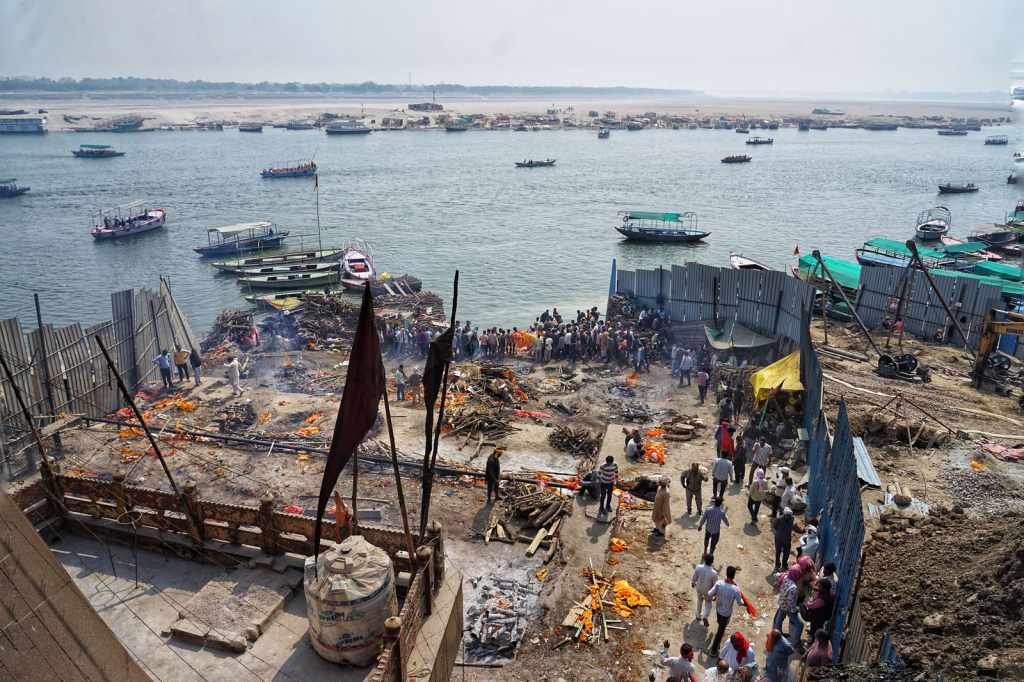
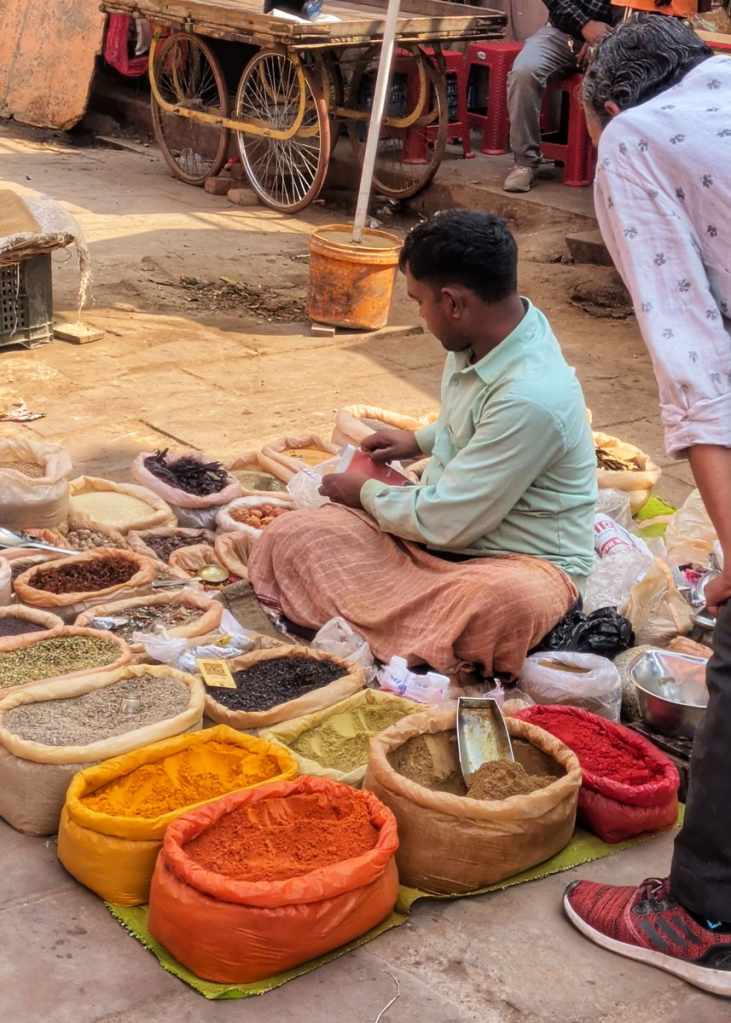
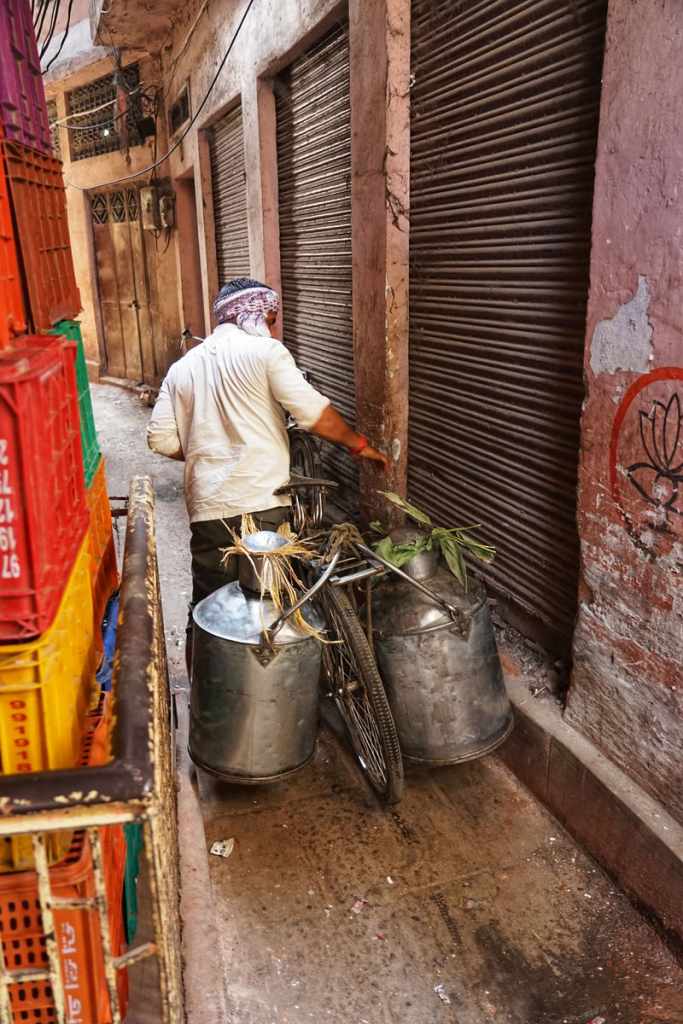
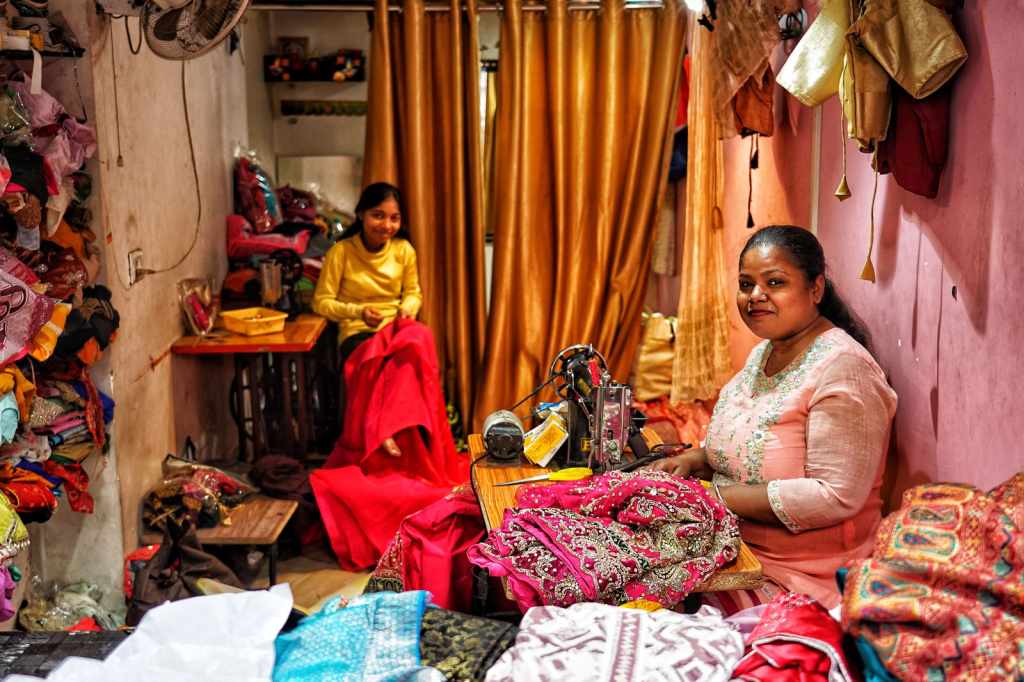
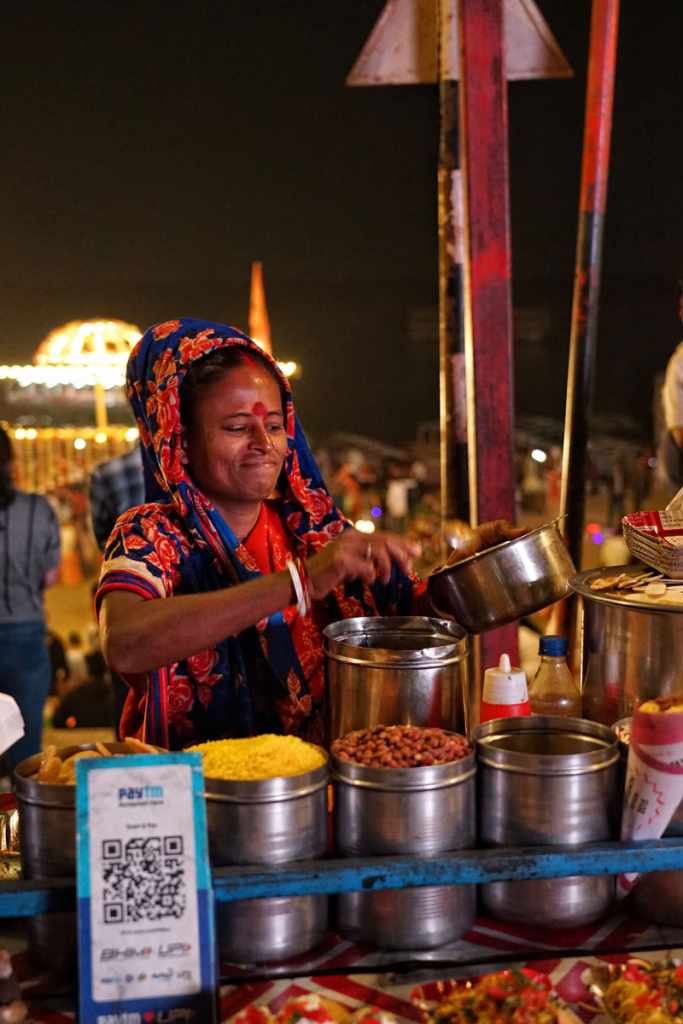
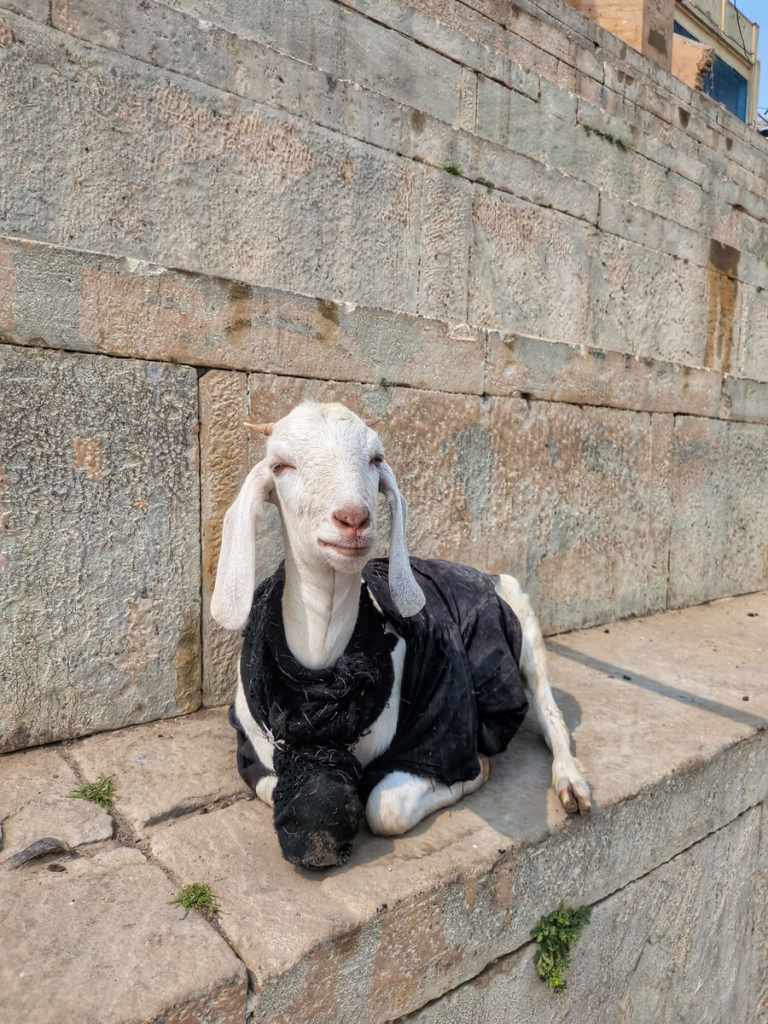
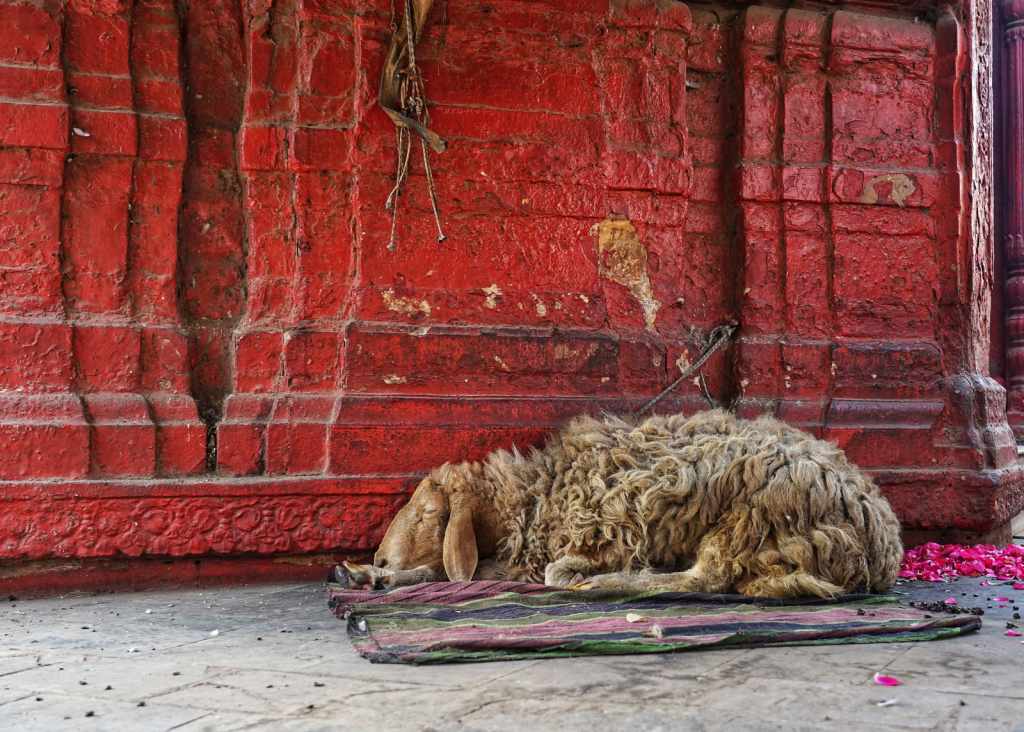
And all of that, my friends, are only the things I encountered at the ghats. But Varanasi is not only fire and river. It is an organism of stone and sound, a labyrinth of narrow lanes where cows stand like patient gatekeepers and scooters insist on passing anyway, their horns stitching a constant high-pitched line through the air. Dogs sleep in impossible calm in the middle of the flow, goats nibble at cardboard, cats slip through doorways, monkeys survey the scene from balconies like small, unpredictable gods. Bells ring from unseen shrines. Someone laughs. Someone shouts. Someone calls out for chai. The whole city moves in overlapping rhythms — mooing, honking, chanting, bargaining — it should be chaos and yet somehow it works.
And then there is the Golden Temple, the Kashi Vishwanath, a bit hidden behind a vast new building complex. The temple itself is tiny. It is density. Devotion pressed into a few square metres. People who have travelled for days just for a few seconds in front of the lingam. The gold above, the murmured mantras below, the constant movement that is also a still point.
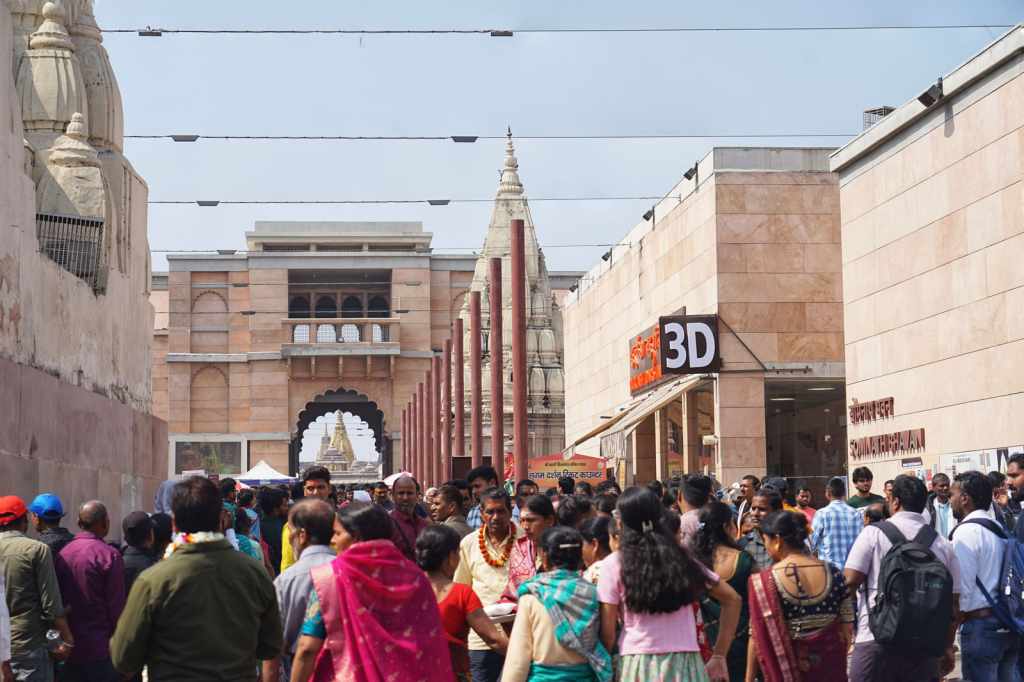
I love the intensity of it all. The aliveness. The vibration. The feeling that everything is happening at once and nothing is excluded — birth, death, prayer, business, sleep, laughter. The fire of Shiva is not only in the cremation grounds; it runs through the streets, through the bodies, through the soundscape. And I can be with it. I am not overwhelmed. Perhaps Tiruvannamalai prepared me well. Perhaps I was simply ready. But there is a deep recognition in me, a sense of: yes, this too.
Only one modest proposal for the future of this ancient city: ban scooters from the alleys. Or at least give them enlightenment so they no longer feel the urgent need to reach moksha at full speed while brushing past my elbow with three passengers and a sack of vegetables.
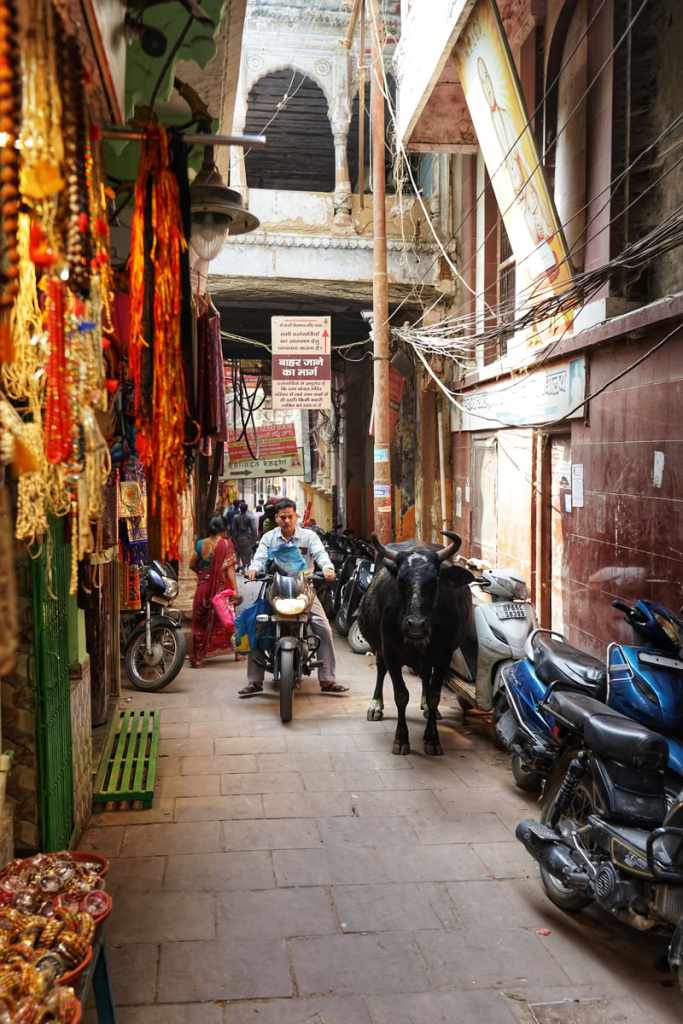
Because apart from that — I love this place. Completely.
Then there is the other layer of the city — the one that does not reveal itself in rituals or encounters, but in conversations. Again and again we hear about the changes. For me, Varanasi is a moment in time, a single inhalation. For the people who live here it is a long story, and the tone of that story is shifting. One local calls it “politics turning pilgrimage into tourism,” and the sentence stays with me. Everyone we speak to places the emphasis somewhere else — on opportunity, on loss, on infrastructure, on survival — but beneath the different perspectives there is a shared awareness that what is changing is not only the surface of the city, but something much more delicate.
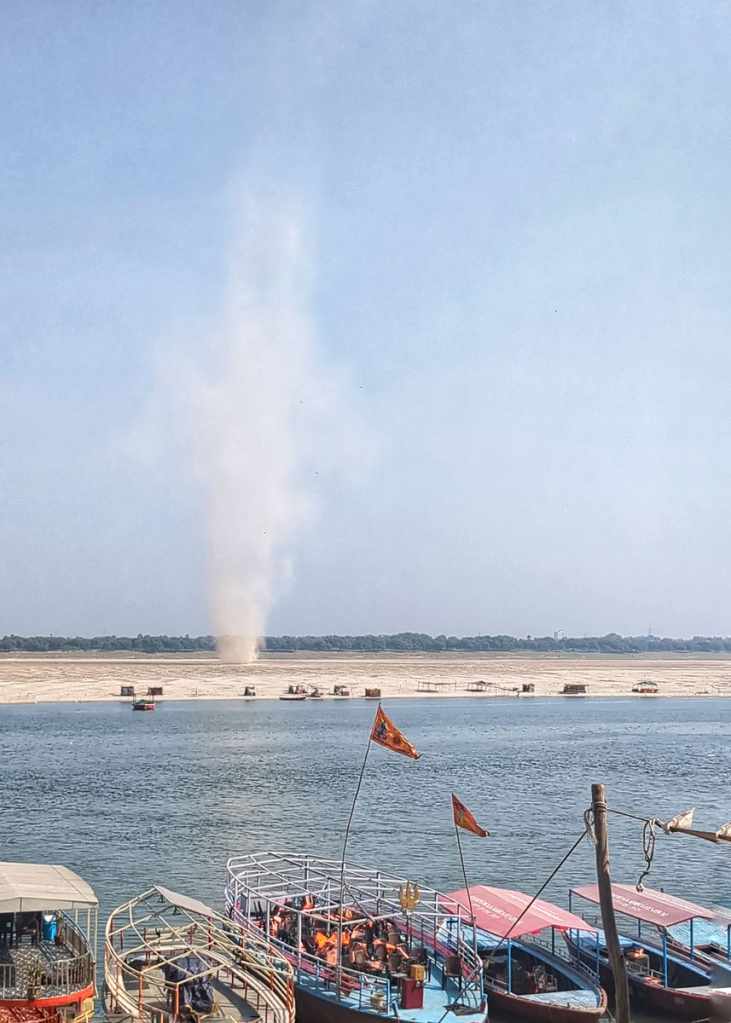
The main cremation ghat is being rebuilt; a modern crematorium is under construction, partly because during the monsoon the river has risen high enough to carry human remains into the streets. A cable car is planned to transport tens of thousands of people every day from the railway station to the ghats. More and more new guesthouses appear in the old city, illegal but comfortable, with air-conditioning and private bathrooms, making it difficult for the small, traditional places to continue. The number of boats on the Ganges has multiplied, bringing regulations to a river that for centuries seemed to belong only to current and prayer. The mosque, fenced and guarded, stands in the charged space of histories that are far older and far more complex than anything I could begin to understand.
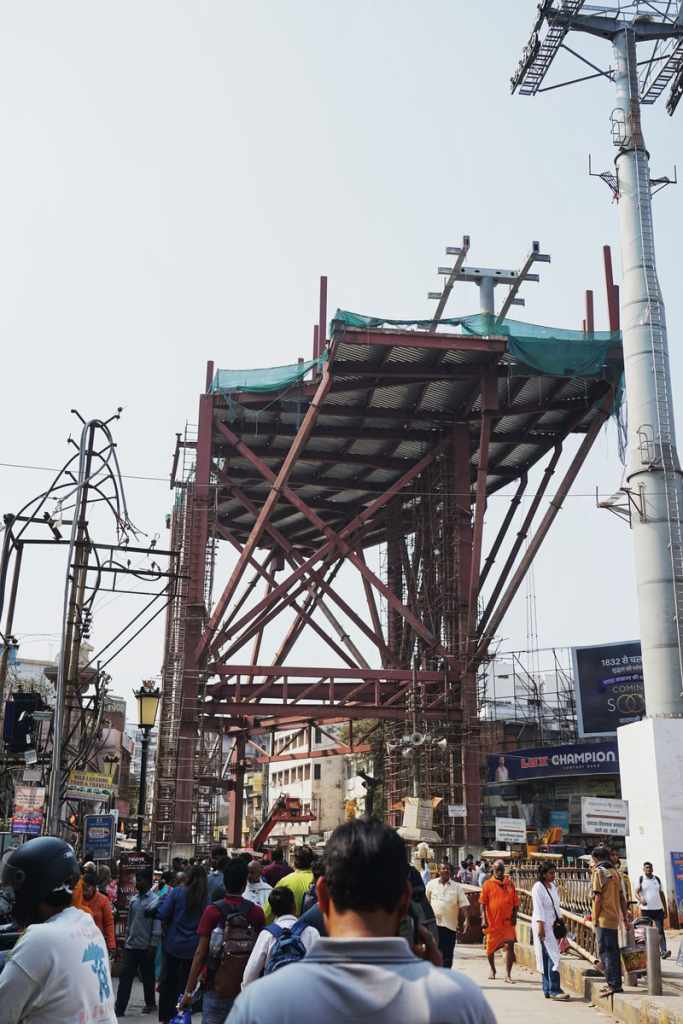
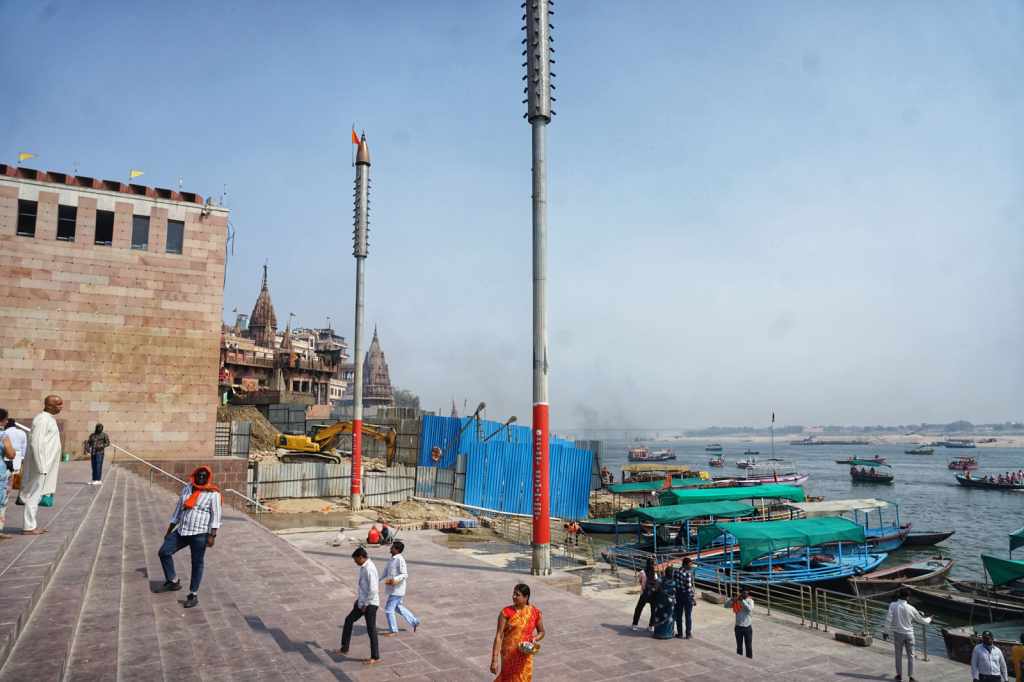
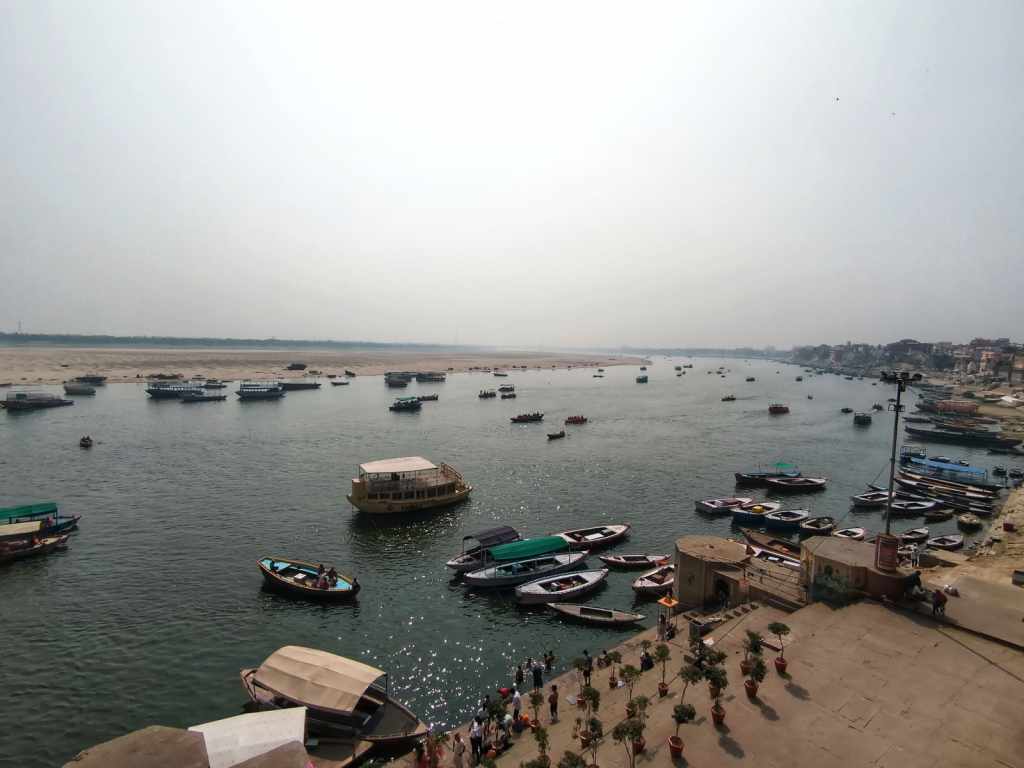
All of this can be read in many ways. As improvement. As loss. As necessity. As violence. As progress. As protection. I realise how little I know, how quickly an outside gaze wants to form an opinion where depth would be required. These processes move through layers of economy, religion, identity and daily survival that are not visible to someone who is only passing through.
So I do not want to judge.
I can only listen, and feel the tenderness that has grown in me for this city that has begun, in its overwhelming, contradictory way, to feel like a relative. And I catch myself hoping, quietly and without knowing what that would even mean in practical terms, that in all these transformations it will not lose what I have felt so strongly here: that raw, flickering, unpolished soul that lives between fire and river.
 An unmapped life
If you feel like responding, I’m listening.