When you read this, I will already be far on my way through Rajasthan. But as I write these lines, I am sitting on the night train from Varanasi to Jaipur — 852 kilometres, nineteen hours. By the time we arrive, I want to have finished this post, closing the train doors firmly behind me. And this is not the only thing that is different about this post. Before I begin, I want to add a small disclaimer: I don’t want to exaggerate. My experience here cannot possibly be the standard. In other parts of the train I hear laughter and lively conversations. This is simply the story of what happened in my small corner of the carriage.
The staring already began at the station. Not only curious, but the kind that makes your body restless, your thoughts louder, your breath shorter. In the train it continues — mostly shy, almost embarrassed. Every time I look up, a pair of eyes quickly turns away.
Our compartment is a 3A sleeper: air-conditioned, six beds on one side, two on the other, separated by a narrow aisle where people and chai sellers constantly pass through. We are booked for the lower and the middle one tonight.
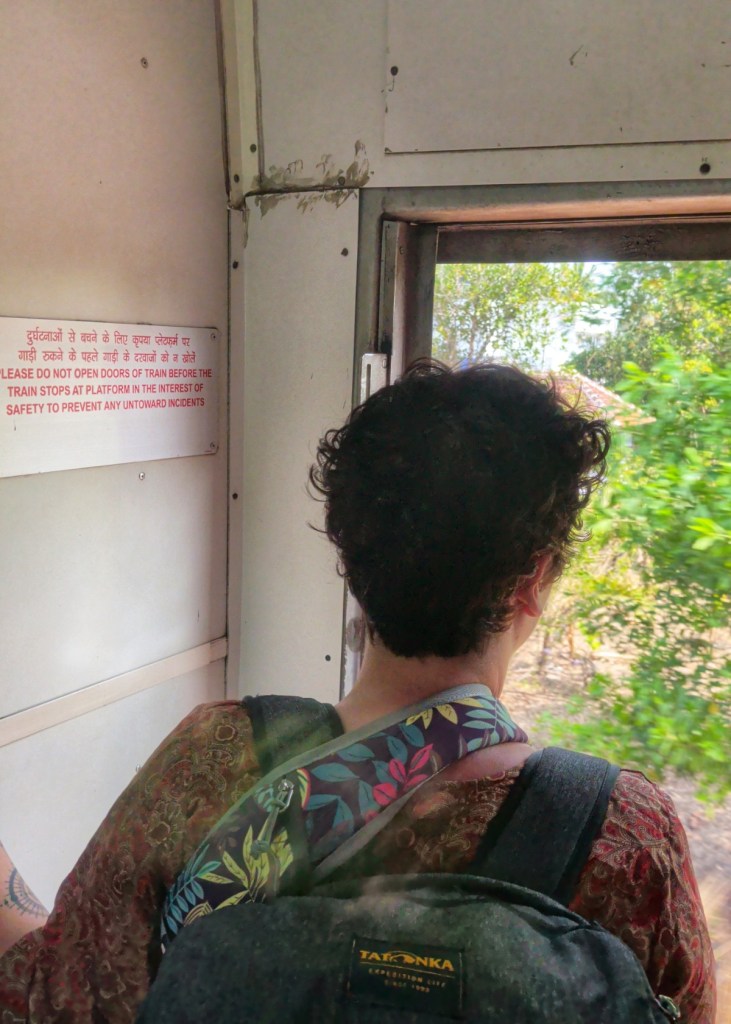
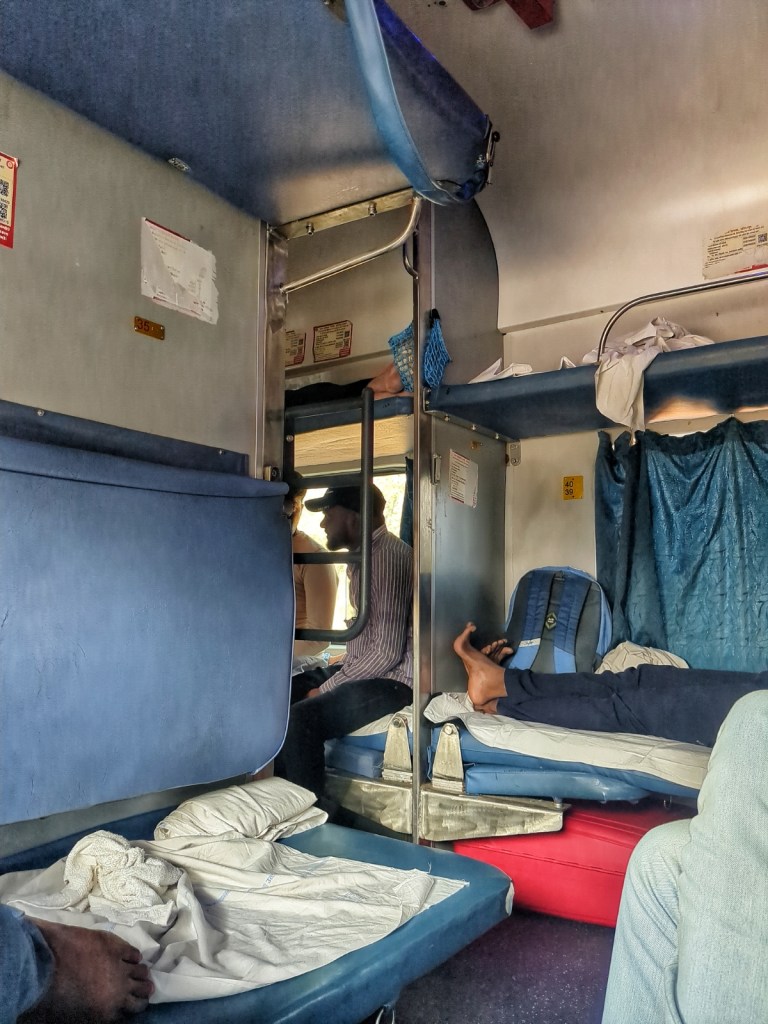
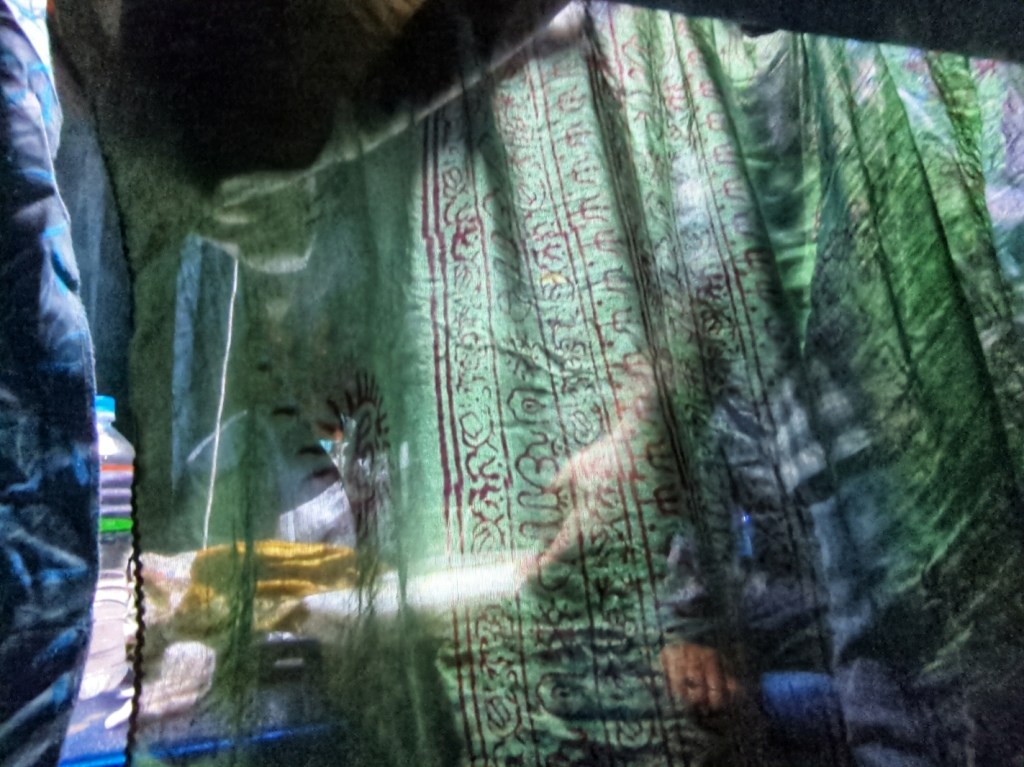
I am quite literally surrounded by men, and very aware of it. No make-up. The widest clothes I have with me. No jewellery. An old strategy: reduce the outline of the body, lower the signal, try to become invisible. Somewhere further down the carriage there are other woman, but the metal walls leave me strangely isolated. The men don’t speak English, and we don’t speak their language, so there is almost no communication between us. It makes hard to connect and it adds to the strange atmosphere. Somehow we agree with them to go to bed in about an hour. Or so we think. Around nine Willem Jan and I prepare our beds: two cotton sheets, a woollen blanket and a pillow. The others keep talking — phone calls on speaker, laughter filling the metal shell of the carriage. I lie down, unsure how to position my body. Every direction feels exposed. I am no longer at eye level; I am a horizontal surface in their field of vision, a buffet of limbs and fabric. Maybe half of it is only in my head, but that doesn’t make the discomfort disappear. So I use my old hostel trick and hang one of my scarves up to create a small curtain — a suggestion of a border. I feel absurdly proud of this little invention and for a few minutes I rest inside my self-made room. My nerves calming down. I am always surprised by how much impact such a tiny piece of fabric can have. Then two more companions arrive with food, and the space fills with more movement, smells and crinkling plastic. I am happy for them, truly. I want them to enjoy their evening. I just want a little rest too. Eventually they prepare their beds as well. Pullover off, night mode on. The guy beside me lies down and within thirty seconds the first of many thunderous snoring breaths fills the compartment. I laugh out loud. What else can you do?
Sleep proves difficult. The steam engine beside me refuses to quiet down. At some point I give up and improvise: one earplug in the right ear, headphones with classical music on maximum volume in the other. Lying on my side, it becomes somewhat bearable. I read on my e-reader.
At around two in the morning I feel ready to try sleeping again. I am just so tired. I get up once more to go to the bathroom. The guy in the two-bed section at my feet gets up shortly after me. When I return and settle back into bed, he lies down again, covers himself with a blanket, switches on his phone — and suddenly the blanket begins moving up and down in a fast, unmistakable rhythm.
My breath stops. My eyes widen. No way. That is not happening. He’s just scratching himself, right? The movement becomes faster, and so do my thoughts.
Am I overreacting?
What if I am wrong?
What if I am not?
Should I do something?
What if it escalates?
What if I do nothing?
One thought cuts through the noise, hot and clear like freshly blown glass: this is not okay. But together with it comes a paralysing fear that has everything to do with the situation — night, narrow space, another country, bodies above and beside me, nowhere to go, being the only woman. My heart pounds so loudly I am convinced everyone must hear it. Confrontation does not feel safe, but I also don’t want to remain quiet. Remain… like this.
I close my eyes and look for a place inside that is not ruled by the scene around me. A quiet point. A small light that has nothing to do with the narrow bed, the dark compartment, or the man a few feet away. I have touched this place before — in meditation, in therapy, in moments where fear tried to take the entire stage. It is never loud. It doesn’t fight. It simply exists, steady and untouched beneath the noise. And as soon as I find it, even faintly, something shifts. The situation outside has not changed. But I am no longer entirely trapped inside it. There is a little space again between what is happening and who I am. From that small space, the next step becomes visible. Not dramatic. Not heroic. Just possible. Civil courage without putting myself in danger. I turn, shift, pick up my phone. The small glow becomes my private space, a border made of light. I don’t look again. I don’t want to see.
From this first fragile border I gather a little more strength. With clenched teeth I slowly pull myself up. It takes everything I have, but I move and wake Willem Jan. I ask for help.
And this, too, is not a small step. Because asking for help means acknowledging — out loud and in front of another person — that something is wrong. It means allowing the vague unease to take shape as a reality. Naming it. Making it visible. For a moment I hesitate, because I know what that step changes: once spoken, the experience leaves the private chamber of doubt and enters the shared world. It becomes something real enough to respond to.
We speak quietly. Willem Jan shifts his position so he can keep an eye on the man, who by now has stopped whatever he was doing. Nothing dramatic happens. No confrontation. No raised voices. Just a small rearrangement of bodies in a narrow space.
But inside me something important has shifted.
Strength, I realise, is rarely the surge of courage we imagine in stories. It is not a sudden feeling that sweeps fear away. It is much smaller and much more deliberate than that. Strength is the slow decision to move despite the pounding heart. The quiet act of sitting up. The whisper that wakes another person. The choice to create witnesses, to widen the circle of awareness just enough that you are no longer alone with what is happening.
Strength is not a feeling. It is a sequence of very small actions. Each one barely visible from the outside. Each one a tiny reclaiming of space.
Still, when I lie down again, tears collect in my eyes. Not so much because of what happened, but because of the magnitude of the inner struggle. The doubt. The constant question whether I am exaggerating. And most importantly: how much the situation paralysed me. How quickly my body froze, how long it took to find even the smallest movement. That is the hardest part to accept — not the moment itself, but the force it had over my body and mind.
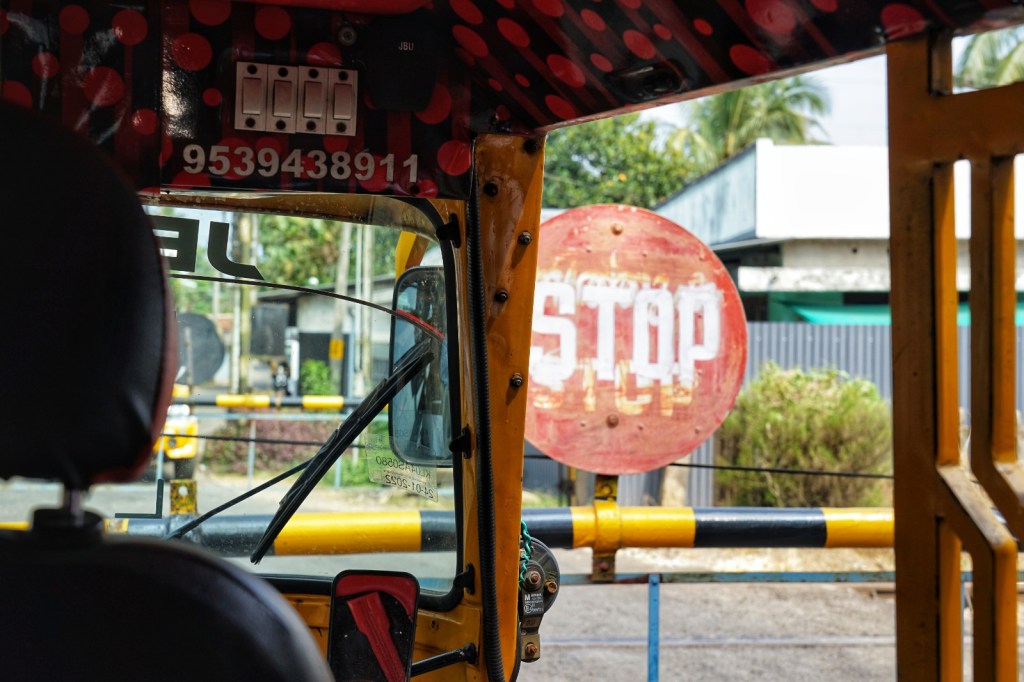
Again India shows something I know from daily life, but here the scale feels magnified. A part of the background code of moving through the world in a female body. A code written in small adjustments: where to sit, how to walk, when to leave, who to text, when to trust, when not to. The constant scanning of surroundings — distance, escape routes, witnesses, tone of voice, clothing, time of night. From how to pass someone in narrow spaces to choosing seats, holding keys between your fingers, sending live locations to friends, smiling just enough to de-escalate. And if something does happen, the responsibility arrives instantly and without invitation: to interpret correctly, to react appropriately, to not accuse falsely, to not endanger yourself, to not make a scene — or to make one if necessary. In those moments empowerment is not a slogan but a sequence of micro-decisions under adrenaline. What might look like passivity from the outside is often a highly complex survival strategy.
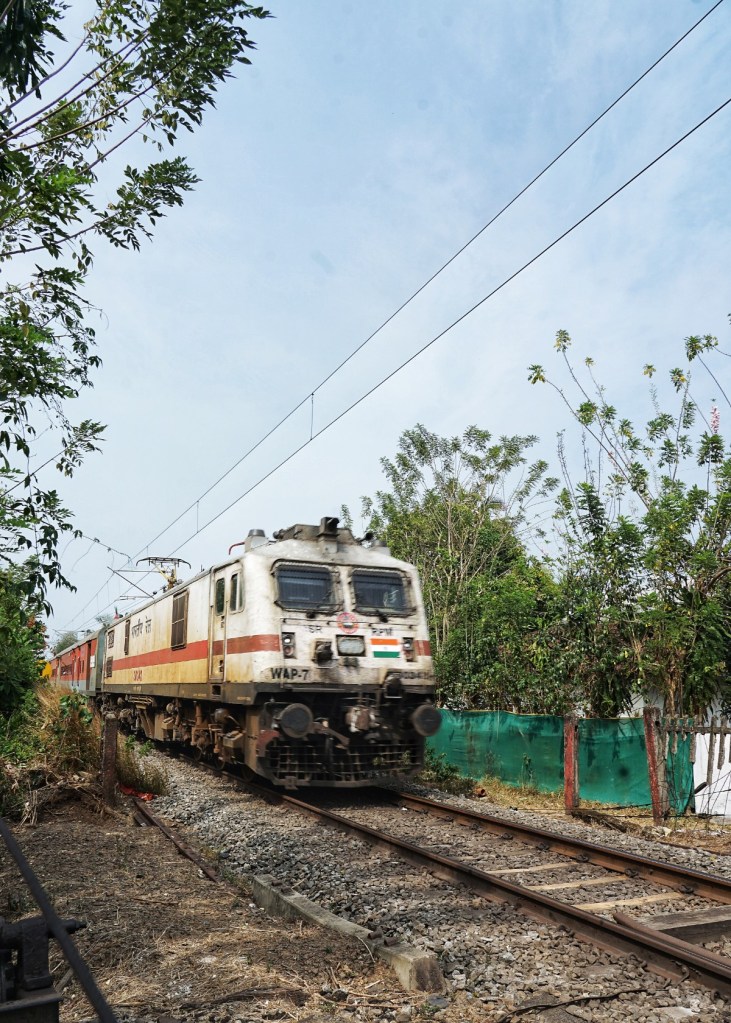
Lying here in this narrow bed, I realise that the exhaustion is not only from this situation or the lack of sleep but from a lifetime of these calculations — the endless balancing between visibility and invisibility, politeness and protection, trust and vigilance that women still have to go through. And sometimes the most exhausting part is the constant doubt that accompanies it — the quiet voice asking whether you are exaggerating, misreading, overreacting. Not everywhere, not all the time. Maybe. Hopefully. But in any case, it is still part of the game.
And yet something else exists now that did not exist for me years ago: the knowledge that even within this system I am allowed to define my boundaries in my own way and in my own timing. Waking someone up, sitting up, drinking water, writing this text — these small movements are not weakness but forms of agency. Not the loud, heroic kind, but the quiet, persistent reclaiming of space.
I am not only lying in a train in India. I am lying in the intersection of all the moments in which women have been told to stay quiet, to not make it awkward, to not ruin the atmosphere.
And I am also lying in the life I have built for myself — one in which I wake someone up, sit up, drink water, write, speak.
I pull the blanket closer around my shoulders and feel the hard line of my backpack at my feet like a small wall. And I know: you are not powerless.
 An unmapped life
If you feel like responding, I’m listening.