Rajasthan. For long, it lived in my imagination. A place dipped in gold dust and legend. A land of deserts and drifting caravans, of mirrored embroidery catching every glimpse of light, of intricate miniature paintings that seem to breathe if you look long enough. Camels moving like slow ships across dunes. Elephants adorned in color and ceremony. Turbans, saris, fabrics that glow as if they remember every sunbeam they’ve ever touched.
And yet—standing in front of our hotel in Jaipur, stepping out of the rickshaw—I feel none of it. Instead I arrive restless. The train ride here is still sitting in my bones, heavy and unprocessed, a journey I already know I don’t want to repeat. The introduction to Rajasthan is not poetic. It is raw and rough. It feels as though India has taken off its velvet gloves. Willem Jan and I are even talking about leaving. About escaping to Rishikesh. About taking a 20-hour bus ride just to get away from a place we’ve only just arrived in. That thought alone tells me everything about the force of this first impression.
Also Jaipur doesn’t make it easy at first. With around four million inhabitants, the city spreads wide, structured yet overwhelming in its own rhythm. Compared to Varanasi, which felt dense and spiritual, almost inward-facing or Kochi, soft and coastal, breathing with the sea—Jaipur is something else entirely. Larger, louder and more insistent.
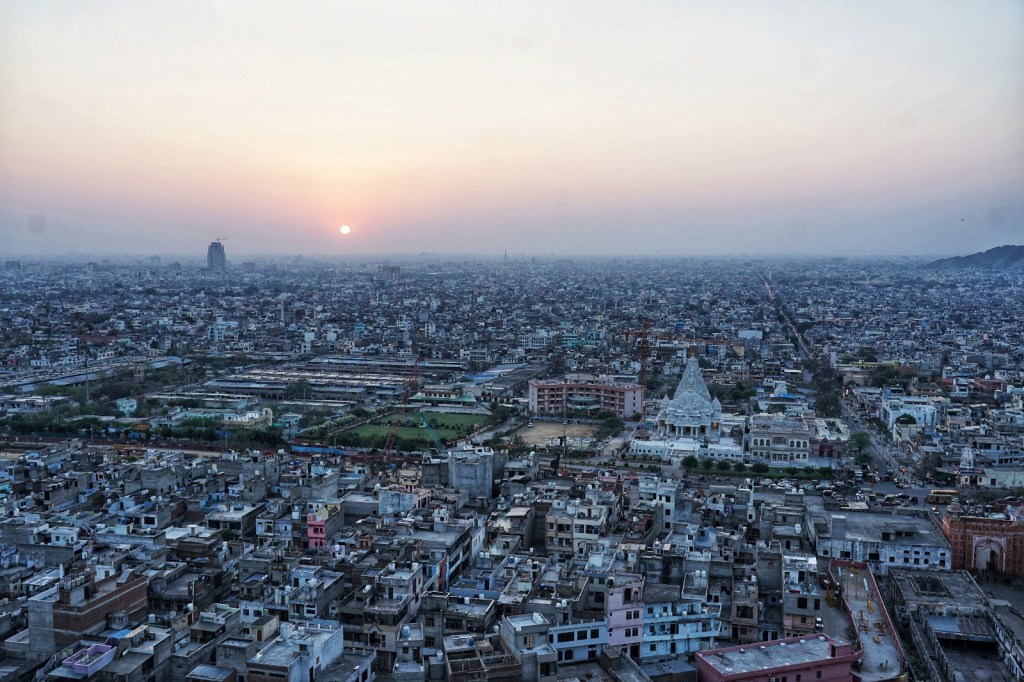
Our hotel sits a little outside the center. At first, that feels inconvenient—rickshaws in and out, always negotiating distance. But later, I will understand: it is a buffer. A necessary exhale between encounters.
On our first day, we ask to be dropped somewhere central. We want to ease into the city. Meet it gently.
But Jaipur has other plans. It buzzes. The traffic is relentless. Motorbikes weaving through impossible gaps. Cars, rickshaws, pedestrians, animals—all moving at once, all negotiating space in a choreography that feels chaotic and strangely precise. We pass through one of the grand pink gates, crossing from the outer city into the old, walled heart. At first, there are bookstores. Small kiosks. Then, almost seamlessly, they give way to jewelers, souvenir shops, endless boutiques displaying saris and turbans. I walk ahead. I know this dance. I think. The calling out, the inviting in. The polite “no, thank you.” The small smiles. But here the sellers step directly into my path. Arms raised to stop me. One of them grabs me—lightly, but firmly enough. I slip away. Step aside. Keep moving. My usual gentle refusals dissolve into avoidance and ignoring. I notice it more and more. The closing and tightening within myself. And with that I become faster, sharper, less available. I don’t like that. Because I believe—deeply—that kindness connects. That politeness opens doors. But here, it feels impossible.
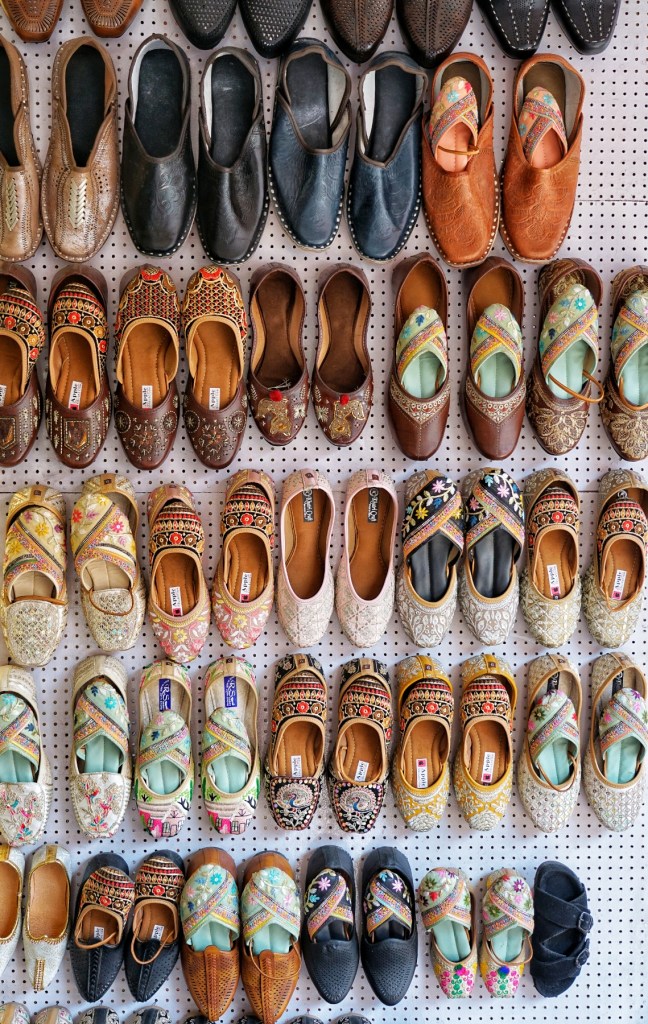
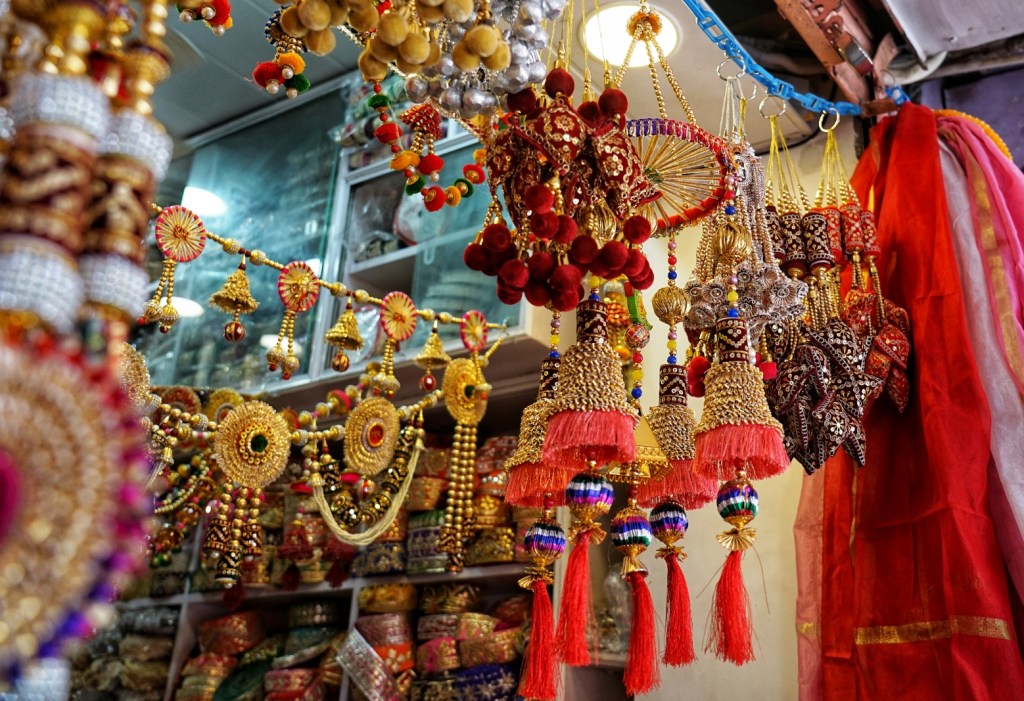
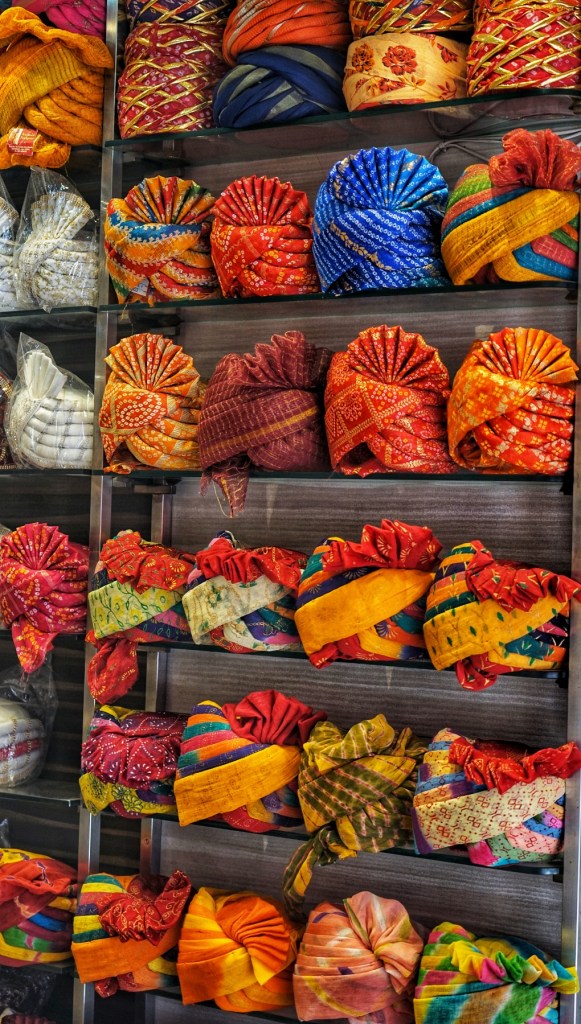
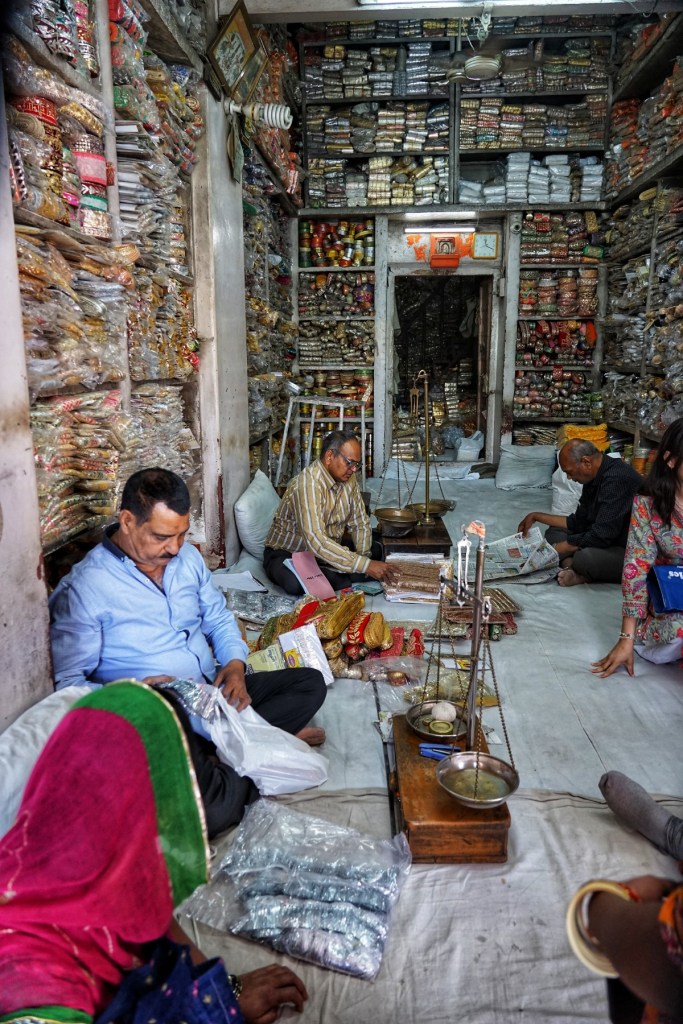
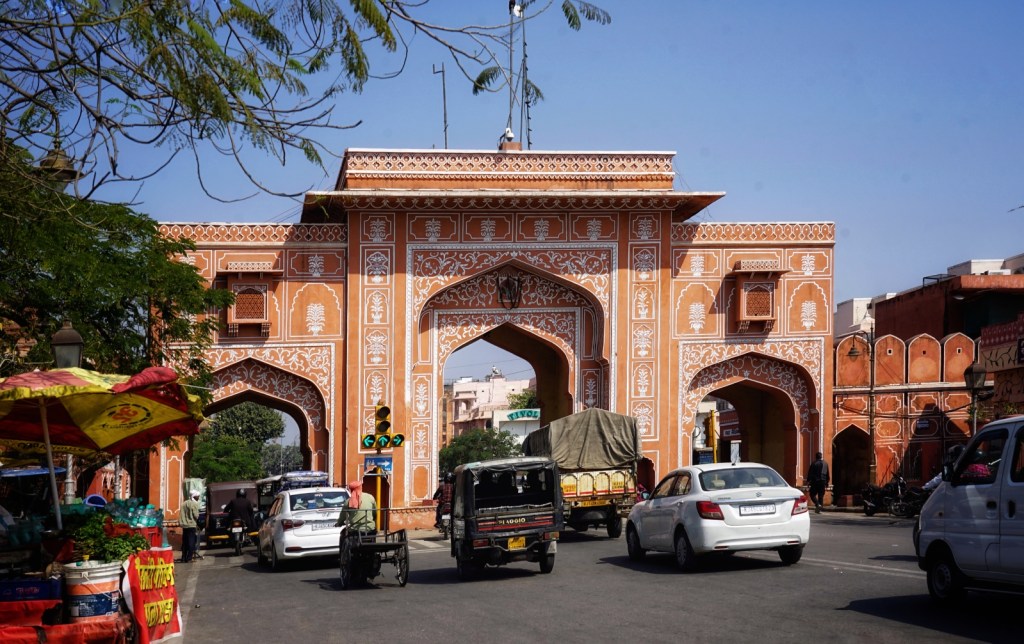
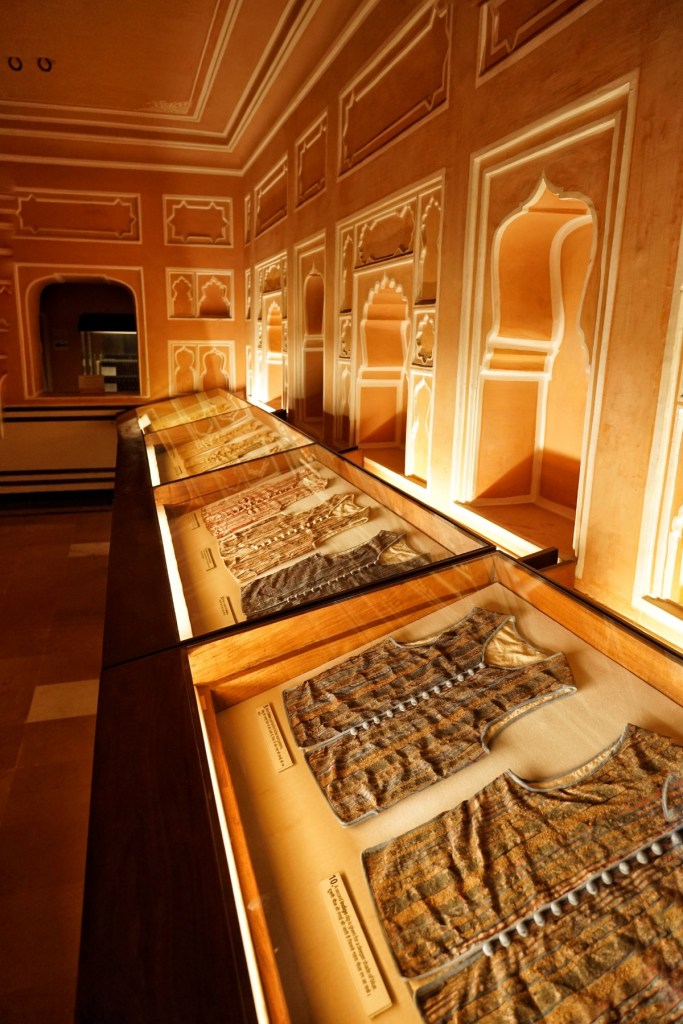
We find ourselves near the palace grounds—one of Jaipur’s main attractions. The City Palac is a blend of courtyards, gates, and museums. Royal garments. Weapons. Painted doorways. History curated and preserved. And it, being the the heart of the Pink City, ironically, isn’t pink at all. Instead inside the complex, pale yellow facades greet us instead—soft, almost sun-washed tones. The famous “pink” of Jaipur, I later learn, comes from the outer city walls and buildings, painted in a terracotta hue in the 19th century to welcome a royal visit—a color of hospitality, not dominance.
The entrance fee: 150 rupees for Indians. 1200 for international visitors. Almost ten times as much.
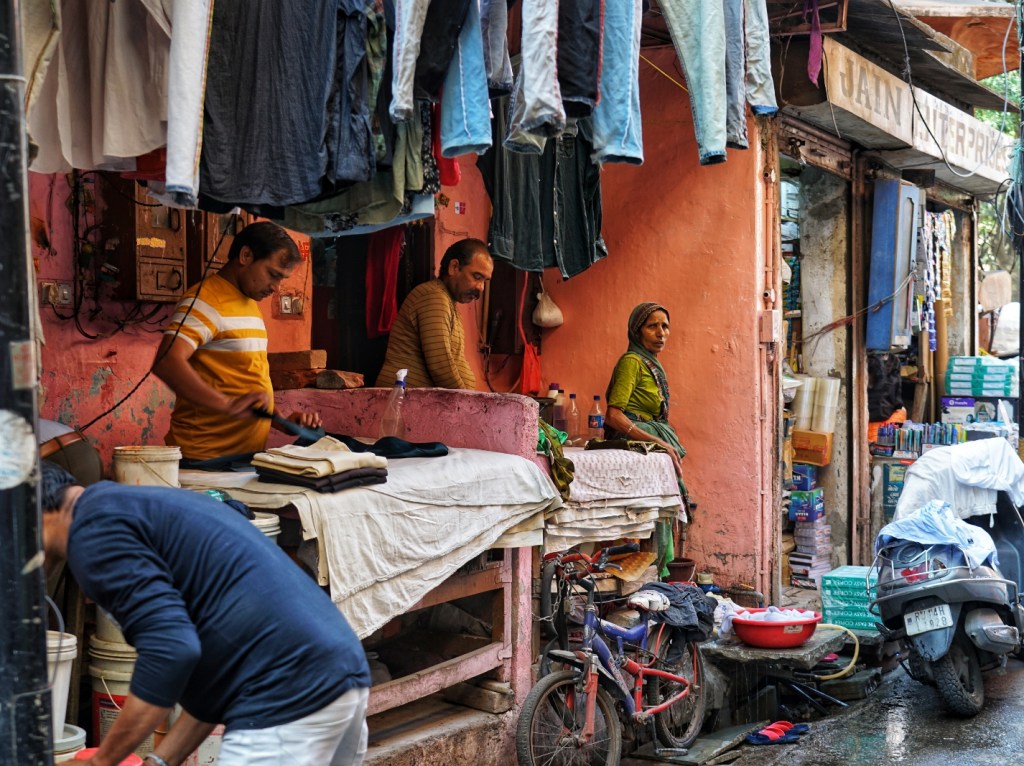
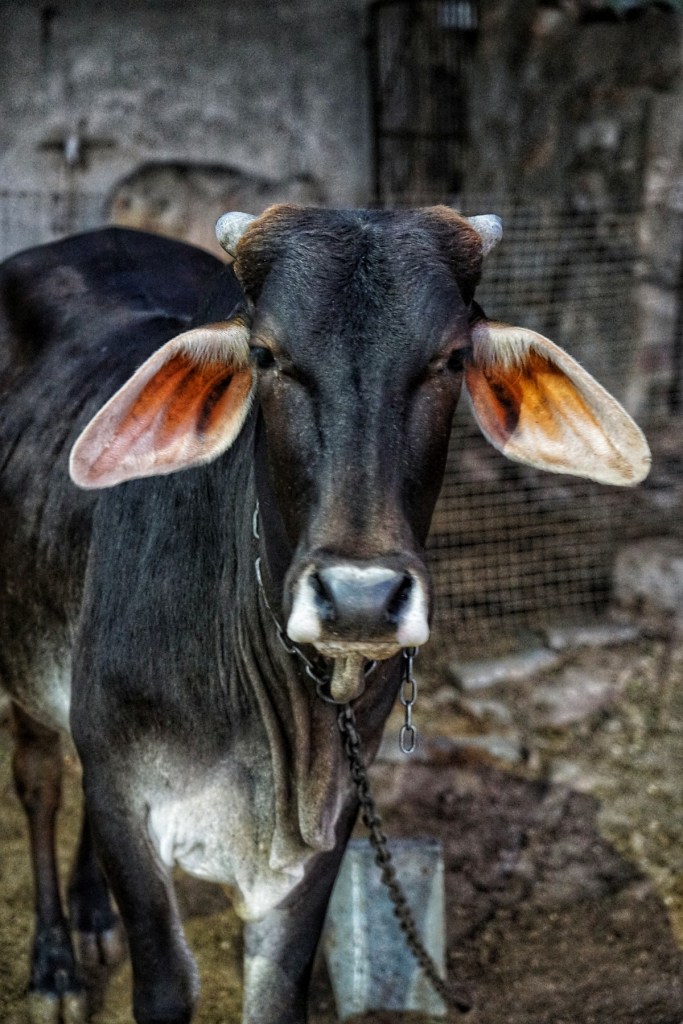
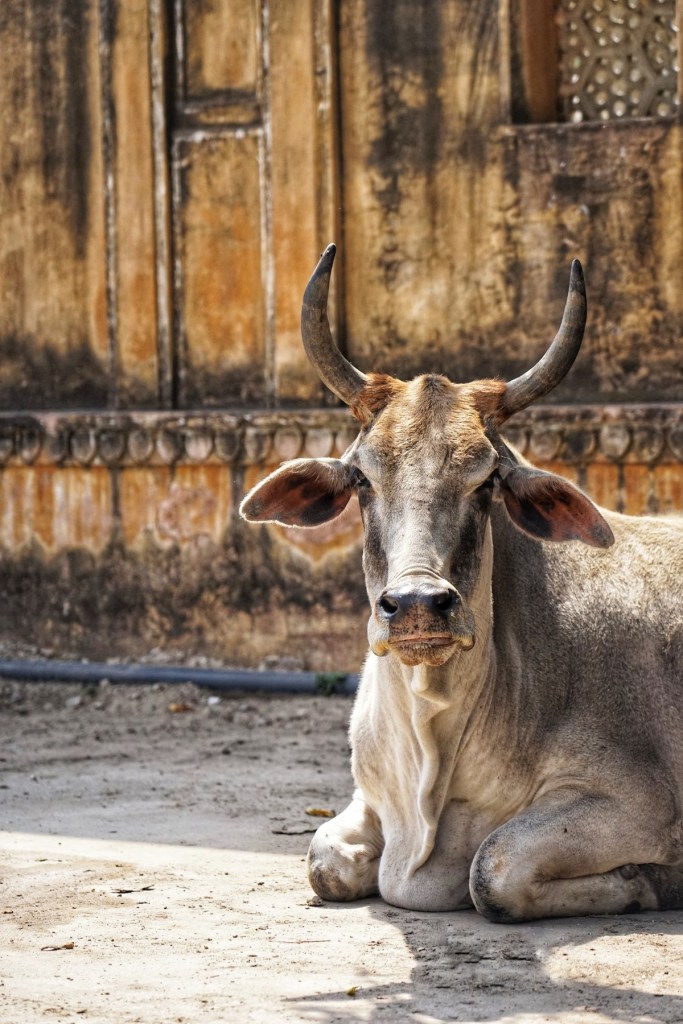
I pause. After two months of traveling, I’m used to paying more as a foreigner. But this feels different. Not just a price difference, but a separation. I’m not up for it. Willem Jan and I talk it over. What do we really want here? We are not looking for polished halls right now. Not for curated beauty. We are looking for connection. Something real. Something that meets us where we actually are—in the aftermath of that train ride, in the discomfort of arrival, in the slight disorientation that comes with a new place. So we don’t go in. Instead, we wander. Through smaller streets. Quieter alleys. Away from what is expected. And slowly my system begins to settle. We pass cows resting in the shade. Children playing, their laughter unbothered. Life unfolding without performance. Jaipur, without the buzz.
We walk toward the Govind Dev Ji Temple. Women in bright saris notice me. They smile—wide, genuine—and wave me over, calling me “Radhe” with a warmth that lands somewhere deep inside.
Before I can fully process it, I’m surrounded. Laughter. Hands. Phones. Photos. Ten, maybe more.
The photos, the curiosity—I’ve experienced it before.
But this time, it is different. Maybe it’s the contrast to what came before. Maybe it’s the timing. Or maybe it’s simply them who help me to carefully drop my shield and start opening up for Rajasthan again.
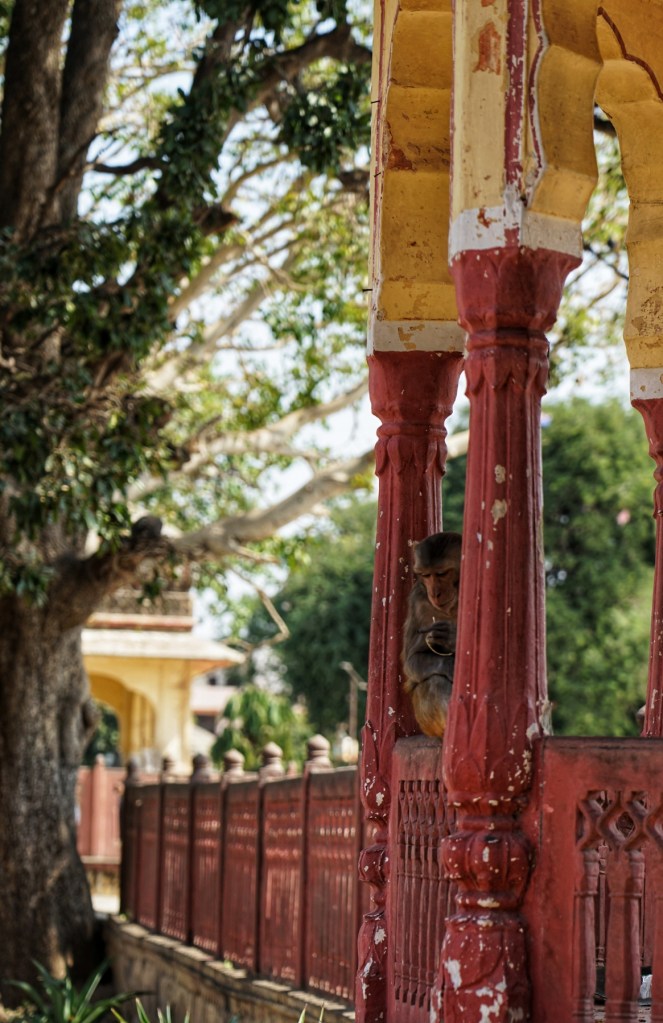
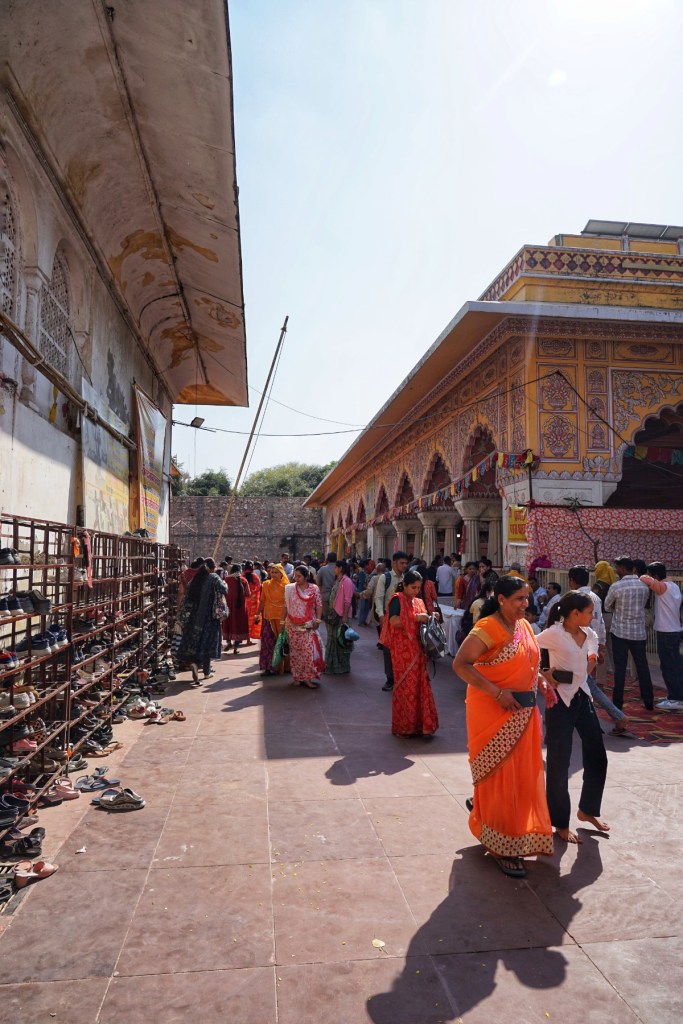
Walking into the temple, we are surprised to find a large crowd gathered around a stage, where two men sit and sing. We are invited to take a seat, and after a while I feel the urge to move closer—right into the heart of it all, among the Indian women sitting on the floor. I am greeted with wide smiles and gently guided forward, right to the front of the stage, no matter how often I try to refuse. I don’t want to take up someone else’s space, but they don’t seem to care. They want to share what unfolds now.
The performance reveals itself slowly with the help of the women around me. It is the story of Krishna and Radhe. Playful, mischievous, Krishna deeply human in his expression, while still a god. His wife Radha stands for devotion. For longing. For that quiet, unwavering pull toward something greater than oneself. Their story is not just romantic. It speaks of connection in a deeper sense—the meeting between the human soul and the divine. Not as something unreachable, but as something that can embodied.
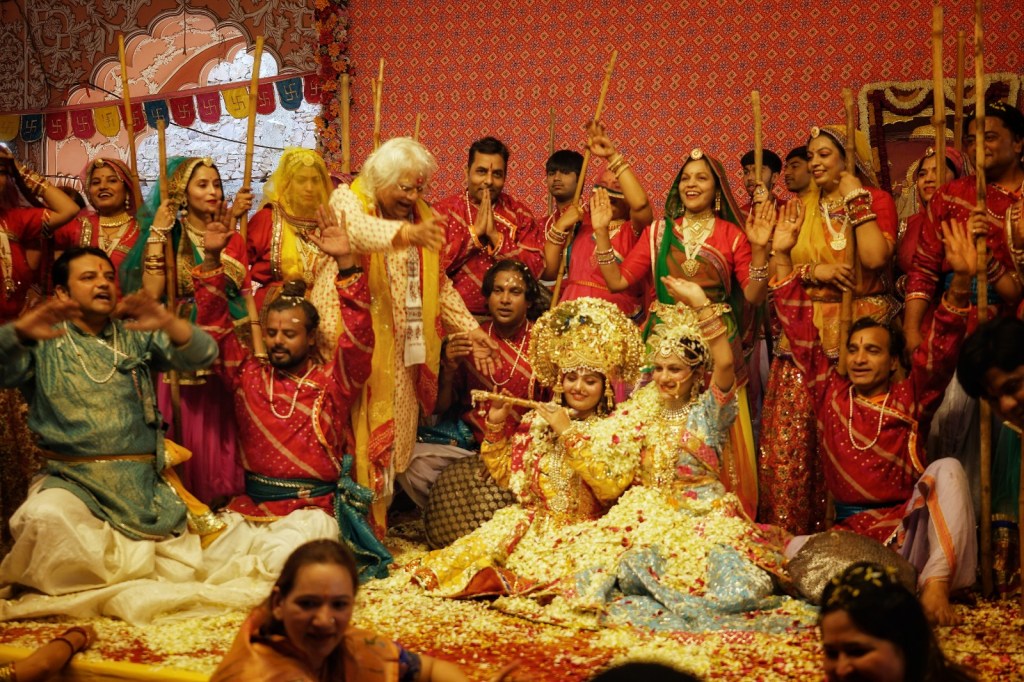
Than people begin to move through the crowd carrying baskets filled with flower petals. They scatter them over us. Petals land in my hair, on my shoulders, in my lap. It is the beginning of Holi, before the powders, I’m told. Nothing demands a reaction. You simply receive.
When it ends, two women turn to me and pull me in for a big hug. And I simply surrender into their arms.
And there it is again.
That feeling.
India.
Not the idea of it. Not the story.
But the pulse.
I can feel it moving through me once more.
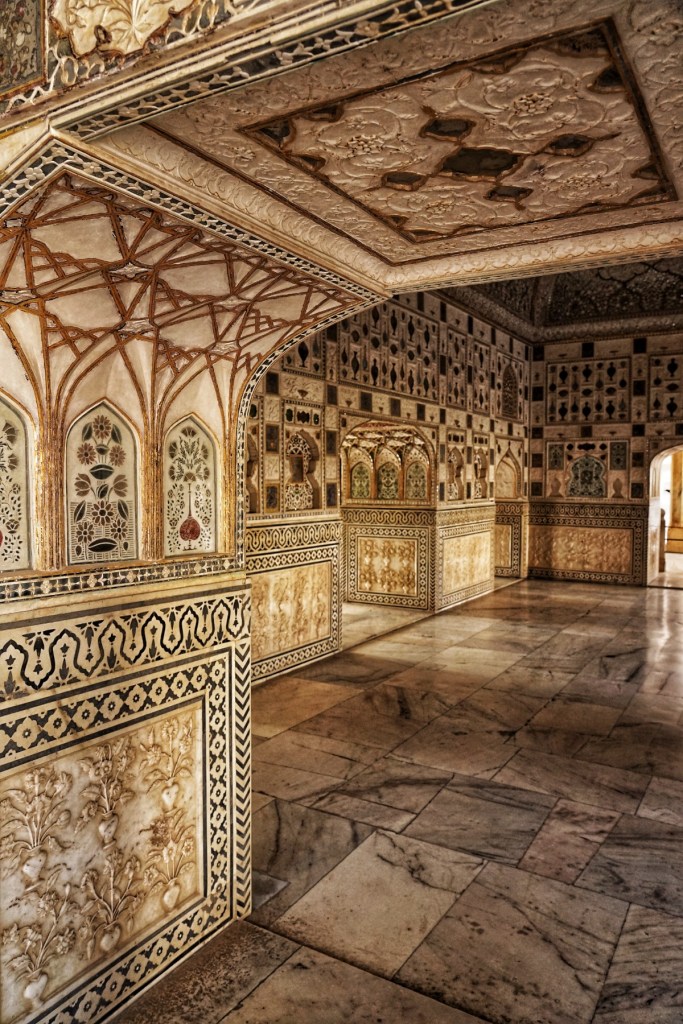
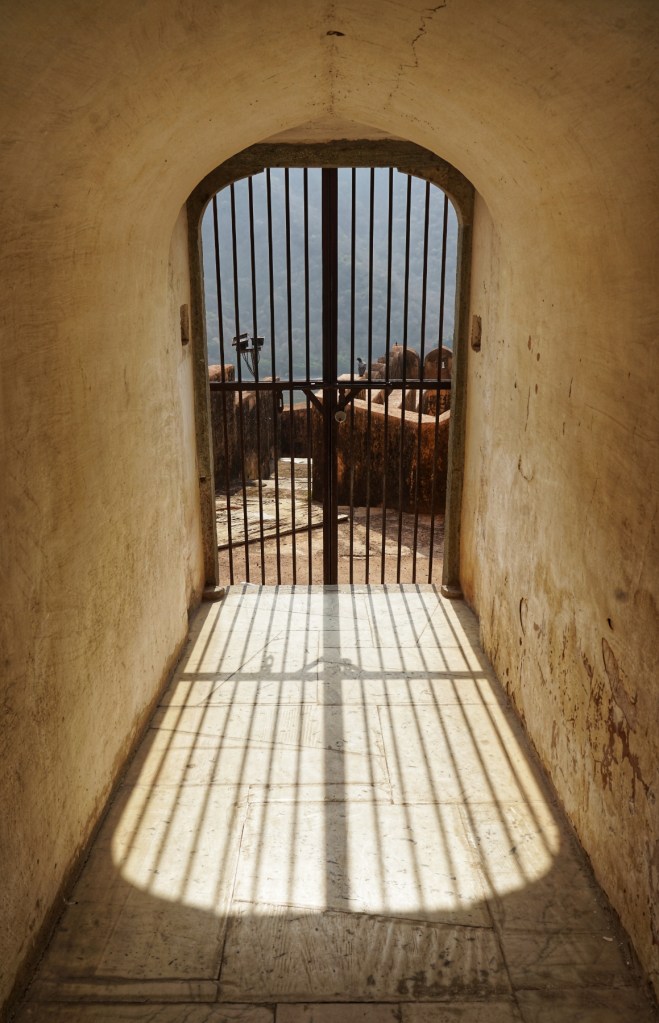
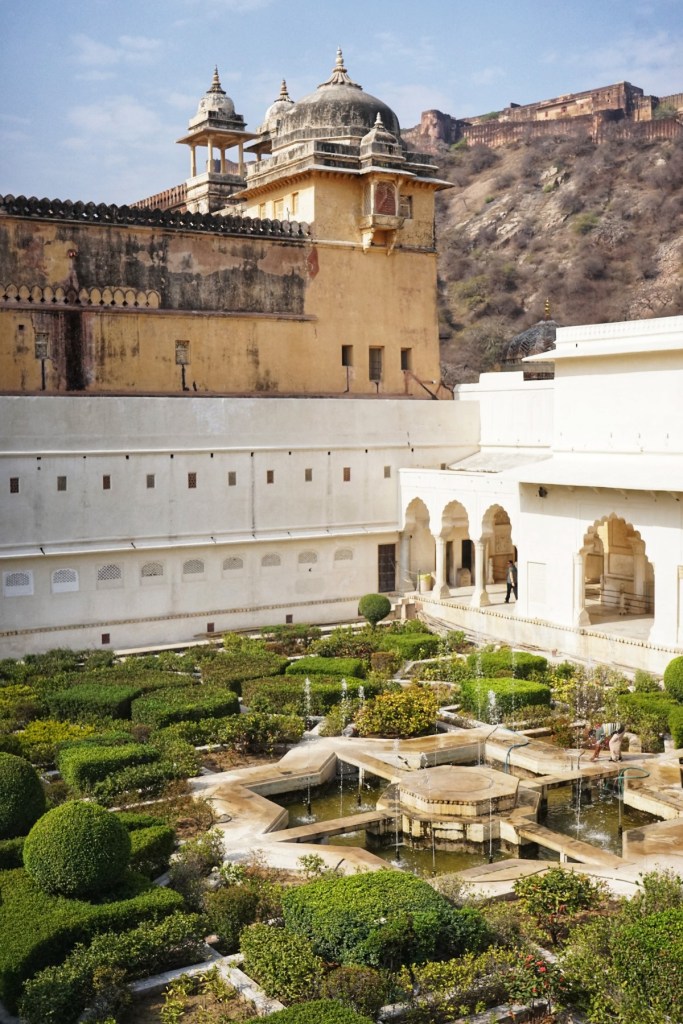
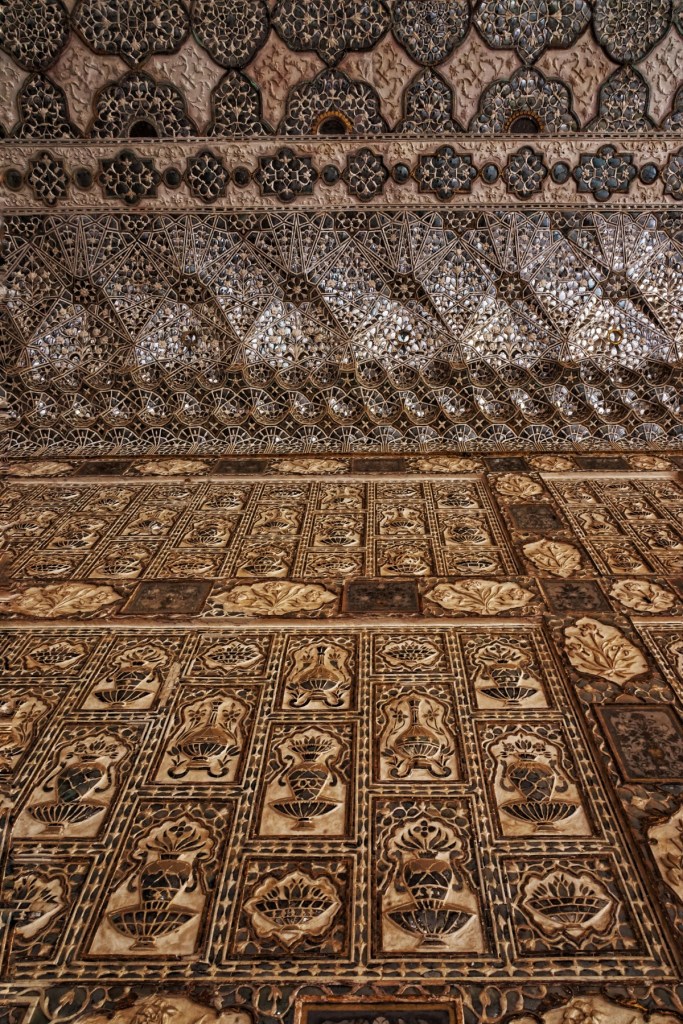
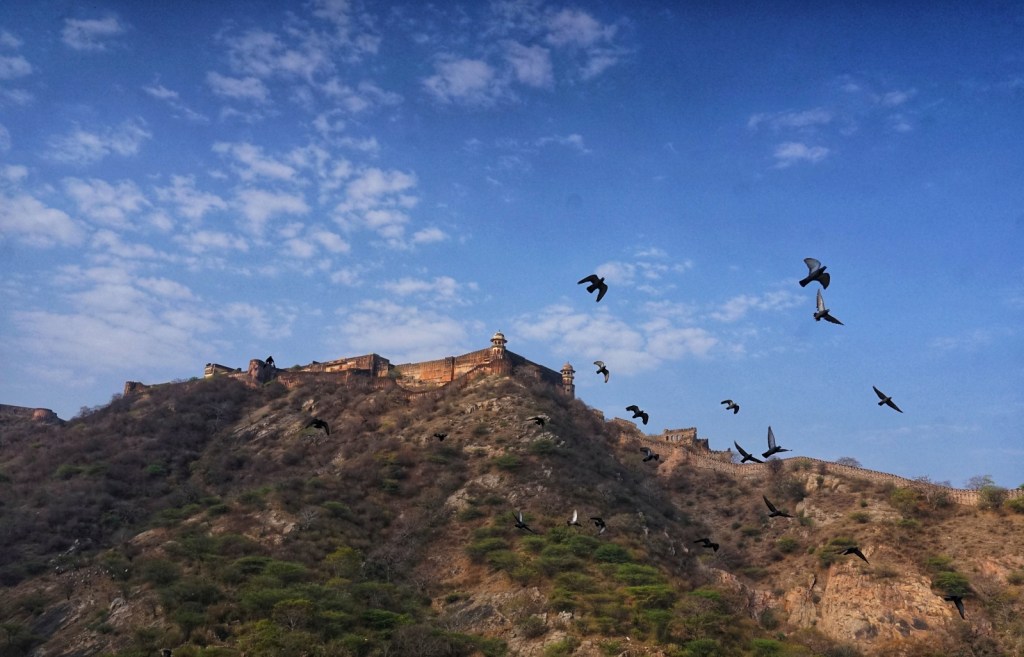
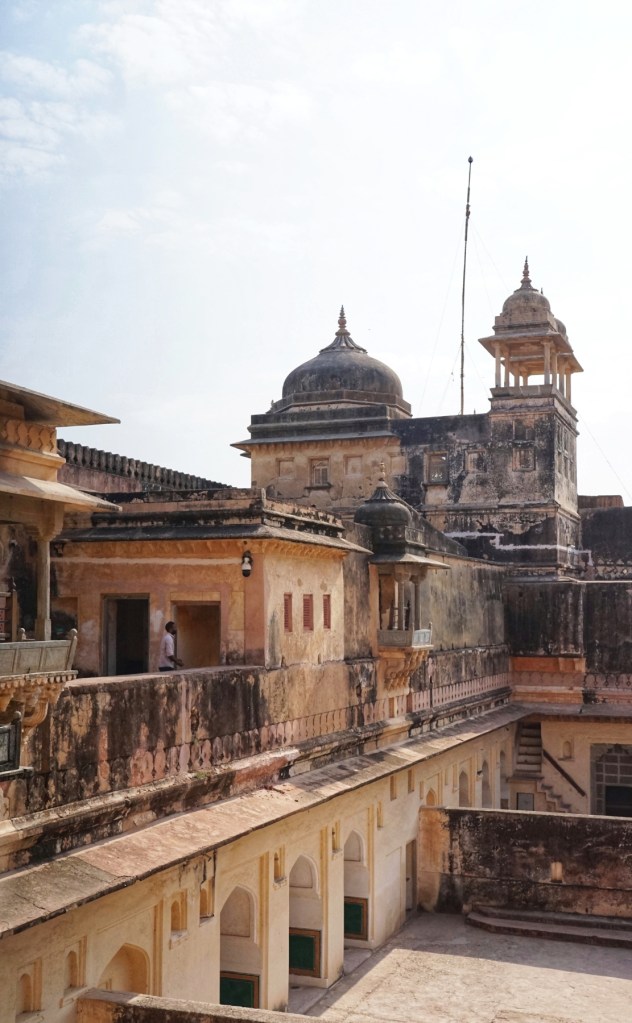
On our second day, we head to Amer Fort, about 11 kilometers outside Jaipur. It sits on a hillside above Maota Lake, its sandstone walls stretching along the ridges of the Aravalli hills. The fort dates back to the late 16th century and was built by Raja Man Singh I under the reign of Akbar. Its layout is structured around a series of courtyards, moving from public to private spaces, combining defensive architecture with elements of Mughal design like marble details and mirror work.
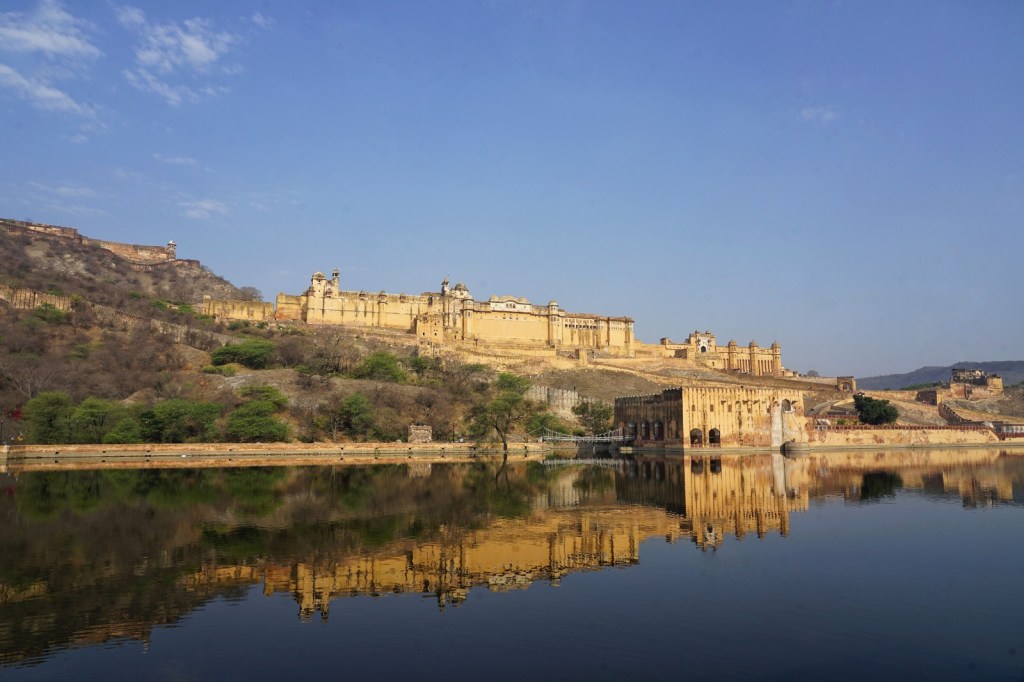
As we arrive, I can already see them from far away: Elephants. They have long held cultural significance in Rajasthan. Beeing symbols of power and status, used by royalty in processions, ceremonies, and warfare. Even today, they appear in festivals and traditional events, often decorated and presented as part of that historical continuity.
Here they move slowly up and down the path leading to the fort gate, carrying tourists on their backs. Their pace is steady. There’s no rush in them, no visible resistance either—just repetition. I’ve always wanted to see an elephant outside of a zoo. Not behind bars. This is different. But not entirely in the way I would like.
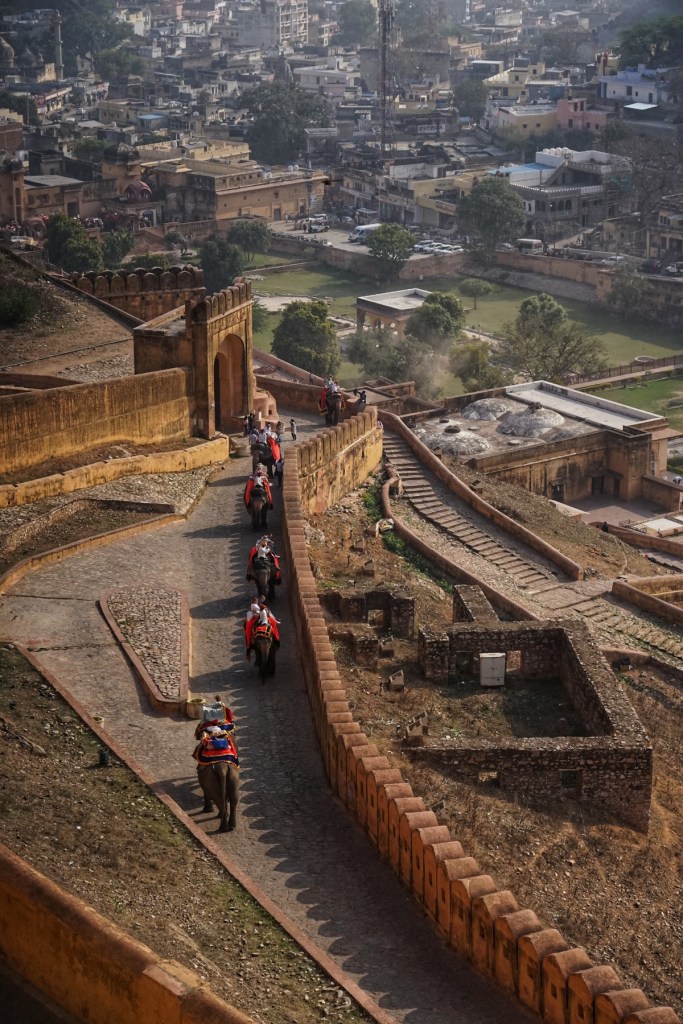
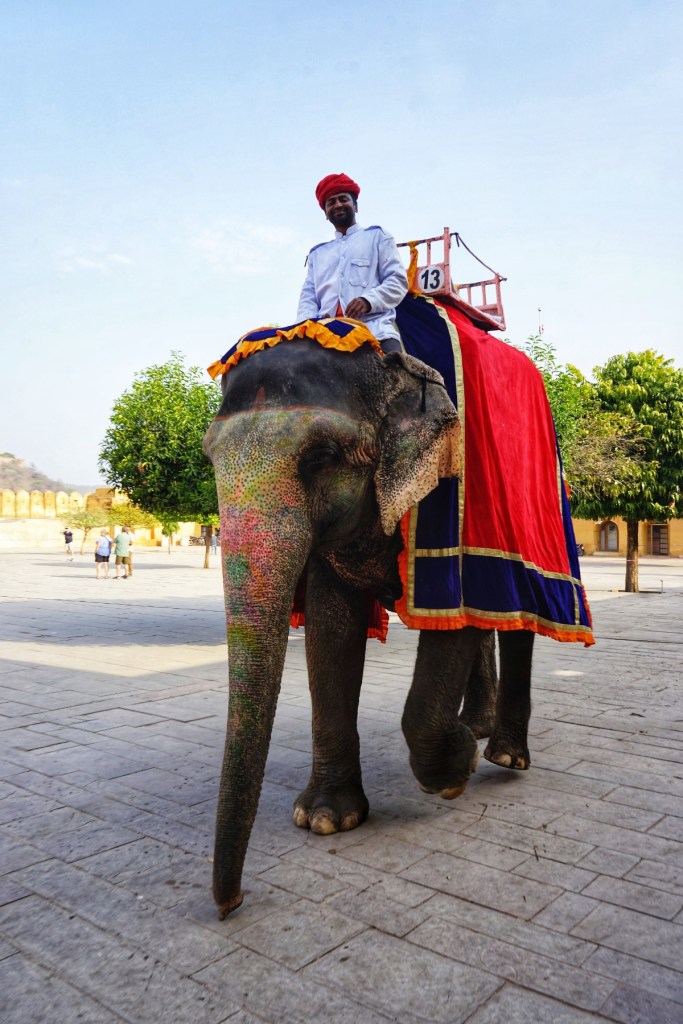
Still—when one of them passes me, just a step ahead, everything in me reacts. The sheer size of it. The texture of its skin, thick and folded. The quiet force in every movement. I can hear its breath. Feel the ground shift ever so slightly under its weight. The look in his eye. After it passes, I just stand there. Than I run over to Willem Jan like almost like a four-year-old, wide-eyed and breathless screaming: “Did you see that?”
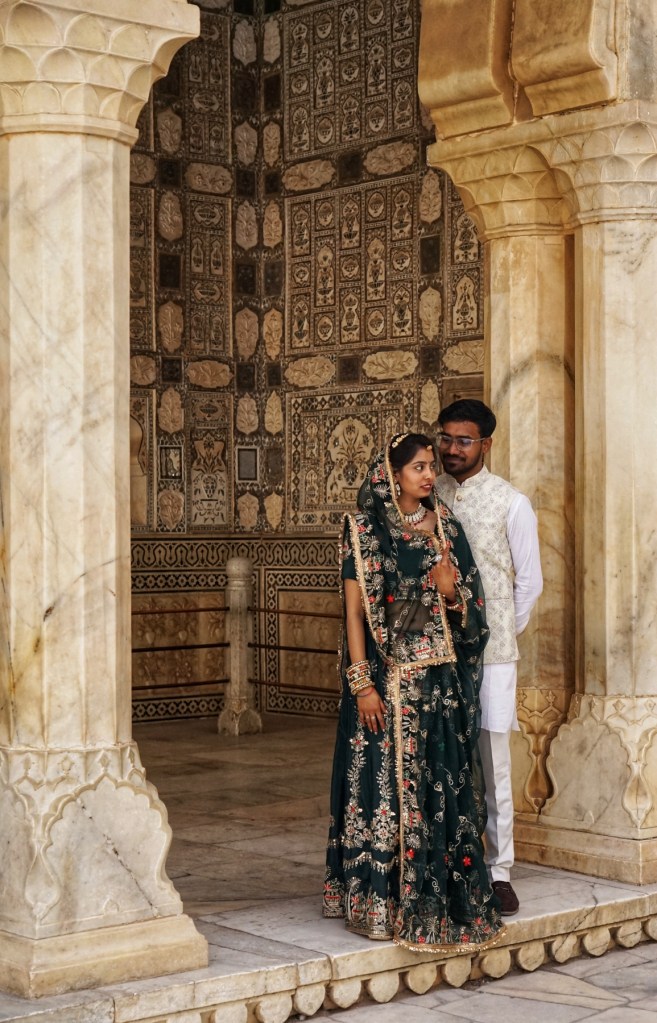
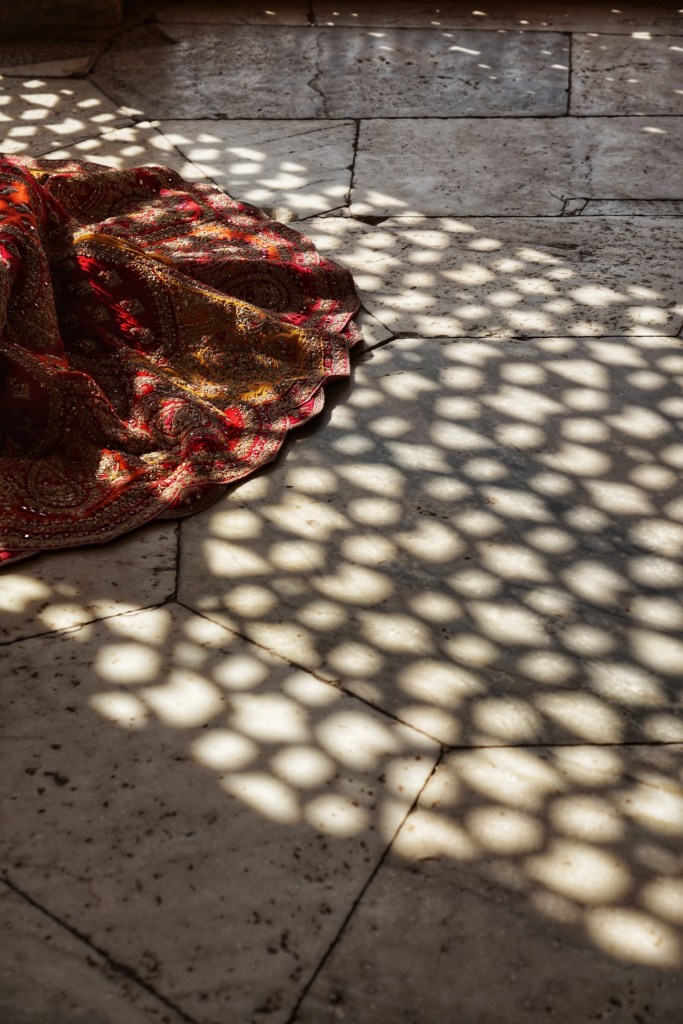
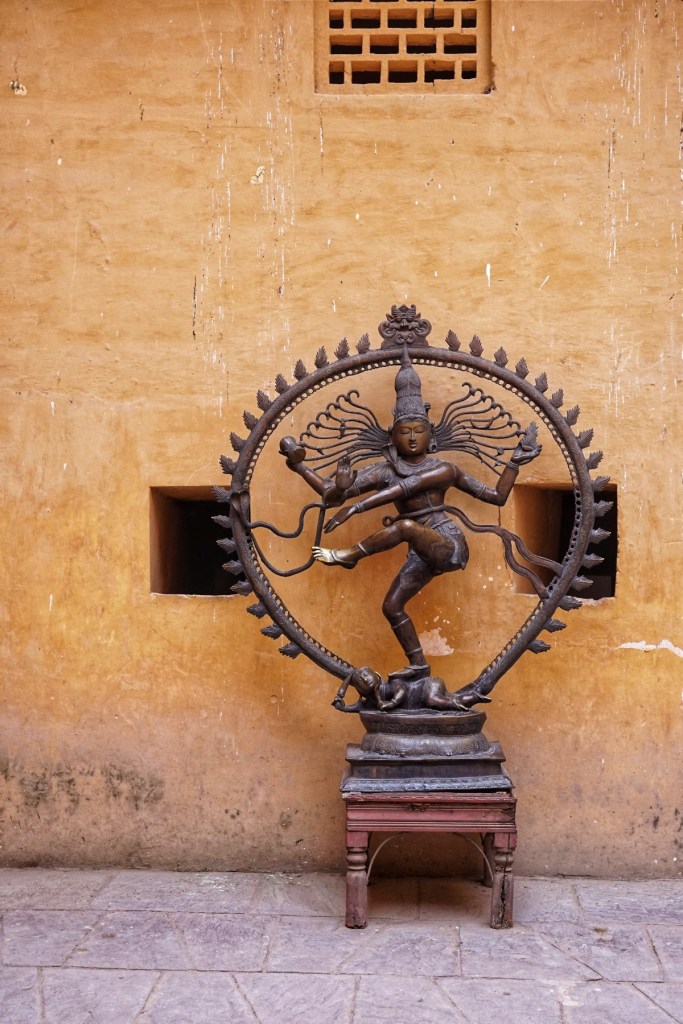
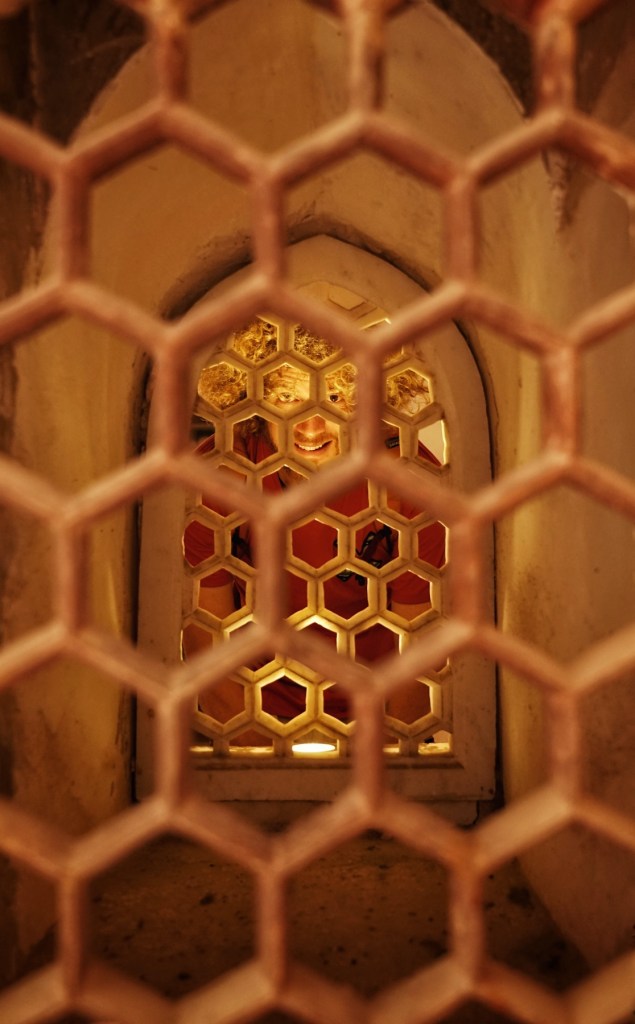
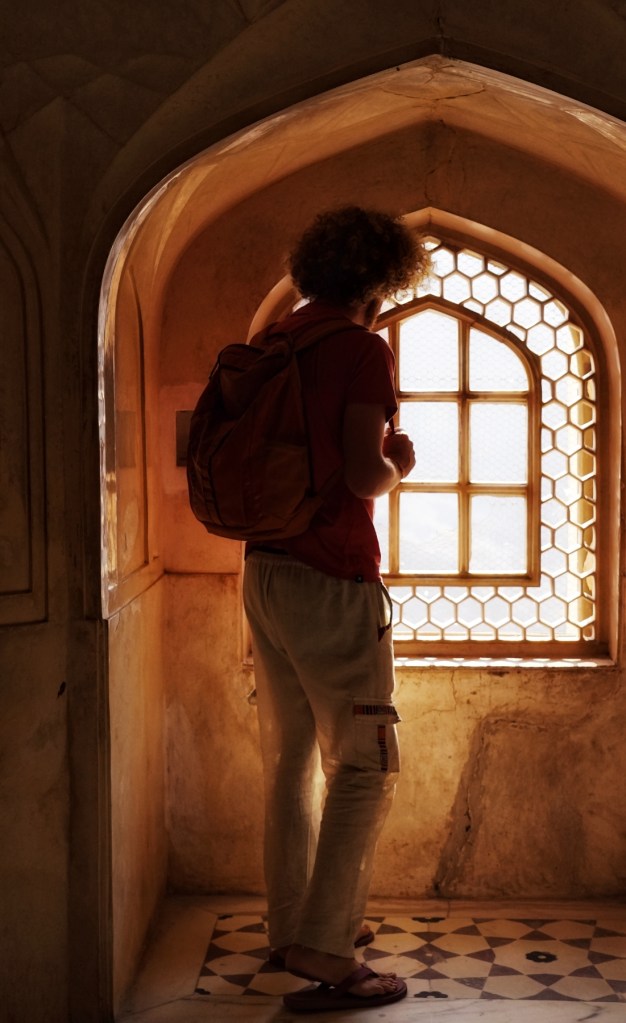
We move through the fort, and I find myself enjoying taking photographs here—just like many, many others. Most of them are Indian couples, often with full photography crews. Men and women dressed for pre-wedding shoots. One room is so popular that it even has to be pre-booked. I have to wait until one shoot finishes, then step in quickly, knowing I have three seconds before the next couple moves in.
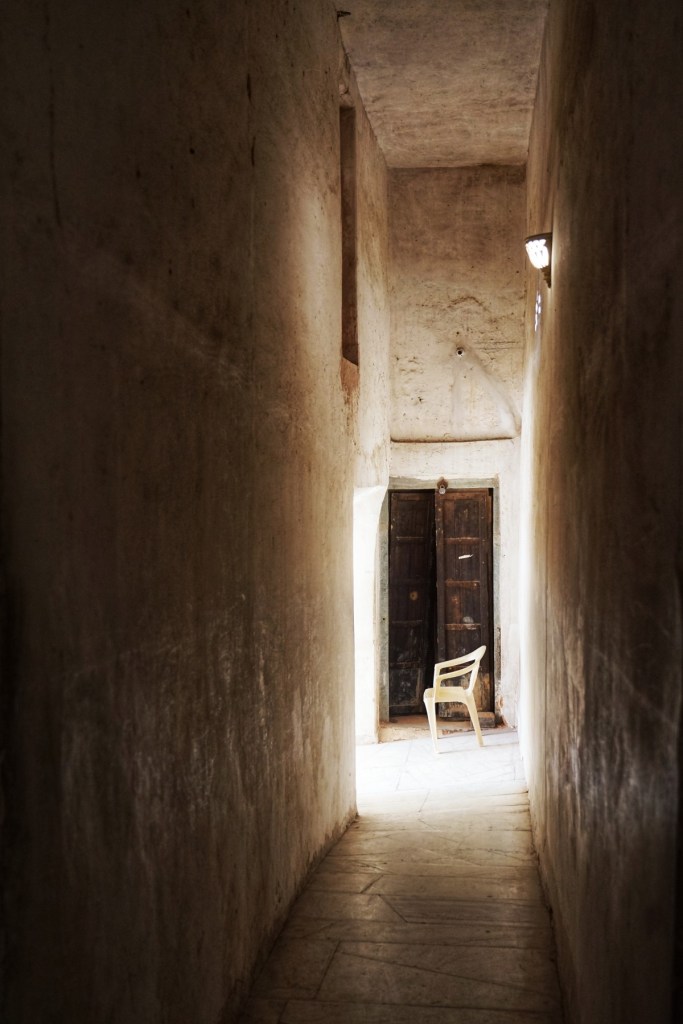
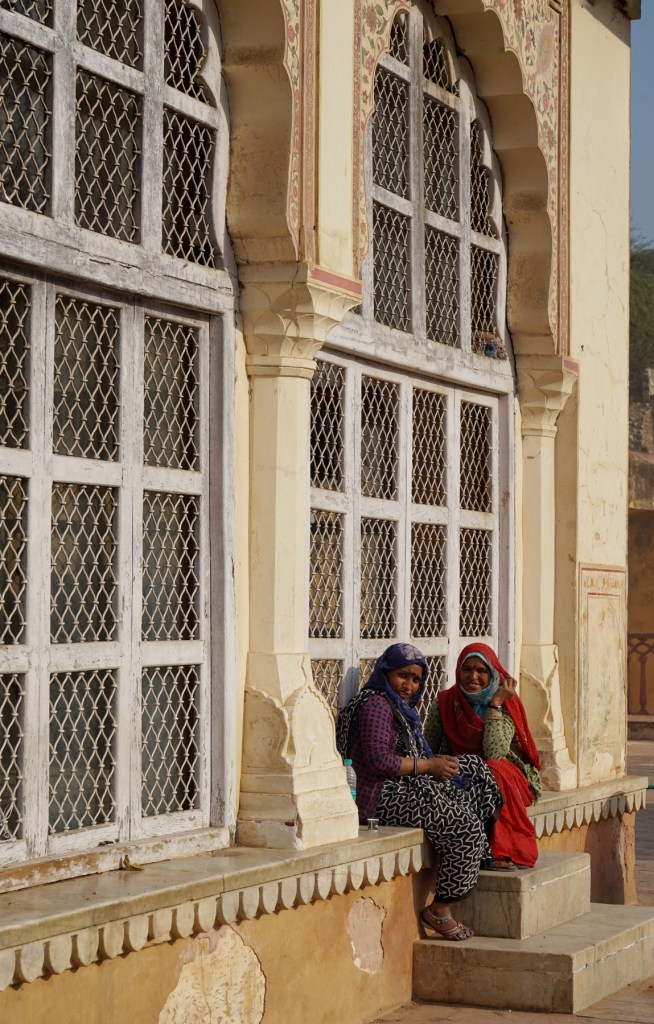
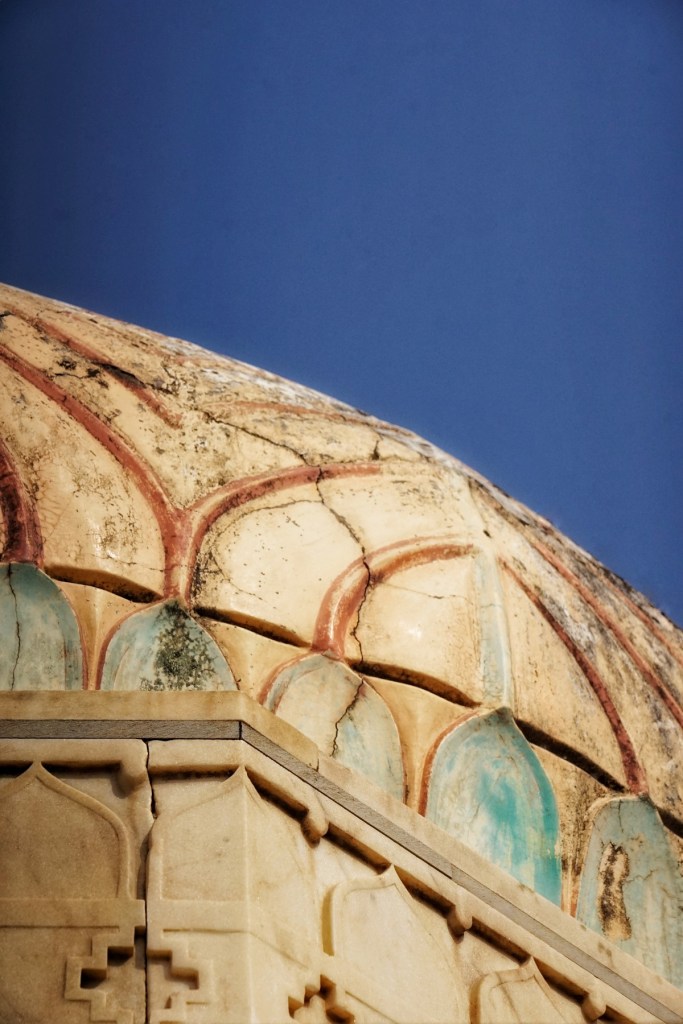
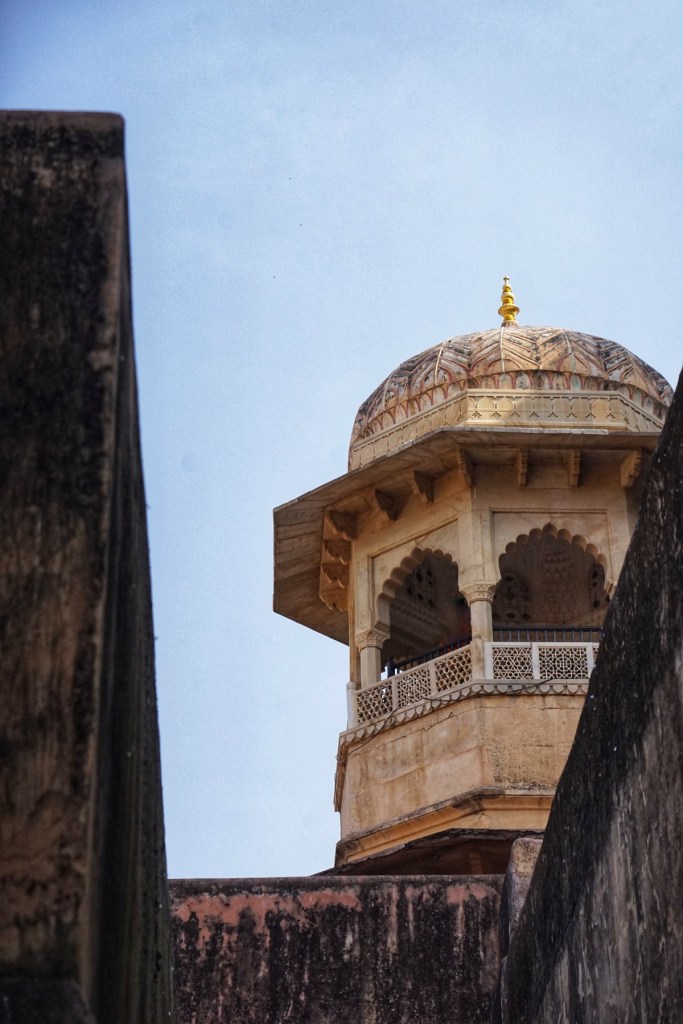
I’m surprised that we don’t find the same crowds in the evening when we head to the Monkey Temple for sunset.
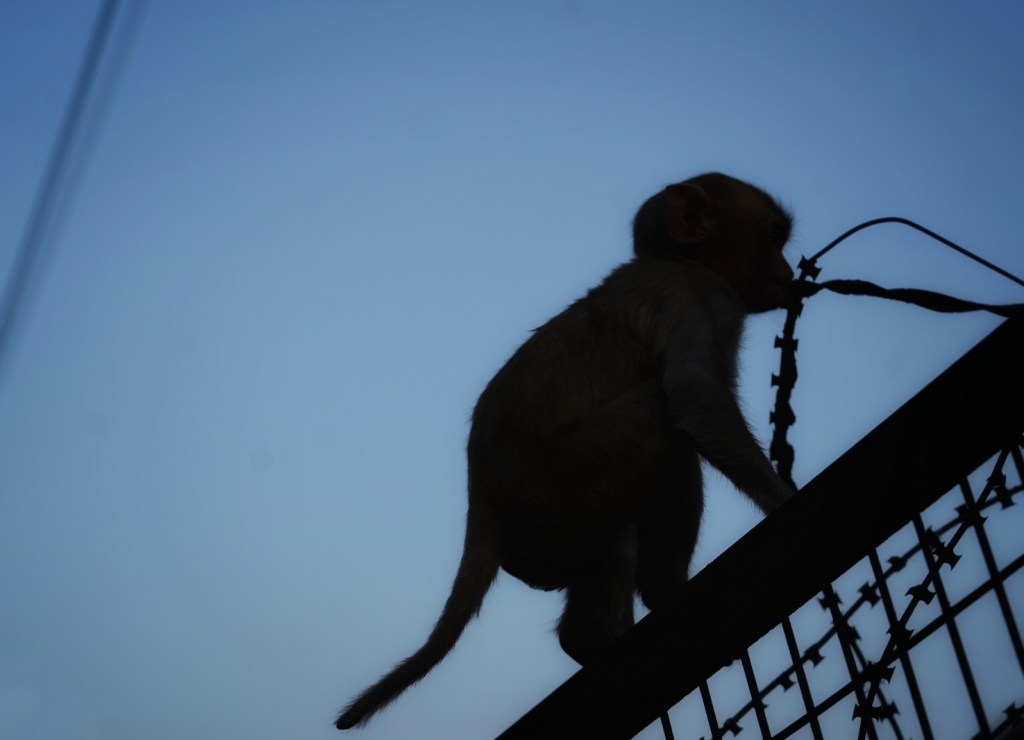
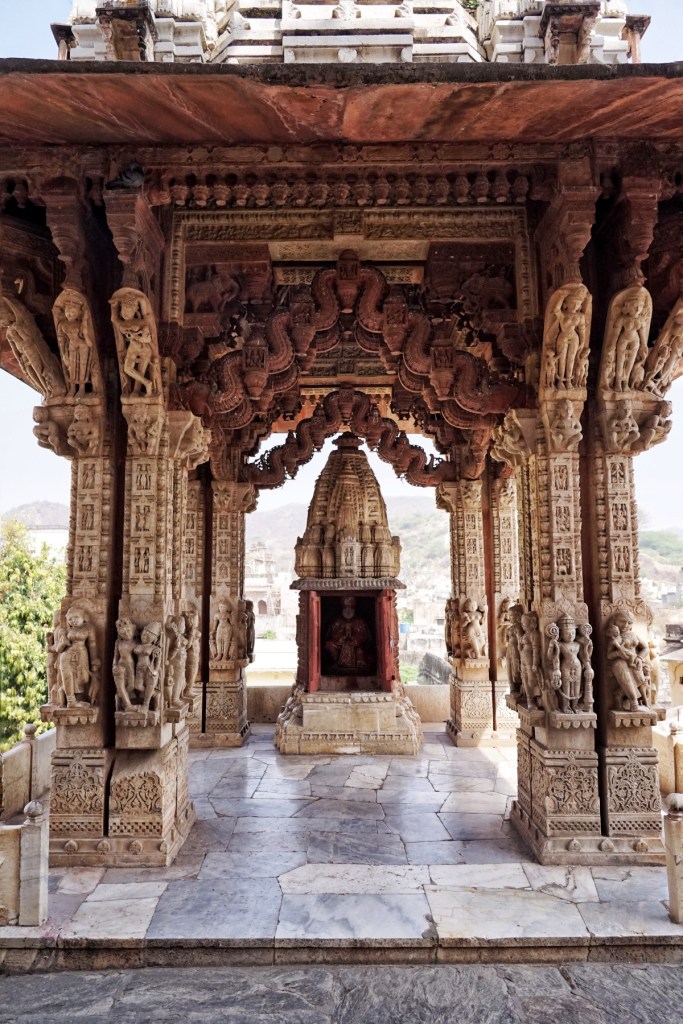
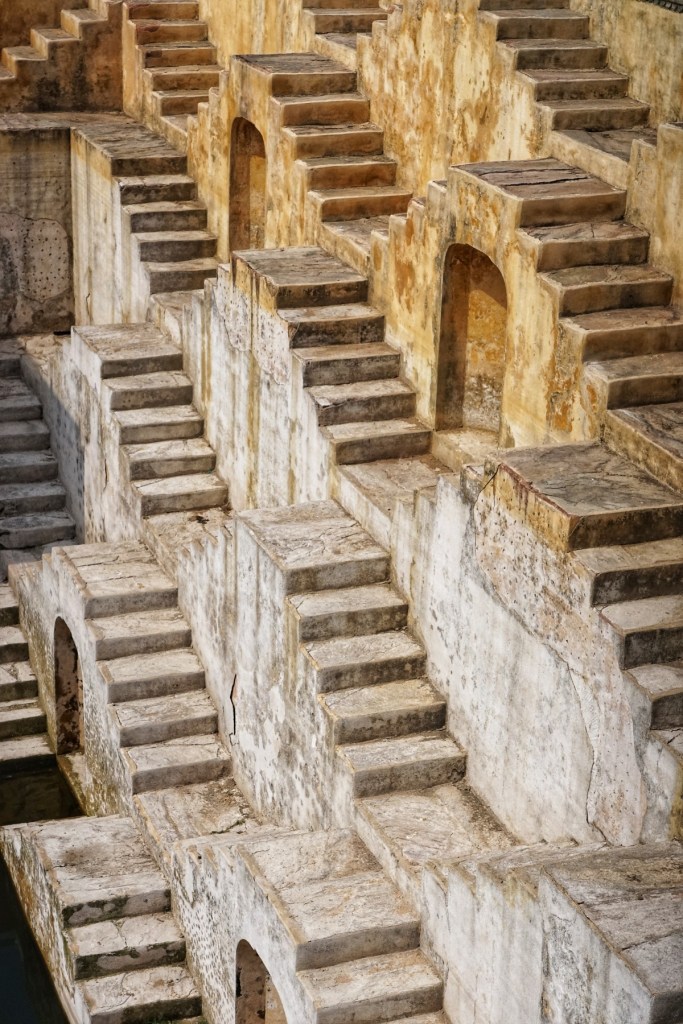
The temple, known as Galta Ji Temple, lies in a narrow valley just outside the city. Surrounded by rocky hills, it feels more secluded, almost tucked away from Jaipur’s constant movement. The complex is built around a series of natural water tanks, fed by a spring that is considered sacred. Pale, weathered buildings rise along the slopes, their facades somewhere between faded pink and sun-bleached ochre. And monkeys. Everywhere. They move freely through the temple grounds—along the steps, across rooftops, gathering at the water basins. We move over the hill, to another temlle and sit for a while, watch the sun dip behind the hills, the light softening, the air cooling. The city buzzing still under us.
Jaipur—and Rajasthan as a whole—still feels different from the places we’ve been before. Less intuitive. Harder to read. More outward-facing, more transactional at first, less immediately inviting than the quiet spirituality I felt in places like Varanasi.
But the edges of that first impression begin to soften. Not all at once. And slowly, I begin to let go of the Rajasthan I had imagined. The one made of color and glow and distance. What replaces it is less polished, less poetic—but more real. Just enough to make space for something else to emerge.
 An unmapped life
If you feel like responding, I’m listening.