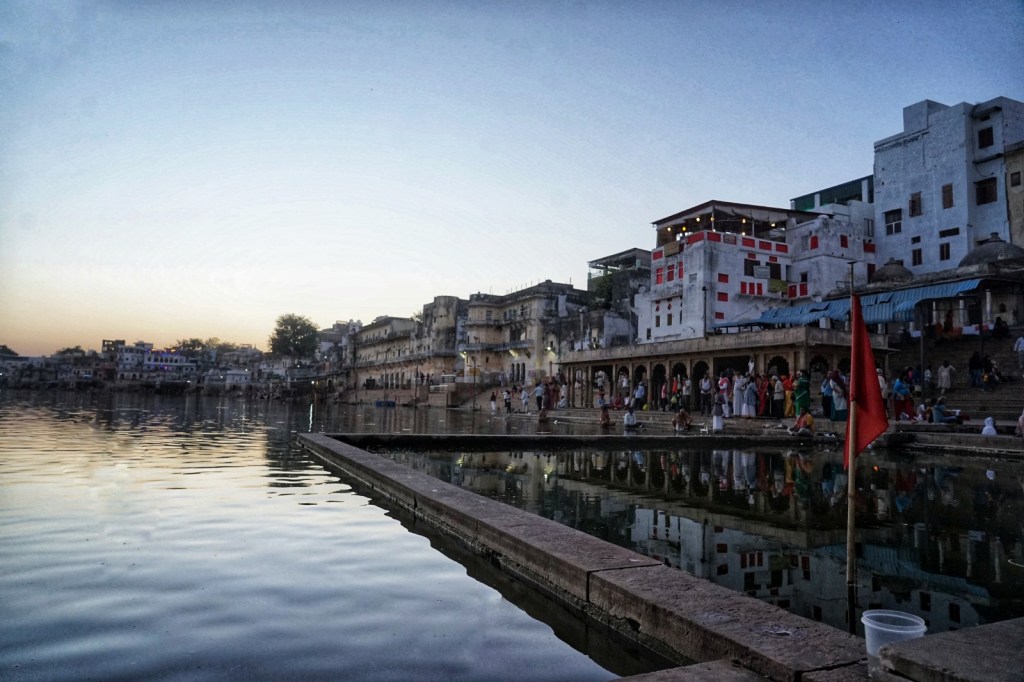
Our second stop in Rajasthan is Pushkar. Built around the sacred Lake, the town is considered one of the oldest in India. Pilgrims come here to bathe in its waters, believing they wash away sins—not metaphorically, but quite literally.
And there’s one of the very few temples in the world dedicated to Brahma, the creator god in Hinduism. Which is strange, if you think about it—the creator, largely ignored. Myth says he was cursed, which is why temples for him are rare. So Pushkar became an exception. A loophole in a divine dispute.
We arrive after yet another train ride—this one smooth again. Just landscapes passing by like they’re on low volume. And still, when we step off, Willem Jan and I are exhausted. Not the obvious kind of “I didn’t sleep enough” tired. A quieter depletion. As if the system needs a moment to catch up with itself. It’s the first time on this trip that traveling feels like work. We’re both relieved we’re staying for a full week. Our hotel is perfect. Right in the middle of everything, yet somehow wrapped in silence. Like someone placed a soft barrier around it that filters out the noise but lets the atmosphere through. It sits in a narrow alley where the only regular traffic consists of the occasional cow and slow-moving passersby.
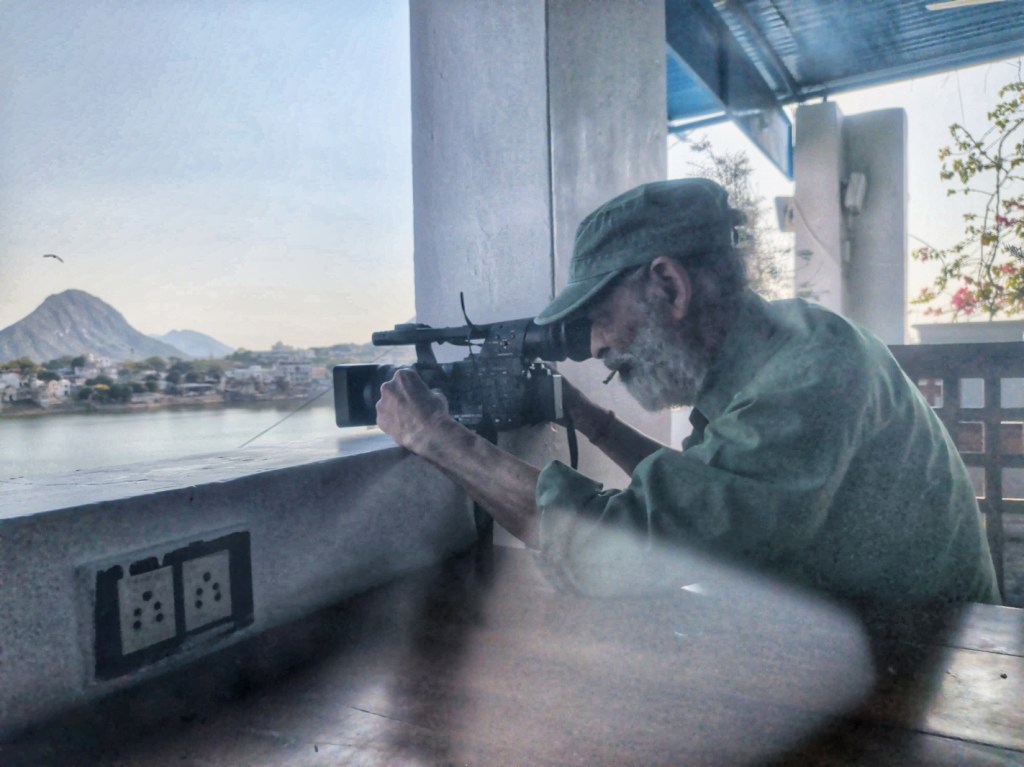
On our first day, we meet two Danish guys: Richard and Kim. They’re here for a reason that feels almost cinematic. Richard is a documentary filmmaker, chasing the idea of making a film about the traditions of Rajasthani gypsy communities. Kim is with him, part companion, part witness to the process. Through them, we meet a woman from one of these communities. She invites us to her home for dinner the following Monday. And it is beautiful, in parts. But also… not simple. There’s warmth and laughter. But underneath it, something else keeps pulling at the edges. A quiet but persistent expectation. Not spoken directly, but present. It starts small. A mehndi on my hand that feels more like a transaction than a gesture. Then the payment for it changes into food and than something else entirely – suddenly we’re contributing 1500 rupees for oversized canisters of cleaning supplies and large bags of rice. And of course, we could have walked away. That’s the truth. But we stayed, engaged and participated, though something is off. Like a note that doesn’t quite land.
When the invitation for Monday stands, I find myself circling one question over and over again: Do I really wanna go? And most importantly: Why? What am I looking for here? And the answer, when it comes, is simple: connection. Not curated. Not staged. Not subtly negotiated. Just… real. And the more I sit with it, the clearer it becomes that this isn’t what I’m feeling here. There’s a layer in between. An expectation that turns the whole thing into something closer to a transaction than an encounter. Although Willem Jan knows quiet fast what he wants, it takes me two days of going back and forth, of talking it through, of checking in with each other. He leaves the final decision to me. And when lands, it feels clean. We don’t go. And interestingly—Richard and Kim don’t go either in the end. Funny how things align like that sometimes. That’s part of traveling, too. Choosing which experiences you don’t need to have. Knowing when curiosity is honest—and when it’s quietly being steered by something else. And learning to trust that difference without overexplaining it to yourself.
One evening, as we pass through the streets, we decide to go down to the Pushkar Lake.
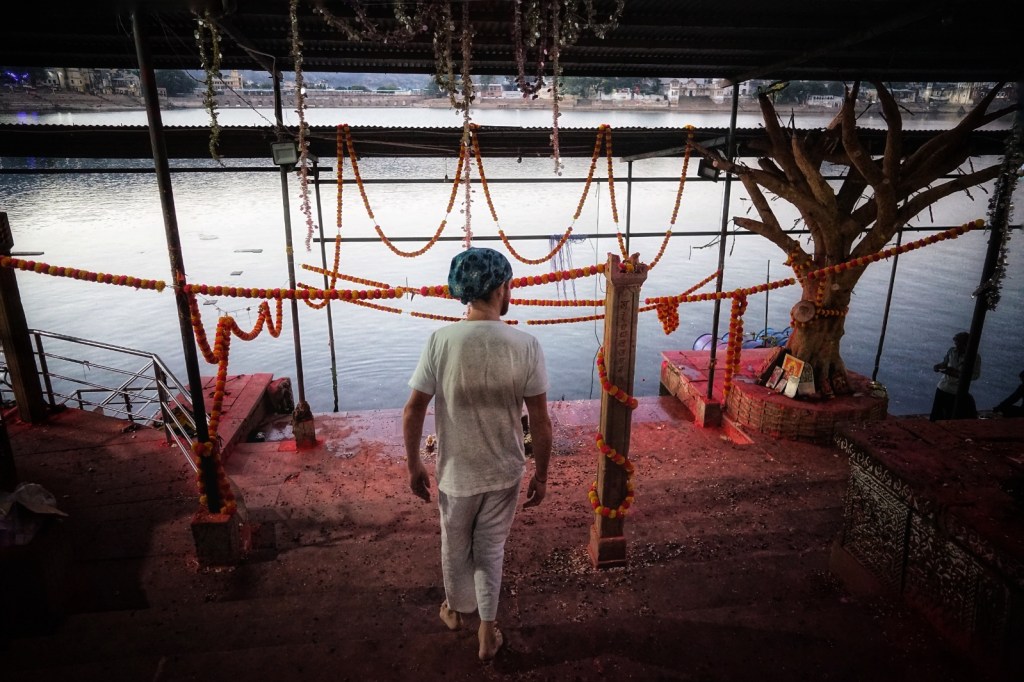
The lake, they say, was created when a lotus flower fell from the hand of Brahma—each petal touching the ground and bringing water with it. There is something quiet about that story. It doesn’t try too hard. The water is surprisingly clear. You can see fish, snakes, even a turtle moving slowly underneath the surface. At the edges, people leave their shoes behind before stepping down. Not just because of cleanliness, but out of respect. You don’t enter something sacred the same way you walk through a street.
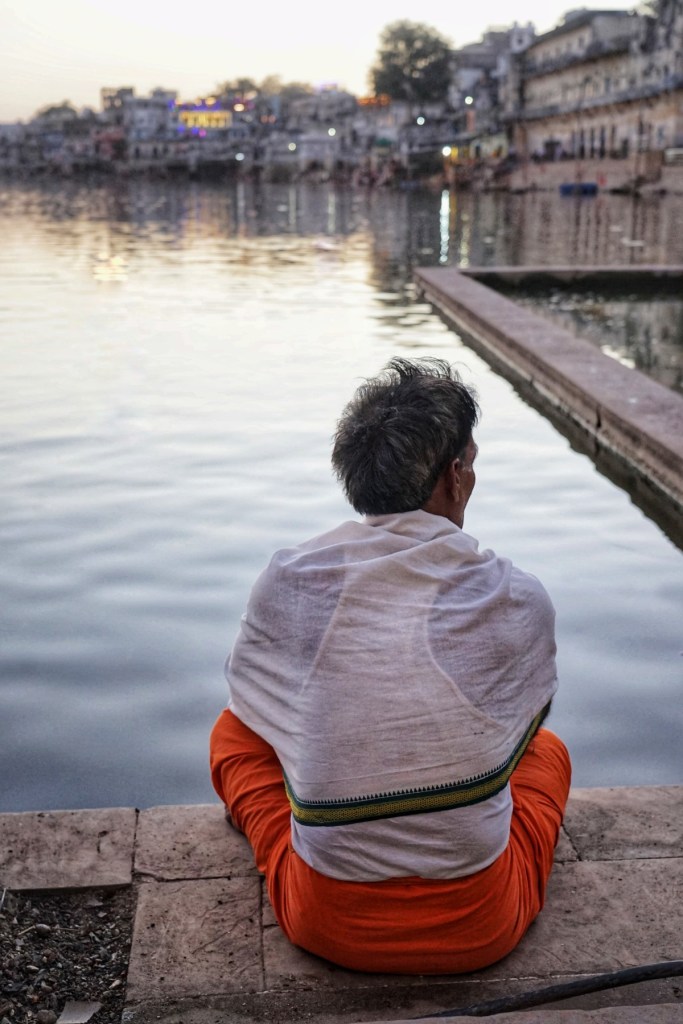
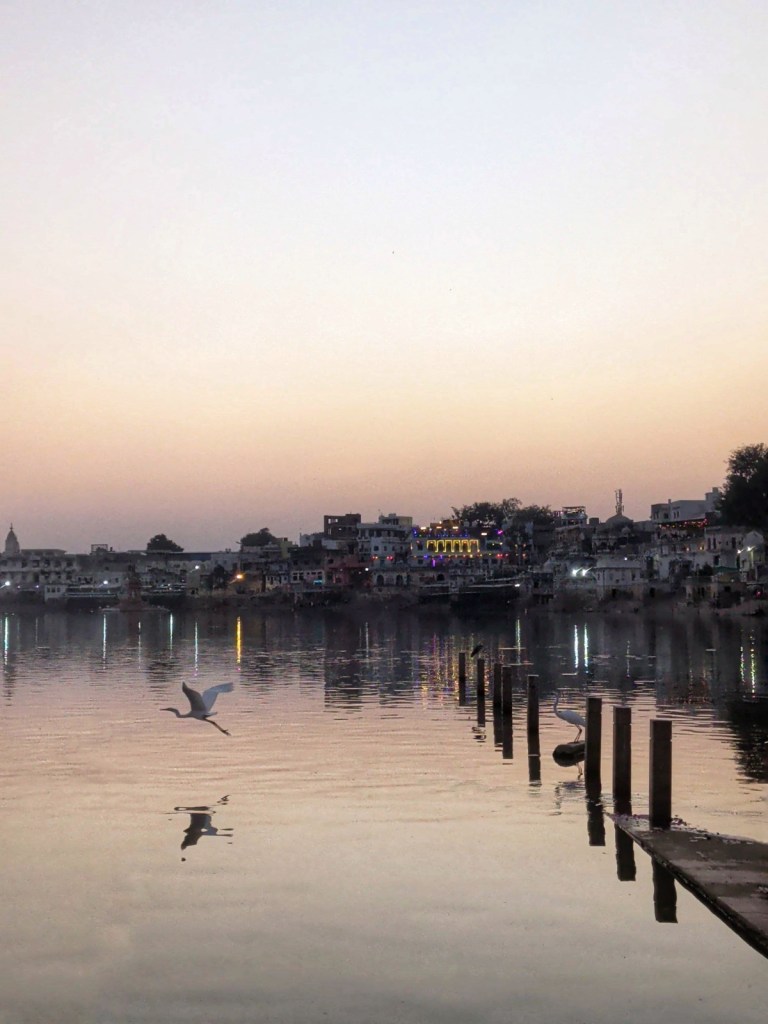
We walk along the edges and pause for a moment, watching people—different generations—bathing in the holy water. It feels both ordinary and not. Then a man approaches us. He presses flowers into our hands and starts guiding us into a puja—a small ritual, an offering with prayers, petals, and repeated words. A moment of connection, at least in theory. We know what is happening. It might come from a genuine place of sharing, but there is almost always also the expectation of some money in the end. And that’s okay. That’s how it goes. This time though, something shifts.
As we stand there, hands folded, flower petals in our palms, repeating his words, he starts adding another line—that we should promise to donate a certain amount of money. That’s when I step out. I’m not promising money inside something that is meant to be sacred. Not like this. I move a few steps away and do my own puja. Quietly. Saying what I want to say. Then I step down one stair into the water to place the flowers. And it happens. The stones are extremely slippery. I lose my footing and crash—camera, body, everything—straight into the water. Willem Jan comes running over immediately, followed by the man. His first question says out loud what I’m already thinking: is the camera okay? I hand it to him. He checks. It works. I breathe. Then I check myself. I’m okay. Somehow, nothing hurts. I just sit there for a moment, completely wet, breathing. That itself is a miracle.
Next to me, a woman is stepping into the water, held by her husband. She looks over and smiles. A simple, beautiful smile. The water glitters. And for a moment, it’s just that. The water and me. Nothing else. It moves in this soft, steady rhythm. Almost like it’s whispering. And then I do it: I step fully into the lake. With all my clothes on. I stand there. And I go under. Once. Twice. Three times. Holding my nose, eyes closed. It’s quiet down there. Not empty—just quiet in a way that doesn’t ask anything from you. The water moves around me, over me. Take it, I think. Take whatever I don’t need to carry anymore.
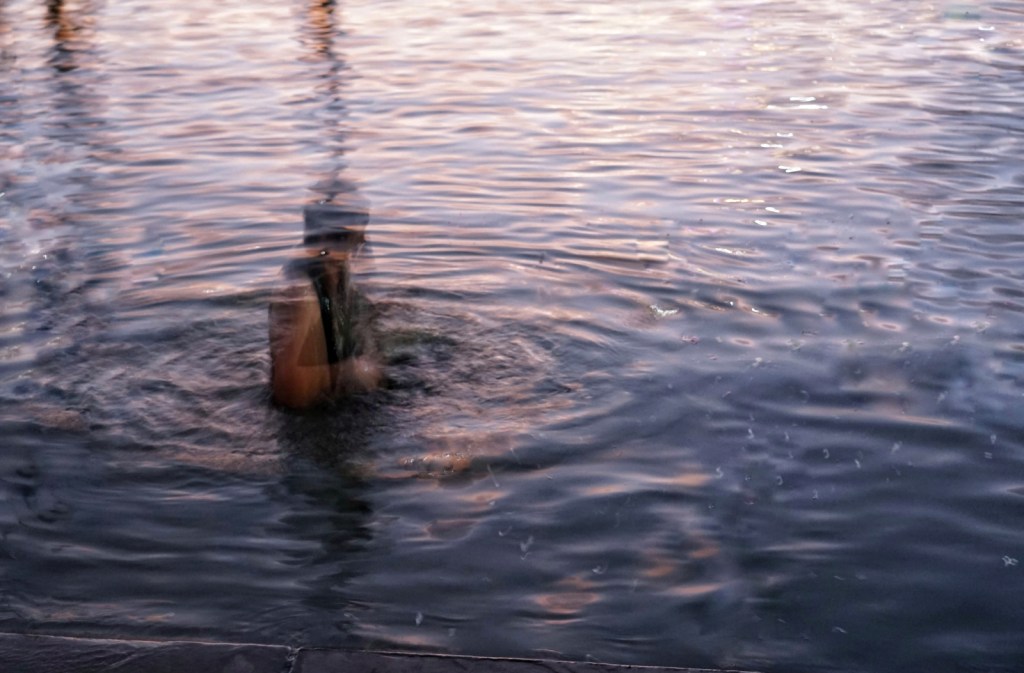
On our way we met Indians claiming that this place or that place had the power to change you. In the end it is not about the place. It is more an alignment of readiness and surrender I believe. A busstop or a holy lake – for me it doesn’t really matter. Like my Grandma used to say: You don’t have to go to a church to meet God, he is everywhere.
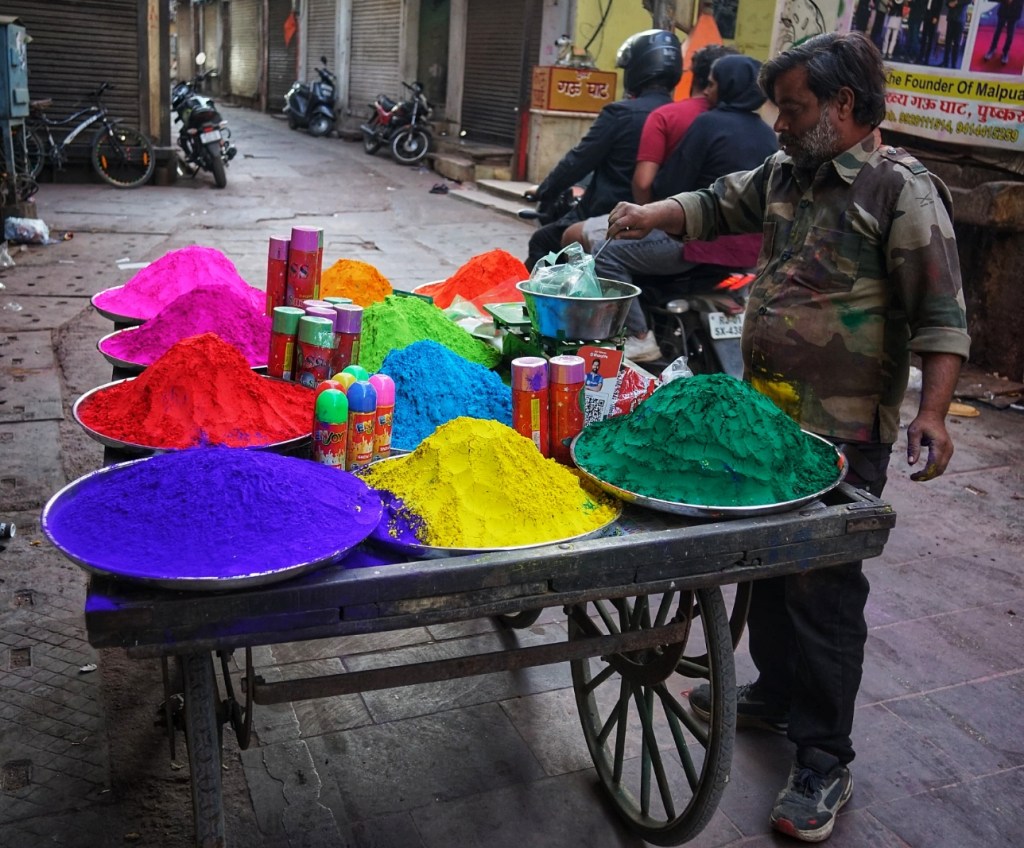
Two days after my wet encounter, Holi begins – the festival of colors, celebrating the arrival of spring, the victory of good over evil, and—maybe most of all—joy. It is associated with Krishna, the playful, mischievous god, known for love, color, and a certain lightness in being. It feels perfect. After the fall, the slipping, the letting go—I meet a god who doesn’t ask for control, but for play. Not transcendence. Just presence, with color on your skin.
The first thing we encounter is a stick dance. Men moving in a circle, guided by steady drumbeats. Step, turn, strike. Their sticks crash against each other in rhythm—wood on wood. Some are more engaged, some less and still it somehow forms a circle, more or less. Traditionally, these kinds of dances are about energy, protection, sometimes even reenacting mythological battles.
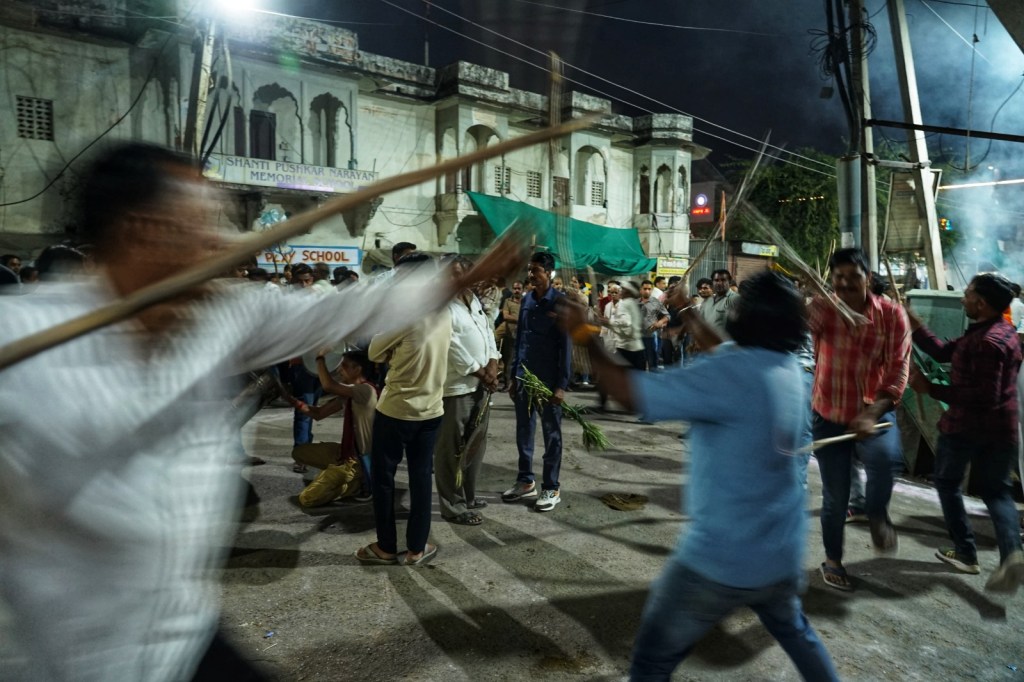
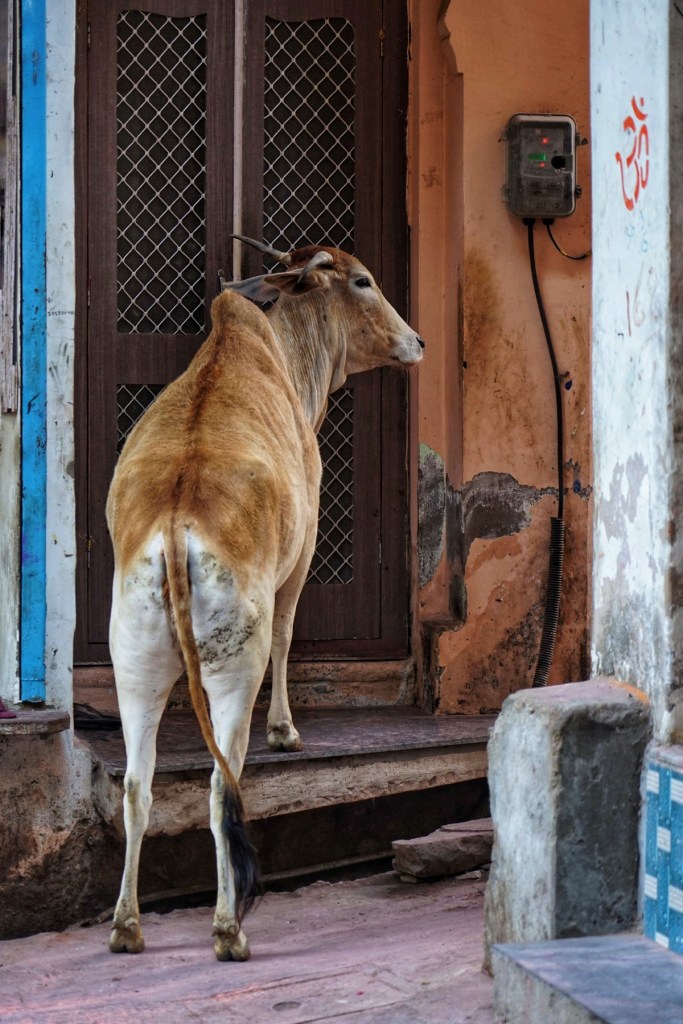
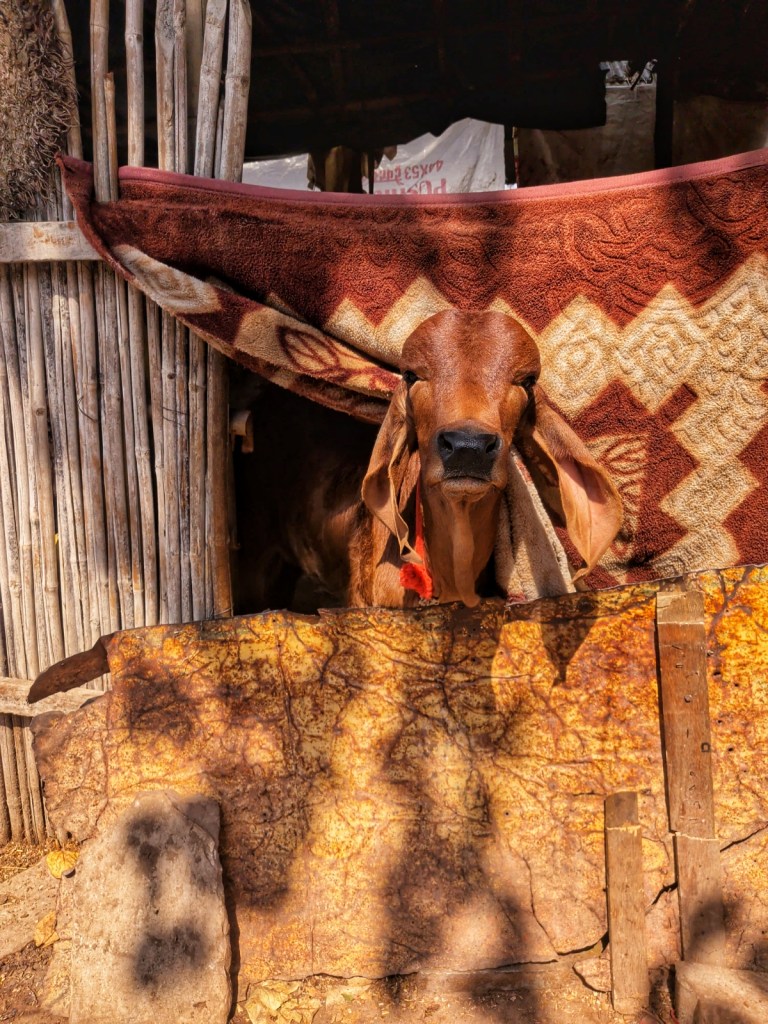
And then it becomes personal. Right in the middle of it, a cow decides she wants to pass through the crowd. She steps directly onto my foot—and stays there. Not briefly. Not by accident. Fully planted, as if this is now her spot. I laugh, then wince, then just stand there, slightly stuck, waiting for her to move. She doesn’t. The men around me notice, start gently nudging her forward, guiding her through the circle. I limp away, half amused, half in pain, and decide—this has to mean something. Something good. Cows are sacred in India—linked to abundance, life, and a kind of quiet generosity. Being touched by a cow, even more so in a temple town like Pushkar, is often seen as auspicious. Not officially a “this brings luck” situation in a literal sense—but close enough. A small blessing, maybe. Or at least not something negative. So I take it. A slightly inconvenient blessing. But a blessing nonetheless.
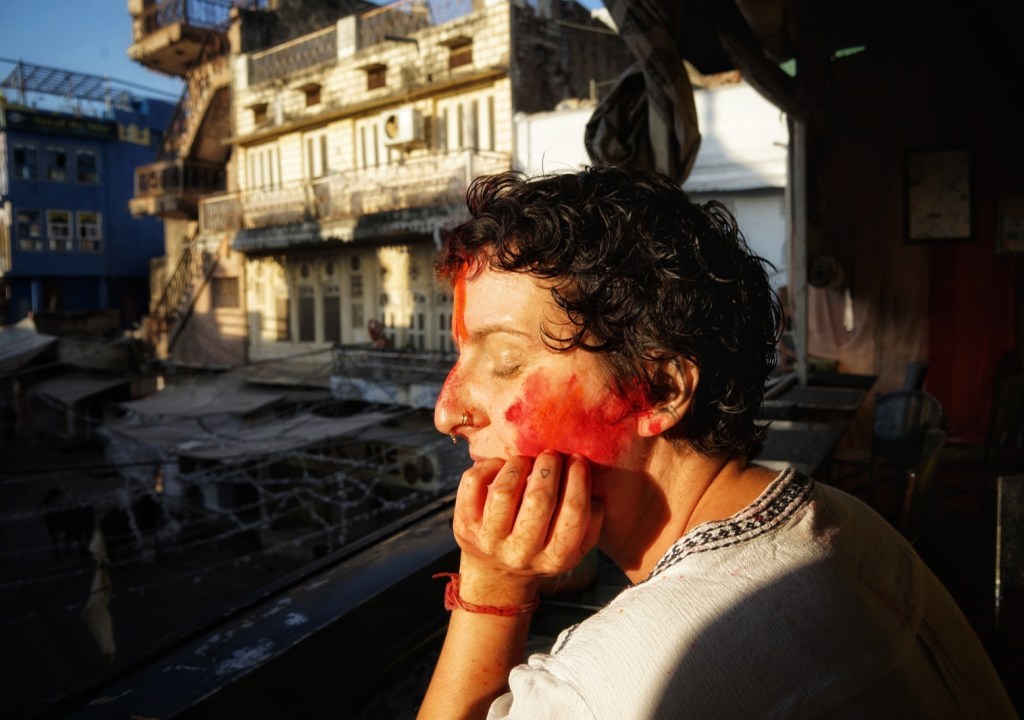
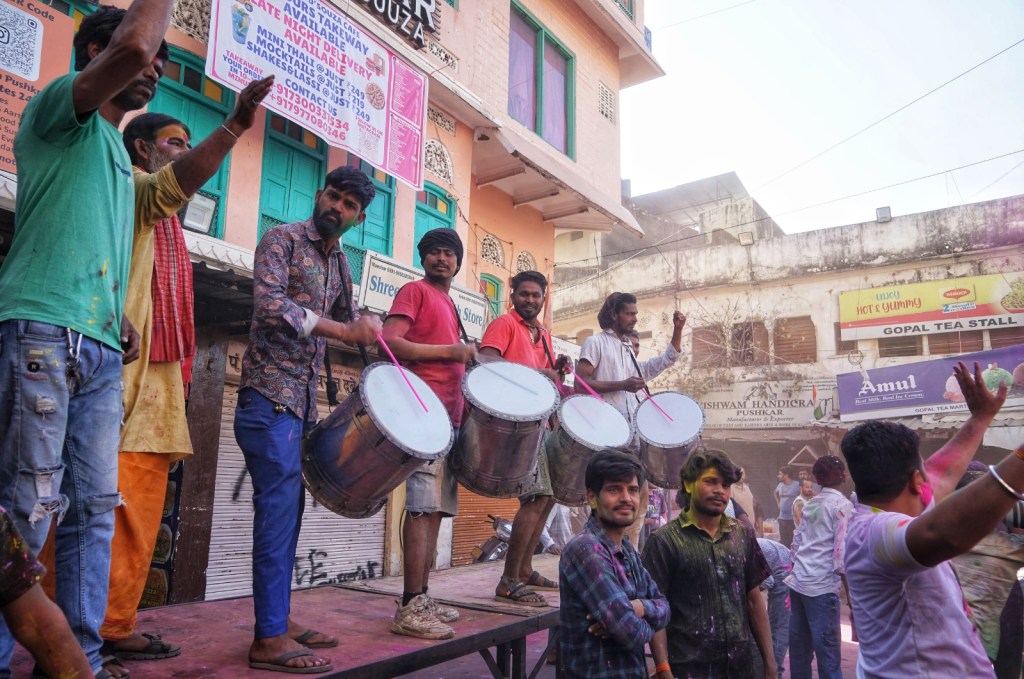
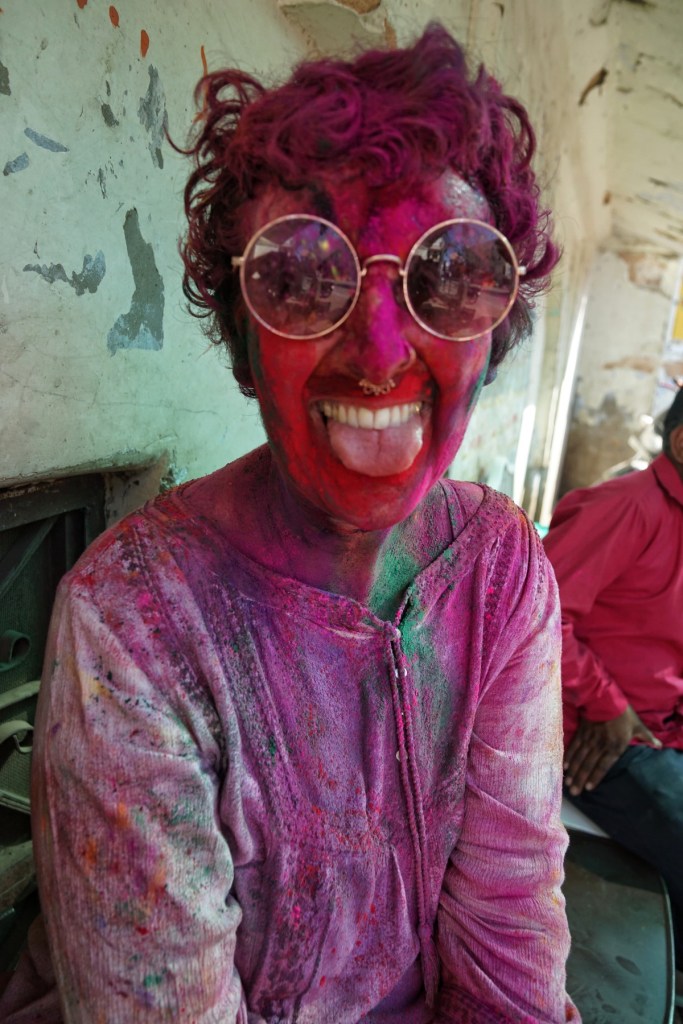
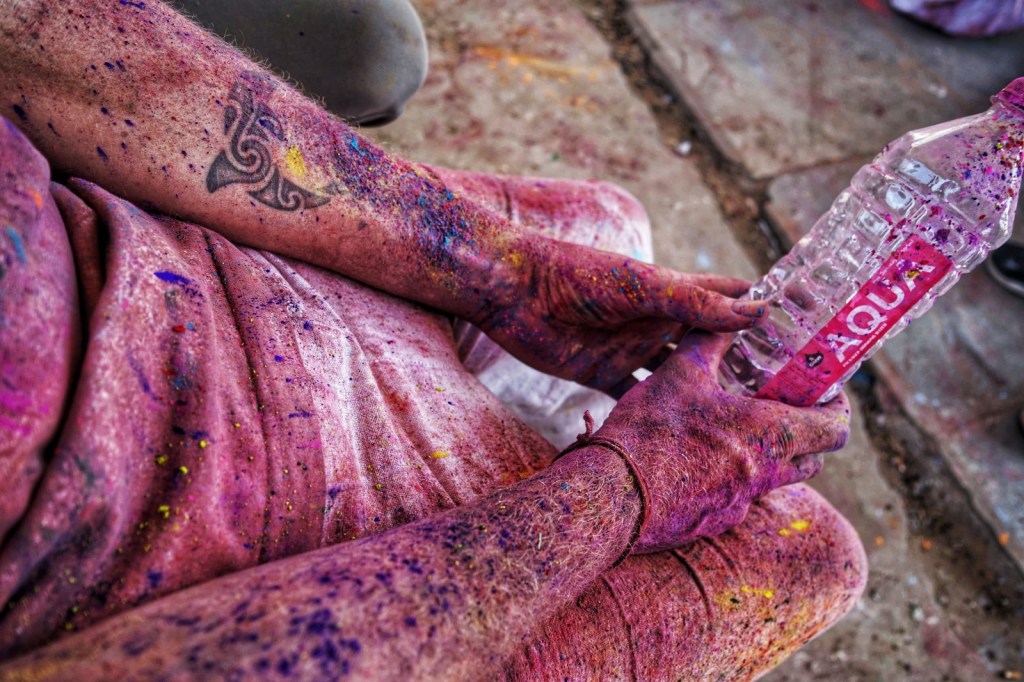
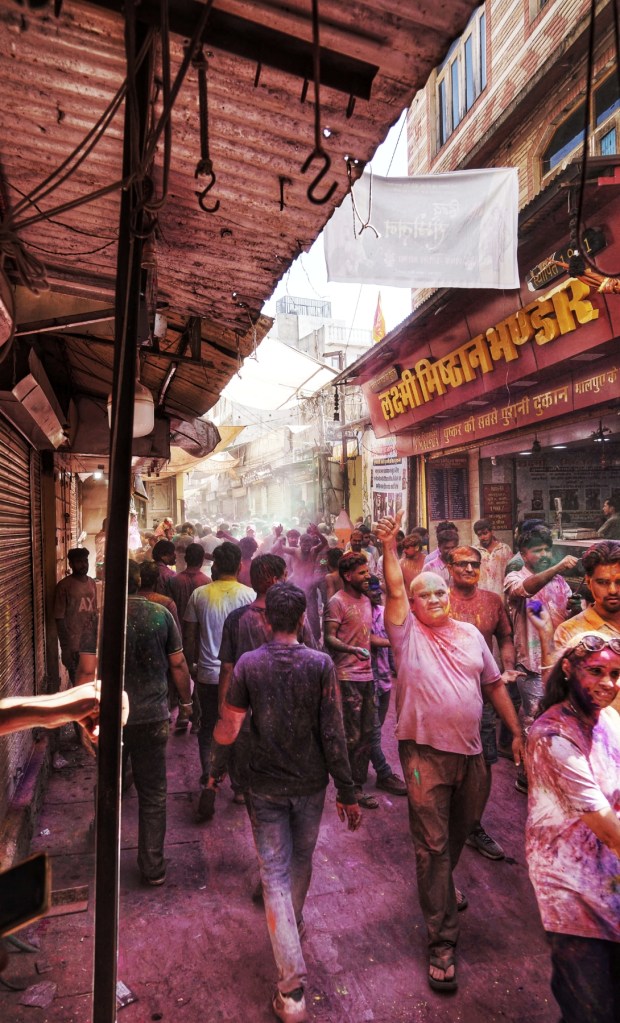
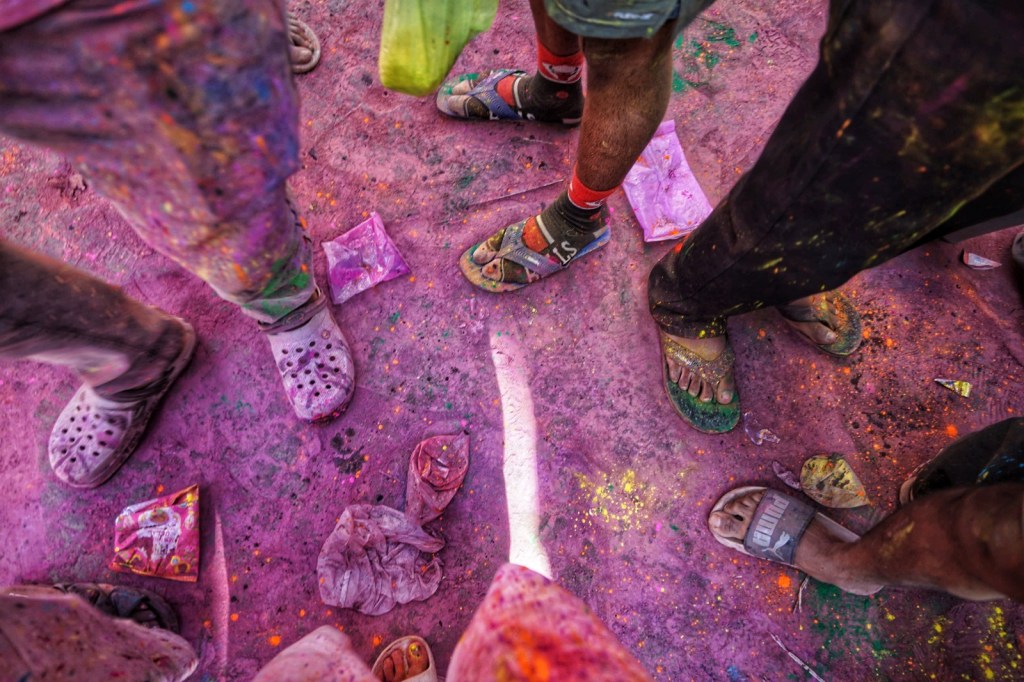
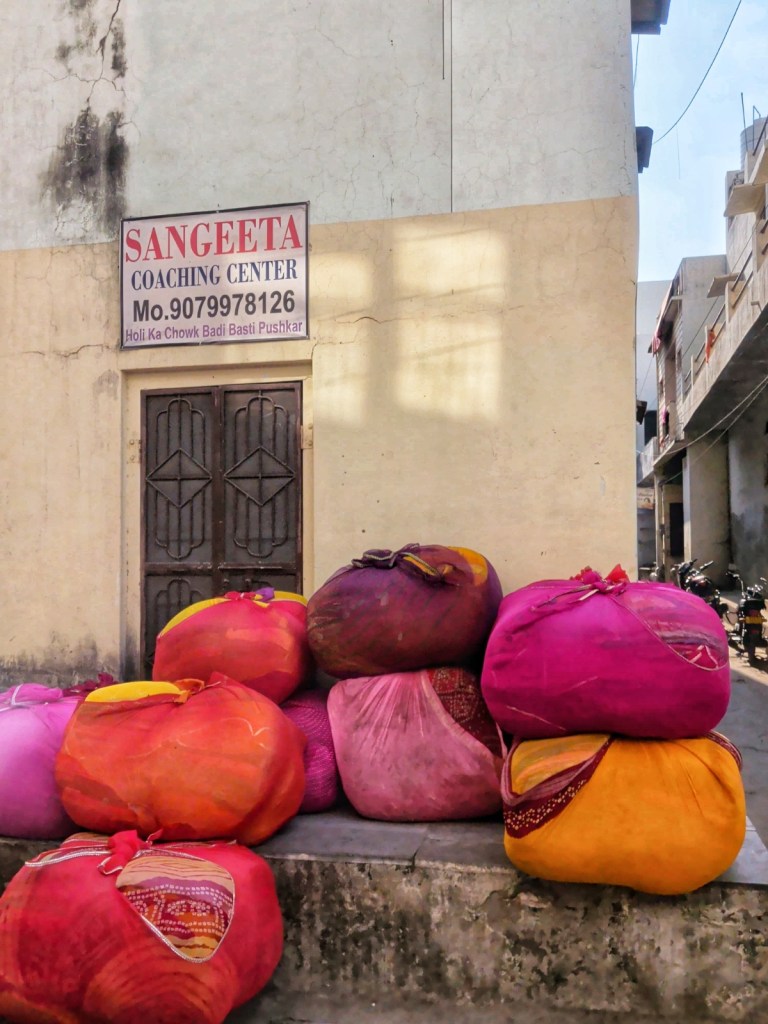
Holi itself turns out to be one of the most communal, joyful things I have ever witnessed. It begins early in the morning, almost gently. In the streets, people approach each other with small amounts of colored powder, lightly touching it to cheeks or foreheads. A soft “Happy Holi” is exchanged. It feels intimate at first. Personal. Like the day is easing itself open. We make our way to a small plaza where a drum band is setting up. At first, it’s just a few people. Then, within minutes, the space fills up—fast, almost unexpectedly so. The rhythm builds, and with it the energy. Clouds of color start to rise into the air, drifting, colliding, settling on skin and clothes. It becomes harder to tell who is who. Everyone slowly turns into the same moving canvas.
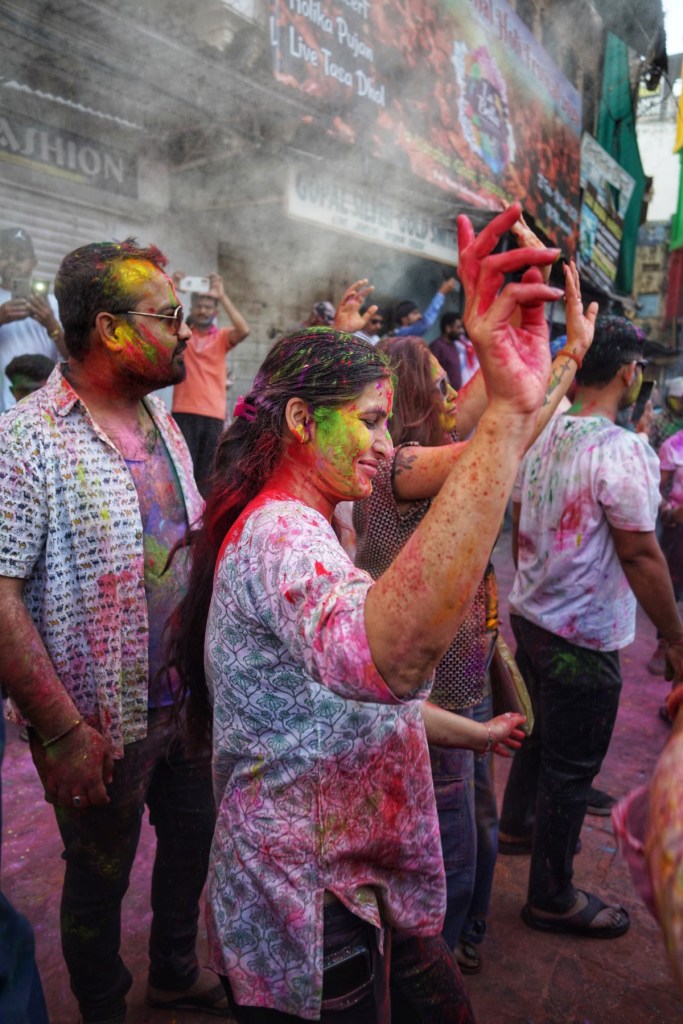
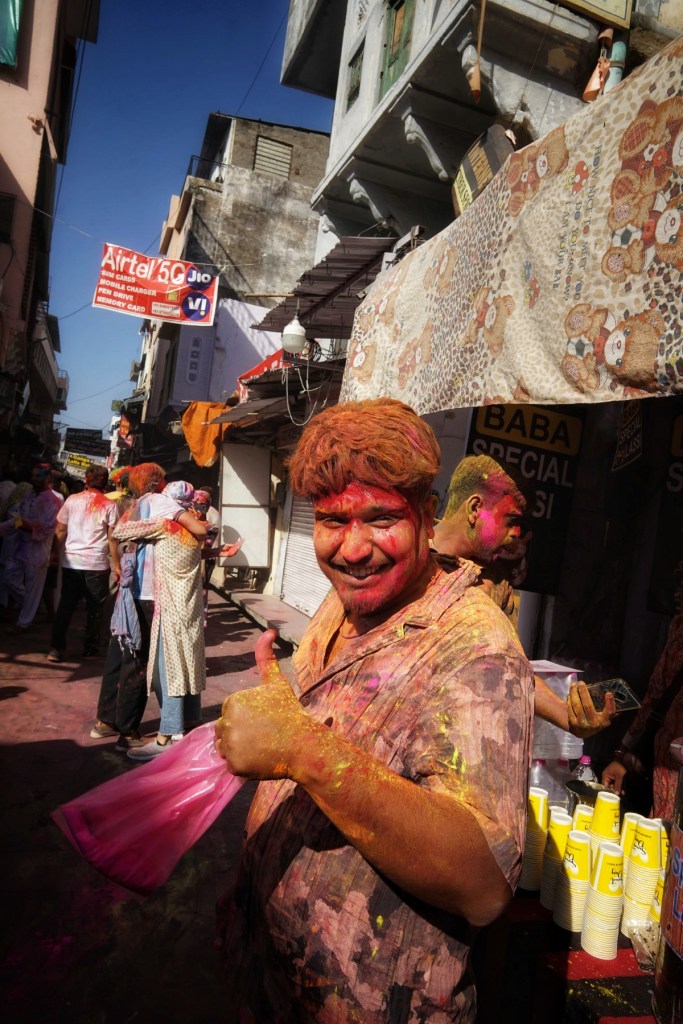
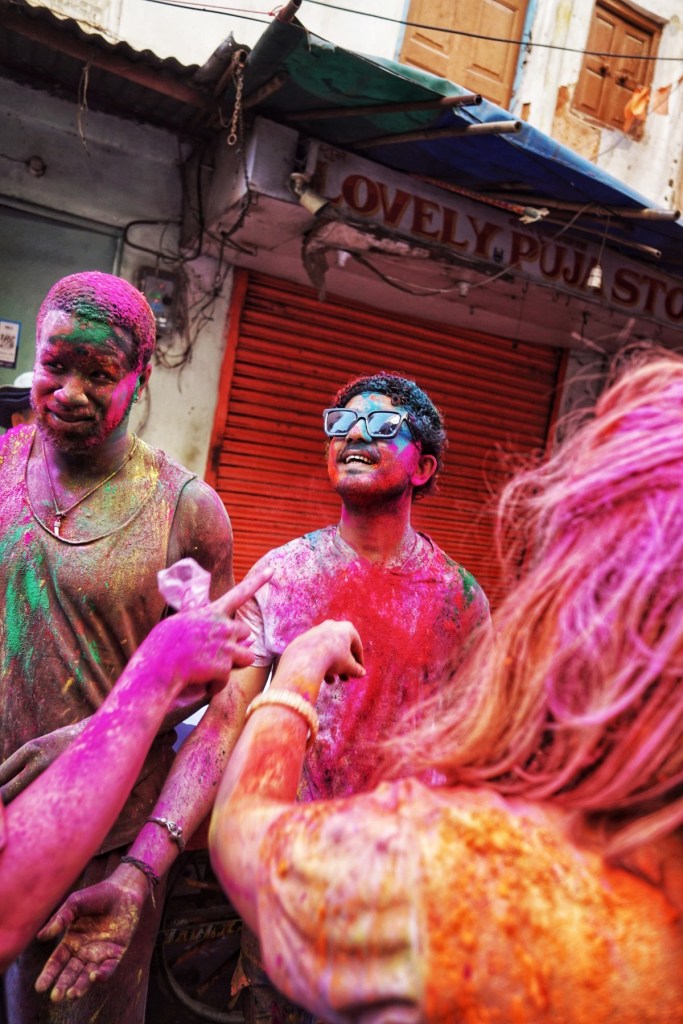
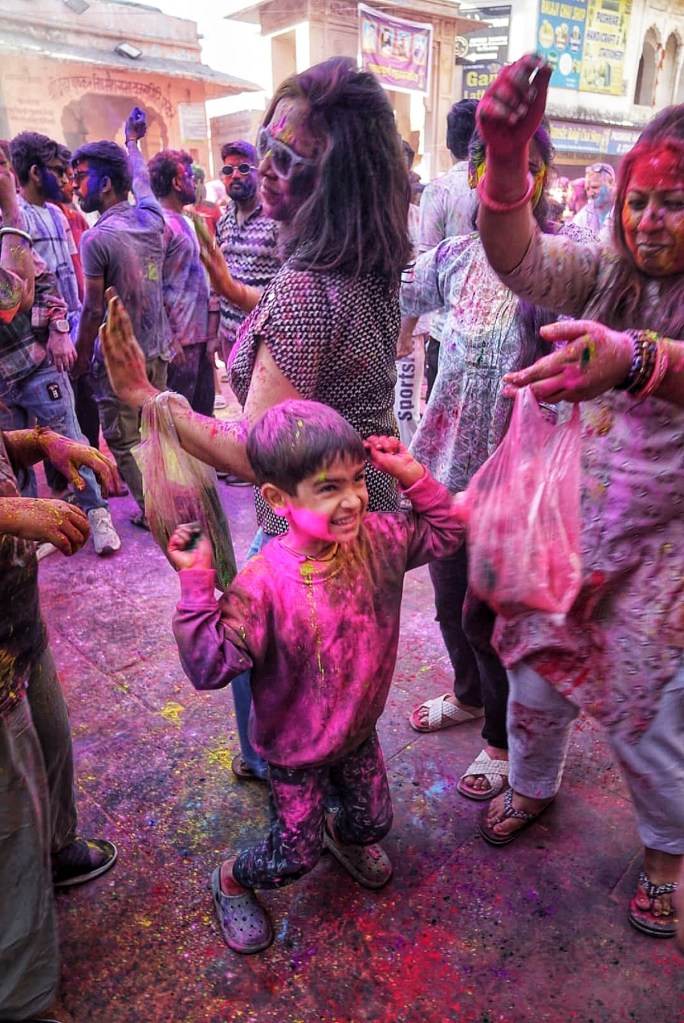
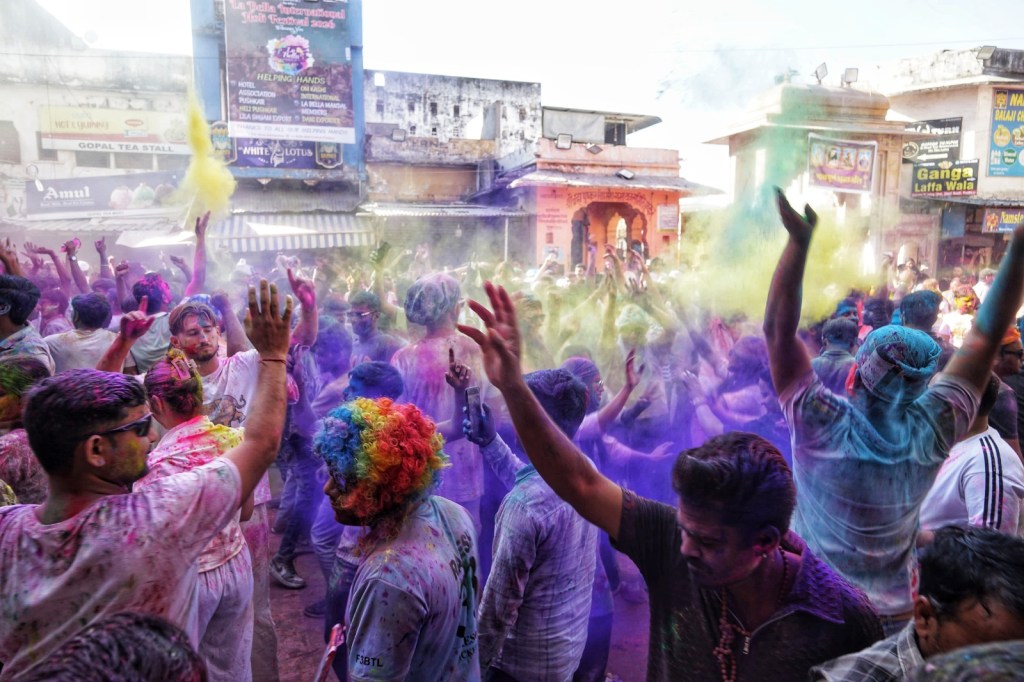
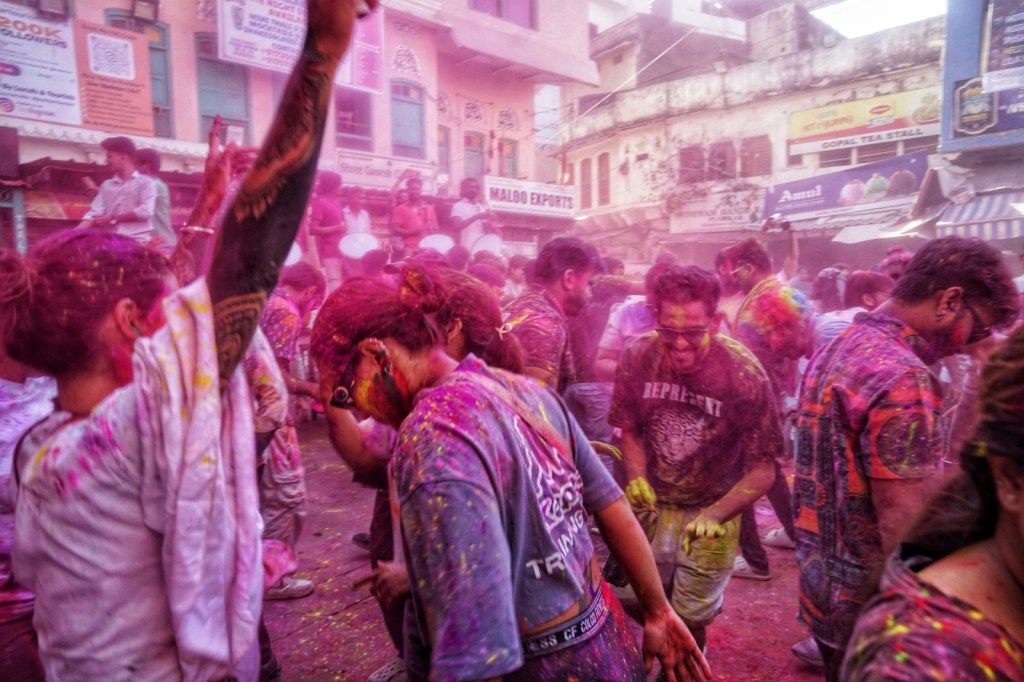
As it gets more and more crowded, we move on to a much bigger plaza outside of town. Here, everything scales up. At some point, a fire truck starts spraying water into the crowd. People cheer, jump, dance into it. Powder turns into color-streaked water running down faces and bodies. It’s intense. A bit too intense for us, so we leave it fir the Rest to enjoy. And from the side, in the shade, it becomes something else again. Short, easy conversations with strangers who feel strangely familiar in that moment. There’s a lot of laughter. No real agenda. Just being there.
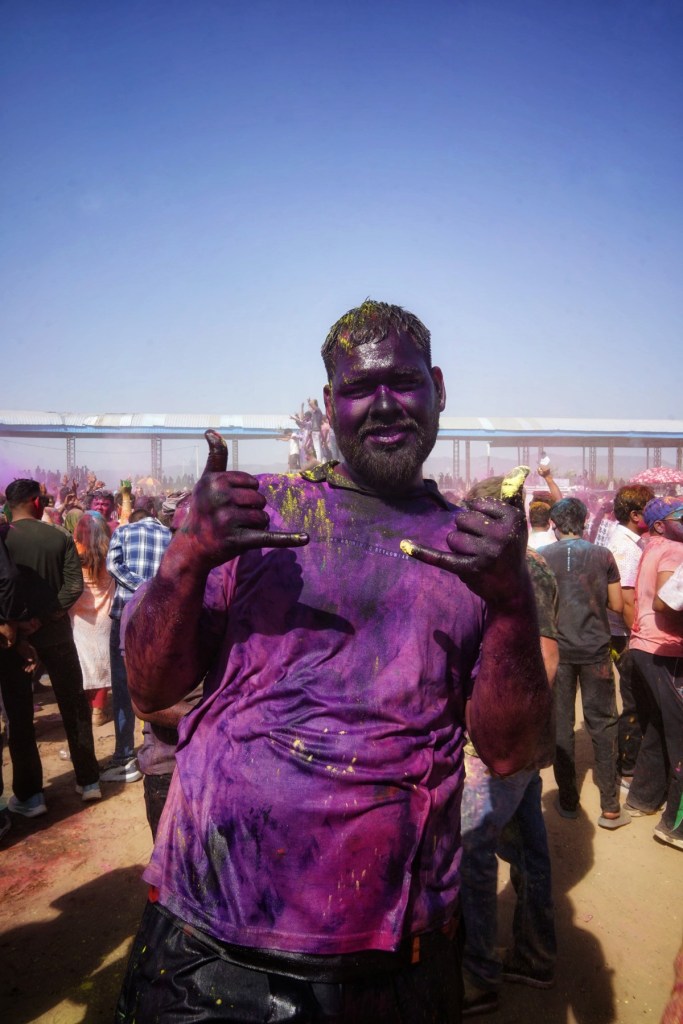
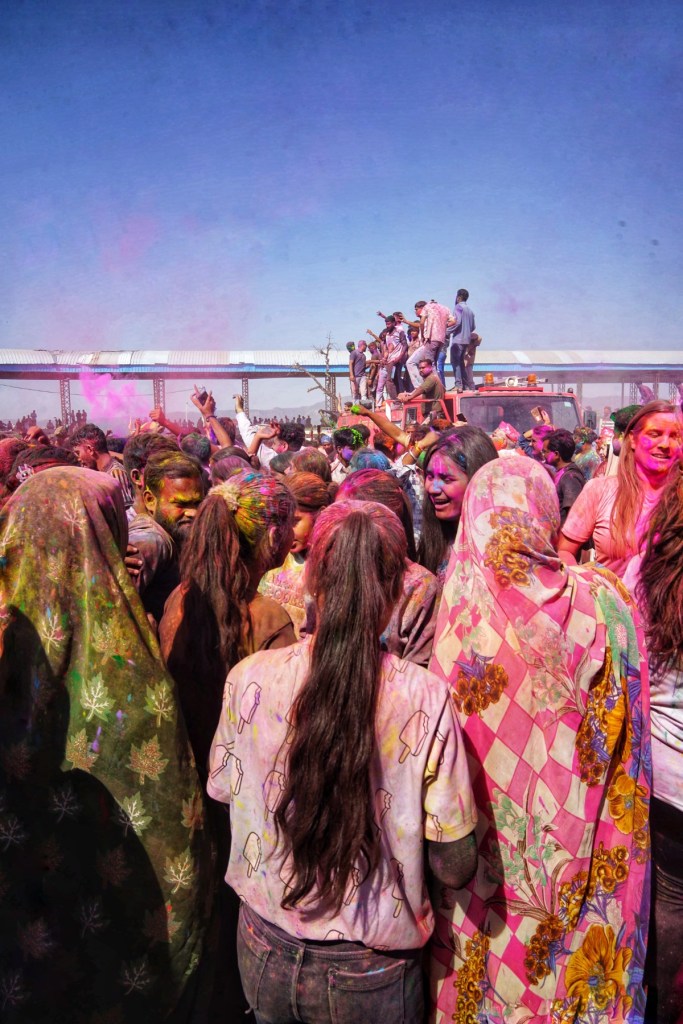
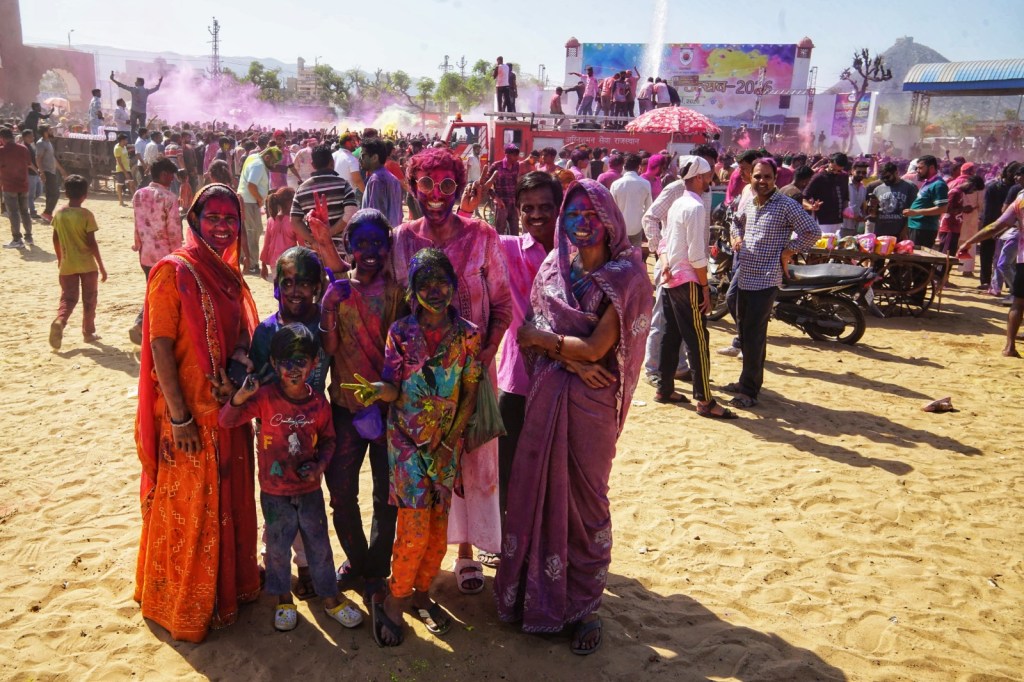
In the end of the afternoon we drip from powder. Before Holi, we had been given a few tips. Cover your skin in coconut oil. Wear sunglasses. Avoid the “big guns” that shoot clouds of powder into the air. And: don’t stay out too long. Willem Jan is also advised to shave his beard and wear a shower cap. The first, I veto. The second turns out to be a very good idea. With a scarf wrapped around it, his lion’s mane is perfectly protected. I, on the other hand, am left with a pink forehead, a slightly questionable moustache, and—somehow—green boobs. It stays for about a day. Long enough to remember.
Pushkar added another layer to India—one that was probably always there, but suddenly became harder to ignore: choice. Until now, the lessons leaned toward surrender. Letting go. Not holding on too tightly. Here, that’s no longer enough. It’s not just about giving in. It’s about noticing when not to.
Almost like Mother India raising the stakes—quietly, but without room to look away. Between surrender and choice, I keep finding myself asking the same question: When do I step in—and when do I step out?
And how do I know what is actually right for me? Because my mind—my mind is brilliant at this game.
It can argue for everything. It can make anything sound reasonable. Stay. Go. Trust. Doubt. Open. Protect. There’s always a story that makes sense.
But underneath that, there’s something else. Quieter. Less convincing. But more honest. I notice it in my body. In my stomach. Does it tighten, almost without me realizing? Does something pull in, hold, brace? Or is there space? Breath? A kind of openness that doesn’t need to explain itself? It’s subtle. Easy to talk myself out of. Not as a perfect answer. Just a signal. Easy to miss. Hard to fake.
 An unmapped life
If you feel like responding, I’m listening.