From a spiritual perspective, my arrival in India is gentle. There is a softness to it, almost a shyness. Hanuman is the primary presence, steady and warm, and I allow A Course in Miracles to rest for a while, working instead with what is already alive and known within me: silence, forgiveness, the repeated return to what I sense as my true Self. Nothing dramatic, nothing overwhelming. A quiet deepening. As we enter the fifth week of our travels, that quality is about to change.
When we reach Coimbatore I feel, for the first time in India, completely drained. Not the satisfying tiredness that follows a full day, but a total depletion. My body feels hollowed out by the journey: the skin sticky with dust and heat, the muscles hurting and unreliable, the head heavy. On arrival in the hotel I just curl up on the bed.
After a long night of sleep I return to myself and we spend almost the entire next day at the Isha Yoga Center. Until shortly before coming to India I am barely aware of Sadhguru, which now seems almost absurd considering his global visibility. Willem Jan has never been particularly interested in him either, and yet during the journey people keep telling us we have to go. When Willem Jan picks up one of his books and finds himself unexpectedly engaged, we decide to make the stop.
He appears like a spiritual rockstar, present in Western media, speaking at international forums, constantly circulating through certain social media spheres — if you move within those particular bubbles. His presence is unmistakable: the long beard, the flowing robes, the motorbike, the way he translates yogic concepts into a language that seems to fit just as well into corporate leadership seminars as into meditation halls.
His ashram lies on about 150 acres at the foot of the Velliangiri Mountains, a vast campus run by the Isha Foundation and centered around the Dhyanalinga, a consecrated meditation space that is said to be open to anyone regardless of belief or practice. Even before entering, the scale becomes apparent: kilometers of designated parking zones under palm trees and on open fields, everything prepared for the immense crowds. Right from the start is a certain tension for me noticeable, like a second layer beneath the devotional surface. It even shows in the landscape. Electric fences under high voltage keep elephants from crossing what used to be their migration paths. And somewhere in the back of my mind are the muted discussions I have come across — questions about how this land was acquired, about its proximity to protected forest areas.
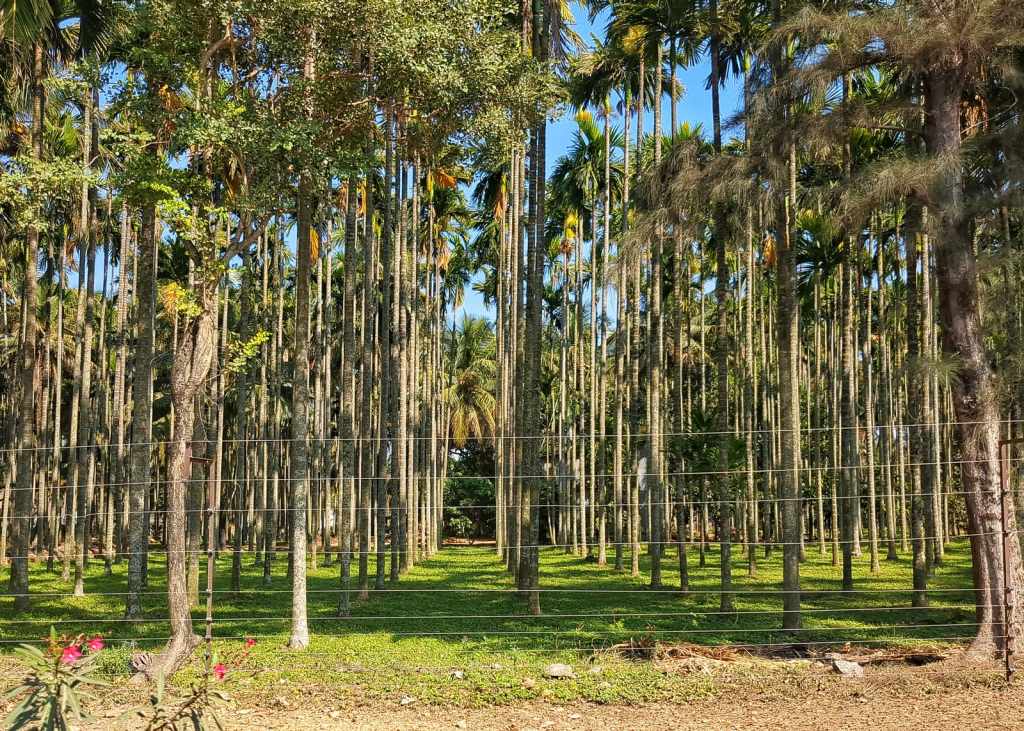
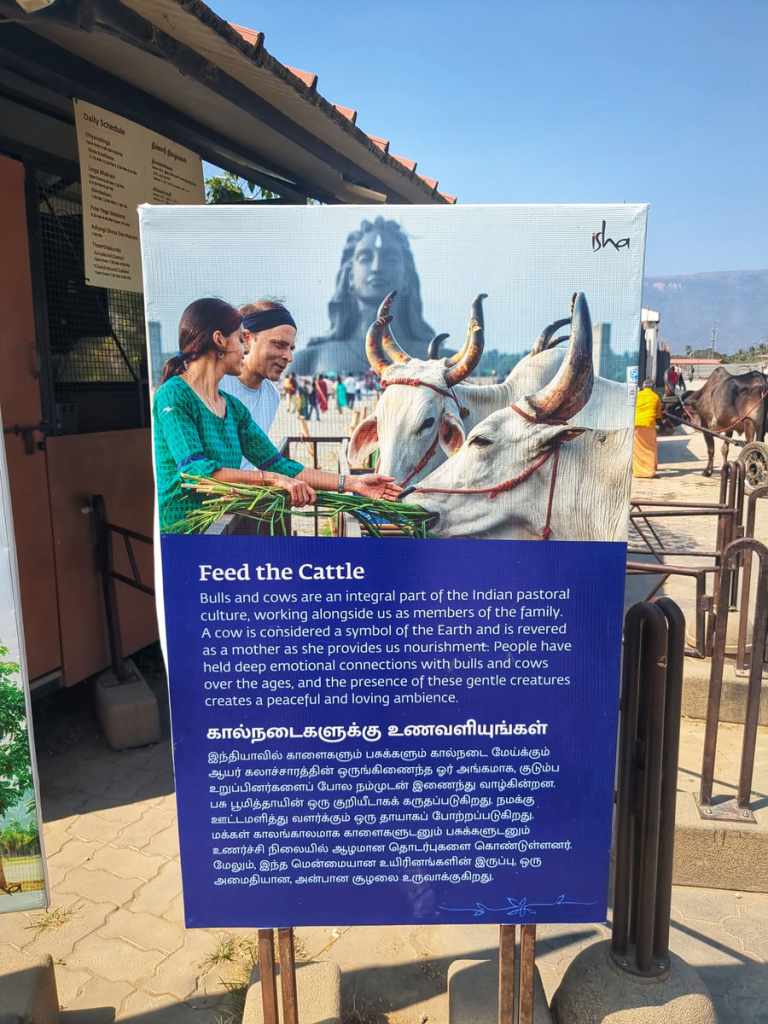
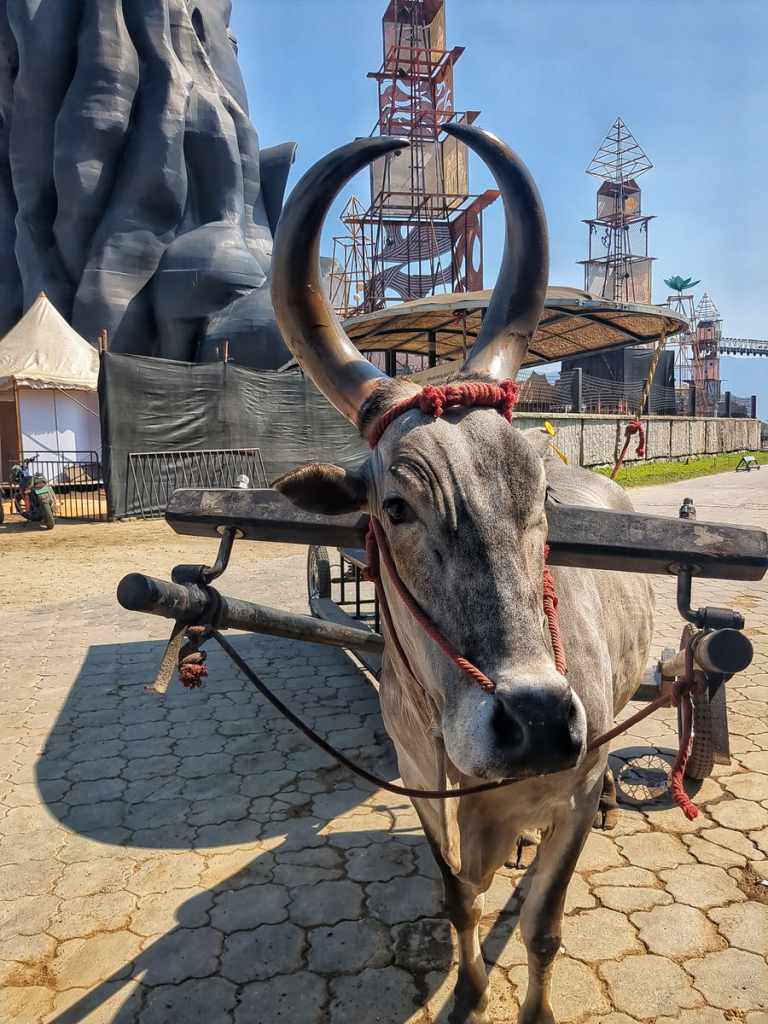
At the entrance we are welcomed by a row of Indian bulls, the same animals that once pulled ploughs and vegetable carts through village streets. Now they are harnessed to bright wagons, transporting tourists who do not want to walk the ten minutes to the statue. A large sign declares the commitment to preserving cultural heritage. The sentence feels carefully polished, almost corporate. Heritage, in this version, waits in the sun for the next customer. If the intention were truly preservation, these animals would not be reduced to an attraction. They would move freely through the grounds, carrying nothing but their own unhurried weight.
Inside, the organization feels almost like a festival. We are allowed to keep our small bags because we carry our passports, but our phones have to be surrendered. In exchange we receive a numbered tag, our photograph taken to ensure the correct person retrieves the device later. Then the shoes are handed over, another tag, another number.
The ritual bathing area marks the beginning of the ashram space, a threshold between the ordinary and what is intended to be approached in a state of receptivity. The large tank for men is visible from the outside. The women’s tank is separate and hidden. At first I feel mildly offended by this segregation, interpreting it through the reflexes I carry with me. But when I enter the enclosed space myself, wearing only the simple orange dress I had to change in, still wet from the shower and slightly cold, I am suddenly grateful for the privacy. The air is quieter here, contained. No one else is in the water, only a woman sitting silently as a guard, her presence neither intrusive nor welcoming, simply part of the order of the place.
The water is ice-cold. The moment I immerse myself every cell contracts, as if my body were trying to become a single solid surface. The breath stops high in the chest before dropping, involuntarily, into something deeper. It is meant to cleanse, to rinse away not physical dirt but a certain density, to loosen energetic blockages so that one enters the meditation hall more available, less entangled. But I cannot find an immediate connection. The gesture is too unfamiliar, the symbolism not yet embodied. I am performing something whose language I do not yet speak.
And yet the body reacts. The cold is not only cold. It is a sharp brightness moving through the spine, a sudden, almost metallic clarity in the head. When I step out I am shivering, looking for a way to dry myself. There are no towels. I secretly take one of the already dried orange cloths hanging nearby, rub my skin as quickly as possible, then wash it carefully in the basin and hang it back in its place, hoping the small transgression will dissolve unnoticed into the larger ritual order.
Interestingly, although I cannot connect to the ritual while I am in the water, a certain calmness appears afterwards. Not emotional, not devotional. More like the static in the mind has been reduced by a few degrees. The inner commentary is softer.
We attend two meditations. The first lasts only seven minutes, an introduction in which Sadhguru’s recorded voice repeats the sentence: “I am not this body. I am not even the mind.” Sitting barefoot on the stone floor without cushion or carpet is more challenging than the meditation itself. After five minutes my feet are numb, my hips aching, and although I understand the intention of the mantra it does not resonate as a living truth for me.
The second meditation takes place in the circular dome around the lingam, in absolute silence, at least in theory. The architecture carries every small sound across the entire space. A little boy discovers this and starts clicking his tongue to hear the echo. I look over at him, he grins, I grin – and for a moment the whole seriousness dissolves into something human and light.
When we leave the temple complex, we walk toward the Adiyogi statue, 34 meter high, officially listed as the tallest in the world in the Guinness Book. The scale is almost absurd, a presence that dominates the horizon like a billboard of divinity. I cannot deny its power, its sheer visual impressiveness. But inside me, a small ember of confusion catches fire and begins to spread. I try to remain open, to meet it on its own terms, yet something resists. I just don’t get it.
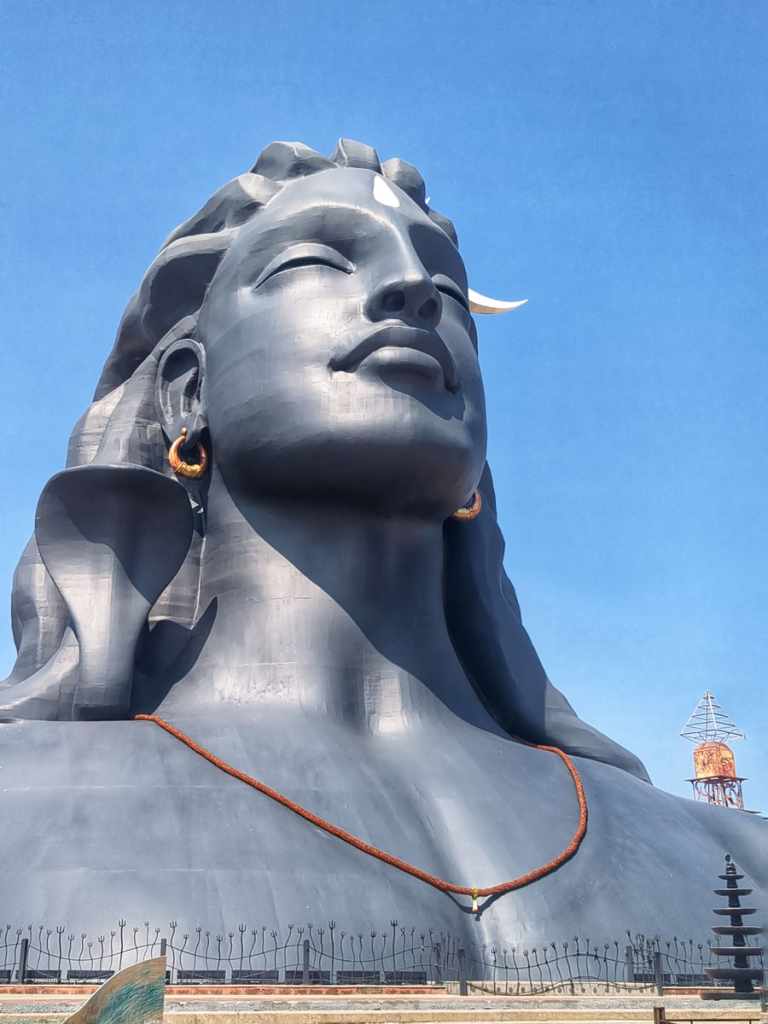
I look at the statue and at the polished grounds around it, at the neatly arranged pathways, the crowds of devotees taking selfies, the gift shops selling branded merchandise. The whole thing is too manicured and designed to impress for my taste. I think of Sadhguru himself: the carefully crafted persona, the global visibility, the constant media presence. There is charisma, there is brilliance, but there is also strategy. I feel the faint echo of marketing beneath the devotional surface, and it irritates me in a way that I cannot quiet.
I reflect on the promise of this place: enlightenment, connection, the dissolution of ego. If the final realization is that all of this is a dream, that our true nature lies beyond form, beyond identity, why does it have to shout so loudly? Why is Shiva here not in the subtle flame of consciousness? The contradiction gnaws at me. Everything here screams form. The very environment seems to insist on itself. I can feel the devotion of the people, and it is beautiful, sincere. But for me, it does not breathe. I cannot access the quiet inner space I have been moving toward all these weeks. My mind recoils, not out of arrogance, but out of a deep, knowing that what is presented here is not for me. It feels performative rather than transformative, consumption rather than surrender. I have followed Hanuman’s quiet, steady presence, worked with my own inner silence, and I sense that the power I seek cannot be bought, sold, or photographed. My path is quieter, less orchestrated, rooted in personal encounter rather than public display.
As we leave Sadhguru’s estate I tell Willem Jan that I don’t think I am an ashram person. Little did I know.
The next morning we travel to Tiruvannamalai, another place deeply associated with Shiva. Here the atmosphere shifts.
It is the town where Ramana Maharshi (1879/- 1950) lived for most of his life – a Hindu sage and one of the most influential teachers in the 20th century, although he himself did not present his teaching as belonging to any system or religion. At the age of sixteen he underwent a sudden and decisive awakening brought about by an intense, direct confrontation with the fear of death. Soon afterward he left his family home and came to the sacred mountain Arunachala, which he regarded not as a symbol but as the living Self. He remained here for the rest of his life — first in the caves on the mountain, absorbed in deep silence, and later at the ashram that gradually formed around him, now known as Sri Ramanasramam.
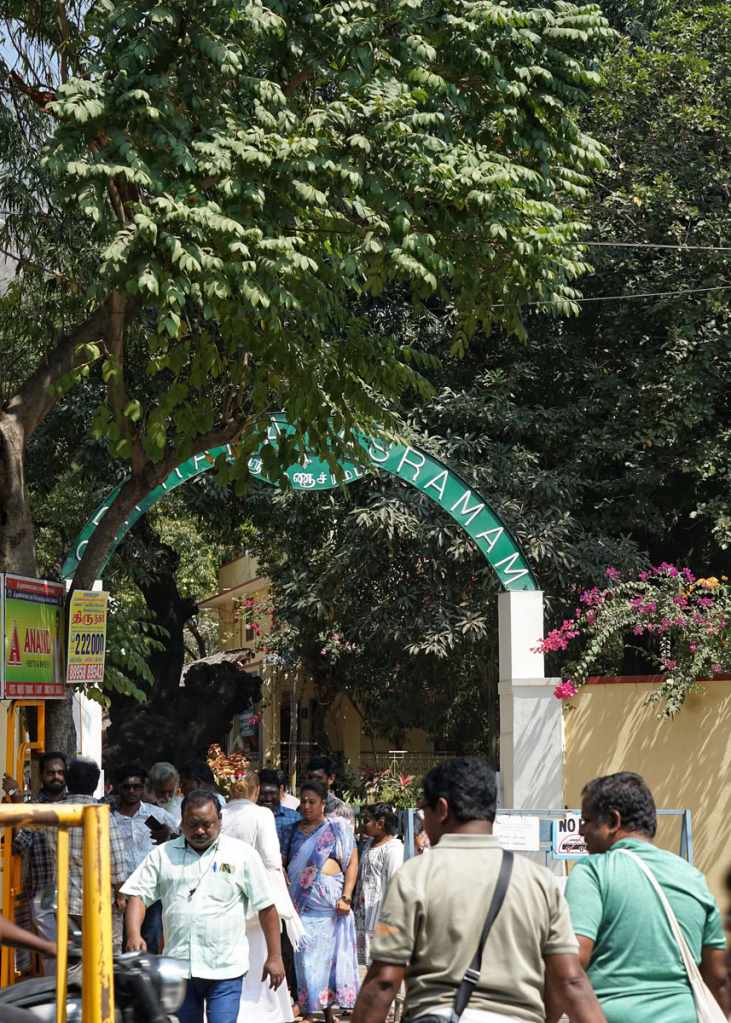
His teaching is disarmingly simple and uncompromising: the question “Who am I?” — not as a philosophical reflection, but as a continuous turning inward toward the source of every thought, every feeling, and every sense of “I,” until the one who asks dissolves in pure awareness.
I begin to experiment with this. Willem Jan and I had already approached it together over the past year. Now as I attempt it alone, it feels stiff. Unyielding. Like a pair of Doc Martens that have not yet learned the shape of my feet. The leather resists and rubs. But still, I walk. Slowly. Again and again. The same inner path and the same quiet returning. And somewhere in this repetition a trust begins to grow. It softens not through force but through contact. With patience the hardness loosens. The effort becomes less visible. What first felt constructed — almost like a posture I had to hold — begins to settle into something more natural. Less doing, more allowing.
In his ashram I encounter a sharp contrast to my experiences so far. It is quiet, almost understated, traditional without being staged. We attend a puja, listen to a sitar concert, sit in meditation. One morning we climb Arunachala at dawn, visiting the samadhi shrines of Ramana and his mother.
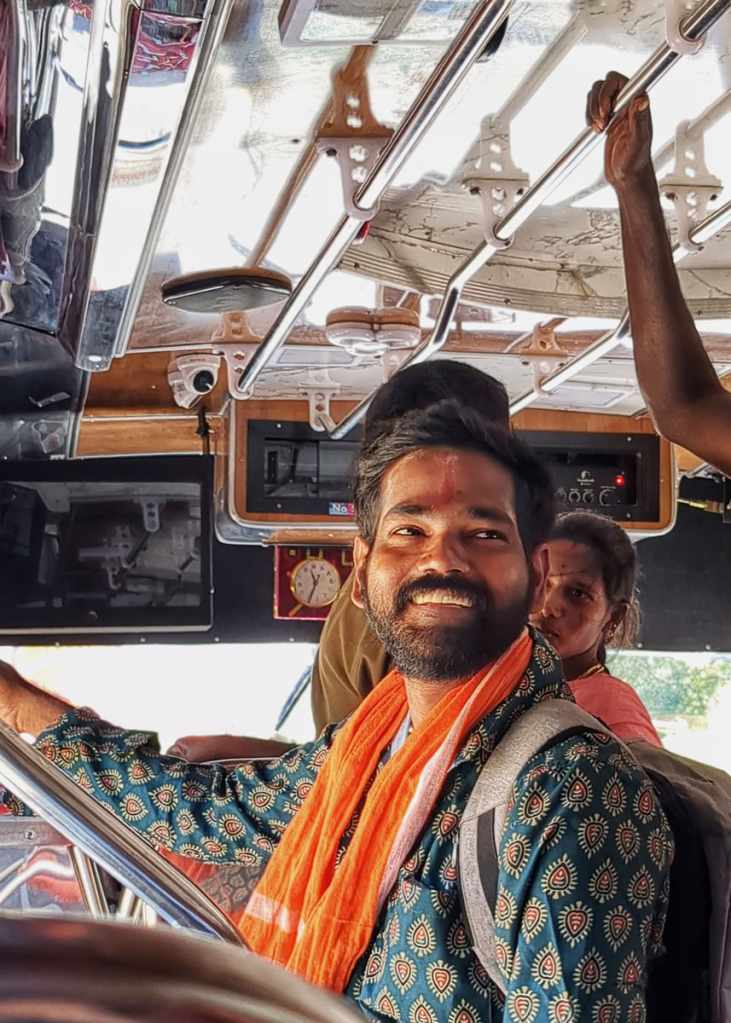
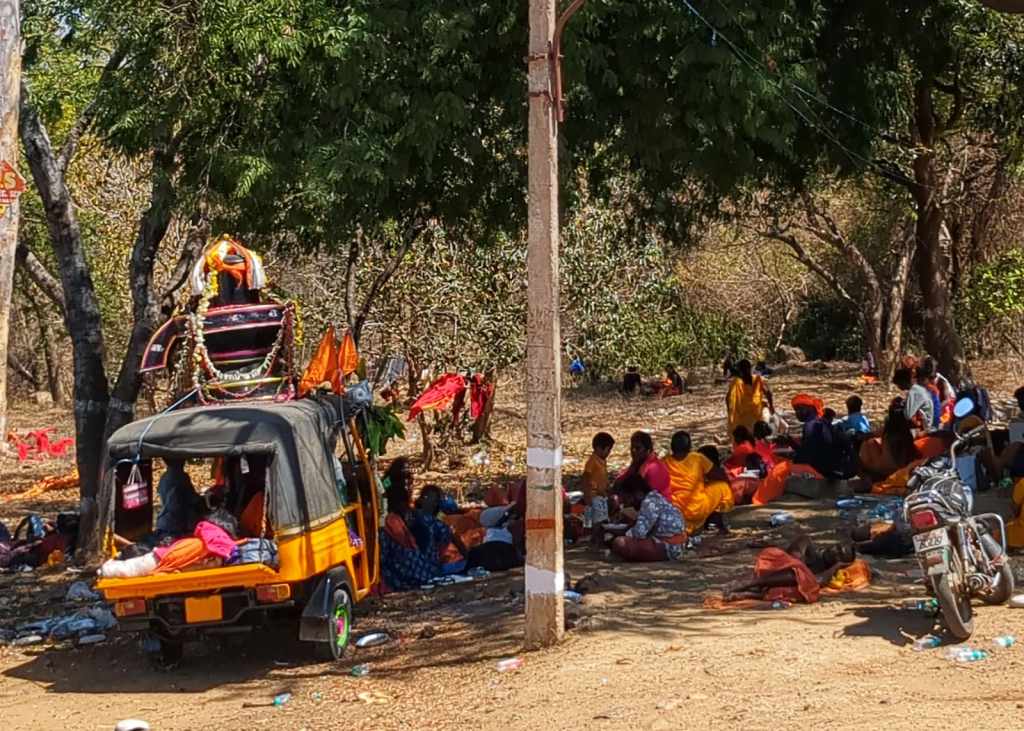
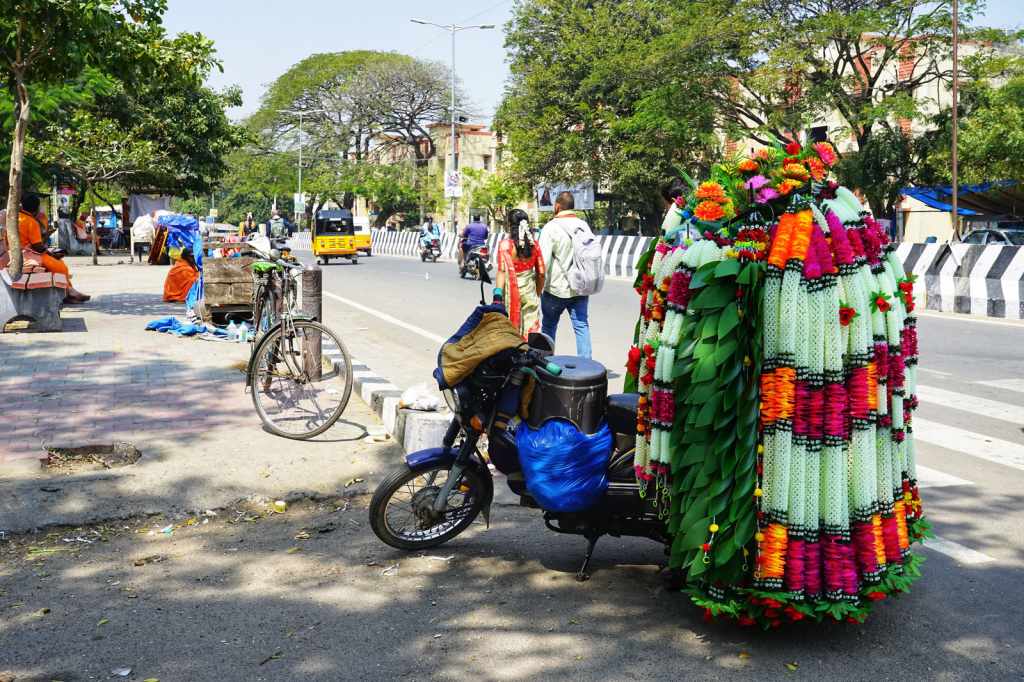
With all of that going on, Tiruvanemalai breathes a very special energy in itself, but even more right now. For days we have been seeing sadhus and pilgrims walking toward the town. The reason is approaching: Mahashivaratri, the Great Night of Shiva. It is the night dedicated to wakefulness, to meditation, to overcoming identification, a night in which the upward movement of energy is said to be especially accessible.
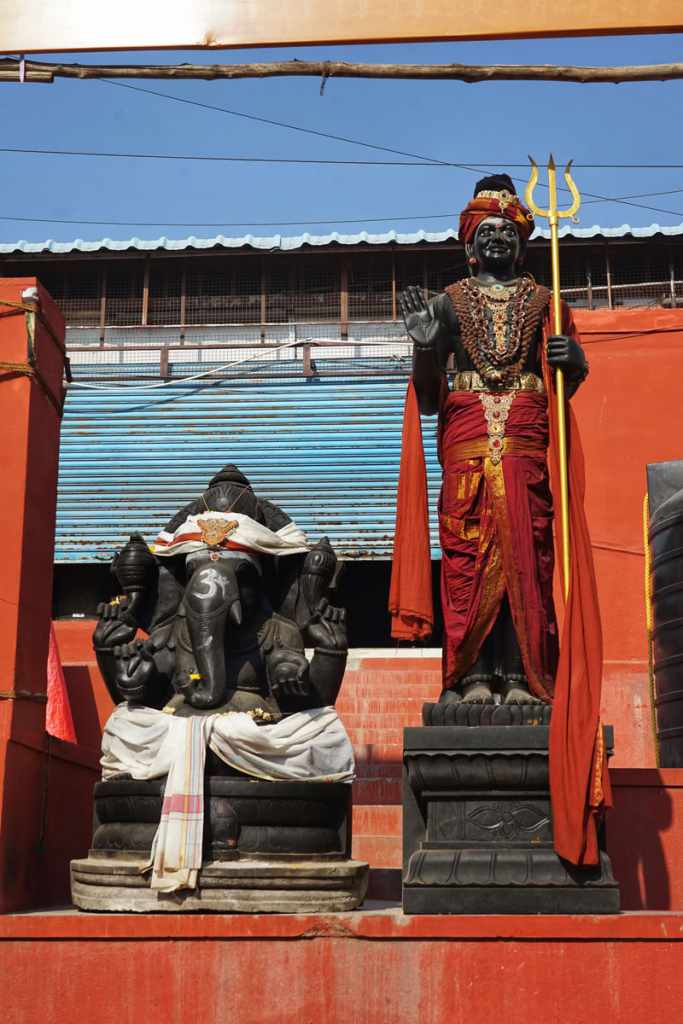
The night before I can hardly sleep. There is a fire in me. Every cell is inflamed. I take two showers in the hope of cooling down, but the water evaporates on my skin as if I were made of hot stone. In bed I toss and turn, my muscles twitch in agony. I don’t know what to do. None of my learned tactics of calming down the nervous system work. Quite the opposite. At one point I lie all curled up with tears streaming down my face, only whispering: This. This is horrible. My mind is burning as well, thousands of images colliding. It is a constant buzz. Like static. It shakes me through and through. My vision becomes blurry. And yet, at the very same time, there is a vast stillness surrounding all of this. It is as if the fire is happening inside a space that has always been untouched. Everything was, is and always will be: fine.
Only later do I begin to understand this as an encounter with Shiva’s energy: not the gentle devotion I had known before, but the principle of inner combustion and heat of transformation. In the context of the Mahashivaratri, the raging fire makes sense. Fun fact: at the night itself, I sleep like a baby.
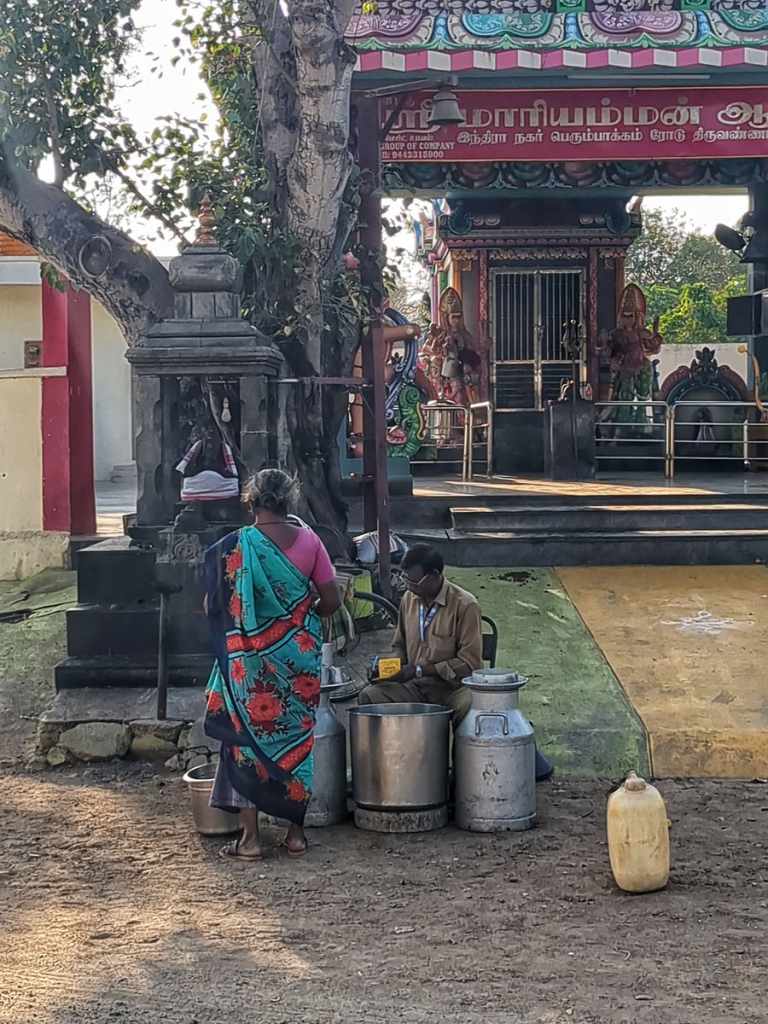
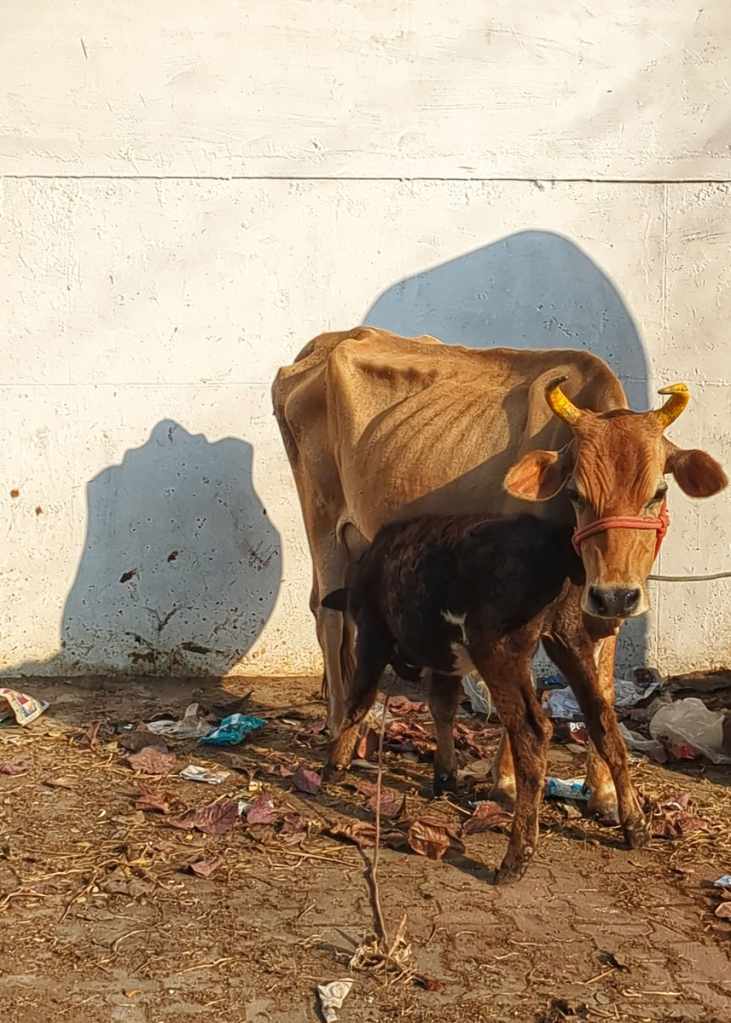
In general I feel more at ease here. The noisy main road, the constant honking, the street stalls, the masses of people, all of it feels grounding rather than disturbing. The beauty of this place sinks more deep in. All those tiny bites of peace I encounter here. Like the local milk collection point, where Cows are being milked while puppies wait for the drops that spill to the ground. The calves stand nearby, and we can observe how they are allowed to drink first to stimulate the milk flow and later receive their share. Very interesting: seeing ox carts transporting goods rather than tourists.
And for the first time I understand that I am, in fact, an ashram person.

 An unmapped life
Leave a Reply to Marianne Smit-weber Cancel reply