Willem Jan and I arrived in Mumbai, and there Henning joined us. For a few days, it was the three of us—sharing decisions, laughter, small confusions, food, moving through the city side by side. As Willem Jan left and Henning and I moved on from Mumbai, another part of my journey through India began. And that’s where I quickly realized what was ending. Traveling with Willem Jan had a certain steadiness to it. Not loud, not dominant—just present. A kind of underlying rhythm I didn’t have to think about. And only once it was gone did I fully notice how much I had leaned into it. With the one who simply knows how things work—gone, it was now on me. Or on us. And very quickly, I learned that traveling through India was far more challenging than I would have hoped for.
It starts with something as simple as finding the right bus stand. Simple, in theory. In reality, it becomes a small odyssey: asking locals, checking maps, talking to travel agencies, even calling the bus company. And still—everyone says something different. The map disagrees with the company, the company disagrees with the locals, and the locals disagree with everyone else. So… whom do we trust? More than once, I catch myself wondering: What would Willem Jan do? In the end, we trust the locals. The ones who watch the buses come and go every single day. And it turns out to be exactly the right decision.
Henning and I load our bags into the belly of the bus and crawl into our narrow beds. The schedule had changed just a day before due to technical issues, and with it the bus itself. This one even has a toilet (yay). My AC, however, has a personality of its own. I can neither switch it off nor adjust it. It’s either blasting cold air straight into my face or nothing at all—because I’ve stuffed Henning’s socks into the vent to block it. Annoying, yes. But not the end of the world.
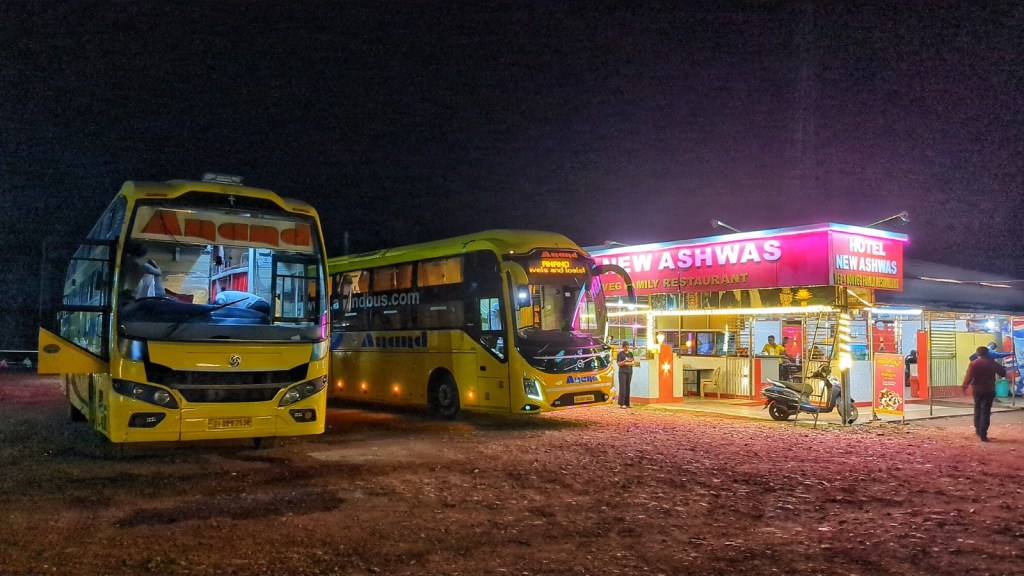
Some more challenges await the moment we step off the bus. At 6 a.m., we find ourselves in the middle of nowhere. The sun is just rising, the air still fresh—but already hinting at the heat to come. Rickshaw drivers gather quickly around us. It’s a 20-minute ride. “900 rupees, Indian price,” one says, grinning. I grin back, pat his shoulder. No, brother. That’s too much. Another says 600. I just walk away, pulling a slightly flabbergasted Henning with me. 500 meters down the road, another driver: 300. I say 200. We settle at 250—but since we’re going a bit further, we end up paying 300. Later we learn that the drivers here seem to operate within a shared pricing system—higher than what I’ve experienced elsewhere. There’s an agreement in the air, an understanding among them. And honestly, good for them. In the end we payed the amount that is usual for the trip. Iam a bit proud.
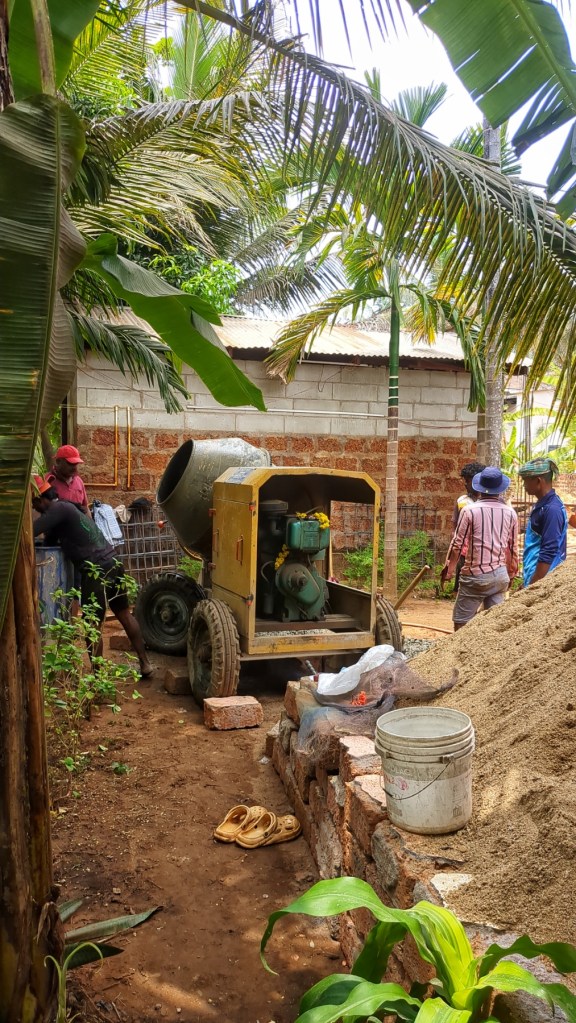
As we arrive, things don’t immediately get easier. We can’t find our place. It doesn’t seem to exist. We walk, ask, wander in circles—but no one speaks English. This is Karnataka. The language here is Kannada. We both don’t know a single word. So we go back and forth until Henning calls the host, who guides us over the phone. The place is tucked between other houses, surrounded by a construction site—holes in the ground, piles of sand, iron rods sticking out of concrete. Is this really it?
Out of seeminlgy nowwhere a man appears and opens a room so we can leave our luggage. Our actual room isn’t ready yet, even though I asked beforehand. It is yet another thing I quickly learn with Willem Jan gone: planning and discussing the details with locals can sometimes be challenging as a woman. At least, that is how it feels in this moment. When I speak, there is a slight hesitation, a lack of response, as if my words don’t quite land. Or maybe they land, but don’t carry the same weight. He simply appears to not take me seriously. When Henning talks to him, he is being addressed as “Sir.” The conversation is polite, the agreements stand. None of it transpires for me. It’s subtle. Not openly dismissive—just a shift in attention, in tone, in who is being acknowledged. And I find myself stepping back without wanting to, watching how the same conversation unfolds differently depending on who is speaking. At the same time, I know this is not universal. I’ve met so many people here who treat me with openness, respect, and genuine warmth. It’s not “India,” it’s not “everywhere,” and it’s not “everyone”. But it is something I notice here and there—and something I haven’t really experienced like this before. Never mind. We are here now. And soon find our way around.
Gokarna stretches long. I knew that before arriving. I thought I wouldn’t mind—2.4 kilometers, easily walkable, right? But the heat! Most days it’s at least 32 degrees, and the app claims it feels like 42. Honestly, it feels like 100. April marks the peak of the dry season here on the Karnataka coast. The air is heavy, almost unmoving, the sun relentless. There is little relief—no rains yet, no cooling winds. Later in the year, from June onward, the monsoon transforms everything: the heat softens, the land drinks, and the air begins to breathe again. But now, everything holds its breath.
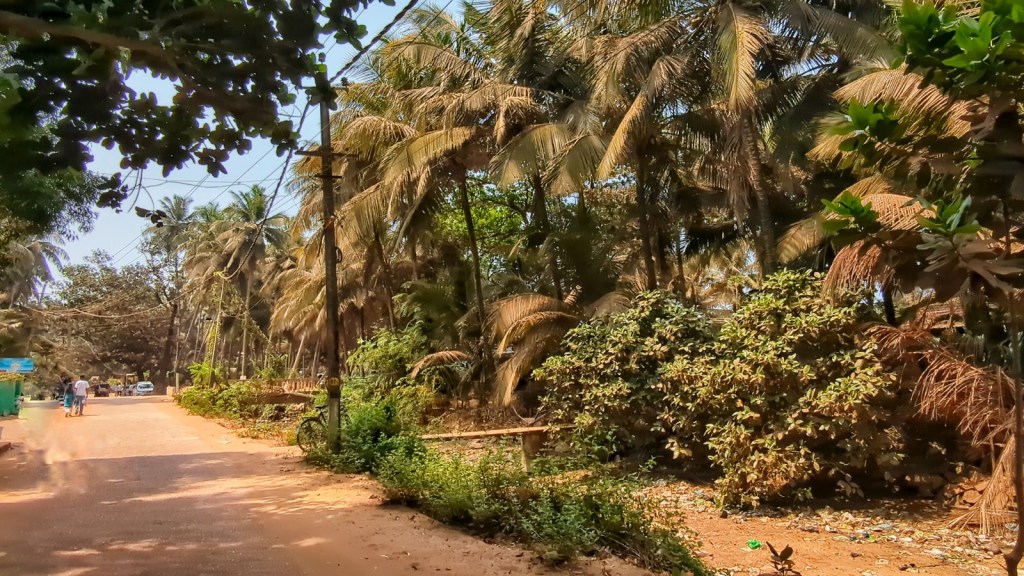
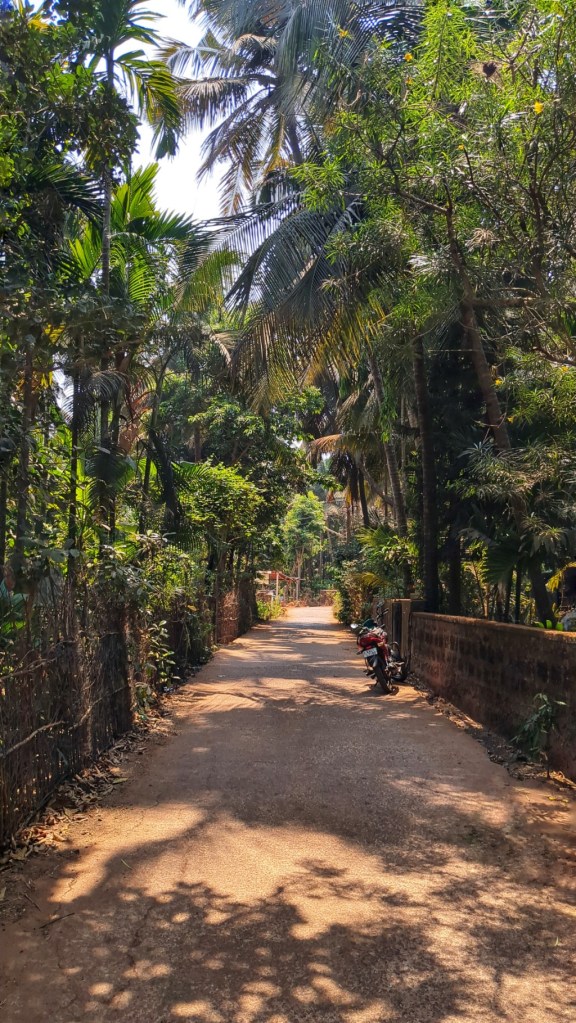
It would be lovely to rent a scooter, but neither of us dares to. Occasionally we take rickshaws. But most of the time we walk.
Because despite the heat, the beauty of the place makes it worth it.
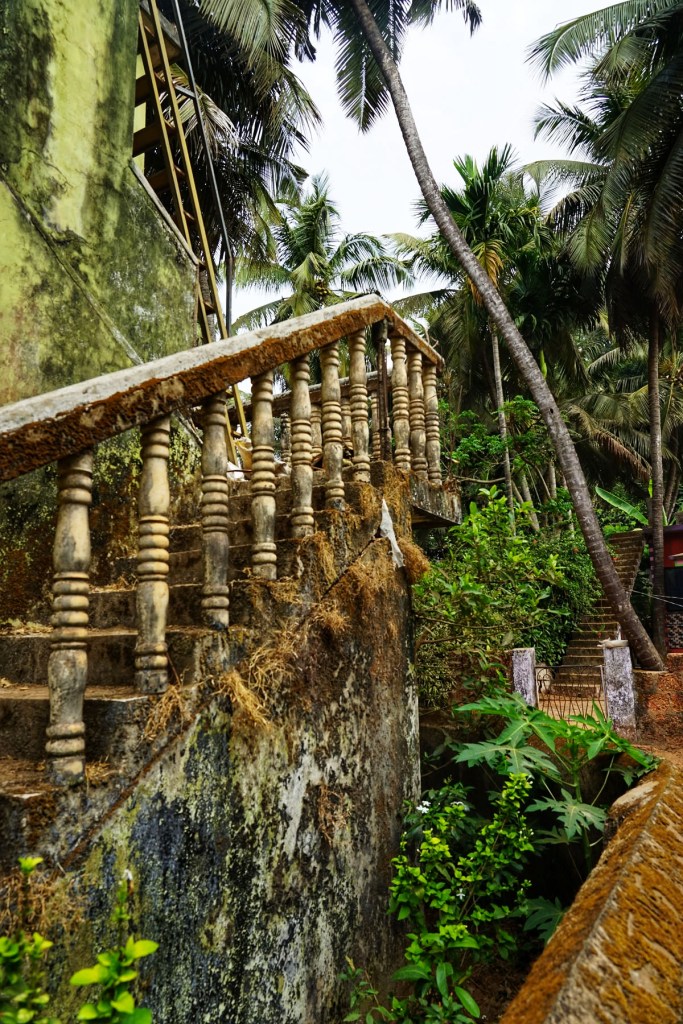
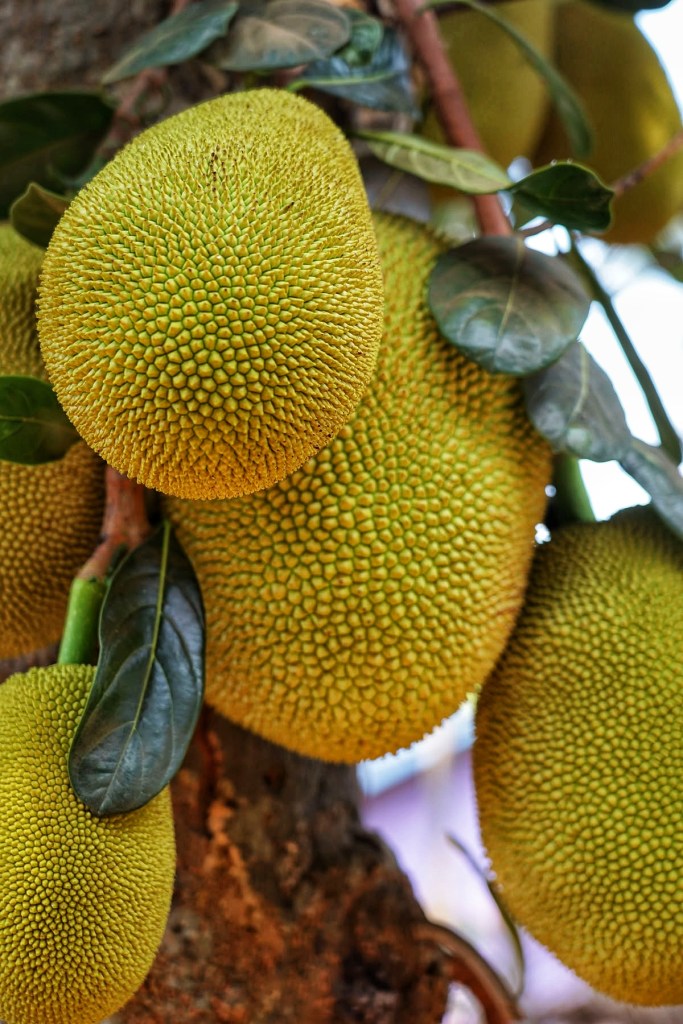
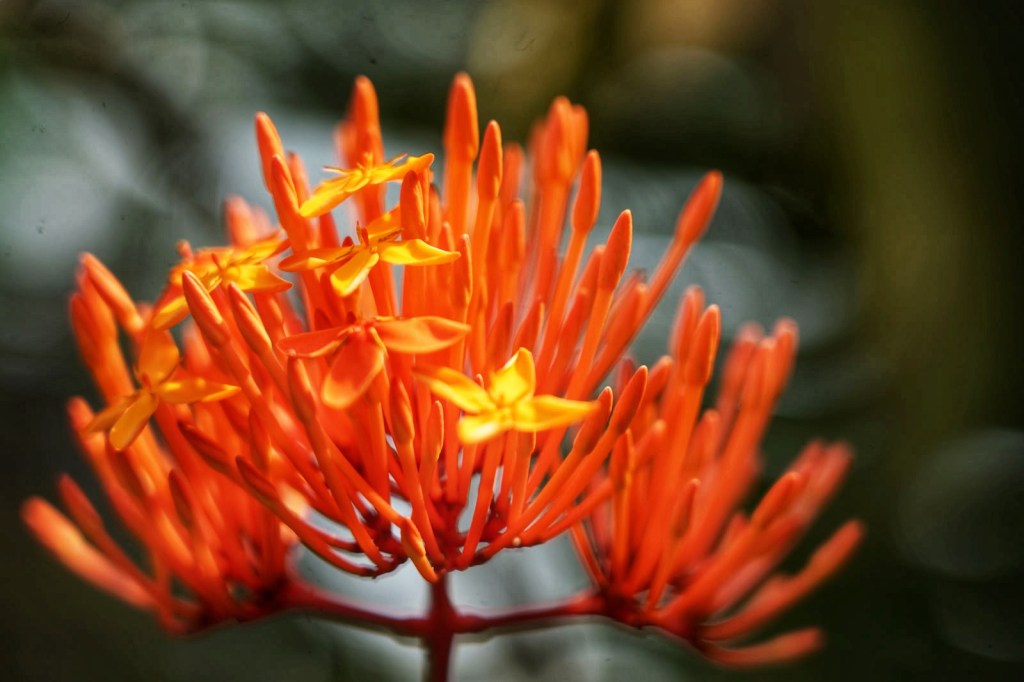
We move through lush greenery every day. It isn’t decorative—it’s alive and dense. Coconut palms lean lazily into the sky, their leaves clattering softly in the heat. Banana plants unfold in wide, fragile layers, their greens softer, almost translucent in the sun. Between them, narrow paths cut through a landscape that feels both cultivated and wild, as if nature and daily life have agreed not to interfere with each other too much. The air smells faintly of earth.
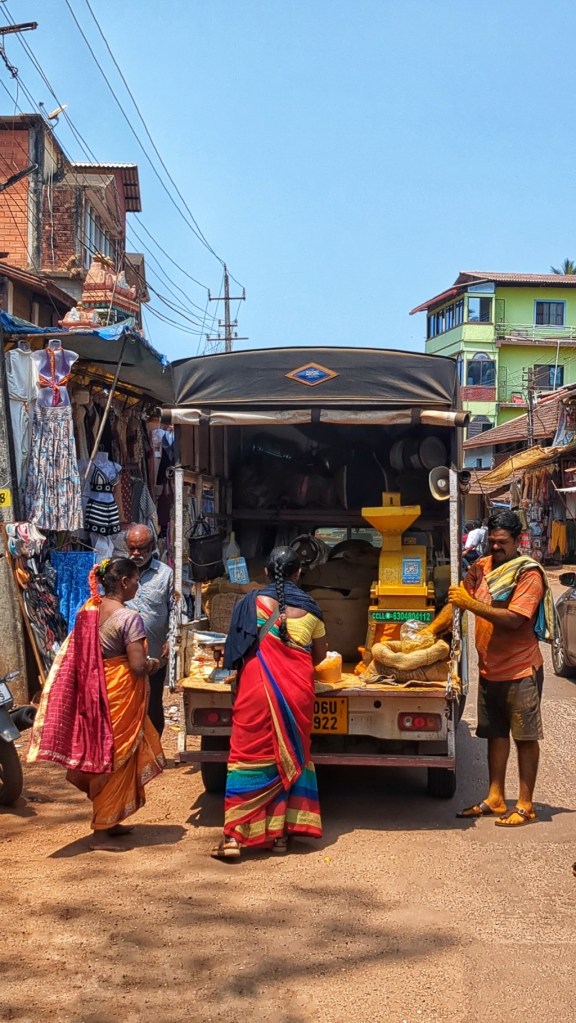
People grow their own food everywhere. We pass gardens where Indian women in colorful saris water plants, smiling and waving as we walk by. Gokarna feels like a place I’ve always imagined living in—small houses, big gardens, a sense of quiet community. And that feeling deepens in small moments. Like when a boy crashes his scooter on the side of the road and within seconds, people rush toward him. Helping. Laughing. Checking if he’s okay. There is no hesitation. Just presence. It’s a kind of care that doesn’t ask questions first—it simply shows up. All the love I’ve felt throughout India seems to gather here, concentrated into something tangible.
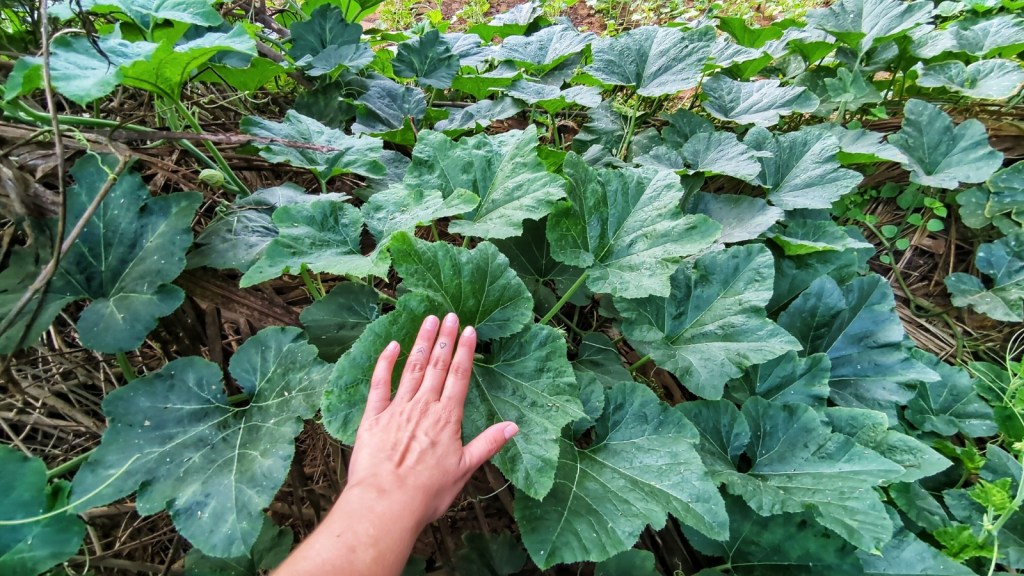
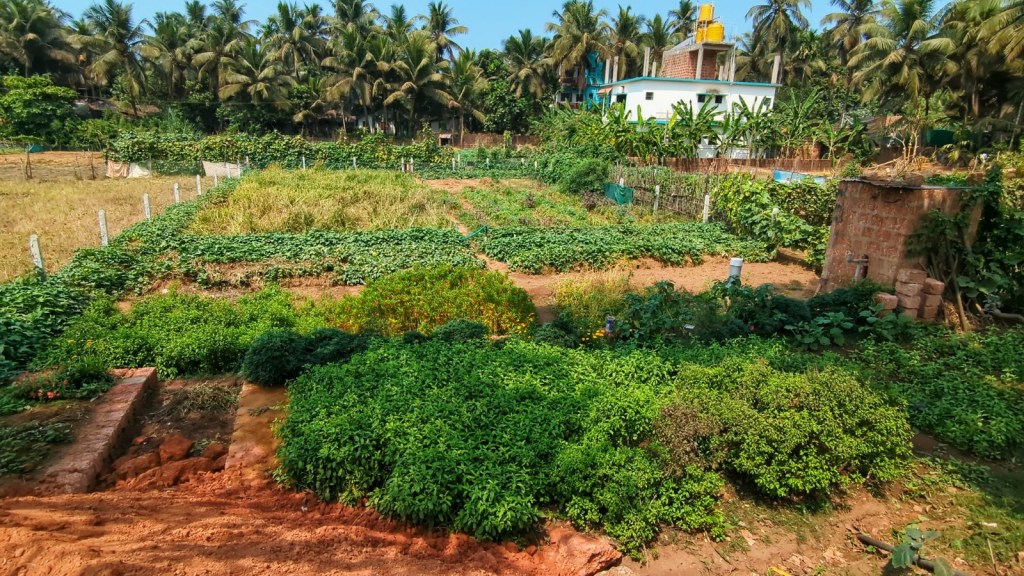
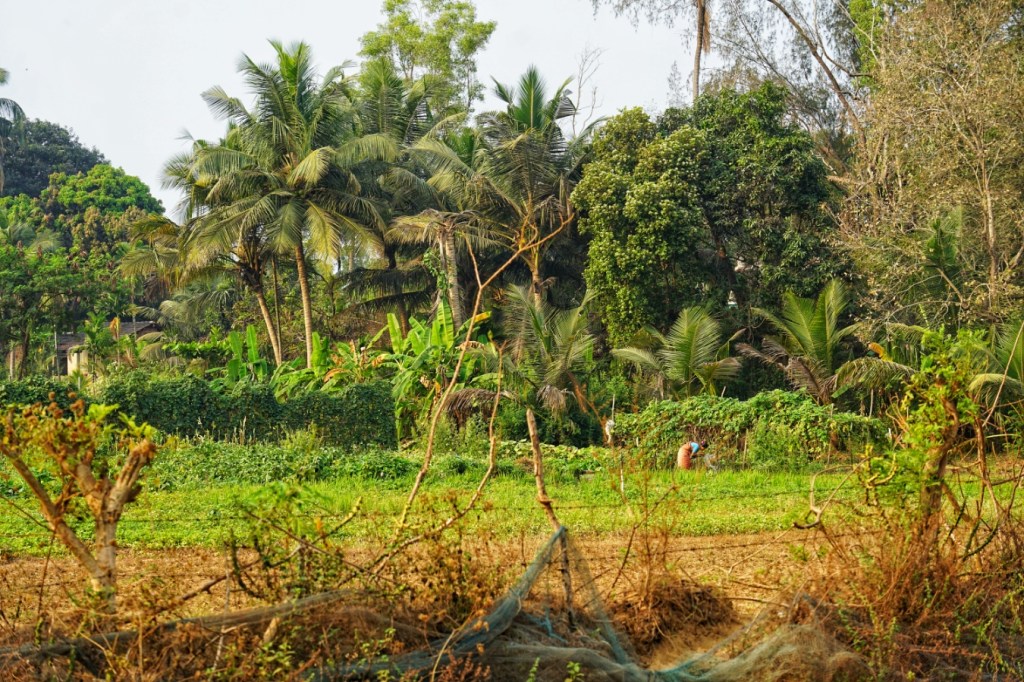
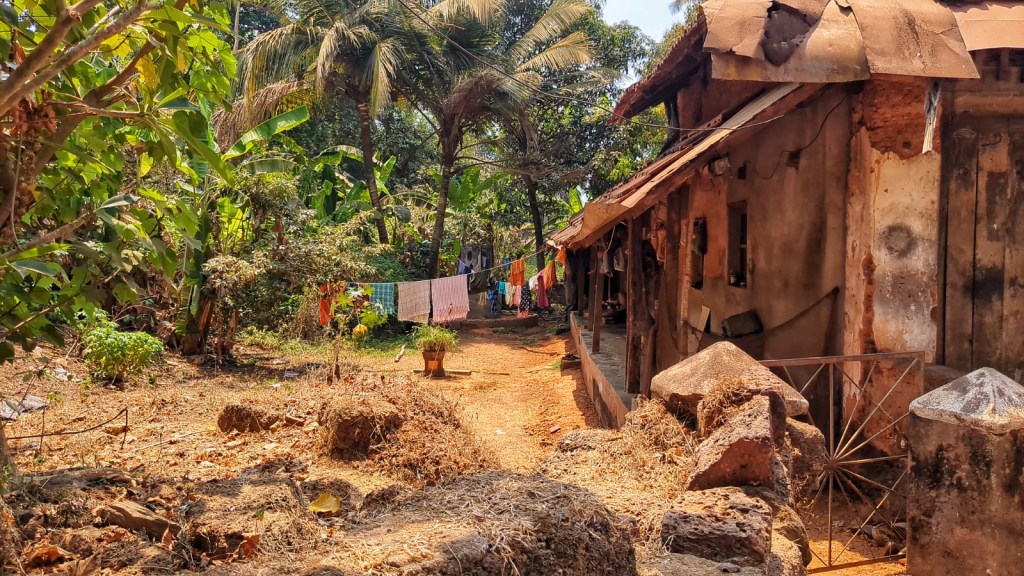
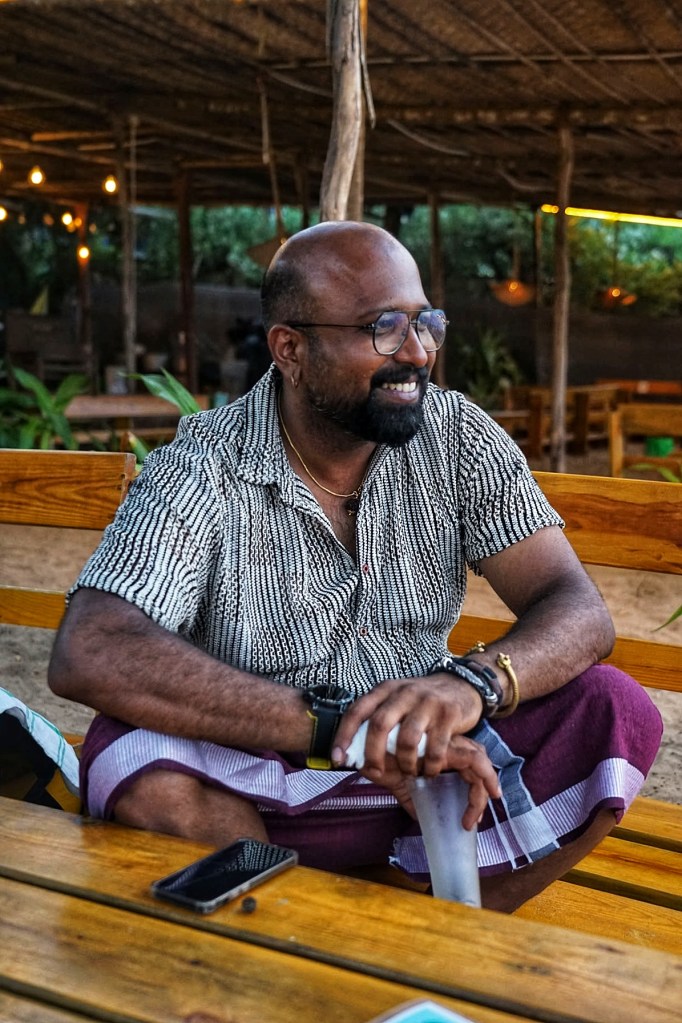
Already on the first day, we meet Abhi. An Indian man who lives in Bangalore, comes from Kerala, and has just quit his job as a banker to become a farmer. We have some nice conversations about meeting the gods while traveling and spend time together relaxing on the beach.
Connecting with locals isn’t always easy; not many speak English. But still, we find those special moments. A few exchanged words in Hindi. A shared smile. And then there are restaurant and shop owners who make us feel welcome far beyond any expectation of simply being there to spend money. It’s a different kind of hospitality—one that lingers a little longer and opens a little wider. With one shop owner, we end up drinking chai and talking about his idea of building a hostel. We sit together on the floor, cups in hand, the pace of everything slowing down. Sharing ideas, travel stories, fragments of lives lived in different places. He tells us about his thoughts, how he imagines it, what he would like it to become. We add our own perspectives from traveling, from seeing places that work and places that don’t. It becomes less of a plan and more of an exchange—an easy, flowing conversation where ideas are allowed to stay unfinished. And in that moment, the roles soften. We’re no longer customers and shop owner. Just people talking, briefly intersecting, each carrying different worlds, meeting somewhere in between. These are the moments that stay. Quietly expansive, as if something opens for a brief second and lets you step inside.
As the days move by, we find ourselves trying to plan our next steps. Originally, we wanted to move further north, to Agonda in Goa. Henning seems to be fighting his own inner battle there, trying to determine whether he truly feels like going further or whether it is more of an ego thought—this subtle pull of wanting “more,” or maybe a fear of missing out on something he might not even be able to name. For me, it is simpler. I quickly feel relaxed and connected to the place, so I don’t really feel the urge to move. Still, we start looking for ways to continue, as I feel a responsibility toward Henning’s wish—if it is truly his wish. But again, we are challenged by simply figuring things out. Connections, routes, timing—it all feels slightly slippery, never fully straightforward. And as we finally manage to find a train, the next step—going from Agonda back to Mumbai—suddenly feels not impossible, but again complicated and strangely daunting.
And for the first time in three months, I feel a wave of real anxiety around traveling. Not sharp panic, but a heaviness that sits in my chest when I think about logistics, transitions, unknown stations, the constant need to re-orient. It is as if something in me that had grown confident in movement suddenly hesitates again, remembering how easily things can become confusing here. We continue talking about it, though—slowly, honestly, trying to stay close to what we actually feel instead of what we think we “should” do. We check in with ourselves, with each other, trying to distinguish curiosity from pressure, desire from expectation. And in the end, we decide together: we stay. I feel relieved. And can finally truely sink in.
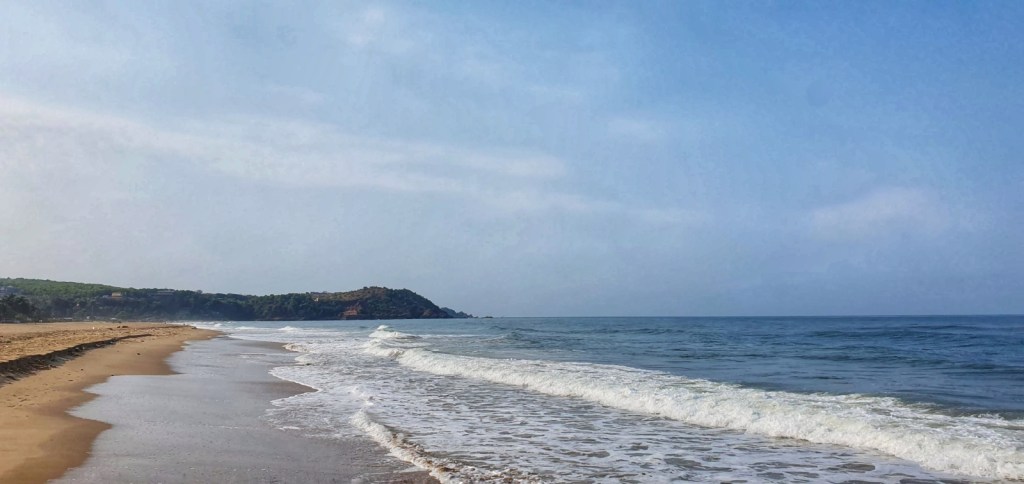
Life by the beach is slow. We spend our days moving in a simple rhythm. We walk through town, stop for food, wander without a fixed direction. We go to Om Beach, swim in the ocean, let the salt and saltwater reset everything for a while. Whole afternoons disappear in beach cafés, sitting in the shade, watching the waves crash in with a steady, unchanging force. We read, we drift, we talk a little, or not at all—time stretching out in a way that feels both empty and full at once.

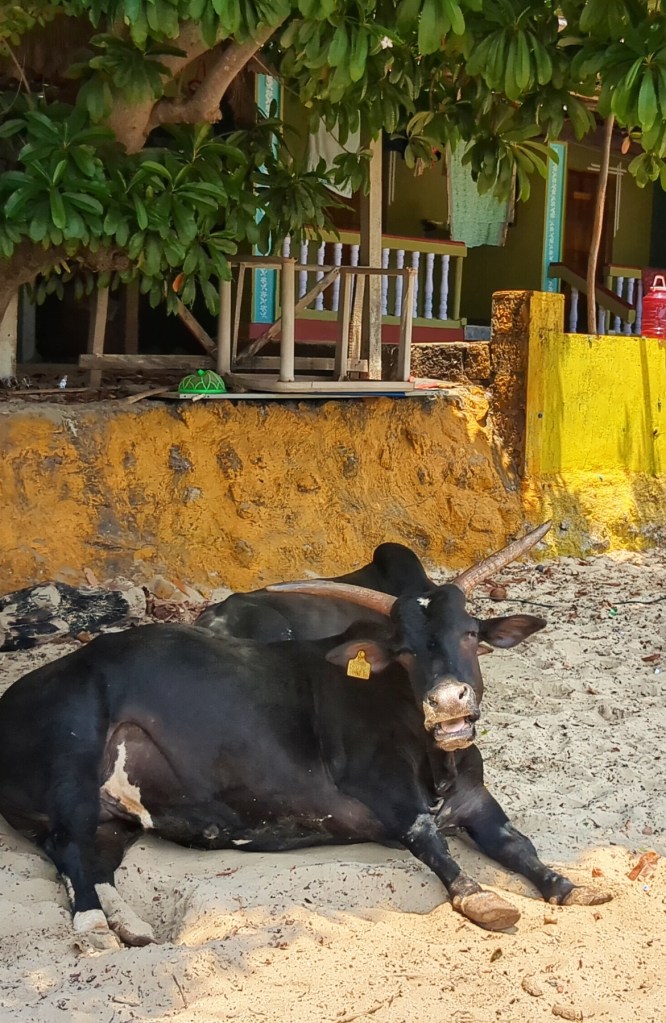

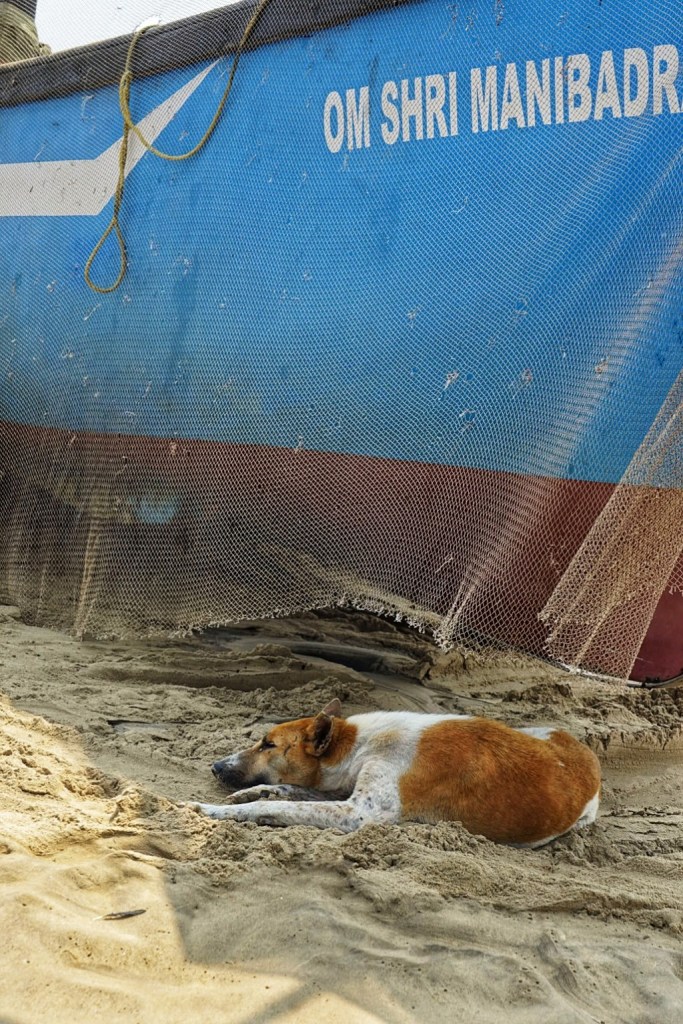

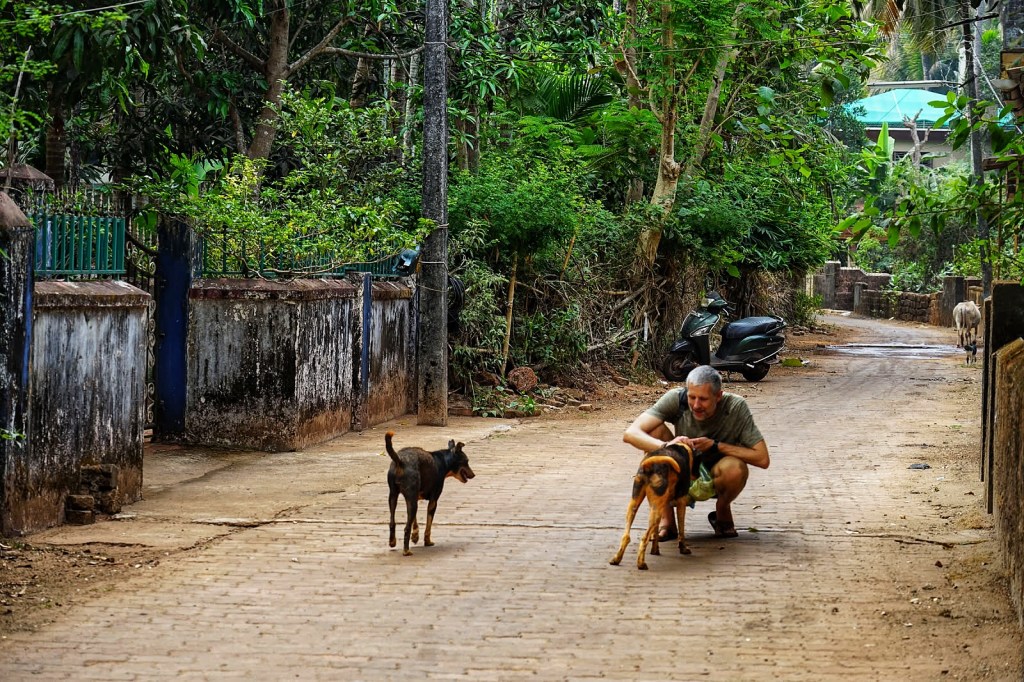
Henning cuddles every dog that wants to. Without hesitation, without overthinking—he simply kneels down, opens his hand, and meets them where they are. There is something very immediate in the way he does it, a kind of natural ease that doesn’t create distance first. Watching this also mirrors something in me. My own relationship with animals along this journey has been more cautious at times.
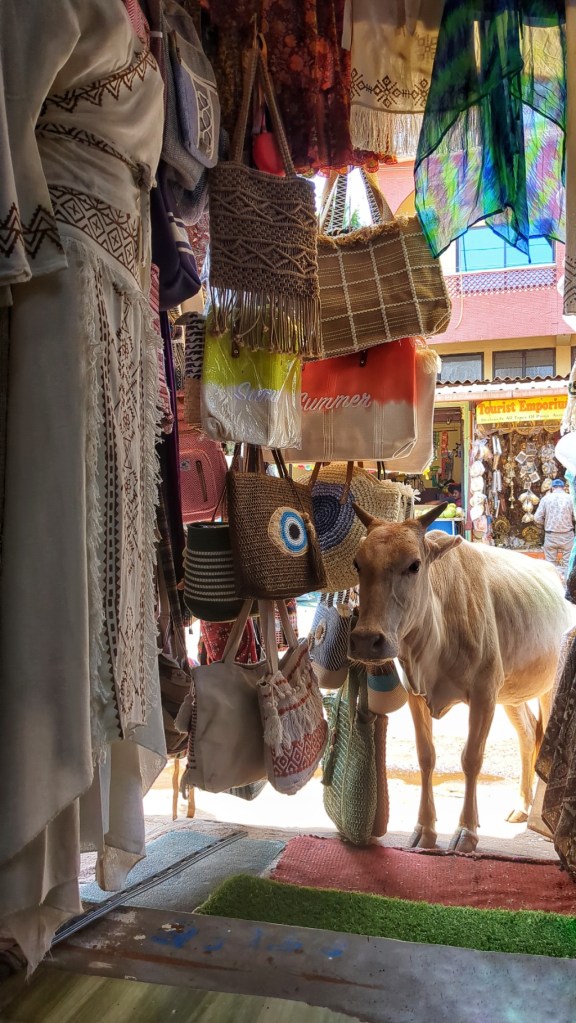
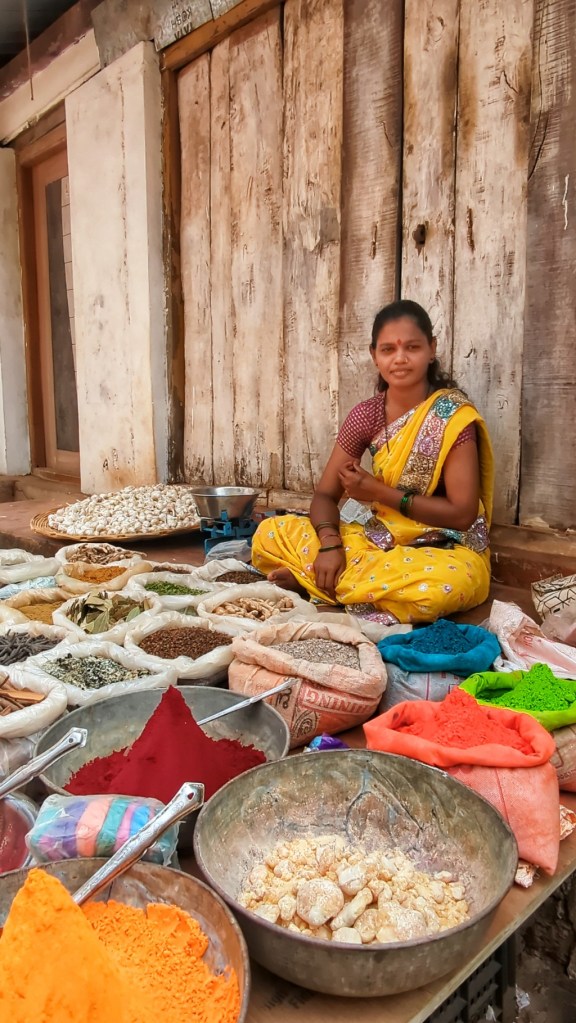
An interesting shift I notice is how my relationship to buying things has changed since the beginning of this trip. At first, India felt like a constant invitation—colors, textures, objects everywhere, each one calling out to be taken home. It was overwhelming, almost intoxicating. Now, I no longer buy anything on the first day. I let things sit. I wait. I want to feel whether I really want something—a piece of jewelry, a fabric, a decoration—or if it’s just the moment speaking. And beyond that, it’s simply nicer not to spend all my time shopping. I’m not like that at home—so why here? When I do decide to buy something later, it feels different. I’m more connected to the place, to the people. I understand better what might actually be special, and what is just everywhere. I see this contrast clearly with Henning, who has just arrived in India. The season is ending, and like I already noticed in Jaisalmer, people are trying to make a bit of money before packing up. Bargaining becomes layered. Some start very low—happy to sell anything rather than nothing. Others start extremely high, testing how far you’re willing to go. In the end, we do buy things. Most of them already planned along my way through India: a dosa pan, an idli maker, a heavy Tibetan singing bowl, a ridiculous amount of Himalaya face cream, incense, lampshades, cookbooks.
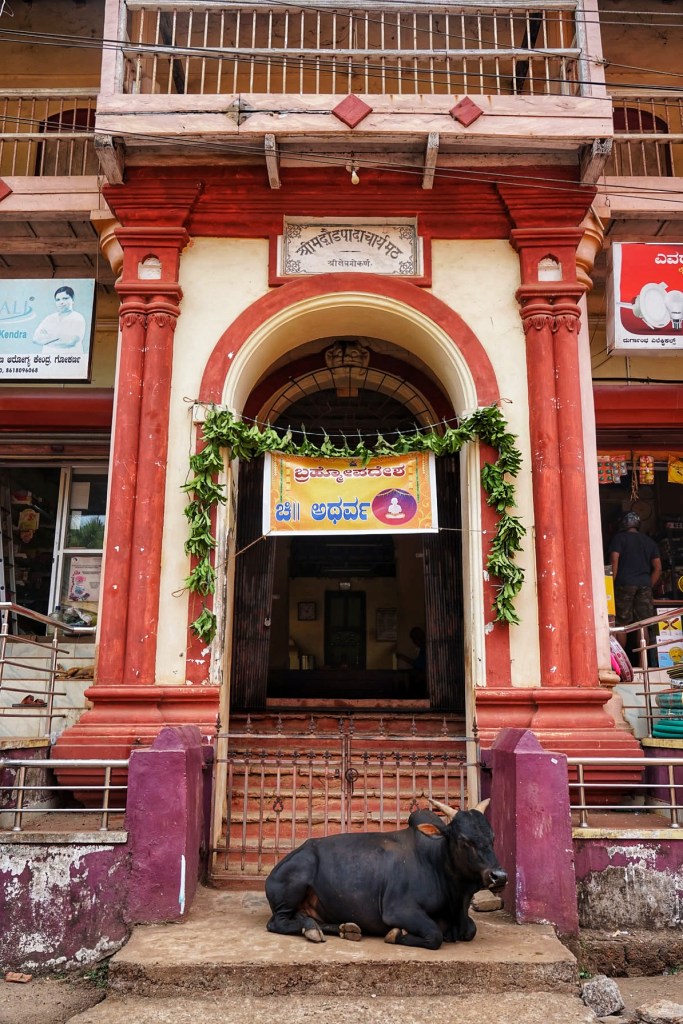
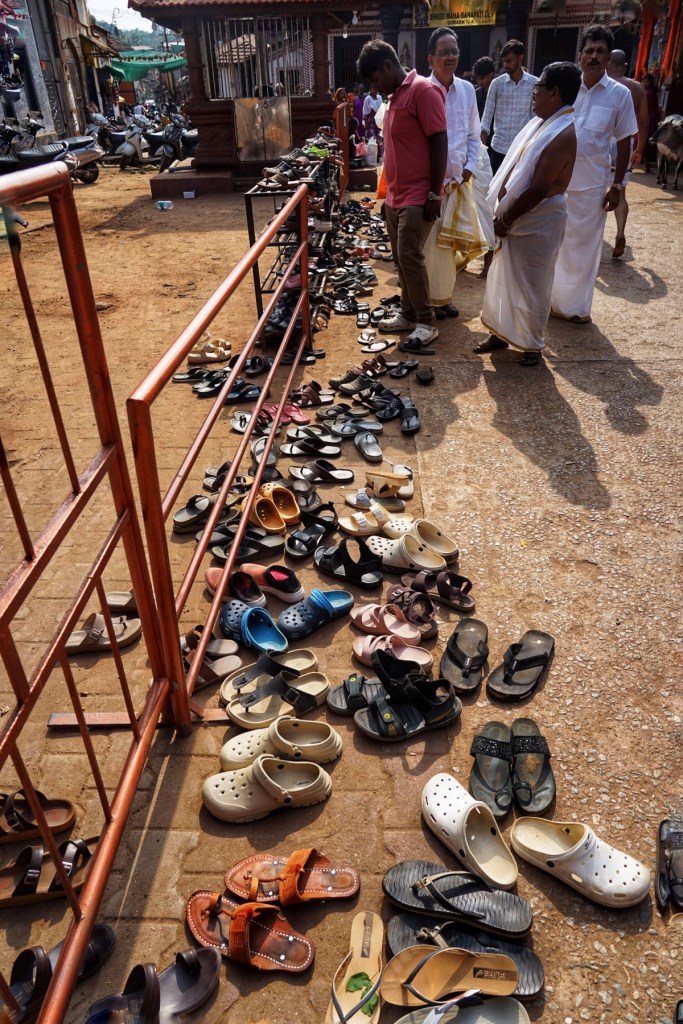
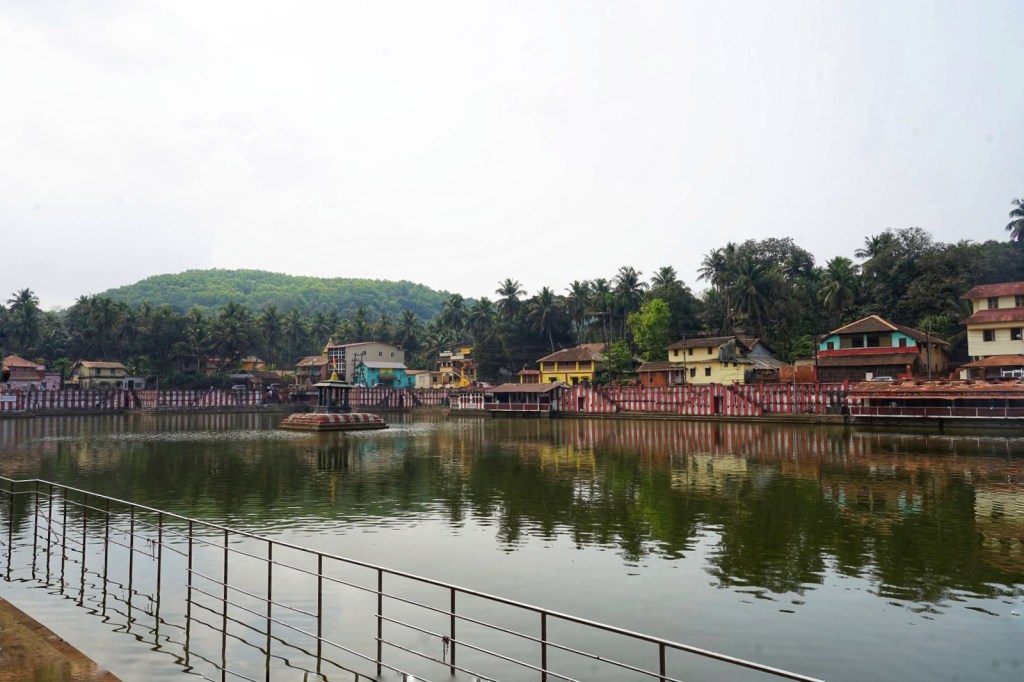
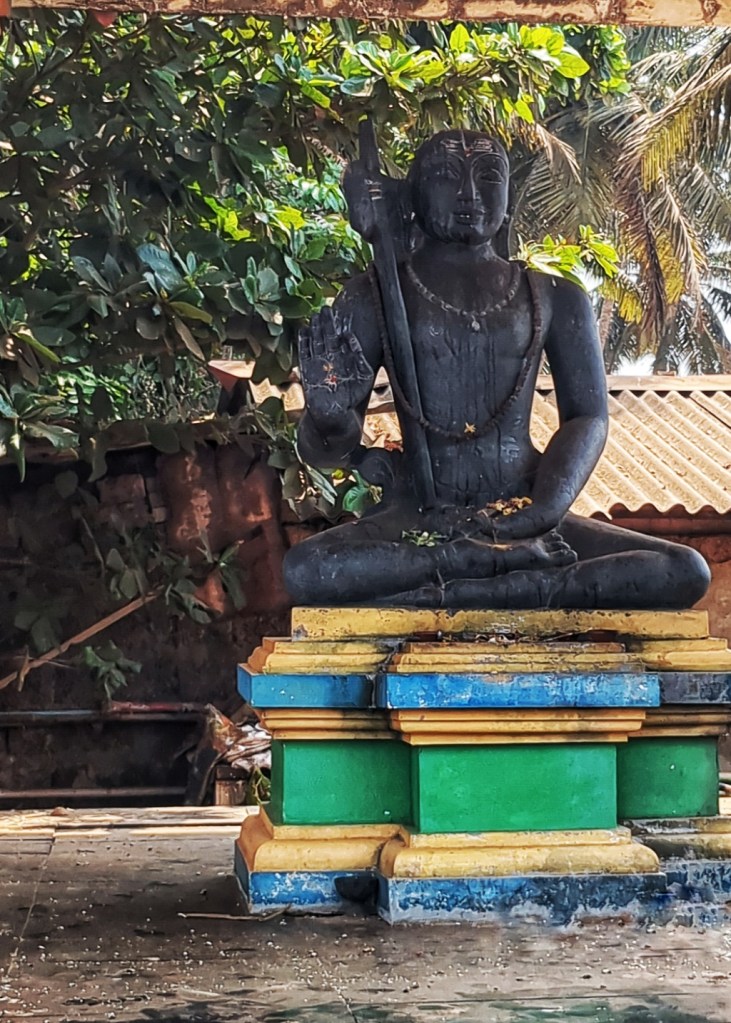
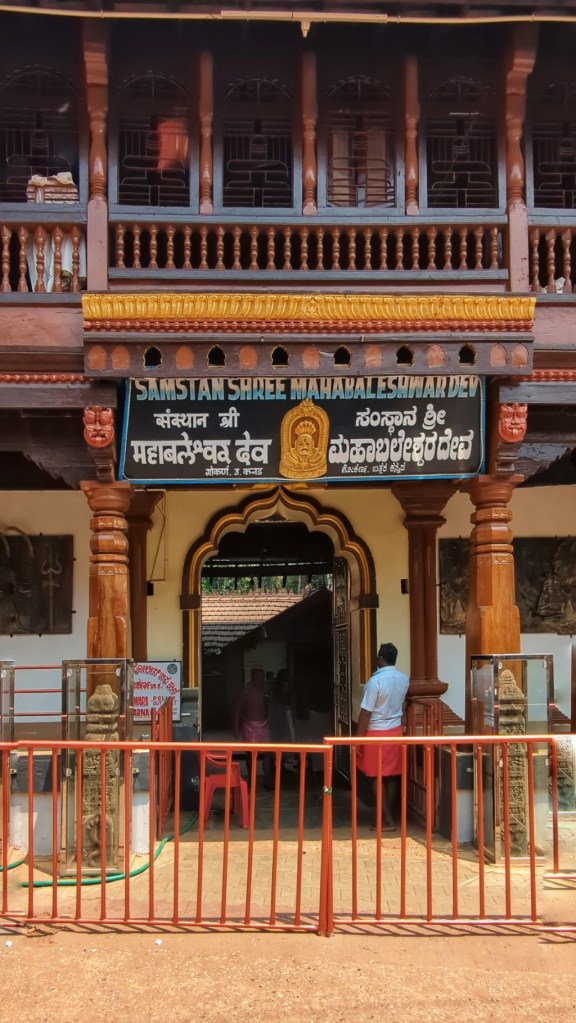
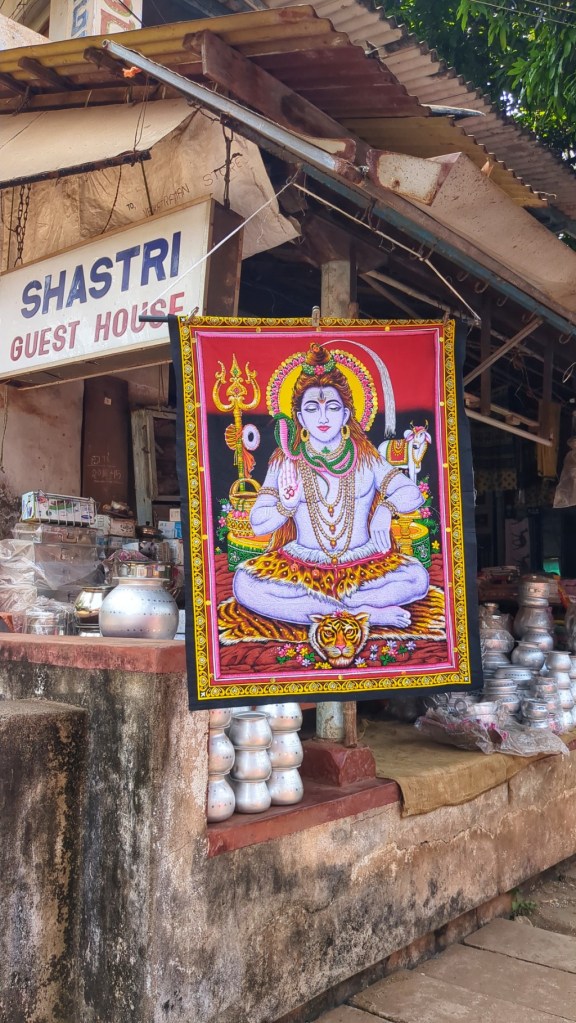
We explore the city and it’s sacred atmosphere. From research I know that Gokarna carries a strong spiritual weight. At its center is the small holy pond near the main temples, surrounded by narrow ghats where pilgrims wash, pray, and sit in quiet ritual. The town is dotted with temples—most prominently the Mahabaleshwar Temple, dedicated to Lord Shiva, along with a cluster of smaller shrines that weave through the streets like an old, living network of devotion. Lord Shiva is a presence I have met on this journey. Alongside Hanuman, he is the one I have actually prayed to during this time in India. So from that perspective, it feels like it should be appropriate—maybe even naturally allowed—to enter these spaces. But these temples come with strict visiting rules. Some say foreigners are not allowed inside at all, others say entry is permitted if you wear appropriate clothing and respect the customs. There is a certain ambiguity around it, and no one explanation feels fully reliable. I wonder if it’s because it feels too daunting, or if there is simply no desire to enter, but every time we pass one of these places, I check inwardly whether there is a pull to go in. But there isn’t. Nothing rises. In the end, I realize the reason doesn’t matter that much. I just don’t feel like going in. And that, too, is completely okay.
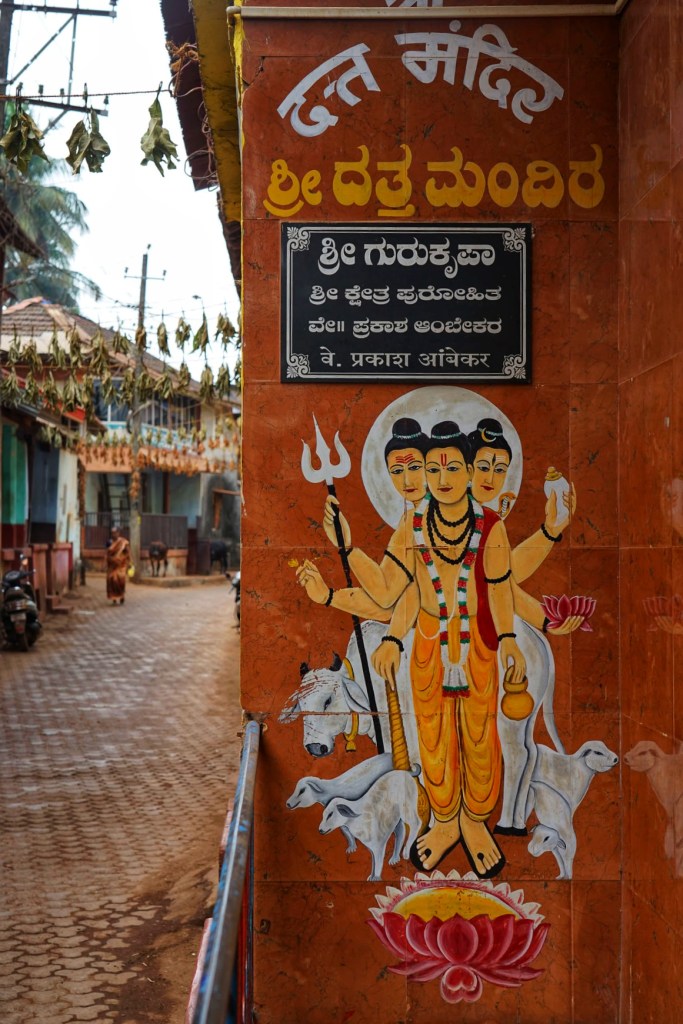
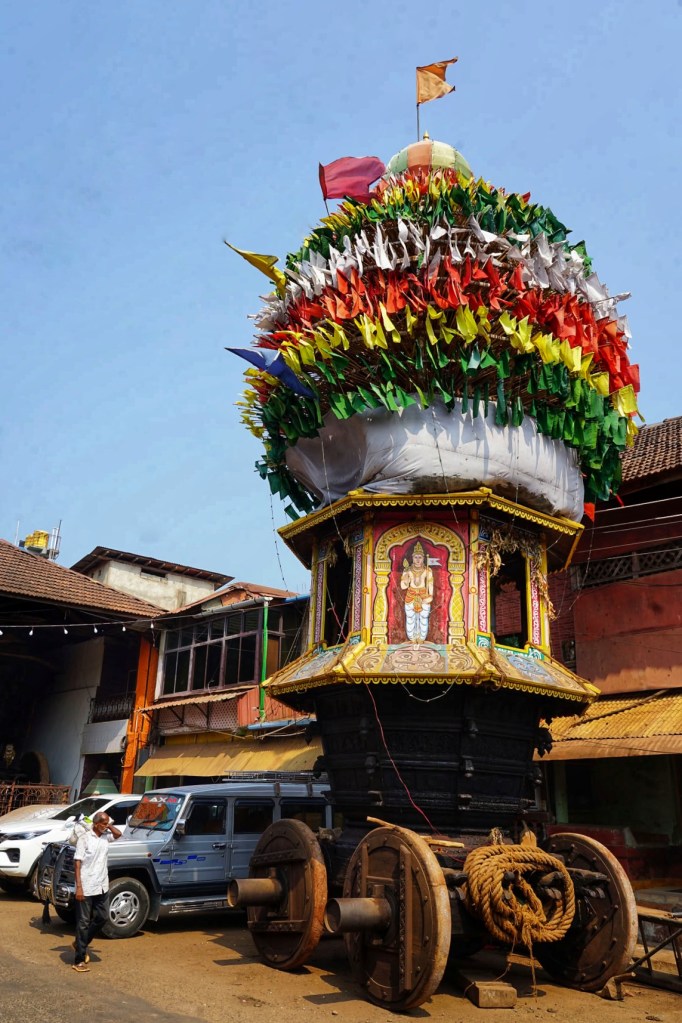
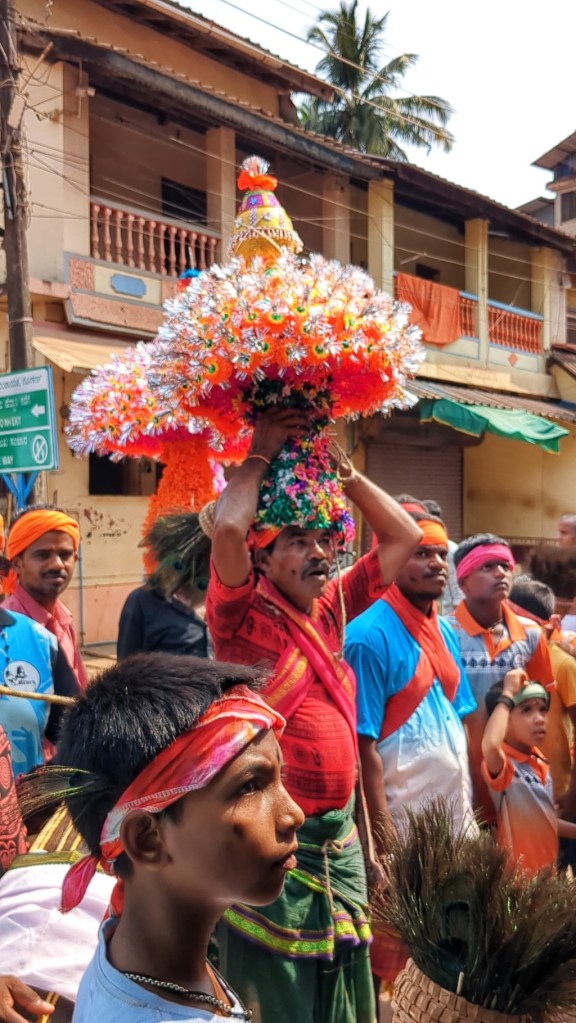
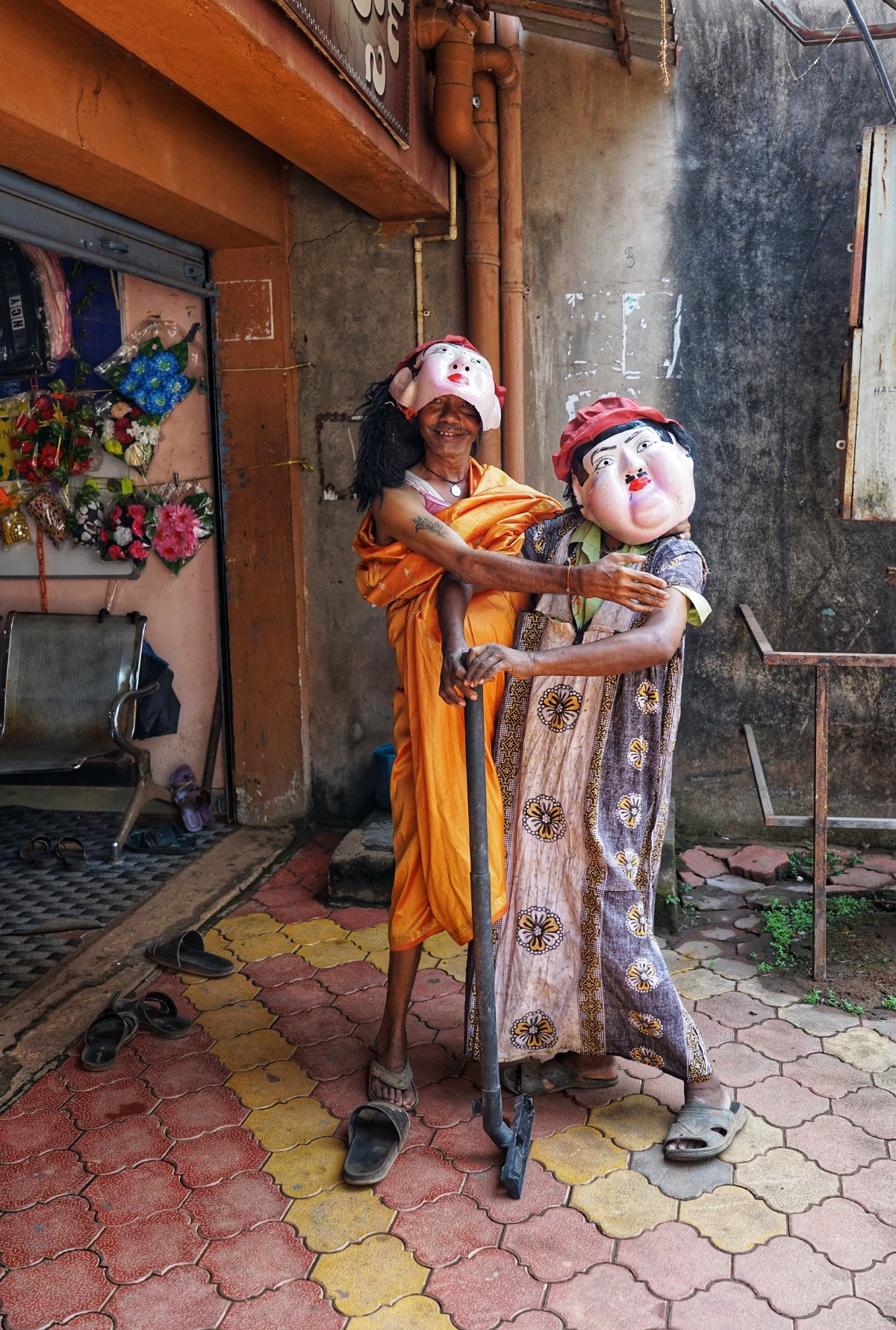
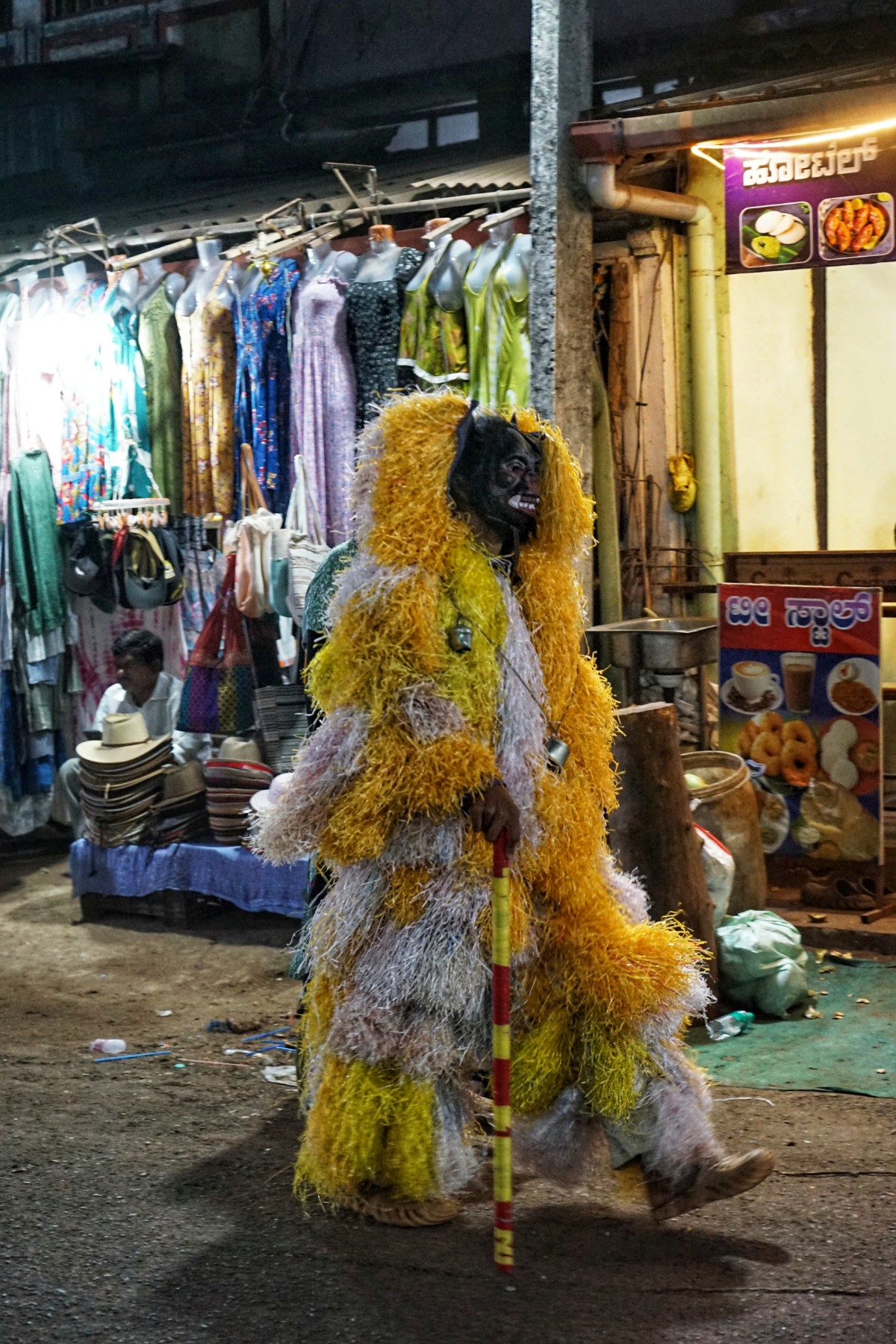
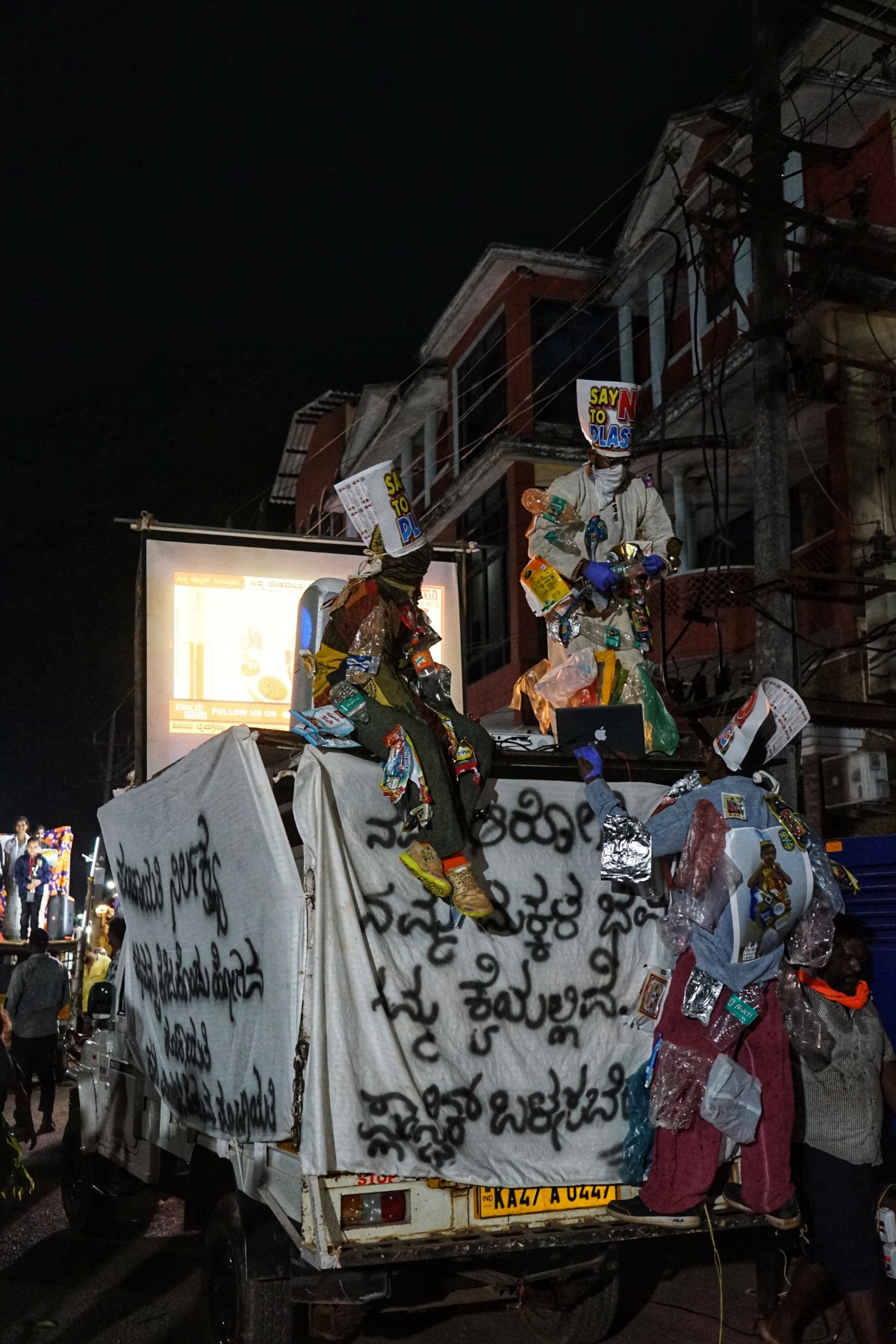
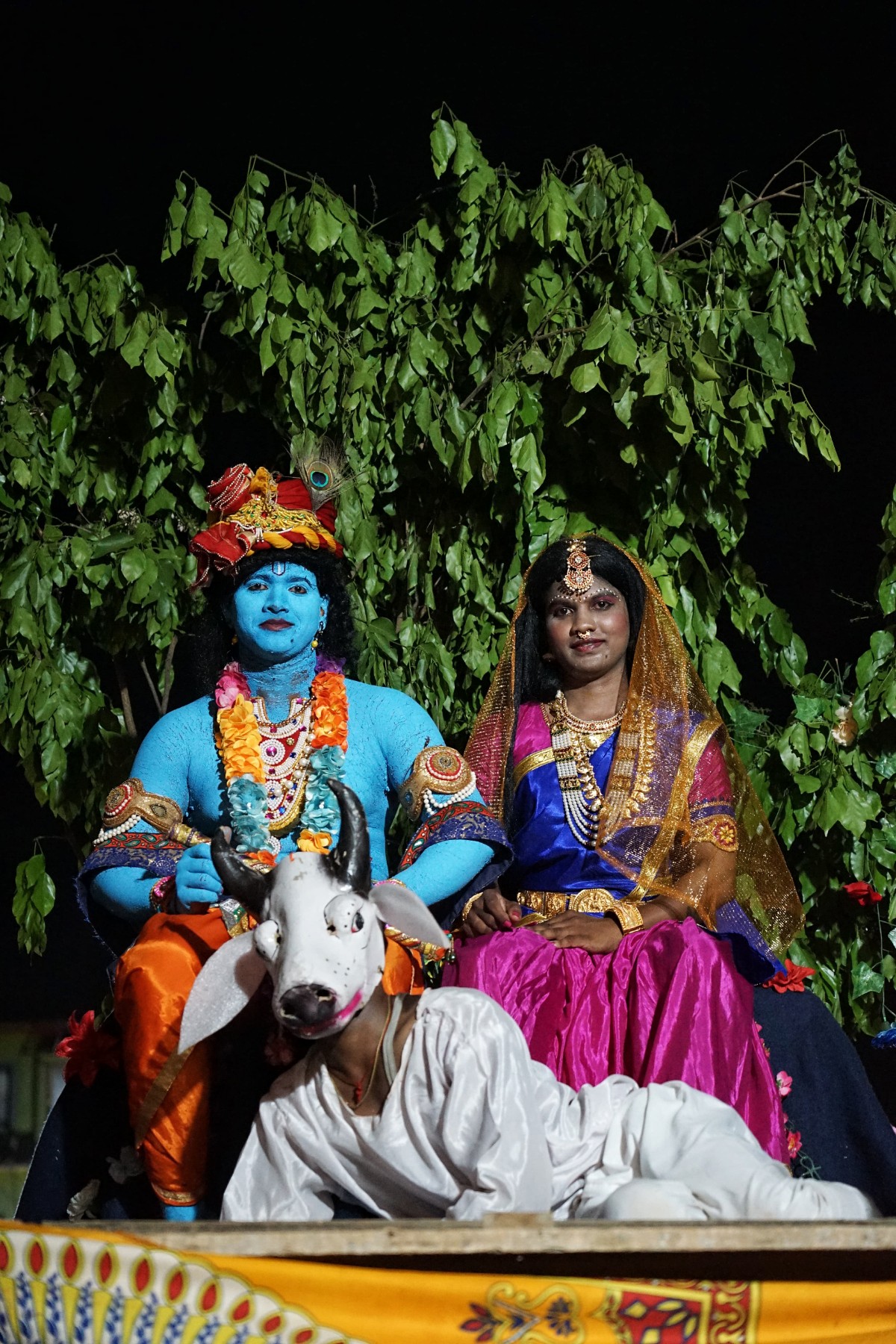
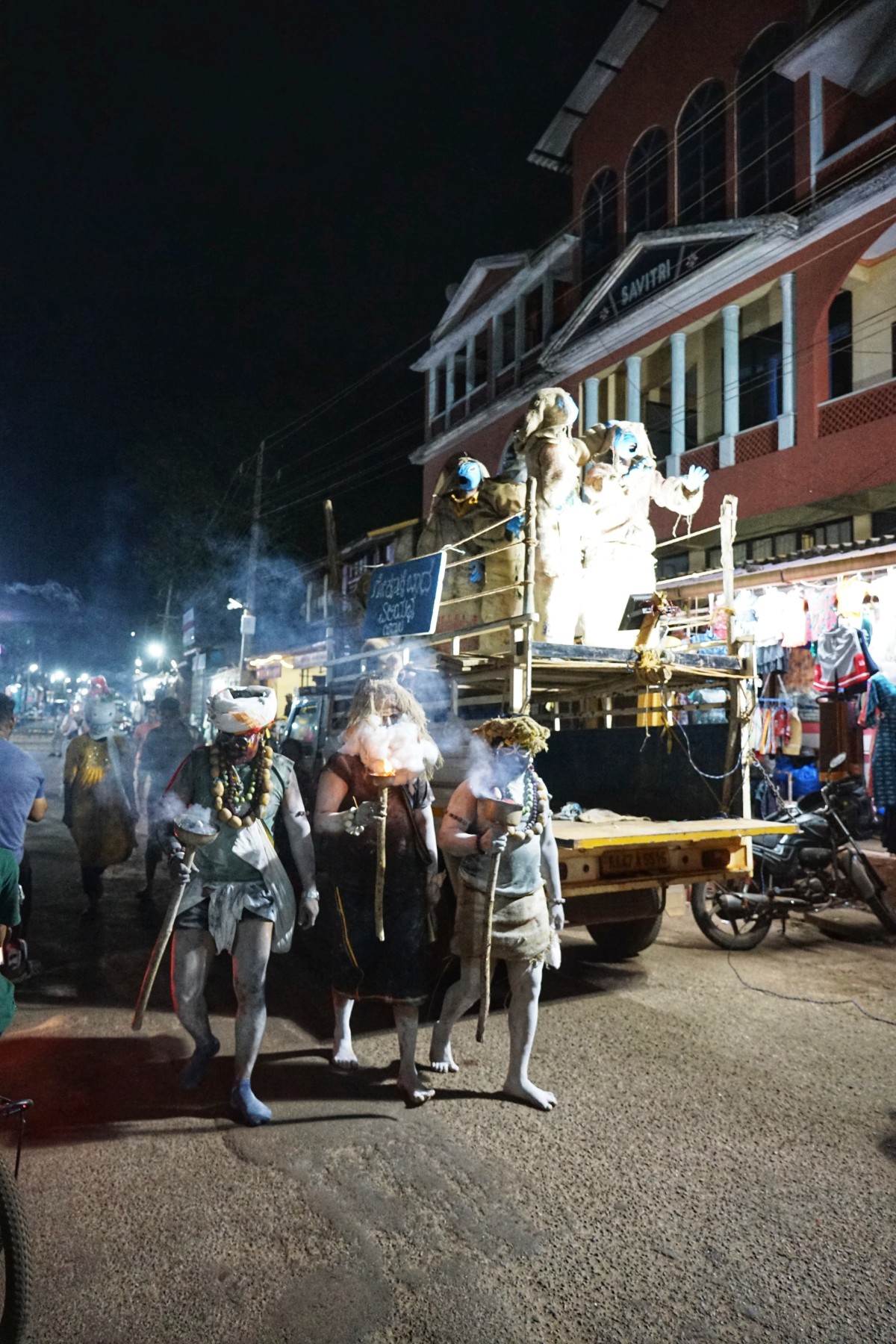
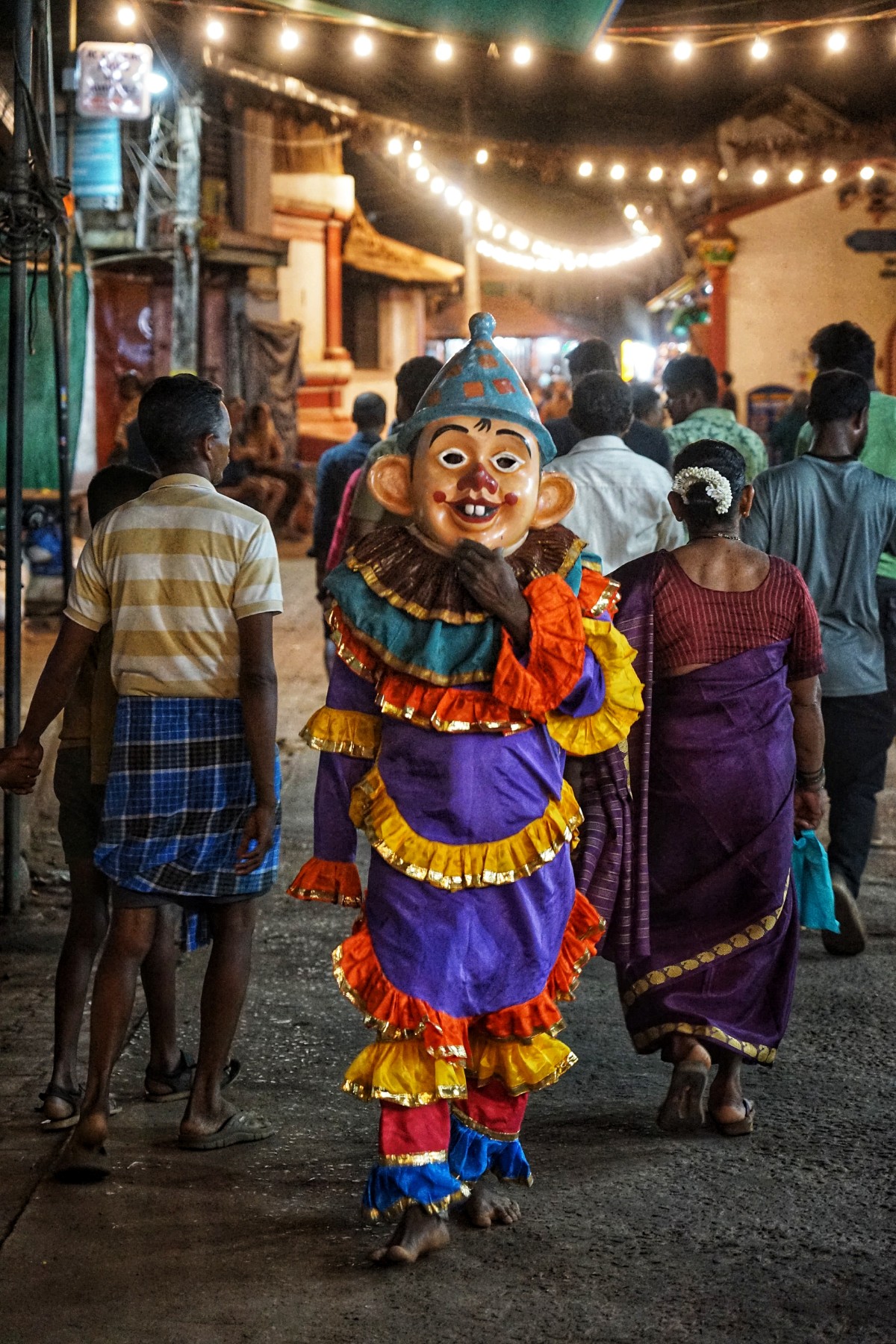
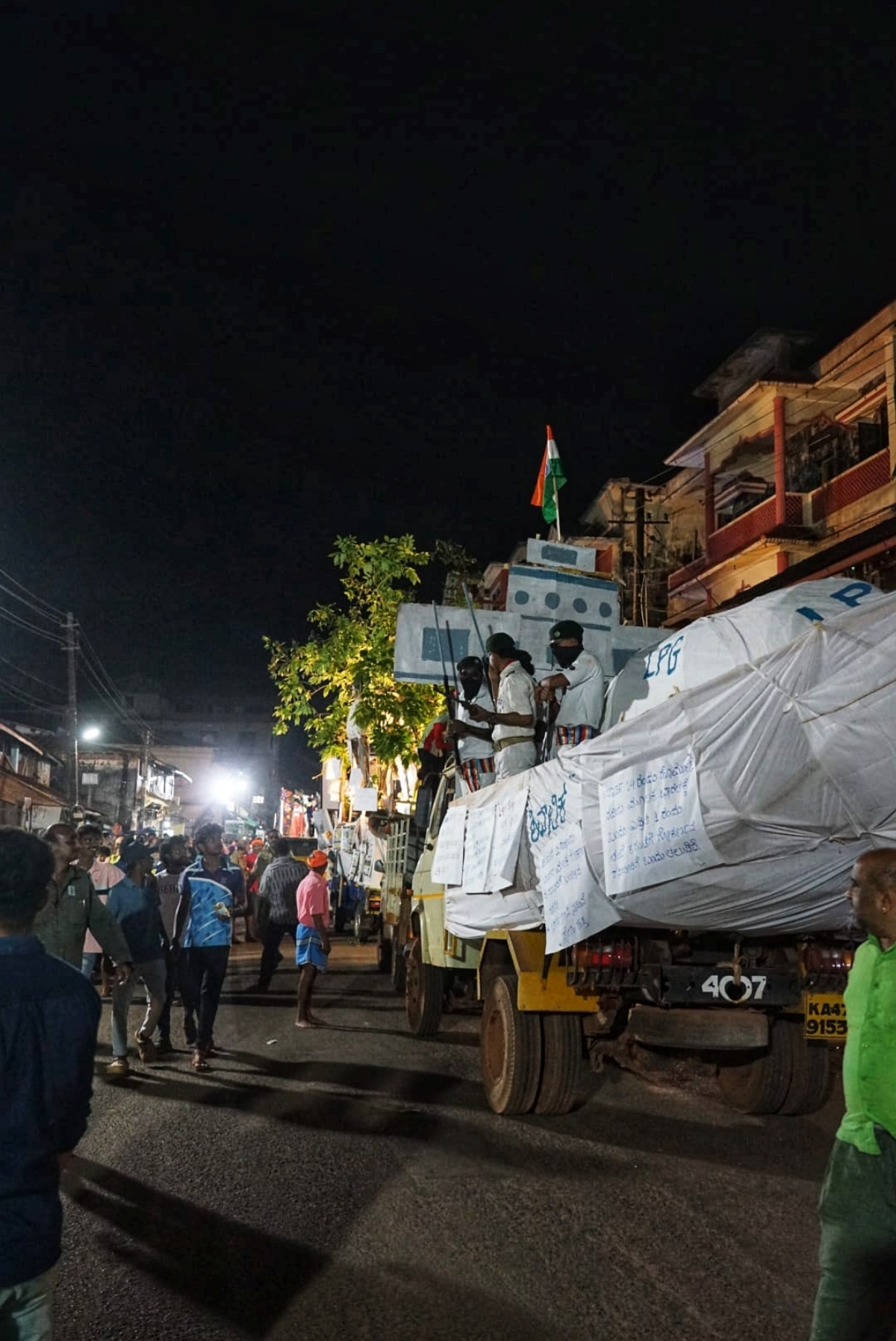
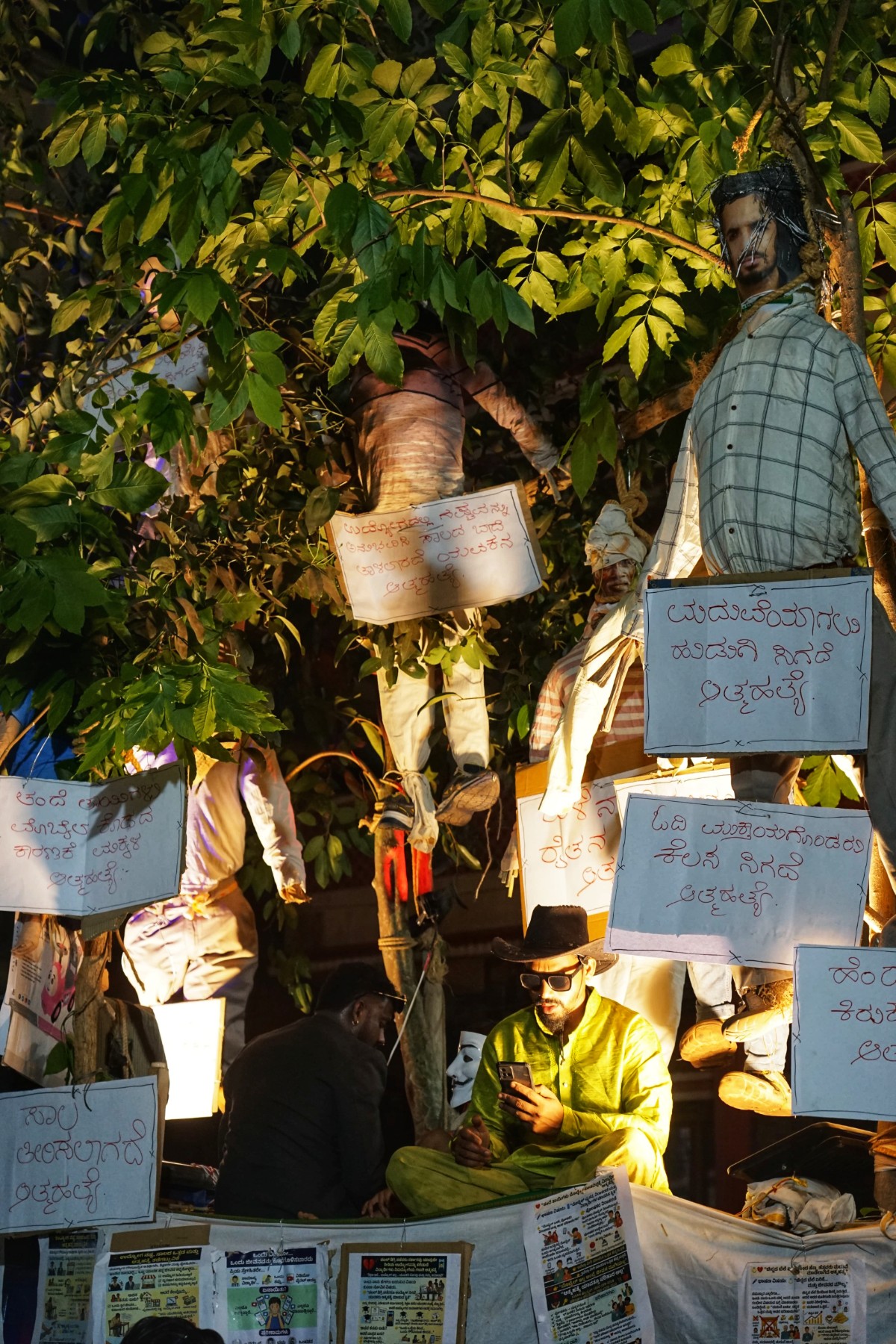
One night we are blessed by experiencing Suggi Habba – a harvest festival celebrated in parts of Karnataka, marking abundance, transition, and gratitude for the land. Here in Gokarna, it unfolds in a way that feels almost like a local, grounded version of carnival. Large wagons roll through the streets, decorated with scenes of political and social commentary. People dress up, music fills the night, and there is dancing—lots of it. It all happens after sunset, when the heat finally loosens its grip. There are no sweets being thrown, no loud spectacle in the way I know it—but something deeper, more rooted. A celebration that belongs entirely to this place.
Towards the end of our stay in Gokarna I feel that I am tired from traveling, like I experienced in Pushkar, although this time it seem to carry more weight. Pushkar felt more like an intermediate moment; this is more like the end. It is curious—I wonder if I would feel the same if I didn’t know I was going soon. But it is around the same time as in Mexico last year when I really felt: I want to go. And back then I could have stayed nine more months according to my health insurance and initial plans. So maybe somehow three months seem to be my magical line, where everything I’ve seen needs to sink in like something newborn. Maybe that is only true for now, and in the future I could extend that time. Or maybe it will be less. I don’t know. But for now it feels like the sweet spot for me, as I can also feel that I am ready to go back. Not in an urgent way like in Mexico. More soft and gentle—like a slow, soft gliding out rather than a harsh escape. But still, I want to go now. Even the heat here makes me look forward to freezing back home.

 An unmapped life
If you feel like responding, I’m listening.