Sitting down to write this article makes me sentimental. It will be my last one from this India series, that is directly connected to what I experienced there in a certain time and place, and the thoughts and emotions that showed up alongside it. This journey has been both a closing and an opening in so many ways that even now, I struggle to fully grasp it. It is too much. Too close. Too compressed. Quite like Mumbai.
More than 20 million people live in Mumbai. Not neatly spread out, but layered. Pressed into trains, into streets, into high-rises and informal settlements. To give you a bit of a feel for that: in Germany roughly 84 million people live – in the entire country. In the Netherlands it is 17.8 million.
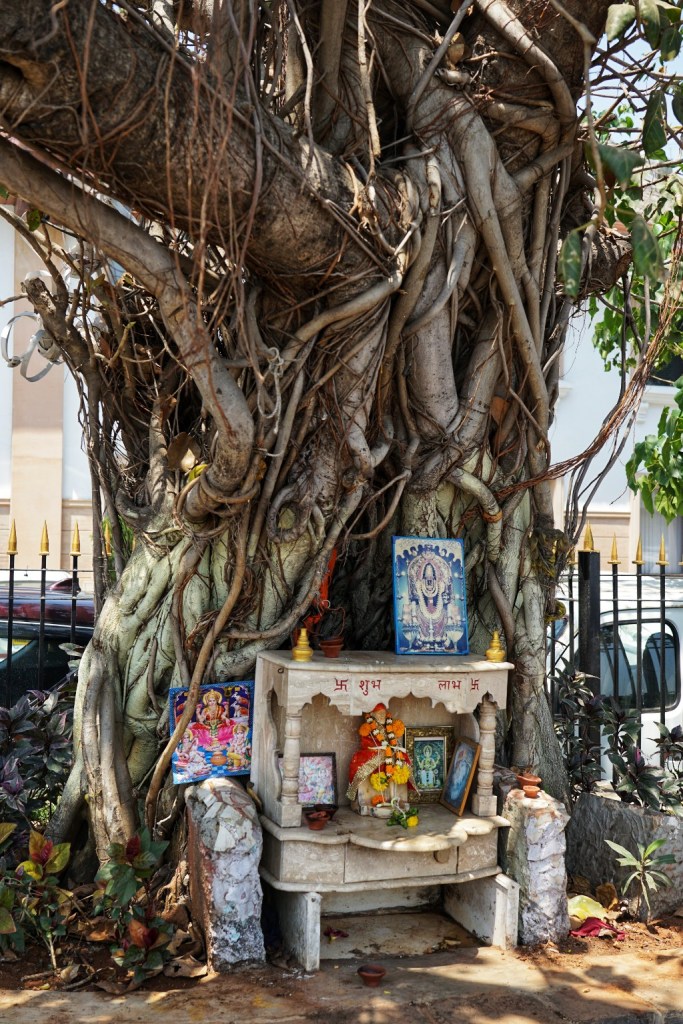
Dozens of languages are spoken, sometimes within the same conversation. Hindi, Marathi, Gujarati, Urdu, English — and many more, shifting depending on who stands in front of you. Religions overlap just as naturally: Hindu temples next to mosques, churches not far from Jain shrines, all woven into the same urban fabric. Not as a curated form of diversity, but as something lived and unquestioned.
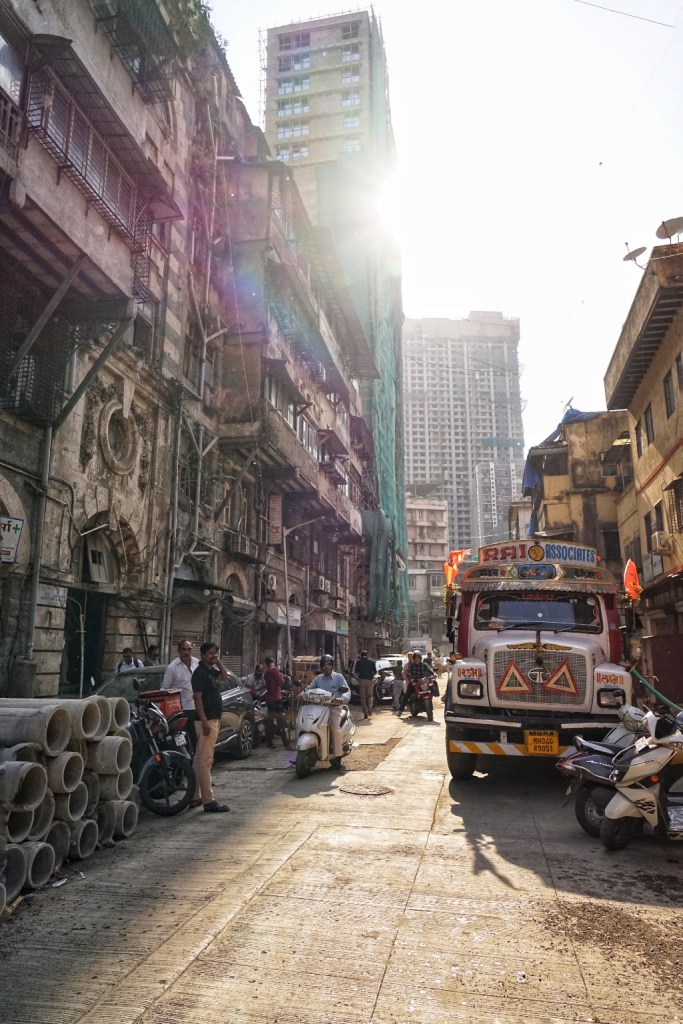
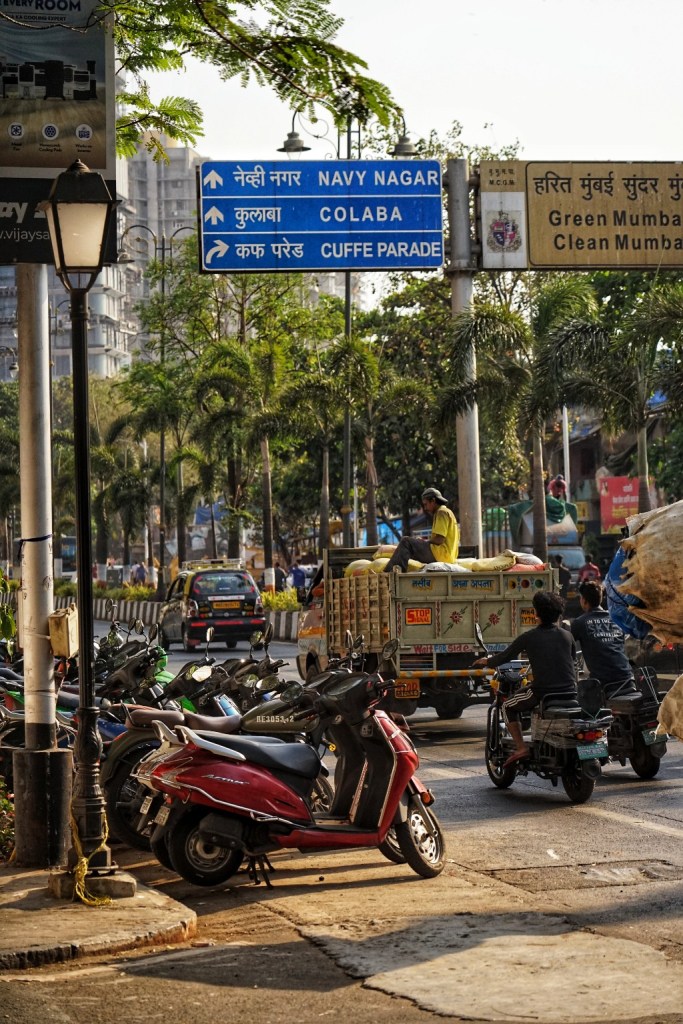
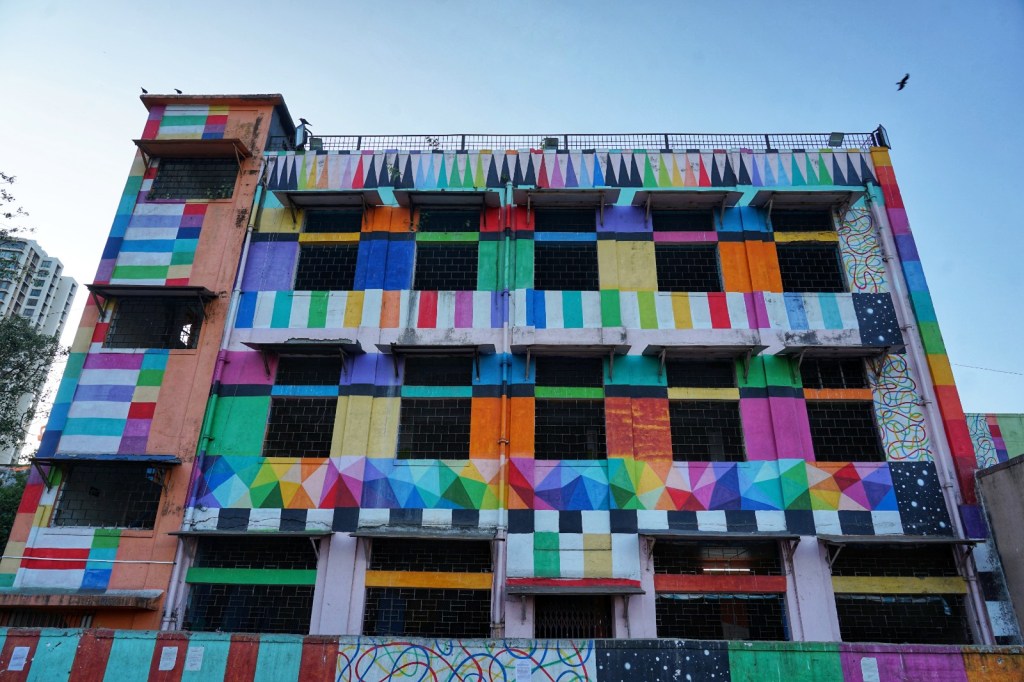
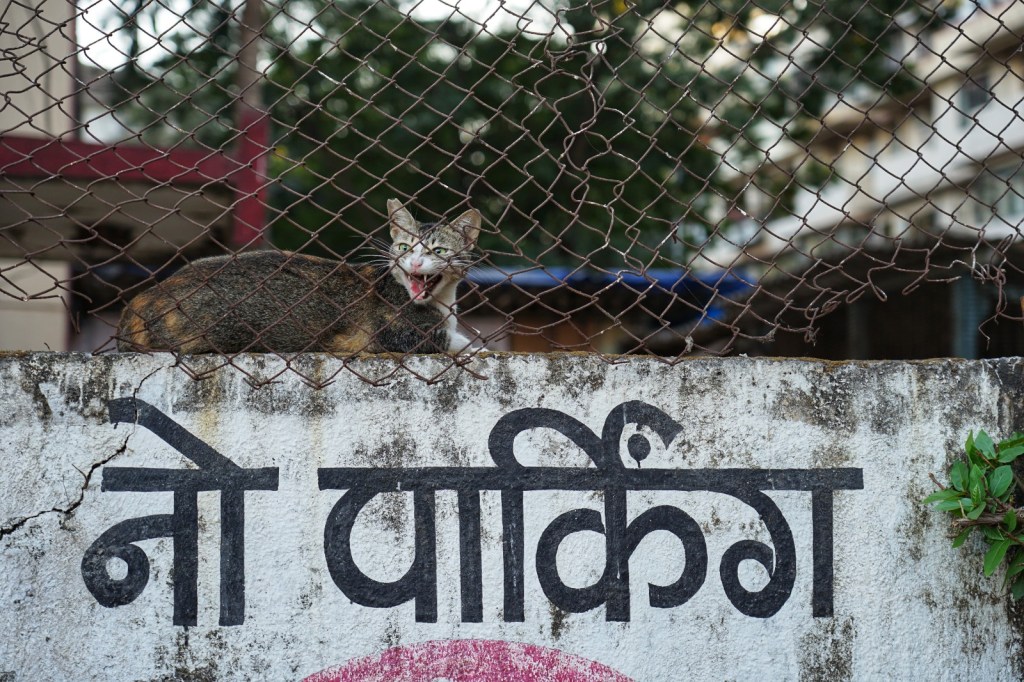
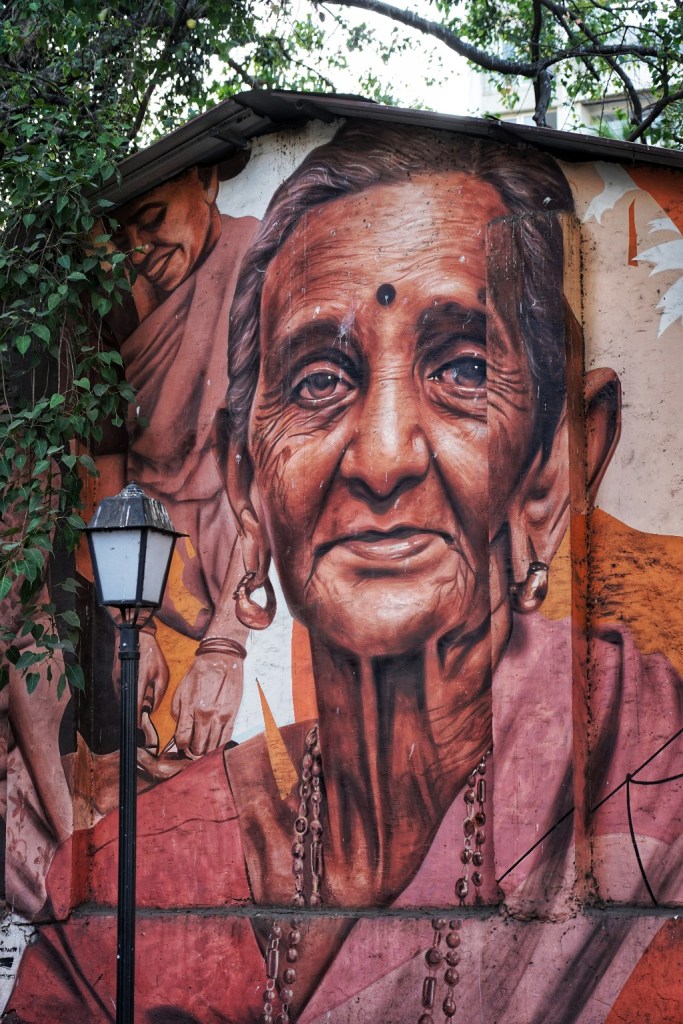
On our first day, Willem-Jan and I stay in Bandra West. It is a winding, layered neighbourhood of Mumbai — full of old, half-decaying yet still beautiful houses that seem to whisper fragments of old Bombay and feels like a soft entry point— leafy in parts, almost spacious, with cafés, old Portuguese-influenced houses, street art on cracked walls, and that strange coexistence of calm corners and constant movement. It feels slightly filtered version of what I expected.
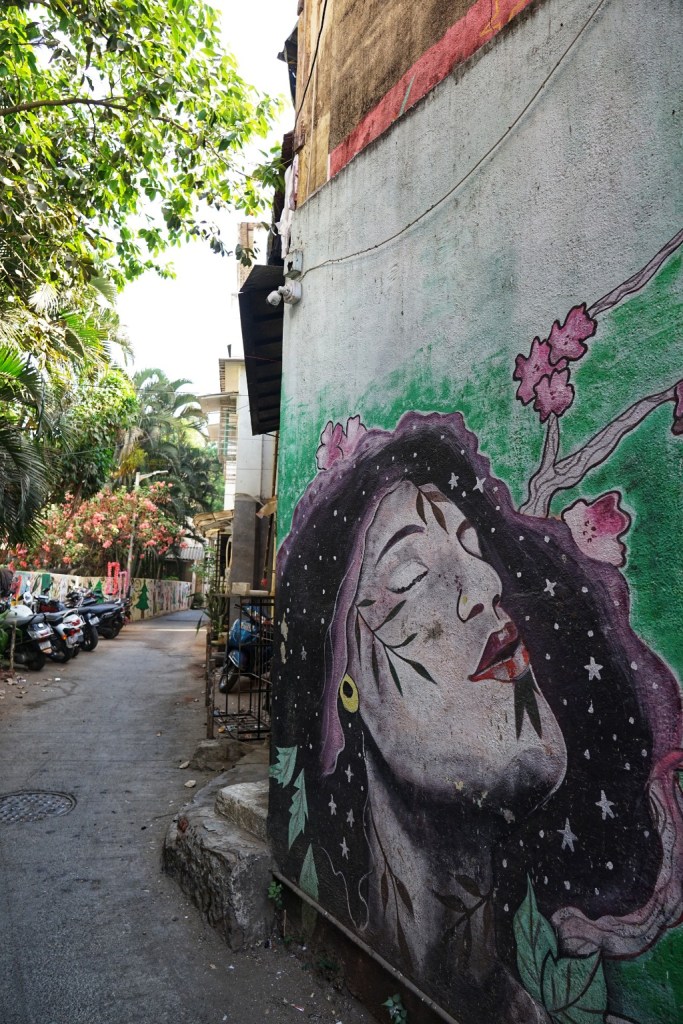
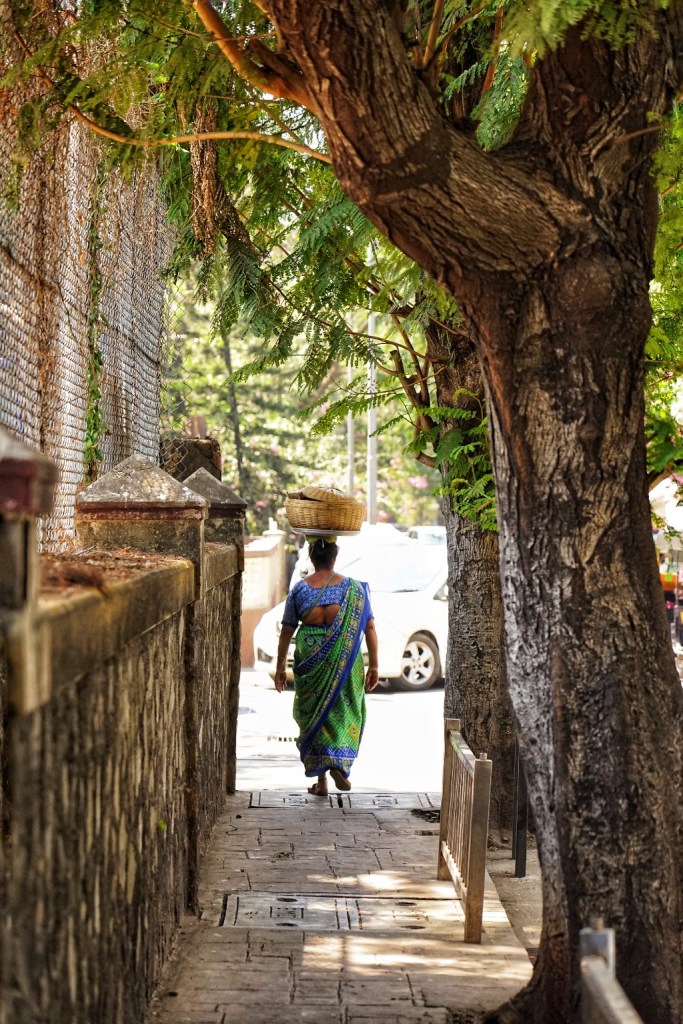
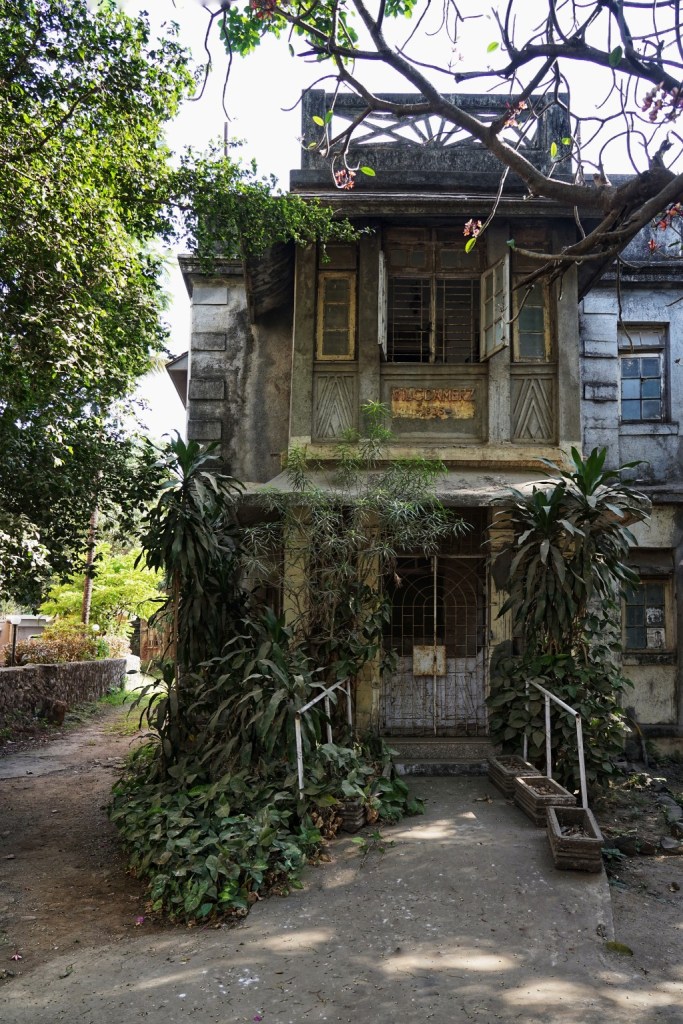
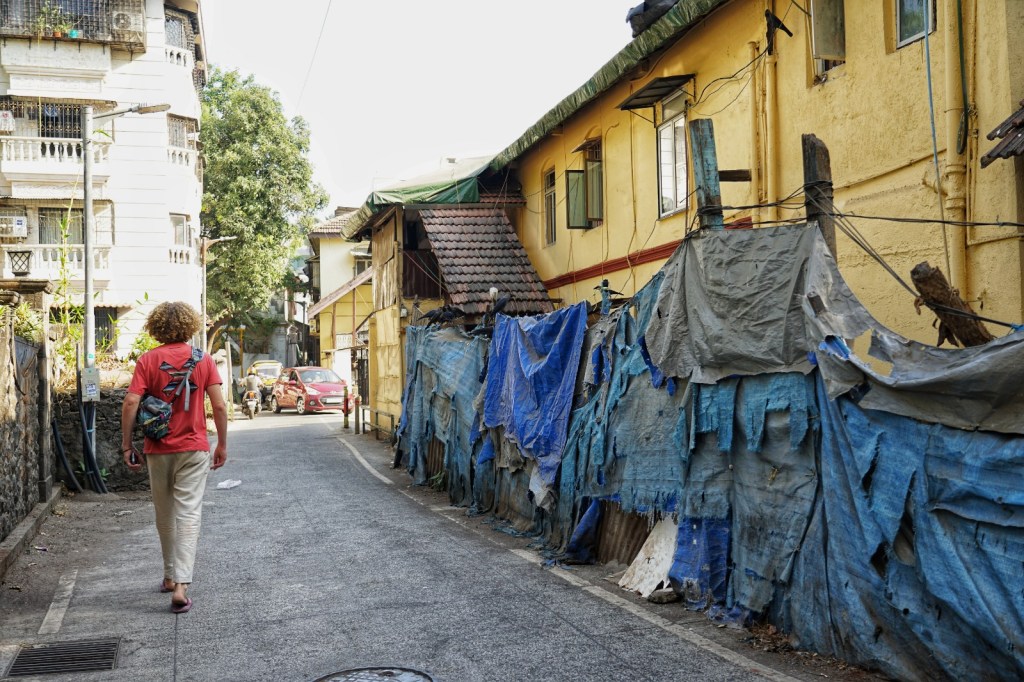
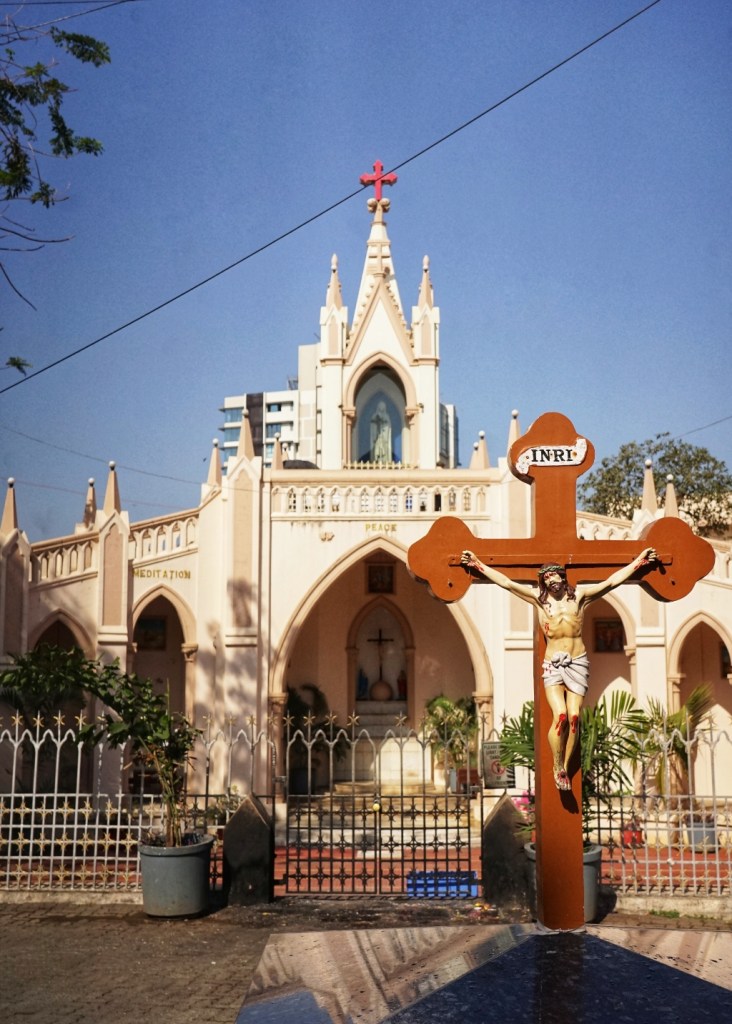
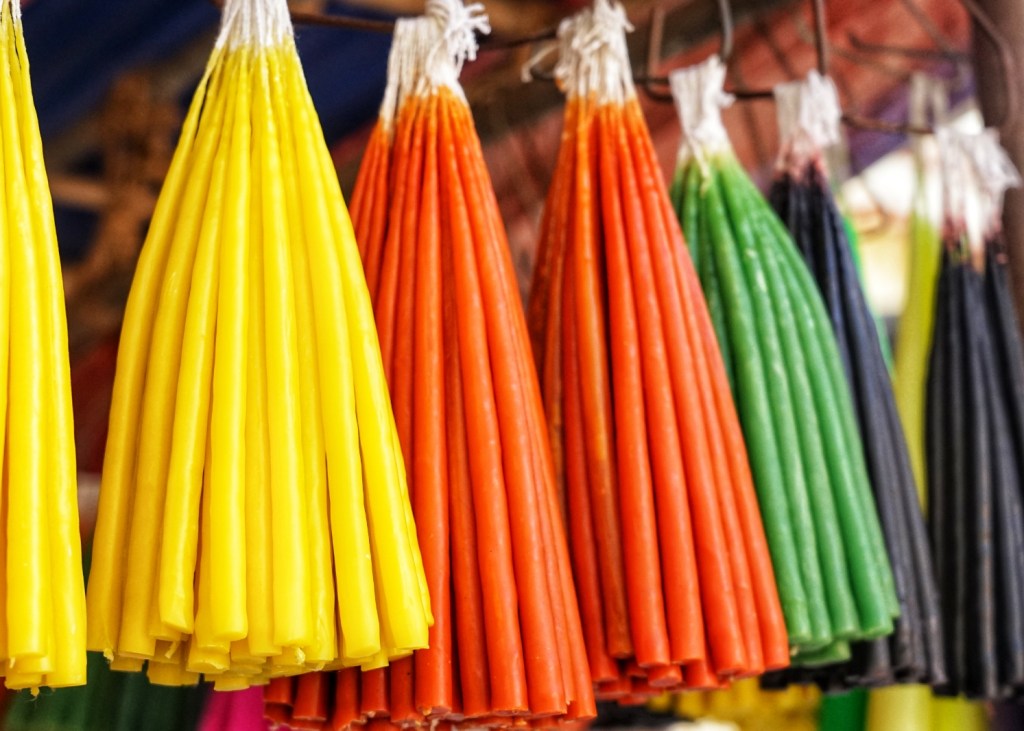
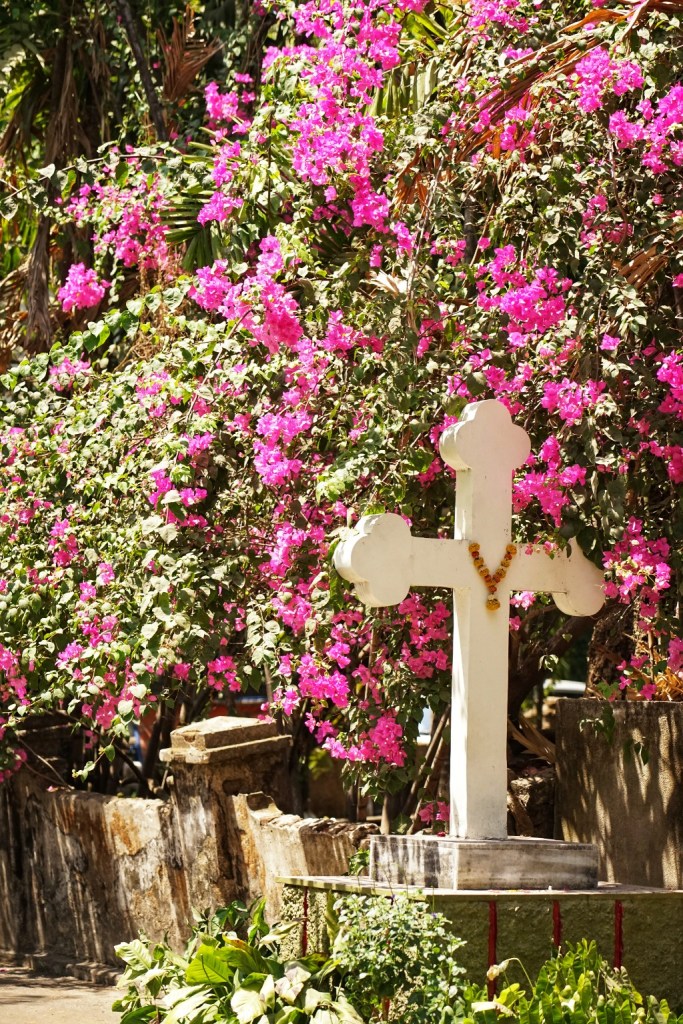
Here we visit the Basilica of Our Lady of the Mount. It is dedicated to Mary, the mother of Jesus — venerated here as Mount Mary, a figure of protection, compassion, and quiet strength. The church itself sits elevated above Bandra West, removed just enough to feel separate, but never fully detached from the city below. Although Bandra is also strongly Hindu and Muslim, represented also in temples and mosques I notice more signs of Christianity as we walk through Bandra. Small ones, tucked between buildings, behind gates, on corners you almost miss. Diffenrent to the crosses – they are everywhere.
We explore more and walk past beachside shacks where blue plastic tarps flap constantly in the wind, held down by stones, ropes, and necessity. And then, without transition, suddenly there are glass high-rises with gated entrances, security guards, and elevators reserved for residents who arrive in air-conditioned SUVs. Apartments stacked vertically like private worlds, sealed off from the street below.
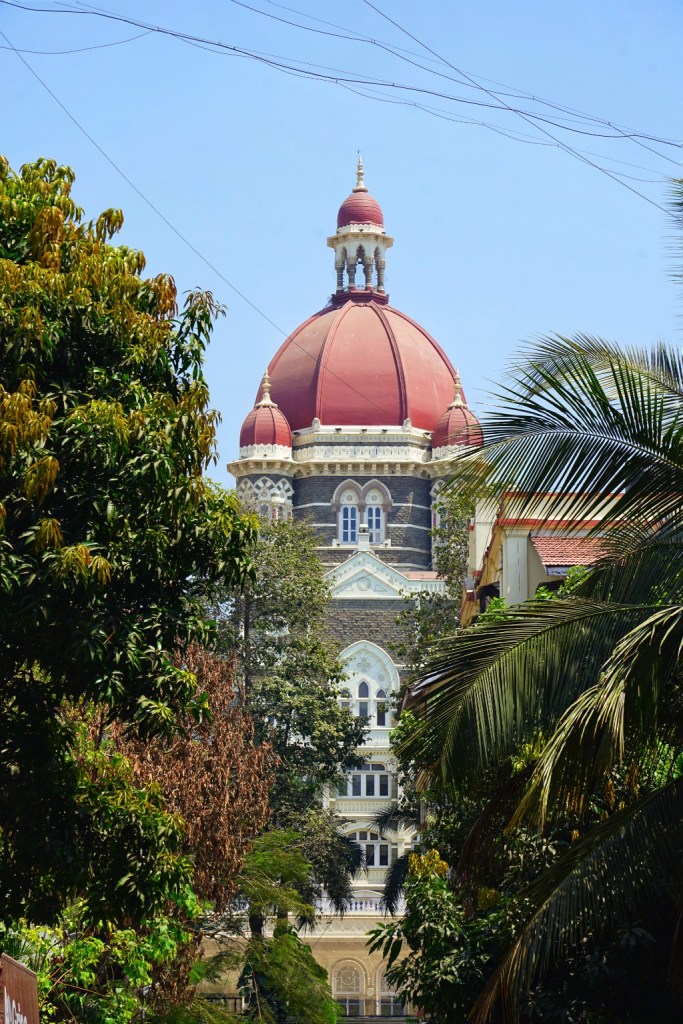
This impression follows me as we move on to Colaba. The area sits at the southern tip of Mumbai, stretching out into the sea, and carries a different texture than Bandra. The streets feel more structured — wide in parts, lined with old buildings from another time. Faded facades, balconies with peeling paint, shutters that have seen decades pass. In between, cafés, small shops, street vendors, and the constant movement of people weaving through it all. There is a certain openness here, compared to other parts of the city. You can walk longer stretches without losing your sense of direction. Landmarks appear — the Gateway of India, the Taj Mahal Palace Hotel — almost like fixed points in a city that otherwise keeps shifting.
For most of the time, we stay at Hotel Antique, right in the middle of it. Colaba is often described as the most touristy part of the city. And maybe it is — as Henning and I will realise later, when we travel further north. But while we are here, it doesn’t quite feel that way. Yes, here and there we spot other foreigners. Backpacks, cameras, the slightly slower way of moving through the streets. But they are fewer than expected. Maybe most of the tourists are Indian. Maybe it’s the time of year — the end of the season, when the flow has already thinned out. Or maybe Mumbai simply absorbs even tourism itself.
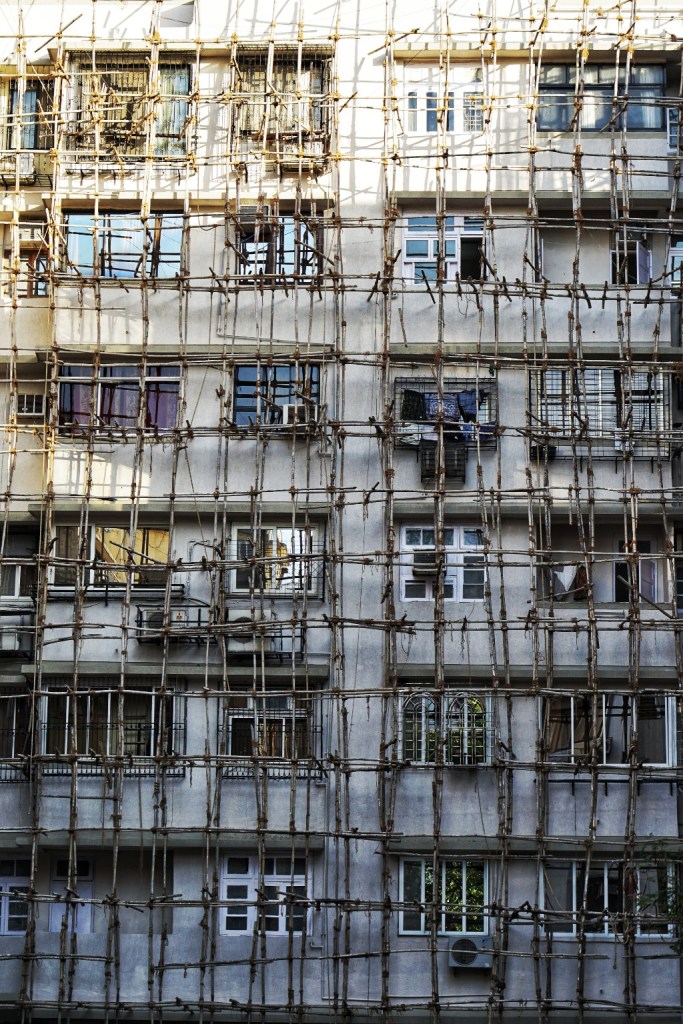
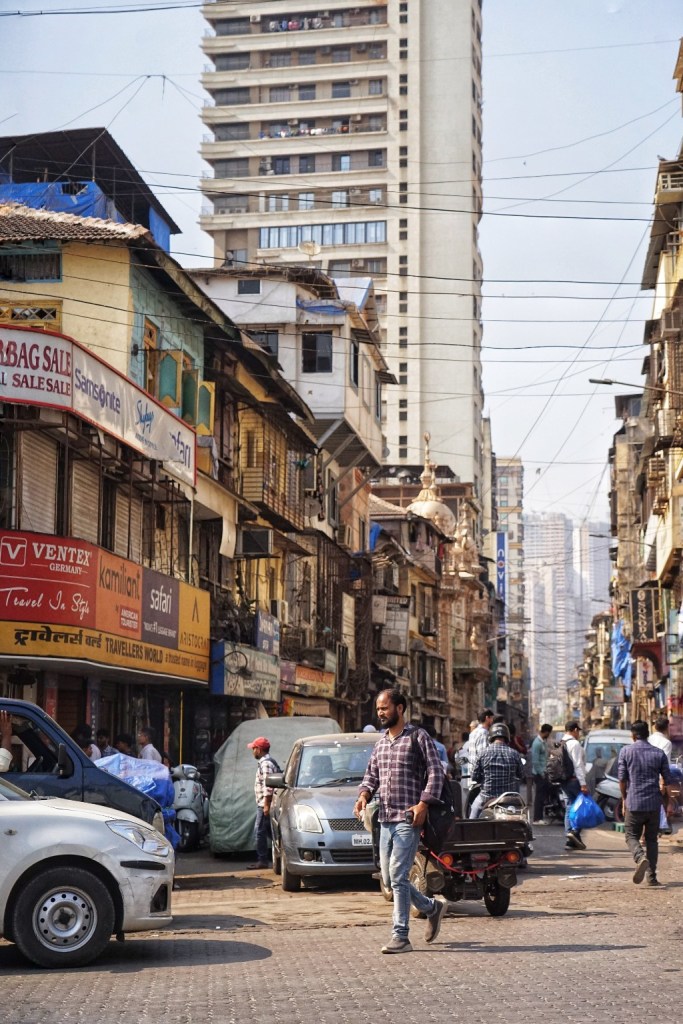
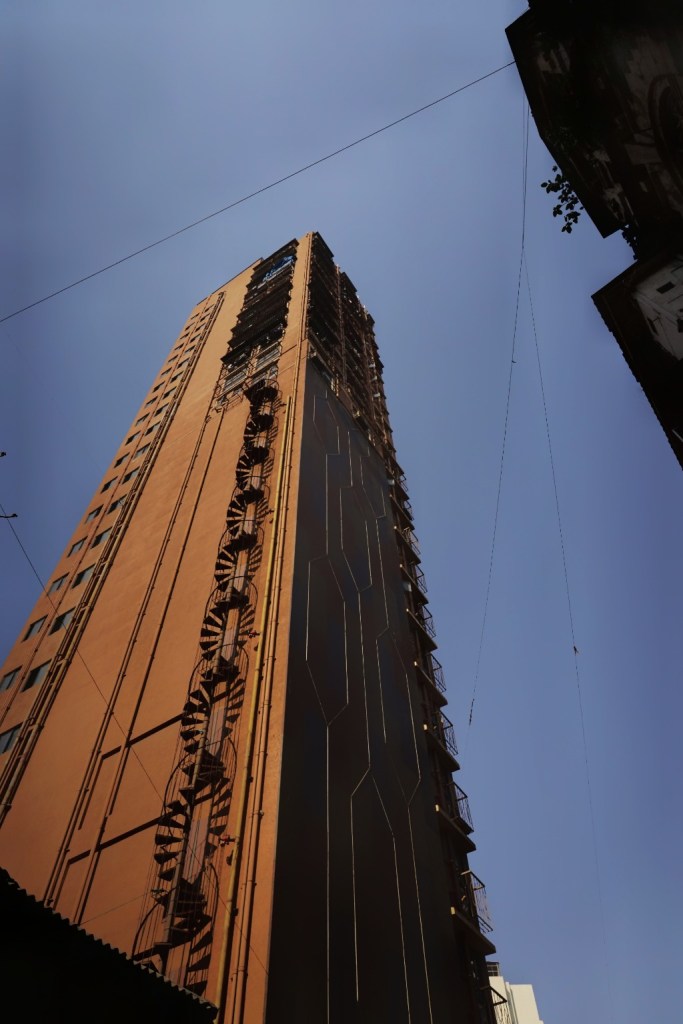
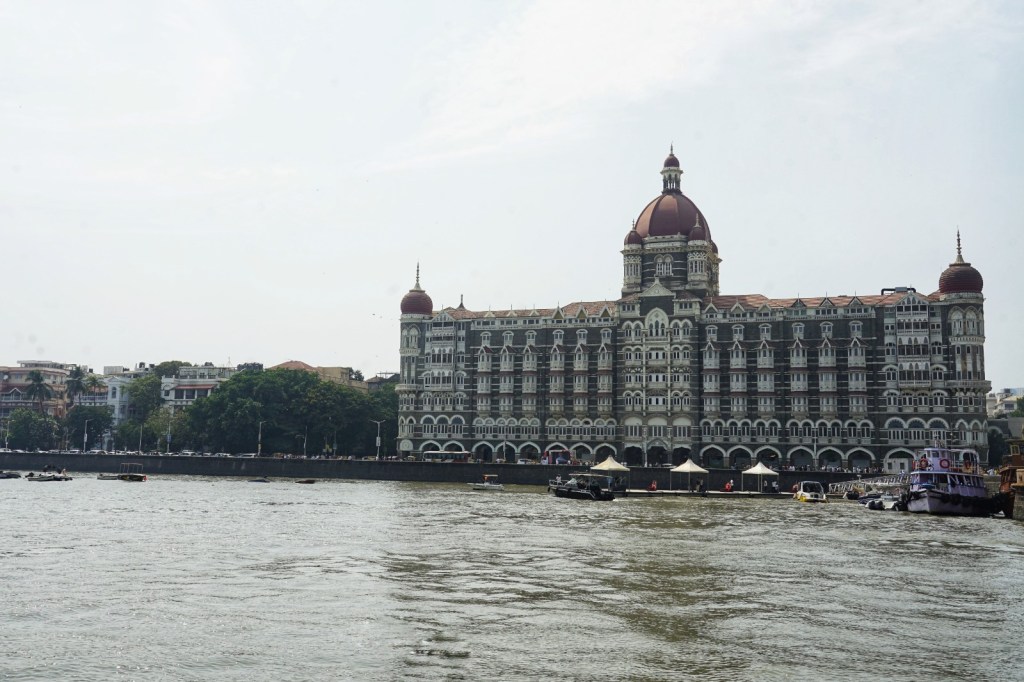
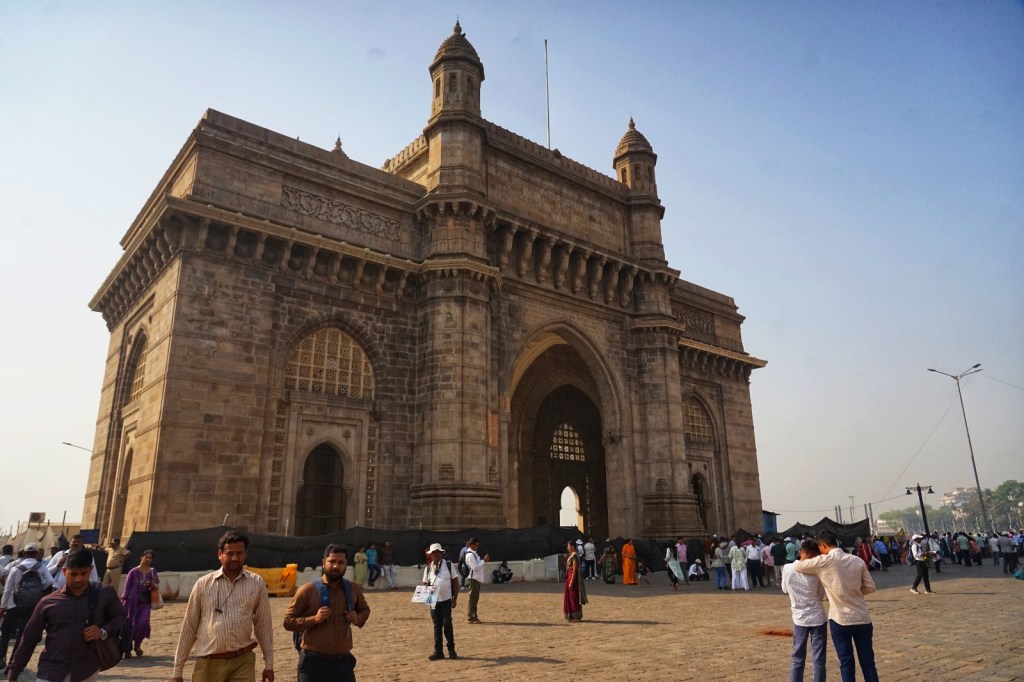
In both areas Bandra West and Colaba the demographic layers of Mumbai becomes sharply visible. The differences in income are not abstract — they sit within walking distance of each other. At the upper end, Mumbai is home to some of the wealthiest individuals in India and the world, with fortunes reaching into the billions, concentrated in industries like finance, real estate, and global business networks. Entire buildings here contain private apartments worth more than what thousands of people nearby might earn in a lifetime.
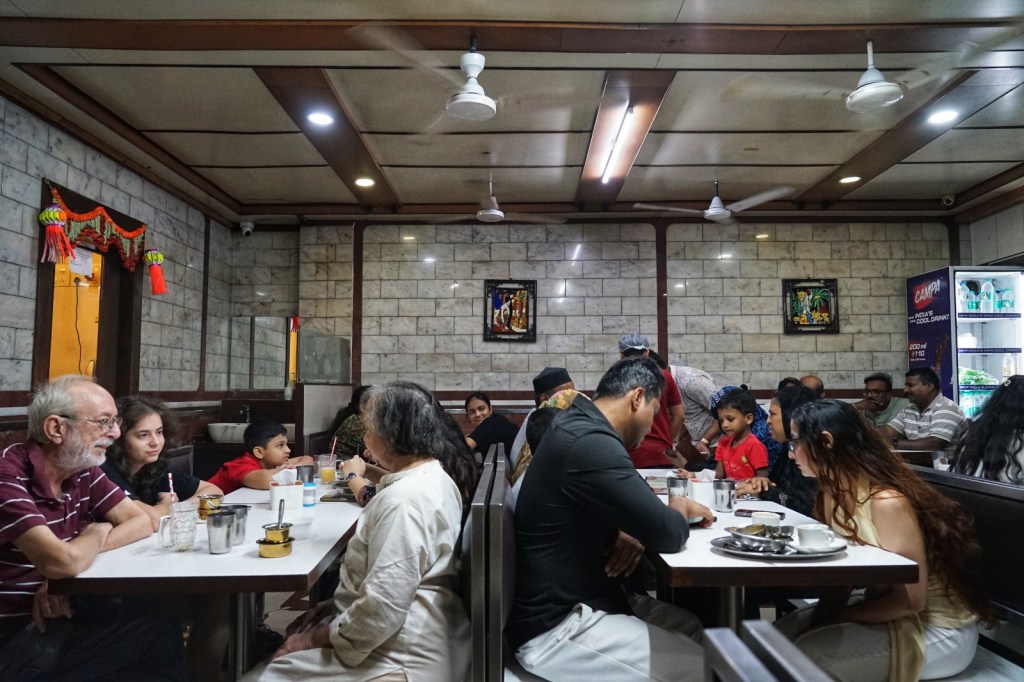
Again and again, we come across bougie cafés — one of them even called Boogie Café — the kind of places in Europe I probably wouldn’t even walk into. Simply not my crowd, and certainly not my wallet. Speaking of wallets: the price level in Mumbai is more than double compared to almost every other place we stayed in during this journey through India, with maybe parts of Pondicherry as the only exception. Accommodation, coffee, meals — everything seems to come with an added metropolitan premium. Even in iconic places like Leopold Cafe, so often recommended and woven into the mythology of the city, we suddenly pay far more than we have become used to elsewhere. I notice how quickly money can shape atmosphere. How a place can feel less relaxed the moment every order becomes a small calculation. So I feel genuinely relieved when we finally find a deeply local restaurant again — stainless steel tables, fast hands, ceiling fans, no performance attached to it. South Indian dishes, honest portions, and prices that allow you to exhale. It was a tip from our amazing hotel manager. Sometimes the best luxury is simply ease.
At the lower end of the spectrum, many people working informal jobs may earn only a few hundred rupees a day. Income shaped by opportunity rather than contract.
In the presence of the slums, I find myself searching for emotions within me. For what I have heard from so many others. Shame. Guilt. But what I actually feel is something else entirely — a quiet love, and gratitude. Not for hardship itself, but for the people, for the presence of life within it. Maybe it is shaped by Shantaram, the book that prepared me for India. But I do not want to pass that easily. I want to understand more.
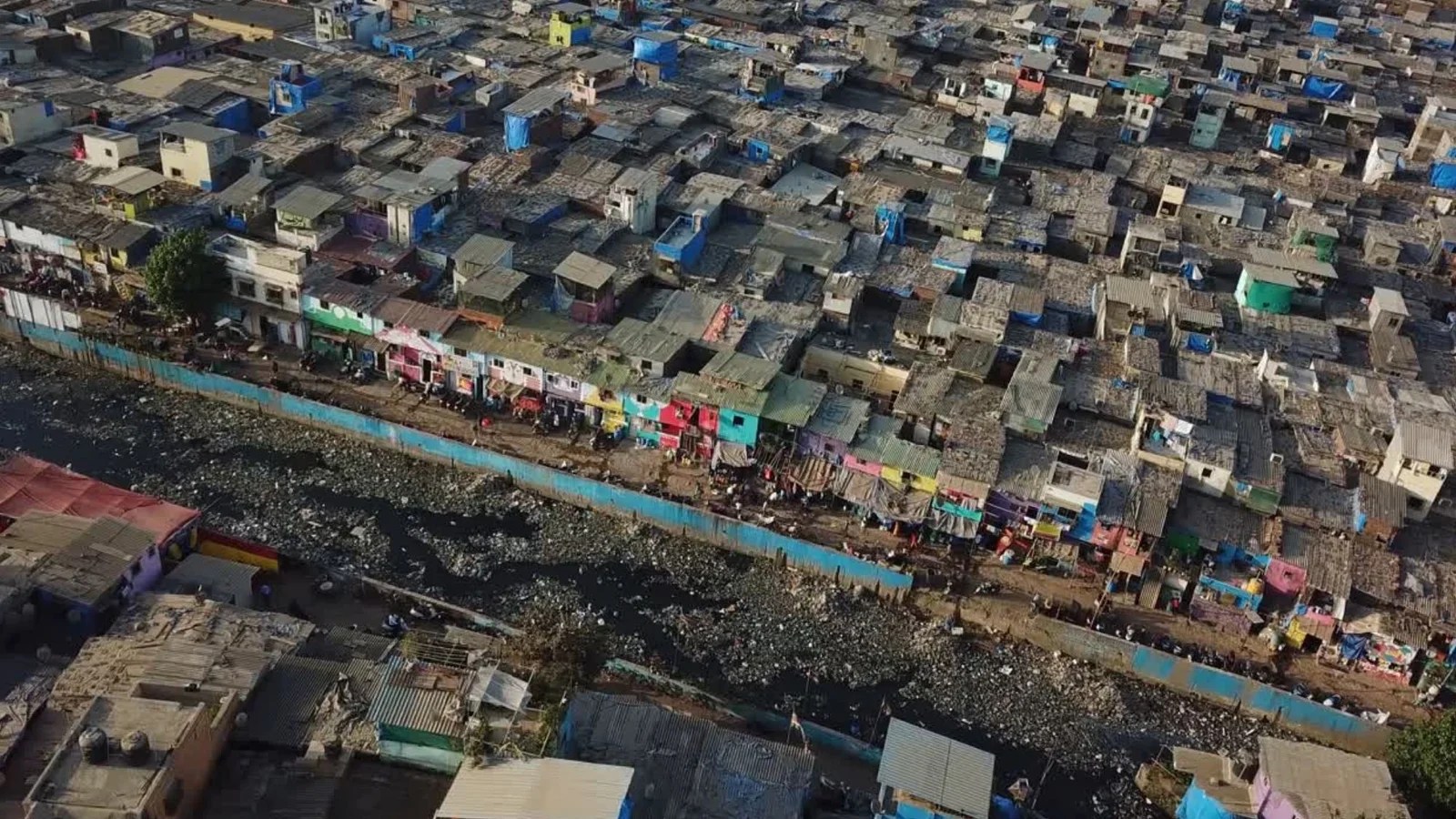
So we book a tour through Dharavi – one of Asia’s biggest slums. No photos allowed. (All you can see in this post are provided by the Tour company.) The money goes back into local projects. We are guided through narrow lanes as guests rather than spectators. Doors stand open. People move in and out carrying goods, buckets, meals, children, conversations. Life does not hide behind walls here. It spills into the passageways. We greet people as we pass. Some smile openly, others shyly, but most greet us back.
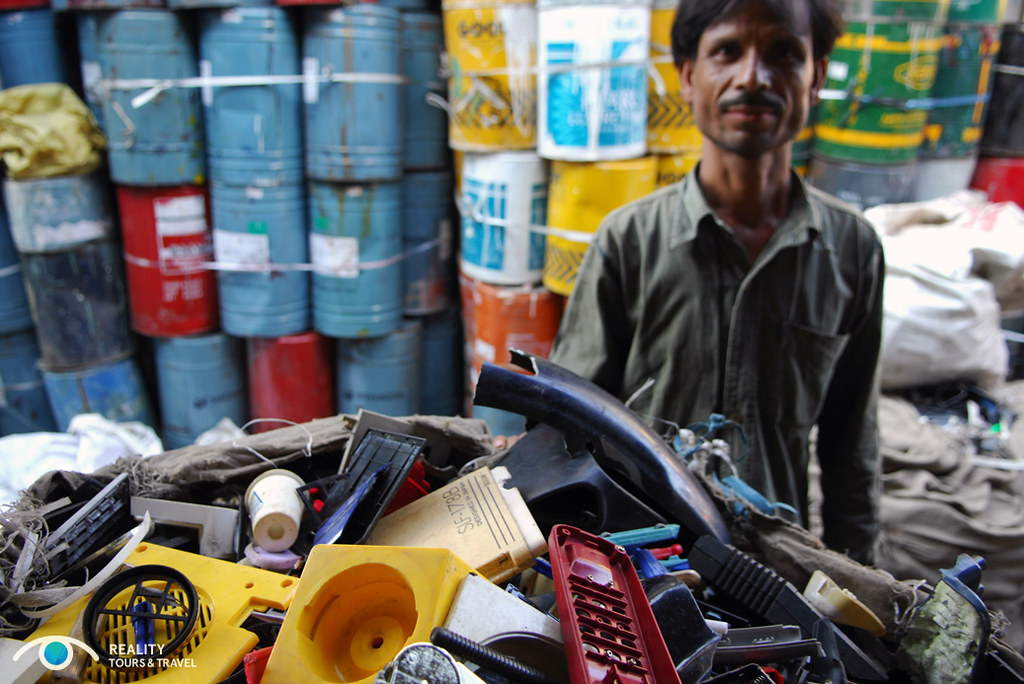
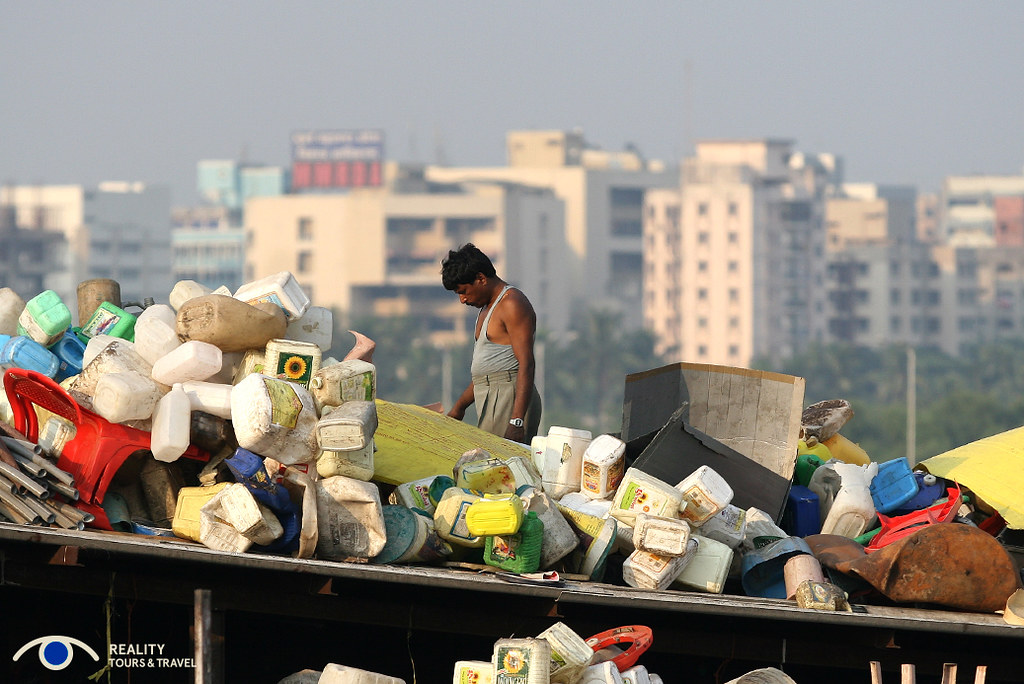
One of the first workshops we see is plastic recycling. Three people sit on the ground in a dim room surrounded by mountains of future recycled plastic — but for now, simply garbage. No gloves. No protective shoes. Everyday clothes. The only real light comes through the open doorway. Hands moving constantly through colour, texture, residue, waste. “It is good work,” the guide tells us. And maybe economically, it is. Regular work. Necessary work. Work with demand. Still, I cannot help feeling an inner contraction as I look at them there. The body often reacts before ideology has formed its opinion.
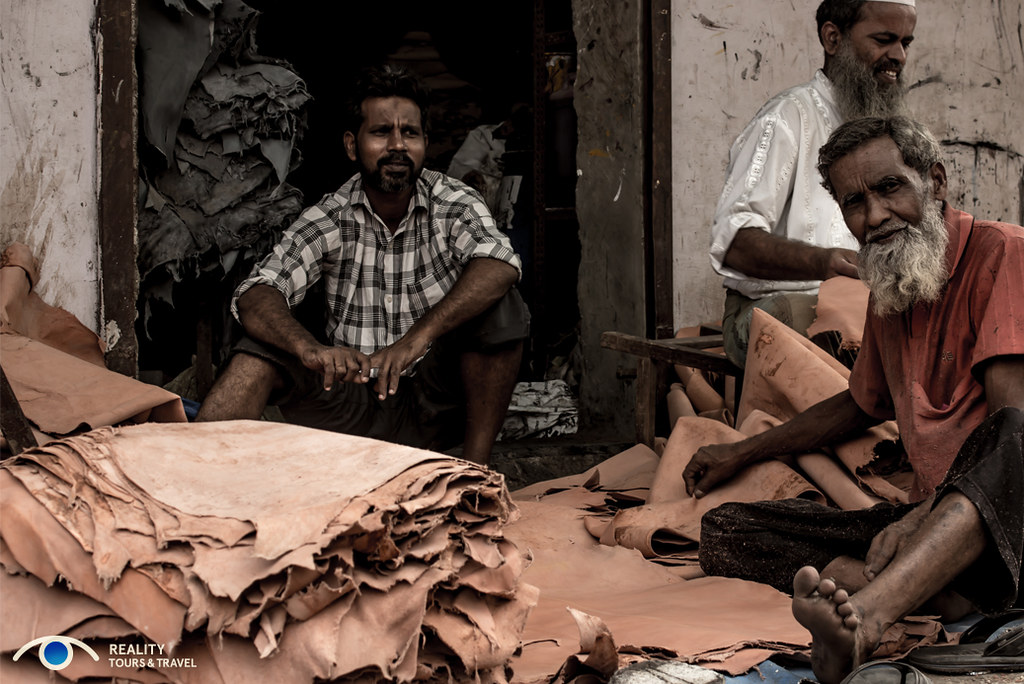
We move on to leather work. It is no longer dyed here, we are told. Too poisonous. The tanning and chemical treatment of leather often involves chromium salts, acids, solvents and wastewater that can damage skin, lungs, rivers, soil, and long-term health when regulation is weak or protection minimal. When I ask where that part of the process has gone now, the guide only says, “Tamil Nadu.” So the burden has simply moved. Other people carry it now. We are then gently steered into a leather shop. Yes, of course. If you want a leather bag, it would hardly get more local than this. The craftsmanship is visible. When we ask whether larger international brands also produce in places like this, the guide smiles but does not name names. She doesn’t need to. In a global economy, labels often travel much further than labour does.
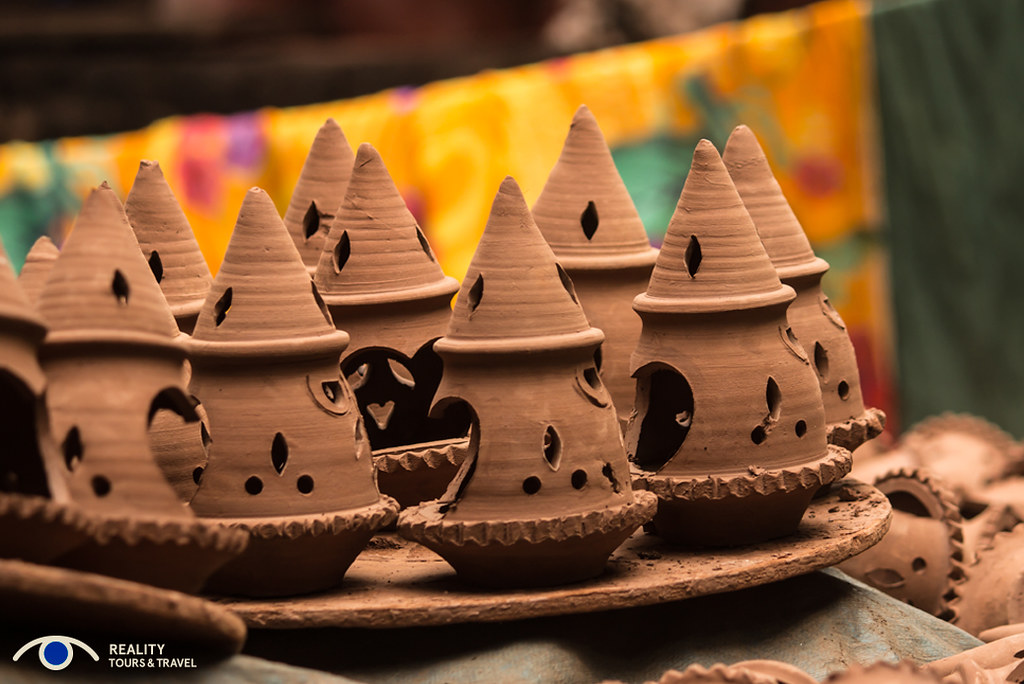
On other stop is pottery. This part of Dharavi is especially known for it. Pottery families have worked here for generations, many with roots in Gujarat and other ceramic traditions. Courtyards open unexpectedly between the dense buildings. Clay pots dry in stacks. Kilns sit in the centre of shared spaces, used by multiple families, their heat belonging to everyone and no one. Bowls, lamps, vessels, storage jars — shaped by hand in the middle of one of the busiest urban areas on earth.
We also learn that communities often cluster loosely by background or religion. Hindu, Muslim, Christian and others each have areas where networks of family, language or worship are stronger. Not rigid borders, but recognisable social geographies. And even here, there are layers within layers. Poorer, poor, and comparatively comfortable. Some homes are dark and cramped. Others, by the end of the tour, look little different from many modest neighbourhood houses I have seen elsewhere in India. Tiled floors. Televisions. Painted walls. Narrow streets, yes — but dignity is not always visible from outside, and poverty is never one single shape.
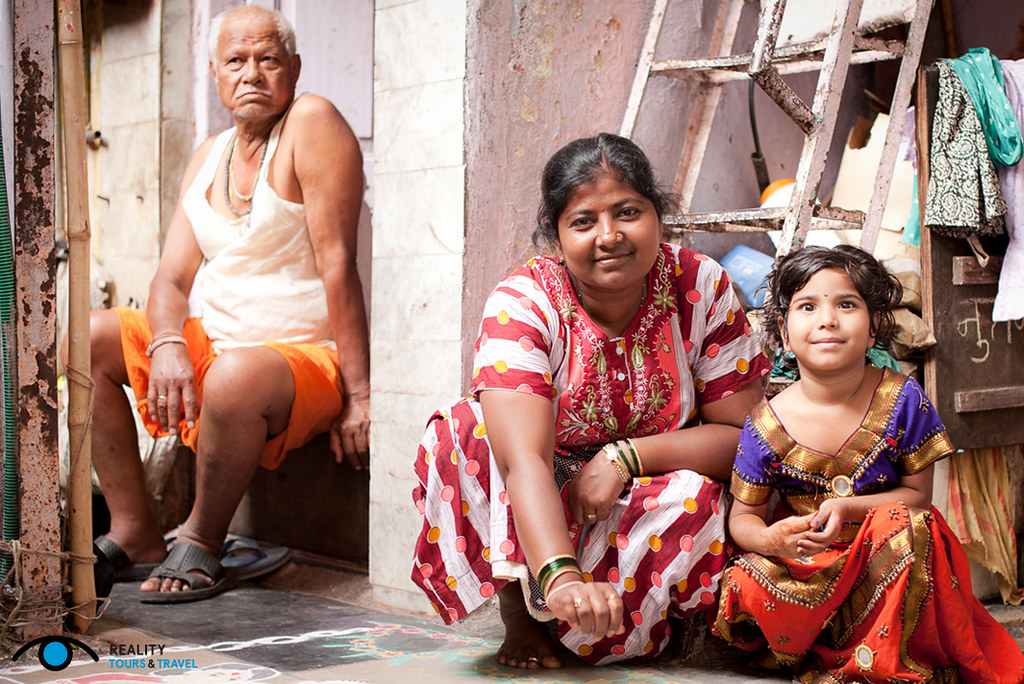
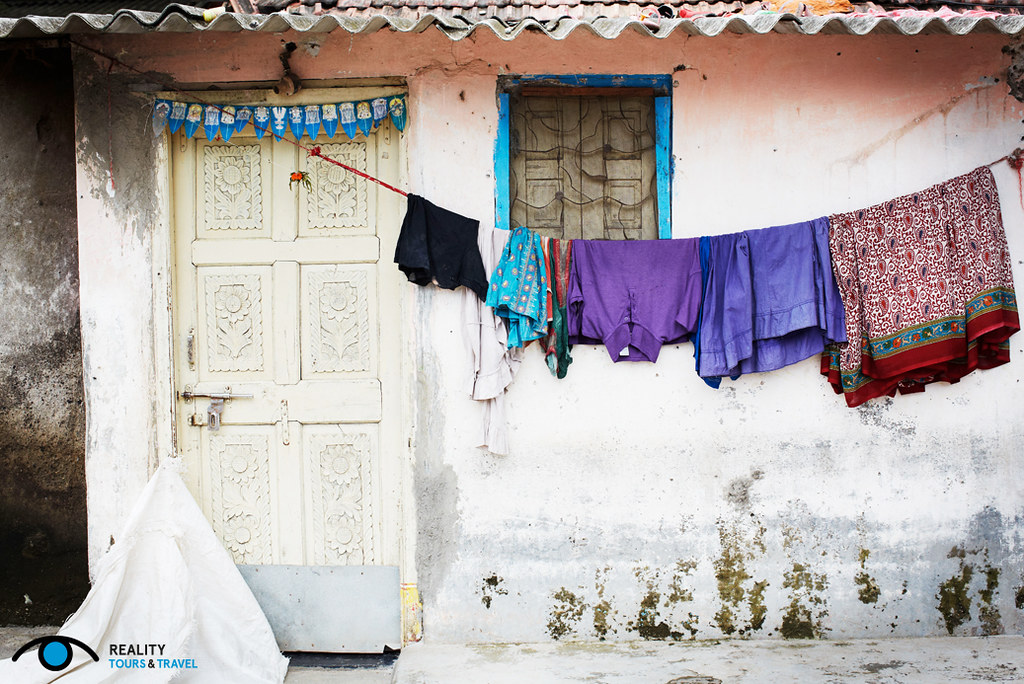
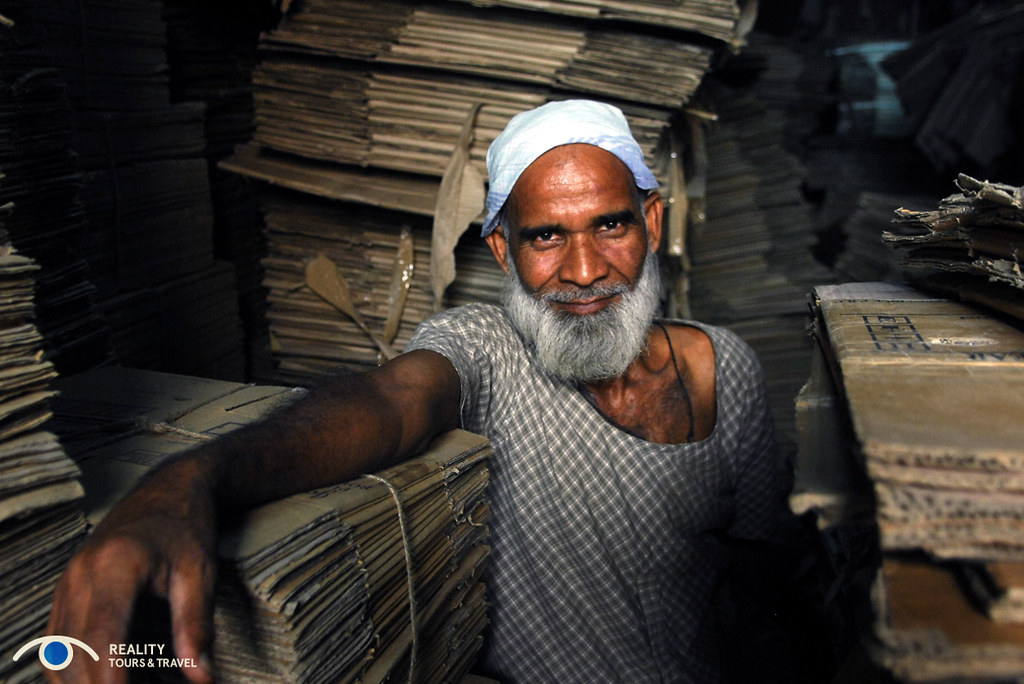
Life here is not easy, not stable, not protected. There is no question about that. And yet, as I glimpse it in fragments here — it is also a life that holds strong threads of community and mutual dependence. A form of togetherness that is not idealised, but necessary. That is what I find myself noticing when I look at the plastic tarps, the narrow lanes, the improvised structures. Not just absence, but connection. Not just lack, but coexistence.
The gaps are not unique to India — it exists in Europe as well — but here it is compressed into the same physical space. Not separated by distance, but layered vertically and horizontally within the same streets, sometimes even the same view.
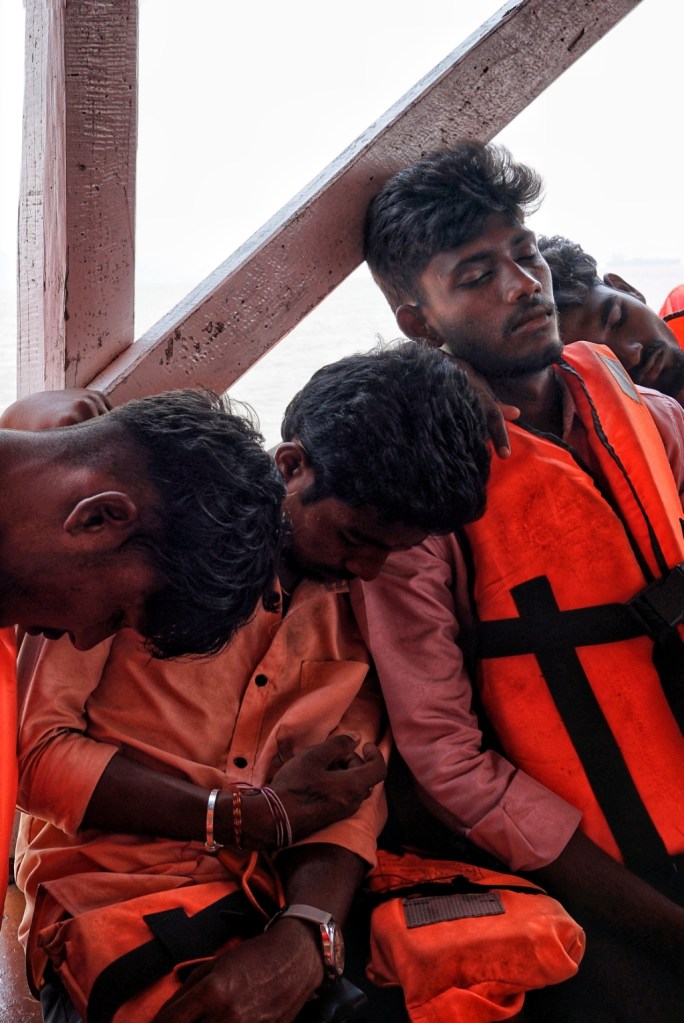
One day we hop over to Elephanta Caves. On the ferry there, we are stopped twice for passport controls. Randomly, apparently. I notice, almost fondly, that I am still not the biggest fan of officials. Ah. Something has not changed. They take my passport. They look at it. They look at me. Then at the passport again, perhaps hoping it has developed new information in the last three seconds. Back to me, as if I may have shapeshifted since page two. At some point, photos are taken with what I sincerely hope are official devices and not somebody’s private phone with family WhatsApp notifications lighting up the screen. All the while I mumble my unease with the procedure, while performing what I believe to be a face of innocent administrative compliance. Henning and Willem Jan, meanwhile, inform me that this behaviour is creating the maximum amount of suspicion possible — and laugh their asses off. Eventually, we are released back into civilian life.
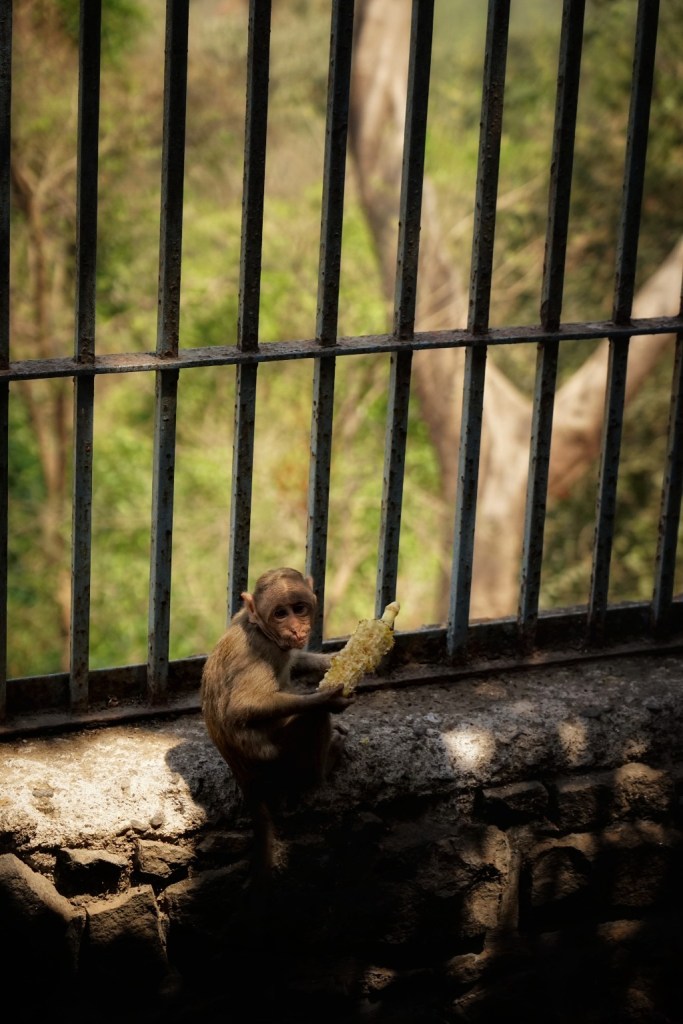
When we arrive on Elephanta Island, the first welcoming committee is not spiritual, historical, or human — but monkeys. Hordes of them. They sit on railings like seasoned supervisors. They drink from abandoned bottles with casual entitlement. I enjoy watching it. Animals versus animals. Humans clutching plastic bags, trying to negotiate ownership. Monkeys entirely uninterested in concepts such as property law. They slap snacks straight out of people’s hands with the precision of trained pickpockets. One second you have chips, the next second a monkey has chips, and frankly, fair enough.
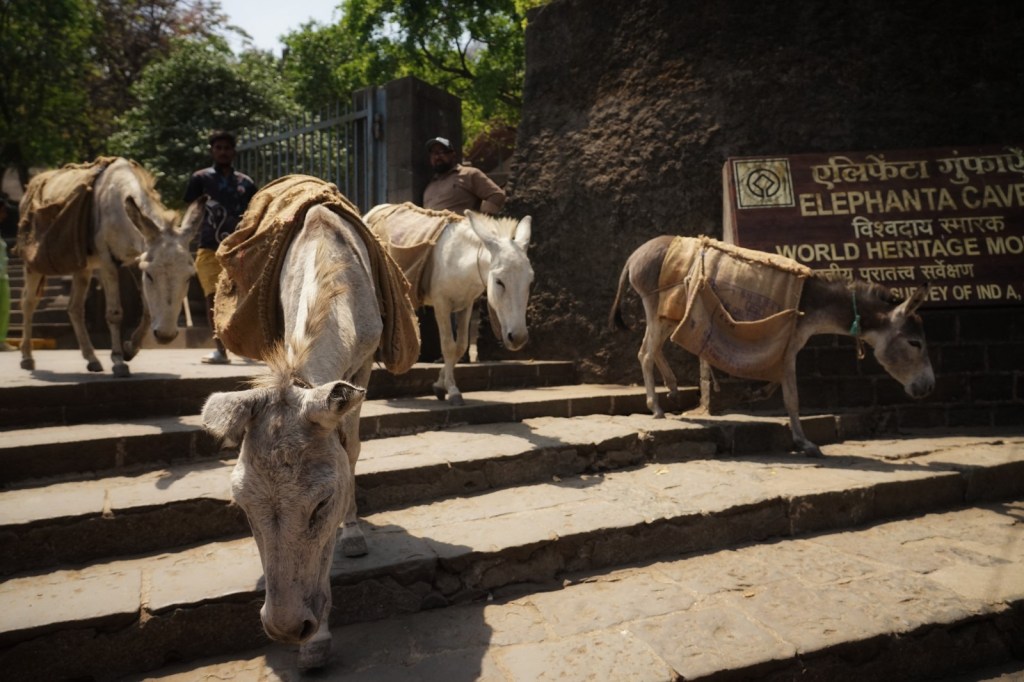
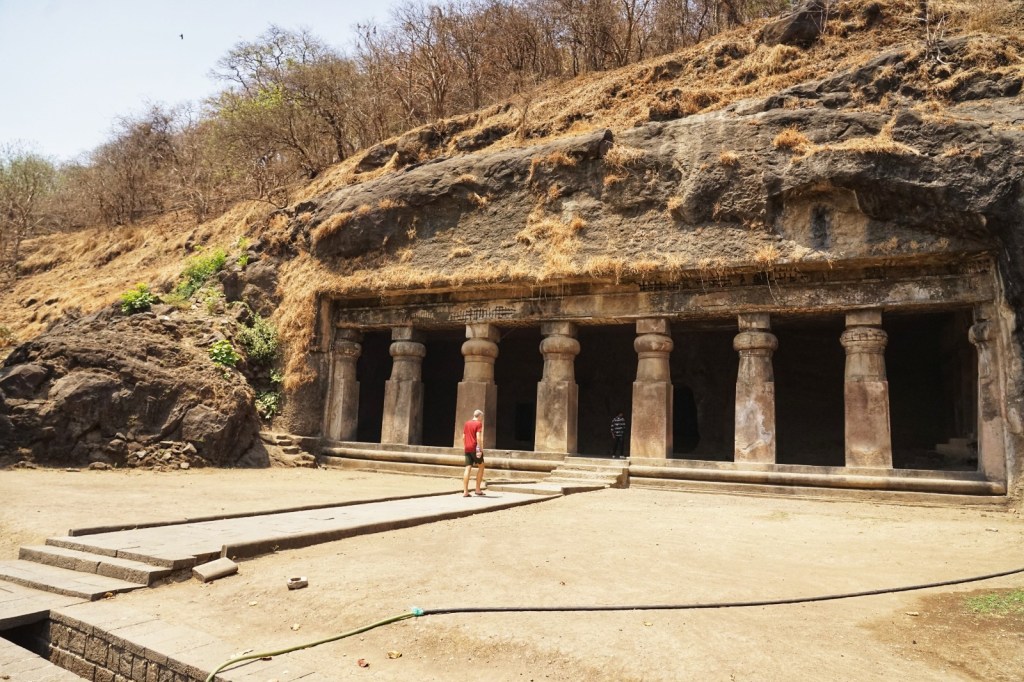
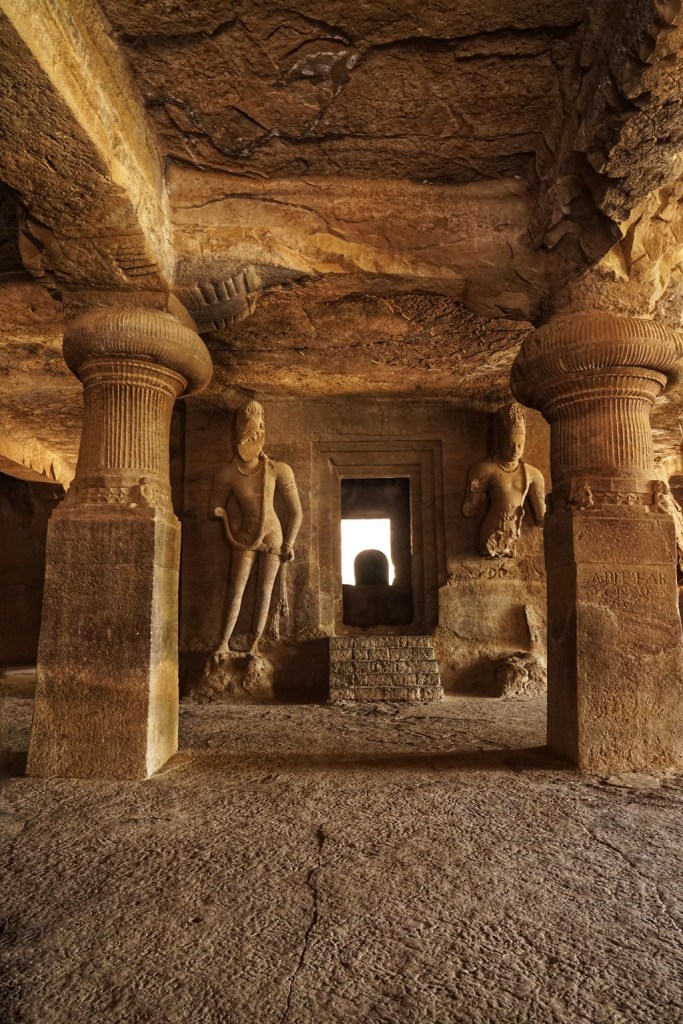
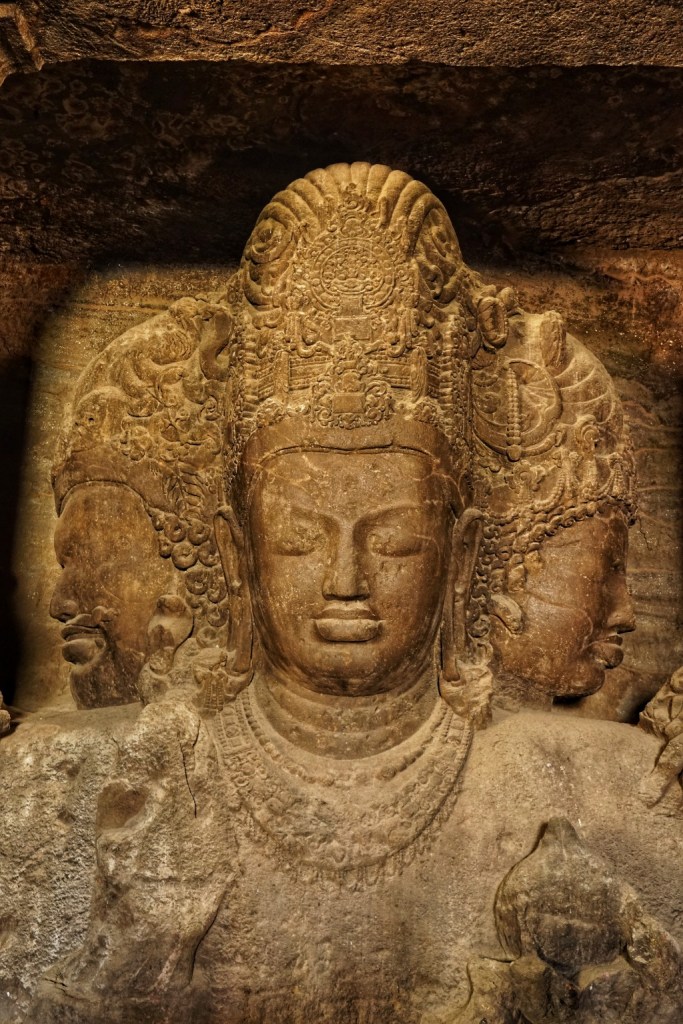
The Elephanta Caves date back roughly to the 5th to 8th century and are dedicated mainly to Shiva. Carved directly into basalt rock, they are not built in the usual sense so much as excavated — revealed by removing everything that was not temple. That alone always impresses me. To create by subtraction. To shape space out of darkness and patience. Most striking of all is the great three-headed form of Shiva, the famous Trimurti. Serene and immense, it represents different aspects of the divine: creation, preservation, destruction. Or perhaps, more honestly, the truth that these things are never separate. Time has damaged parts of the caves. Portuguese soldiers are said to have used some sculptures for target practice centuries ago — a depressingly consistent theme in colonial history: arrive somewhere ancient, misunderstand it, then shoot at it. And yet much remains.
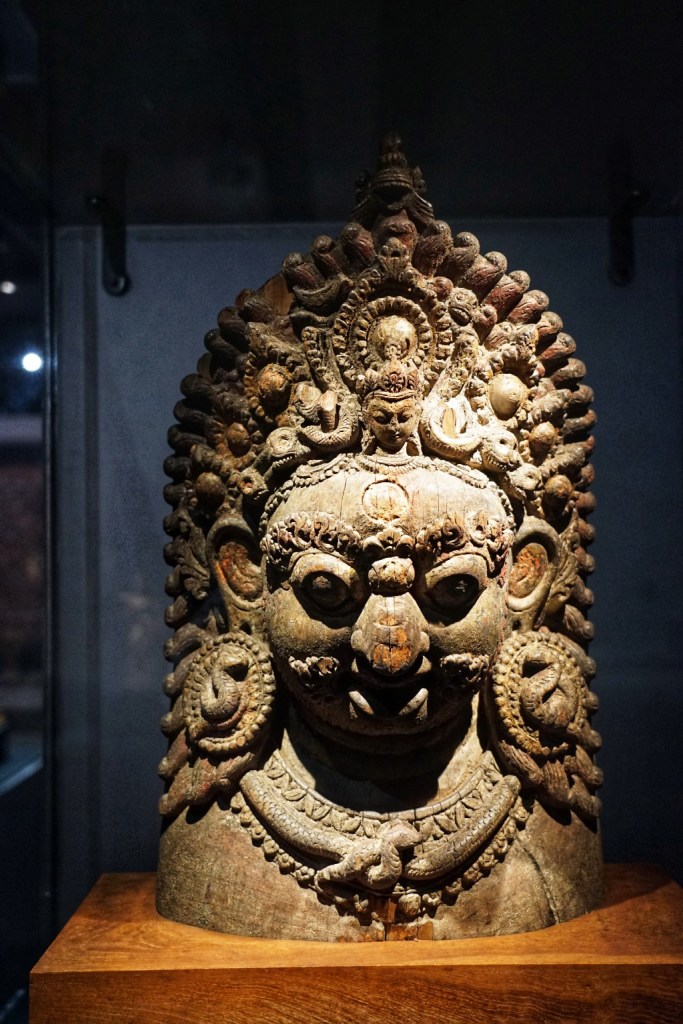
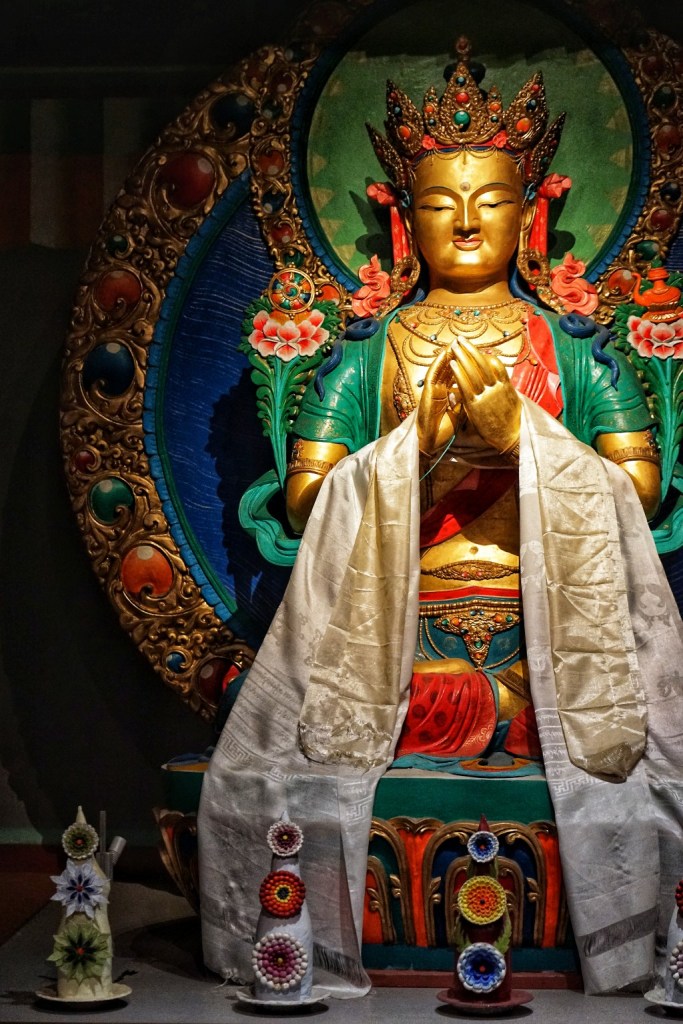
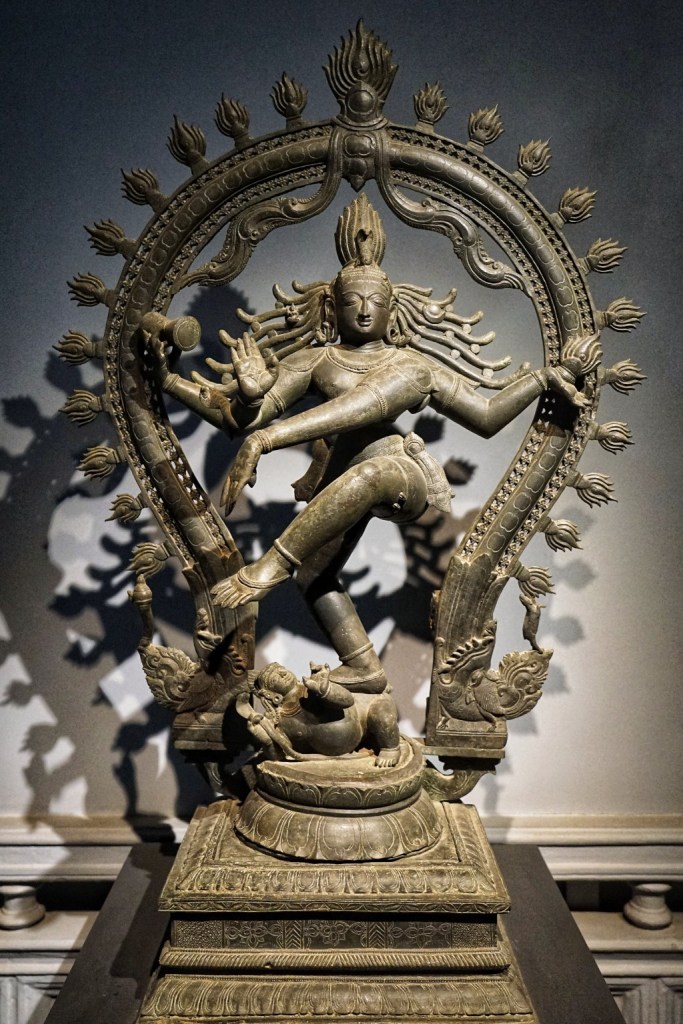
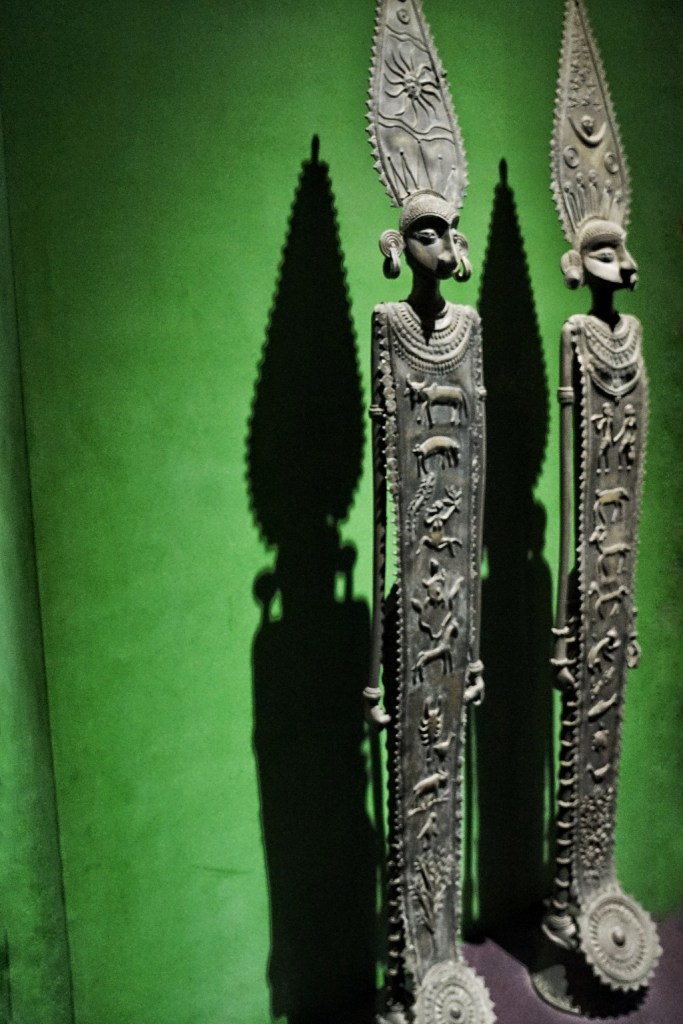
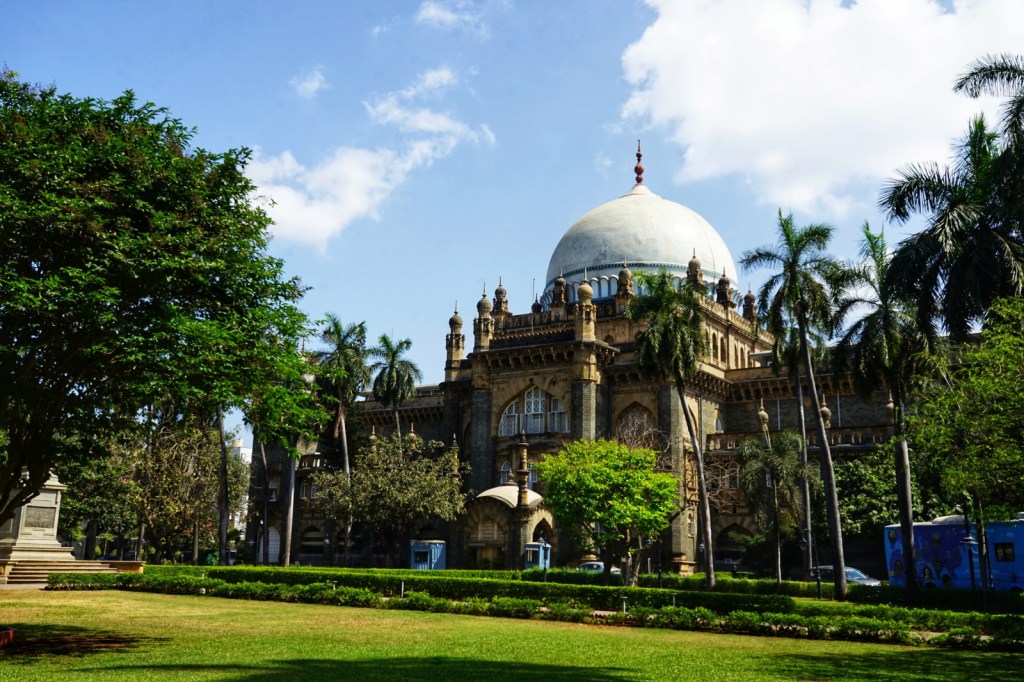
One day we visit the Chhatrapati Shivaji Maharaj Vastu Sangrahalaya. It is one of Mumbai’s major cultural institutions. And it is vast. Gallery after gallery: sculpture, miniature paintings, decorative arts, natural history, archaeology, trade objects, stories layered in glass cases and carefully lit rooms. What I enjoy most is the exhibition Networks of the Past. It explores how movement, trade, migration, craft, ideas and belief systems connected regions long before our modern obsession with calling everything global. Seas were roads. Objects travelled. Techniques migrated. Religions adapted. Cultures borrowed shamelessly from one another and then called it tradition. It brings me back to my own studies in archaeology. That particular feeling of recognising that the world has always been more entangled than neat national narratives would like us to believe. The past, once you look closely, is rarely tidy.
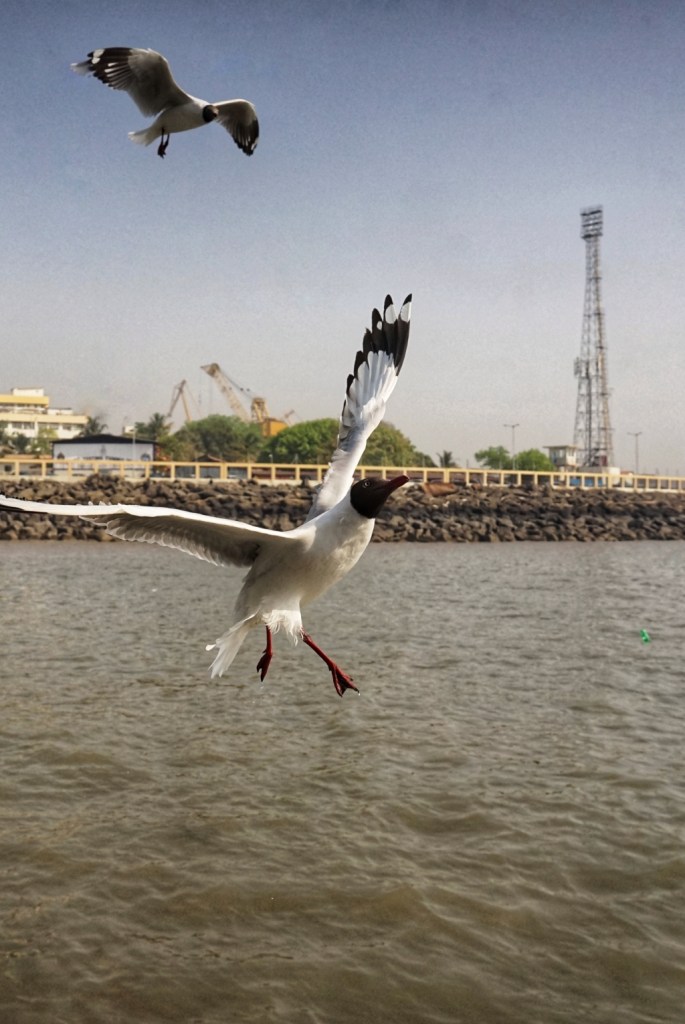
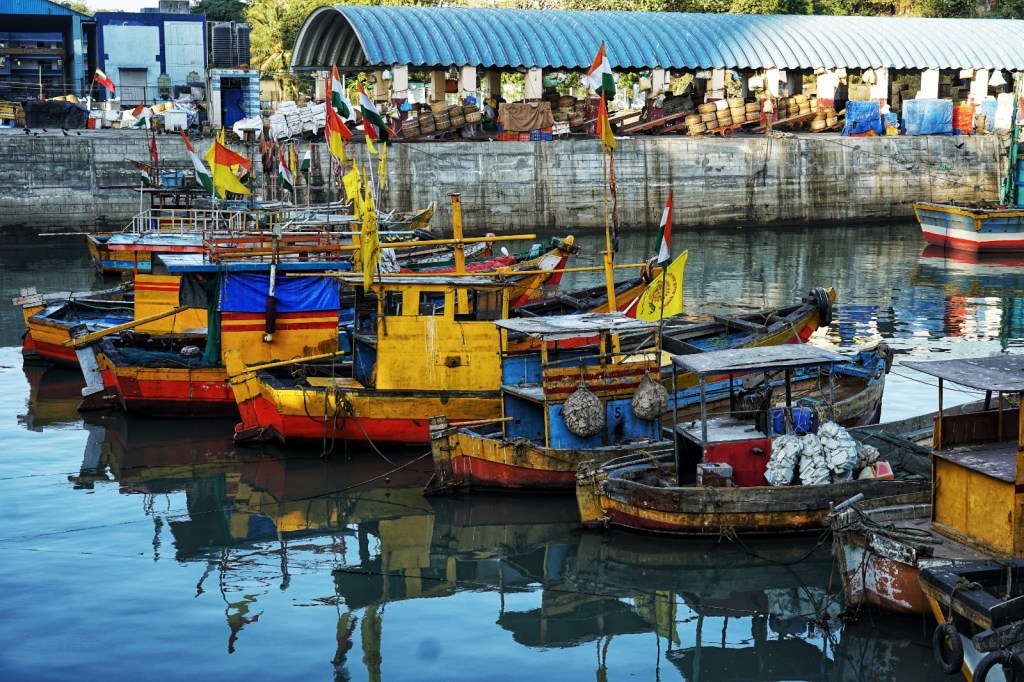
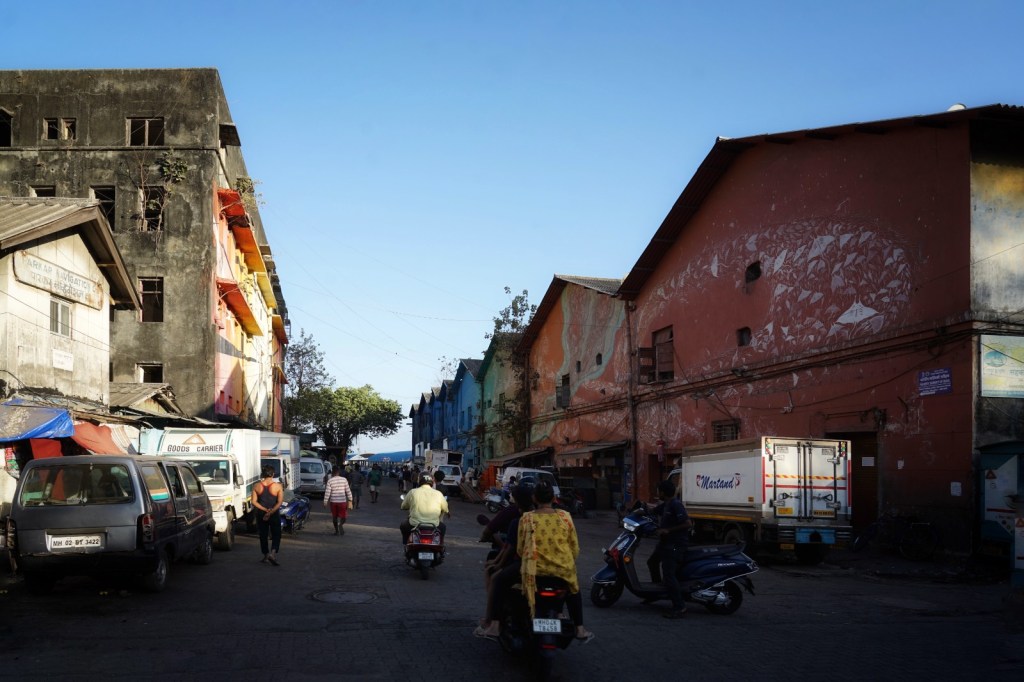
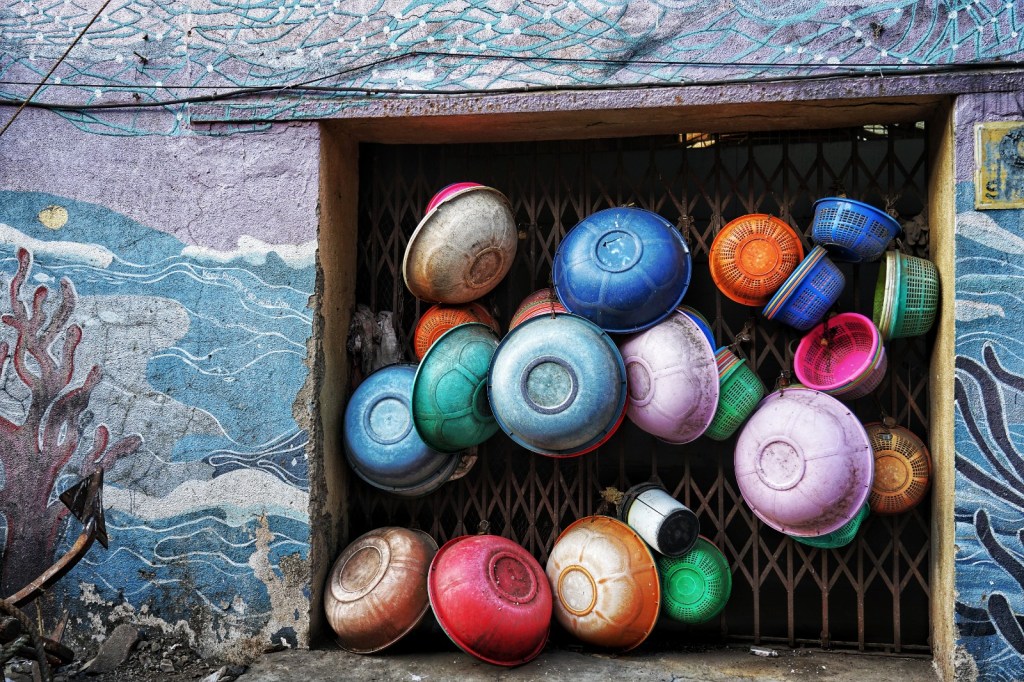
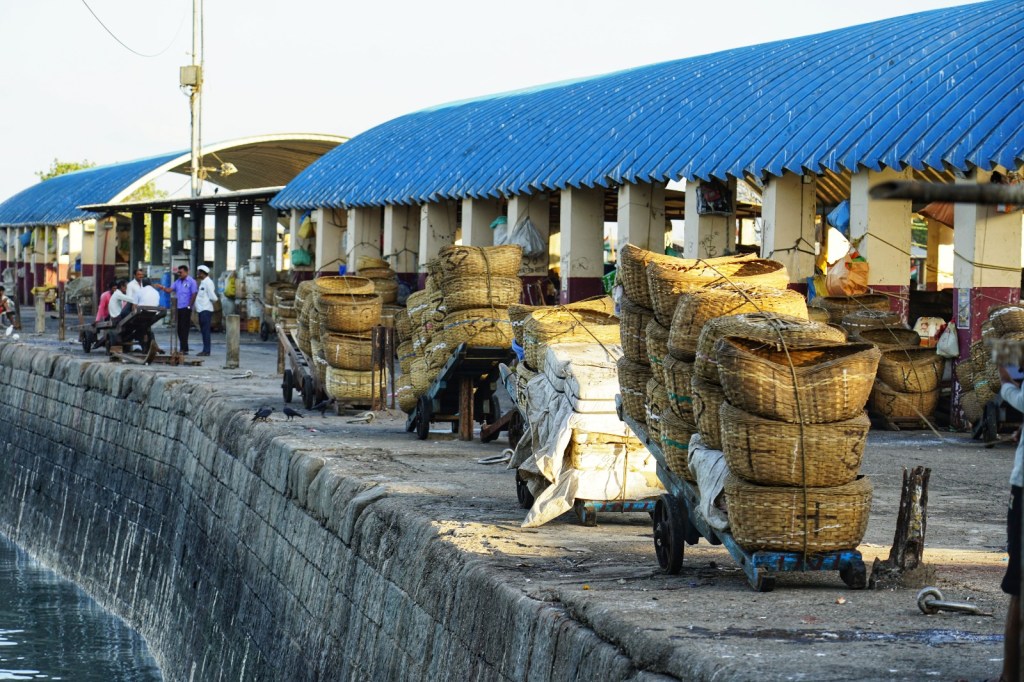
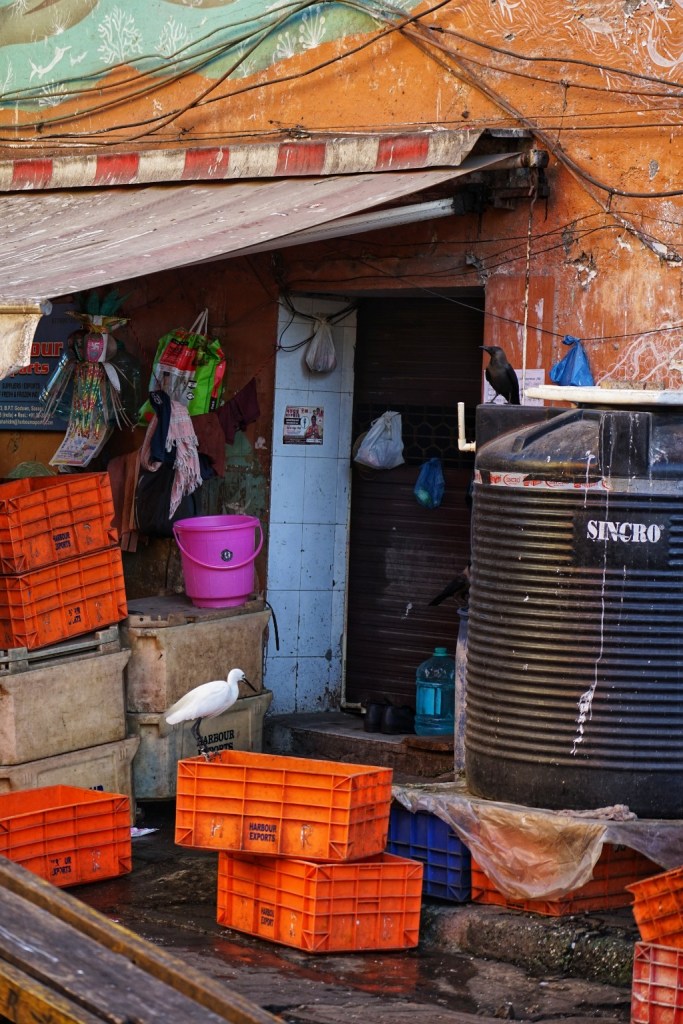
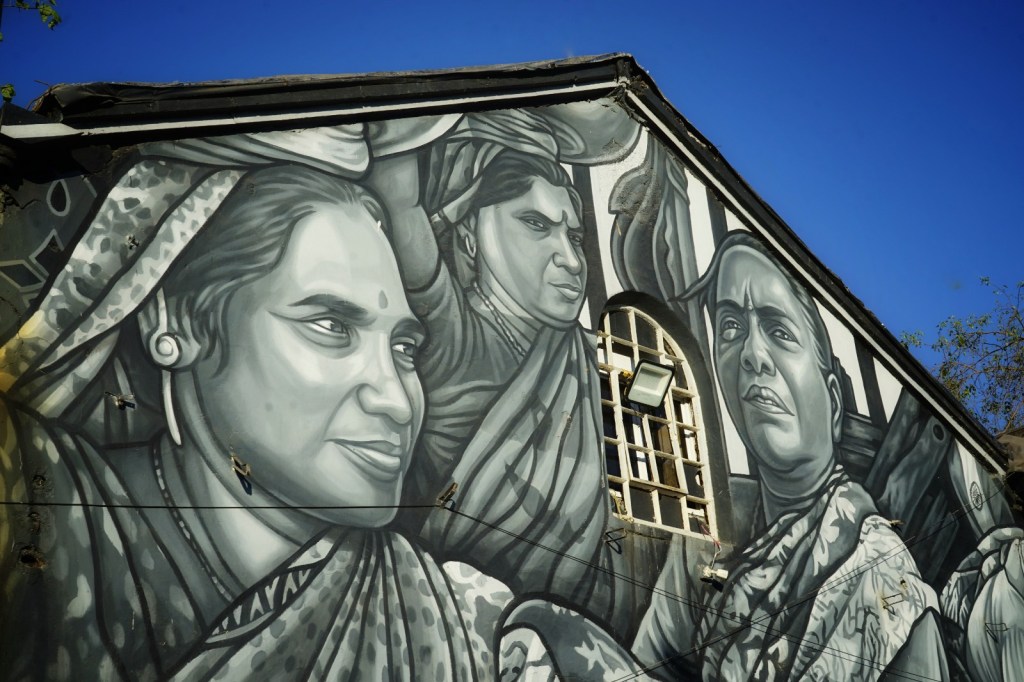
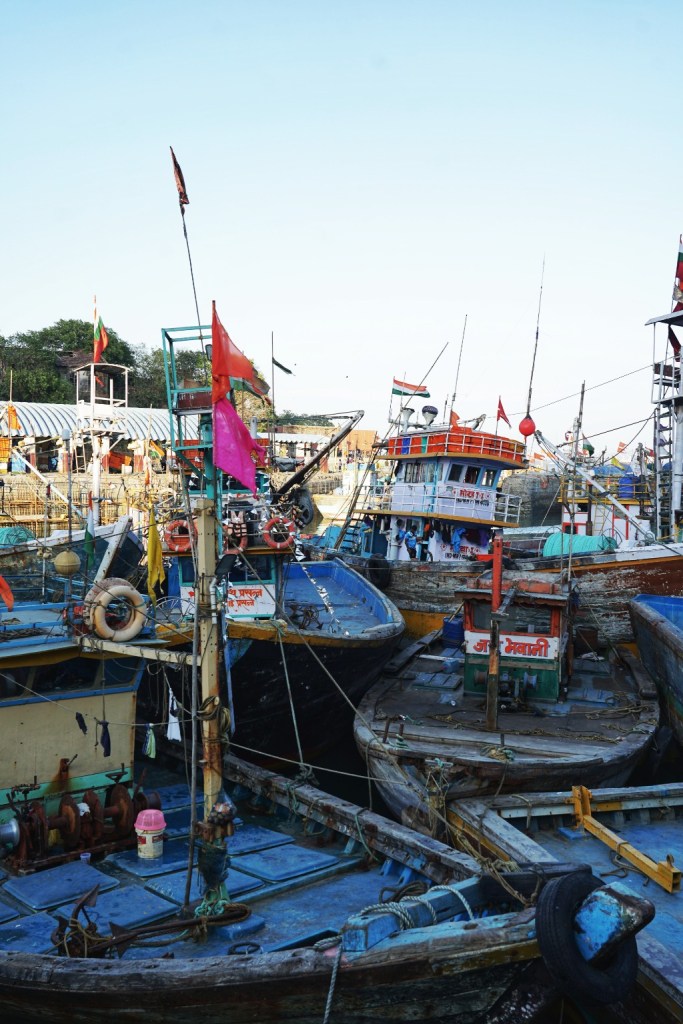
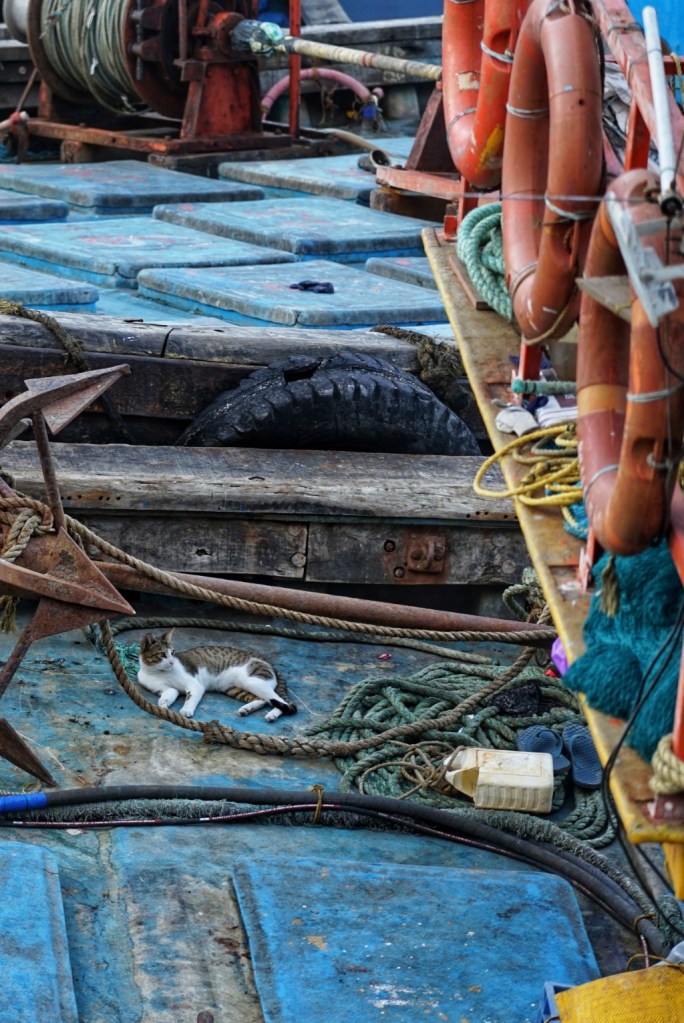
In the afternoon we go to see the local fish market. Wet ground, shouted instructions, gulls circling overhead, the smell of salt, diesel and fish strong enough to become almost architectural. Everything moves quickly, but not chaotically. What fascinates me most are the boats. So many of them. Packed tightly together, pressing into narrow spaces that by all visible logic should not accommodate even half their number. Painted hulls knocking gently against each other, ropes crossing in impossible angles, engines sputtering, men jumping from one vessel to the next with the balance of lifelong practice. There seems to be no room for anyone, and yet somehow everyone gets through. Beautiful murals cover parts of the surrounding walls — bright colours against labour and weather. No foreigners seem to be here. We are noticed, of course. Looked at. But in the warm, curious way I have come to recognise. A few smiles. Small nods. No fuss.

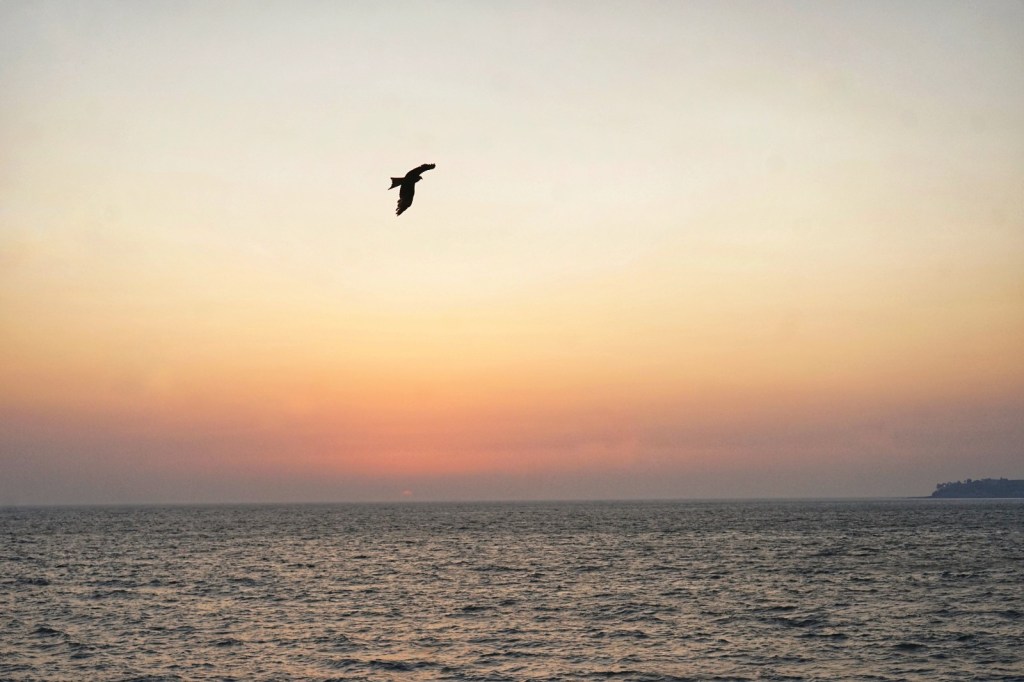
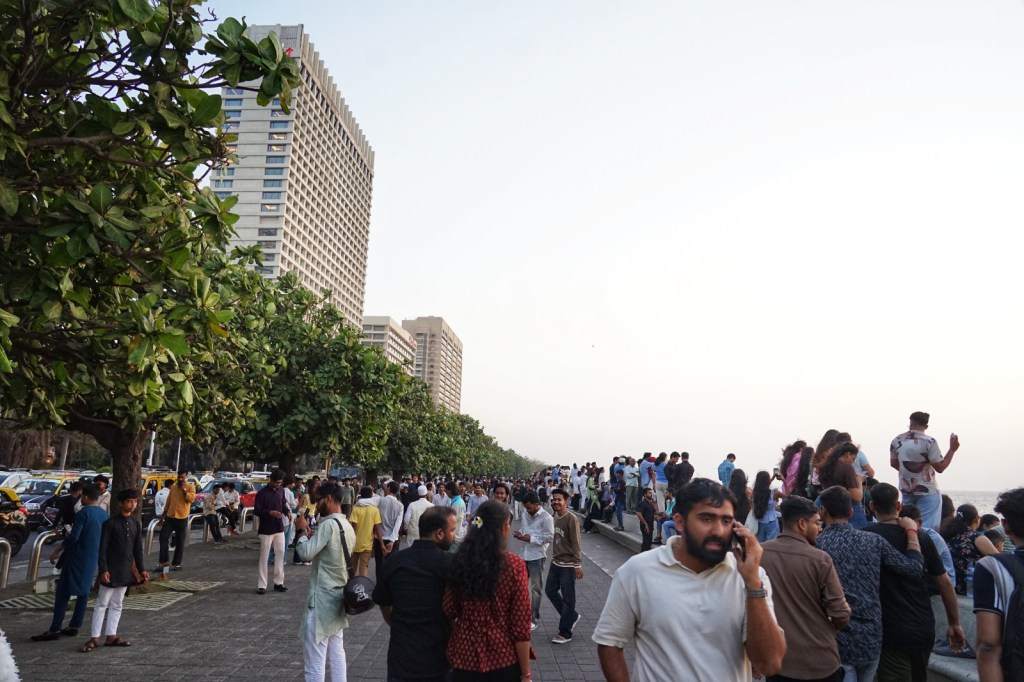
In the evening, we visit Marine Drive and watch the sunset. With so. Many. Other. People. This seems to be one of the city’s main events. A long curved boulevard along the Arabian Sea where people come not so much to do something, but simply to be there. To sit. To walk. To snack. To stare into the distance. To meet someone. To avoid someone. To let the day end in company.
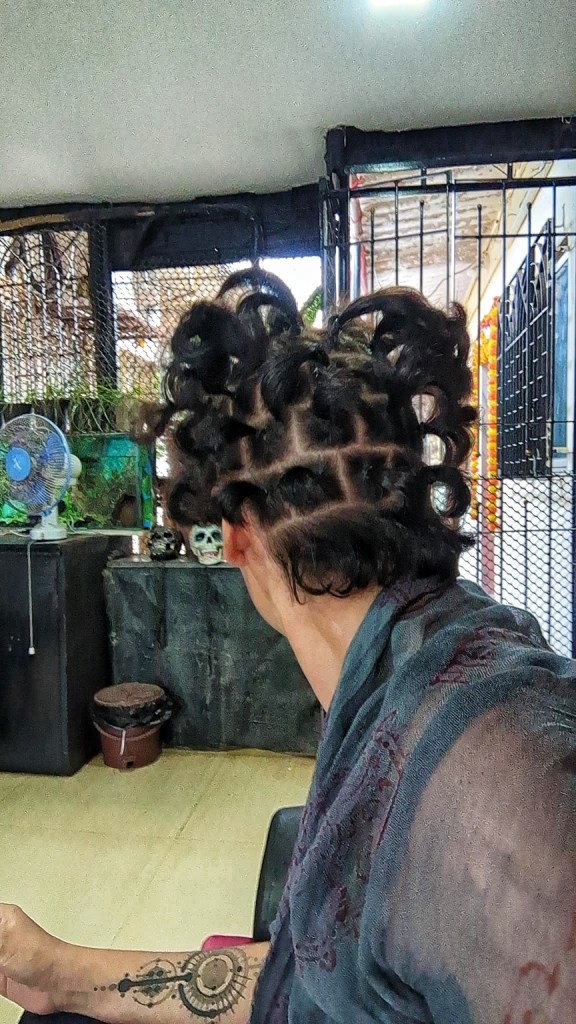
My very last day in Mumbai I spend unexpectedly: getting dread extensions. I had looked for a place since Varanasi, wanting to ease into the idea rather than declare a whole new identity by lunchtime. I mistrust dramatic reinventions. Better to try slowly. See what feels like expression and what feels like costume.
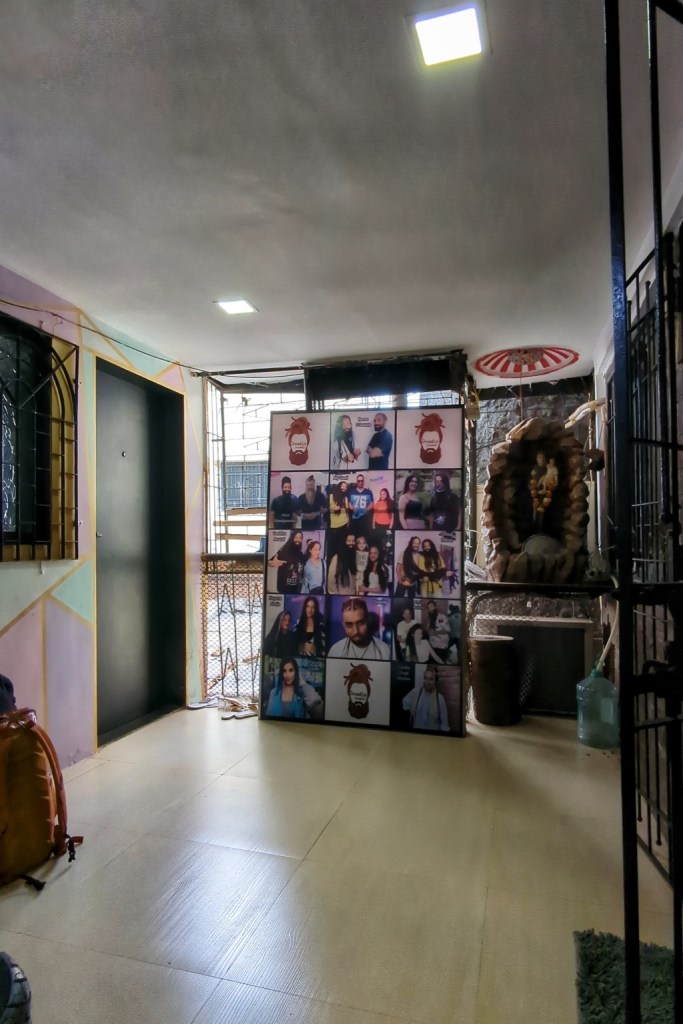
We arrive in a fully local neighbourhood with all our luggage, forty minutes early. Very punctual. Mildly inconvenient. A passing Indian dreadhead guides us there and tells us he has been coming for ten years. A strong endorsement. Once inside, the appointment begins not with hair, but with conversation. There is something reassuring about that. No rushing, no immediate transformation, no dramatic before-and-after energy. First Ashley explain the process carefully: how extensions are attached, how sections are parted, how much tension is normal, how to care for them afterwards, what to expect in the first days, what to avoid, what to trust. It feels less like being sold something and more like being guided into a decision. Which, for me, matters.
Then we begin. From ten until four I sit there while my hair is parted, woven, tightened, shaped. And while they work, the last three months pass through me: Mumbai and Chennai at the beginning. Southward trains and coastlines. Sathankulam and family warmth. Kerala’s green softness. Ooty and Coonoor in the hills. Tiruvannamalai and Shivaratri. Varanasi with smoke and surrender. Rajasthan’s forts and desert light. Mumbai again. Gokarna and its beaches where time loosened. And now Mumbai once more. Endings, as so often, returning to beginnings.
Tracy is mainly doing and overseeing the installation and we speak throughout the day. And not in the shallow salon way of passing time with harmless questions. We talk properly. About life, relationships, identity, expectations, freedom, women, aging, family, choices, how difficult it can be to know what is truly ours and what has merely been handed to us. There is something tender about speaking openly with someone you may never see again. No history to defend. No role to maintain. Sometimes strangers receive truths more gently than familiar people can. Around us, hair continues to be braided, sectioned, transformed. Outside, Mumbai continues being Mumbai. Inside, time has its own tempo. By the time we are done, it is not only my hair that feels different. Touched by a day I know I will not forget.

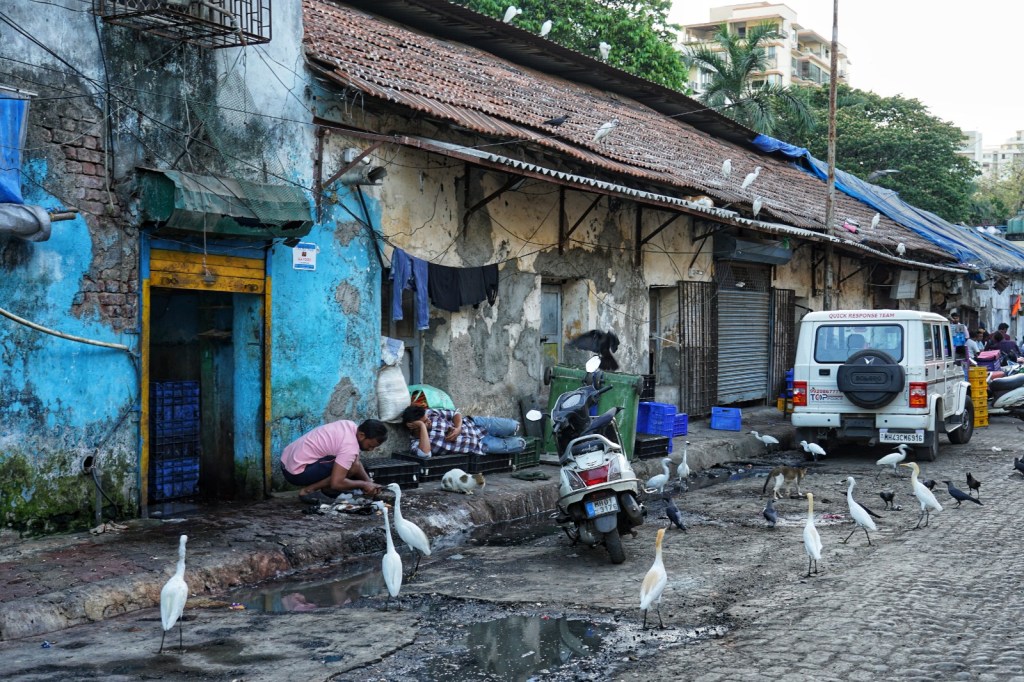
What stays with me is Mumbai’s density, as if everything is happening at once and on top of each other – and with that many people on such a small peace of earth – it really just does. The way a single street can hold extremes that don’t resolve. A man sleeping on the pavement beneath a billboard advertising luxury apartments. The smell of incense mixing with exhaust fumes. Silence, somehow, inside the noise. You don’t just pass through Mumbai — you are absorbed by it. A city that doesn’t ask you to understand it — only to withstand it.
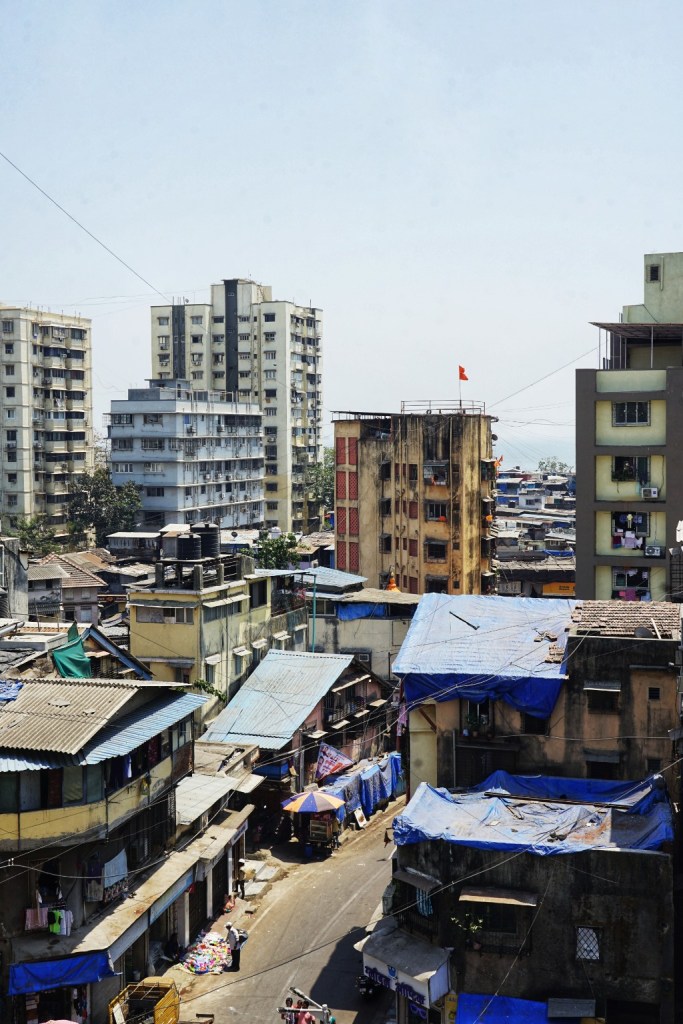
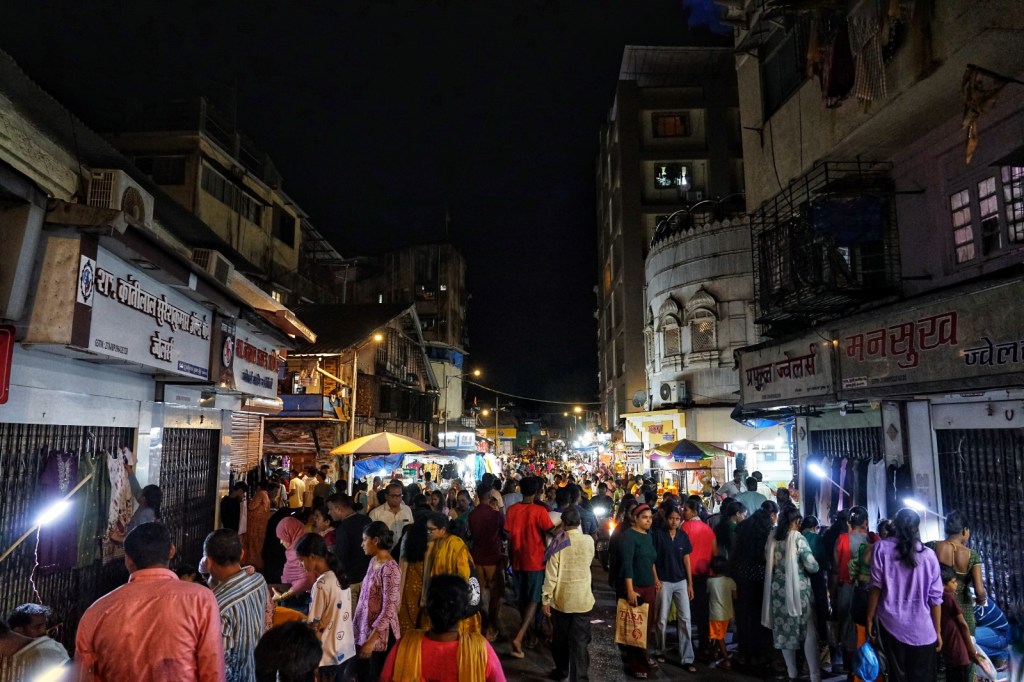
In that sense Mumbai is the perfect place to end this journey. Not because I chose it that way, but because it holds both — the beginning and the end — without trying to separate them. When I first arrived here, everything felt loud. Now, returning, the city hasn’t changed. But something in the way I move through it has. Mumbai doesn’t make things easier. It doesn’t soften edges or create space where there is none. If anything, it confronts you — with everything at once. And maybe that’s exactly why it fits. Because this journey was never about finding calm by removing the chaos. It was about learning to stay — even when it’s loud, even when it’s messy, even when everything exists at the same time. And there is no place that reflects that more honestly than this city of contrasts.


If you feel like responding, I’m listening.