Barth, Ribnitz-Damgarten, Neundorf. Even though I spent my summer holidays here with my grandparents every year, I never remembered much of my childhood and adolescence up here in the far north of Germany.
In psychology, they say that traumatic events (yes, there is that word again) can make memories inaccessible. The brain does not neatly distinguish between “good” and “bad.” Trauma does not discriminate. It does not sort our memories into two tidy piles, keeping the beautiful ones within reach and hiding away the painful ones. Sometimes it locks the whole drawer. It is a form of protection. When a place, a smell, a face, or a particular period of our lives becomes associated with something that was too much to bear, it may not only be the painful memories that disappear. Everything connected to them can disappear, too. The summer holidays. The people. The laughter. The feeling of being safe. Or loved.
The memory is not erased. It is simply out of reach. Until, one day, something opens the door. For me, apparently, that is now. Because as we drive past these places, everything comes back. Pain and love. All at once.
I stand in front of the old post office. Aunt Greta’s smell. The creaking floorboards beneath my feet. The little crocheted doilies. Her delicate hands and quiet eyes. Even the taste of that candy she had in a transparent glas bowl.
One street further used to be a house belonging to Uncle Eduard and Aunt Waltraud. Family. Laughter. Togetherness. Cooking. More laughter. The smell of blood soup. Wet feet from walking through the grass. The honking of the geese. The soft fur of the rabbits. The feeling of belonging somewhere without having to think about it. It is less a single image than an entire web of things that suddenly return.
None of it is there anymore. The houses are abandoned. The windows boarded up. Greta, Eduard and Waltraud have passed. Their children moved away. I do not know where they went. My grandmother’s clever little address book disappeared after she died, and with it, the entire branch of that family.
I drive on.
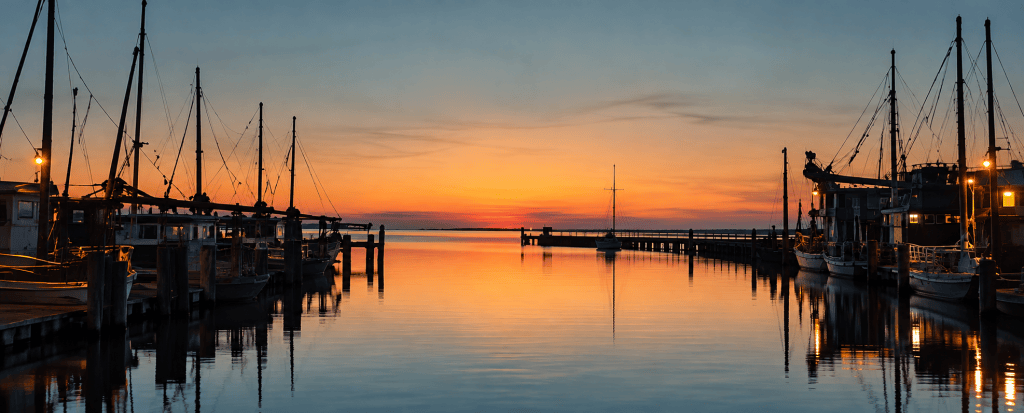
To the harbour. To the beach. To the jetty. The water lies quietly in front of me. Somewhere between lies a memory that has been waiting all these years to be found again. Here I drank my first beer. With Kai? Was this the place of my first kiss as well? With Kai? Did he had freckles? Or do I just make that up?
It is strange, the way memory works. We tend to think of remembering as if it were stored somewhere behind us, waiting to be retrieved. But memory is not simply an archive in which our past is stored unchanged. Memories are formed, altered, connected to one another, and, each time we recall them, reconstructed in some way.
Iam wondering: If our memories change, what does that mean for our relationship with our own past? Are we still the same person if we cannot remember parts of our lives? Does a childhood we have forgotten still belong to us? And what happens when we suddenly remember something that changes the way we see ourselves?
For a long time, I thought remembering was a kind of gathering myself back together. As if all those forgotten places, people, smells, sensations, the laughter, the pain, the love, were pieces of me that had been scattered somewhere along the way. And that by remembering them, I could finally become whole again.
Today, I am not so sure about that.
Because: Why give the past so much power?
We speak about our past as if it were a place from which everything that comes after must be explained. This happened to me, therefore I am this way. This hurt me, therefore I carry it. This was missing, therefore something in me will always be missing.
But perhaps the past does not have to be the author of the present.
A memory can tell me where I have been without telling me where I have to go.
Isn’t that one of the strange freedoms of being alive: every moment arrives without an instruction manual. We are not required to remain faithful to every version of ourselves we have previously been. We can change our minds. We can abandon stories that once seemed essential. We can discover that something we believed about ourselves for thirty years was simply a conclusion we drew from circumstances we no longer live in.
Even memory itself is not fixed. It changes as we change. The child who stood at this jetty is not the woman standing here now. And yet both exist in me. Neither has to erase the other.
The past happened to me. It shaped me. It belongs to me. But it does not own me.
And perhaps that is another kind of remembering: not gathering all the pieces of who I once was, but realizing that I do not have to carry every piece into who I am becoming.
I drive on. The landscape passes by.
And for the first time, the north remembers me.


If you feel like responding, I’m listening.